
“I would love to try parasailing in Okinawa, but an accident report has made me nervous.” If that sounds familiar, a beautiful holiday photograph may not be enough to help you decide whether to book.
The view over the sea is a wonderful attraction, but no outdoor activity can promise that an accident is impossible. Rather than keeping your worries to yourself, ask specific questions before booking about weather decisions, equipment, the briefing and participation requirements.
This guide explains how to read accident information and what to ask the shop. It also introduces the participation requirements and meeting point listed in Kai・la's menu, helping you turn a general worry into questions you can actually resolve.
Reading parasailing accident information: start with the date, place and source
Separate the publication date from the date of the accident
When a report appears in search results, first find out when and where the event happened. A recently updated page may describe an accident from years ago. Even if a headline mentions Okinawa, check the actual location, operator and type of activity in the article.
Look beyond the page's publication date to the incident date, country or region, and whether parasailing was involved. Paragliding and skydiving are different activities. Similar names in search results do not mean the reports all describe the same experience.
Next, distinguish an initial news report from an account of completed investigation findings. An article saying the cause is under investigation does not establish that particular equipment or weather caused the event. Keeping confirmed facts separate from unanswered questions helps you avoid filling the gaps with assumptions.
Use official reports to identify questions for your own booking
The US National Transportation Safety Board's report, adopted on June 18, 2014, examined parasailing accidents in the United States and its territories and discussed equipment, weather and operational issues. You can read more in the NTSB's parasailing safety investigation.
The report has a specific geographical and historical scope. It does not describe present-day Okinawan rules or Kai・la's operations. Findings about another country should not be presented as Japanese requirements.
Use such material to identify what to clarify before your own outing, rather than repeatedly watching an accident scene. Questions such as “When will you decide whether our trip can operate?” or “What will be explained before departure?” make research useful for planning.
Accident counts alone do not establish a rate or guarantee safety
A count of reported accidents does not tell you how many participants were affected out of everyone who took part. A meaningful rate needs a defined participant population, period, area and definition of an accident. You cannot combine participant numbers from one country with accident reports from Japan.
Do not base a booking decision on an accident rate whose source or counting method is unclear. Equally, failing to find an accident in search results does not establish that there is no risk.
Reviews can help you understand the reception and whether explanations were easy to follow. However, “It wasn't scary” or “We had a great trip” describes that person's experience on that day. You still need to check your own eligibility and the instructions for your departure.
Three areas to ask about: weather, equipment and the briefing
Ask about your departure even when the sky is clear
The sky and rain are easy for visitors to notice, but “It is sunny” should not be the whole basis for deciding whether a trip operates. Before leaving, check information such as the Japan Meteorological Agency's Okinawa Main Island forecast, then confirm the instructions for your booked departure.
Ask when you will receive the final update and how a change before your meeting time will reach you. Do not apply your own cutoff to a number in a weather app, or assume that another boat operating at a different harbor confirms your trip. Check your own location and departure.
Kai・la's parasailing menu states that sea conditions or equipment problems may lead to cancellation. If you receive a cancellation or change notice, make your revised plans around that decision. When booking, check that the telephone number and email address provided will be usable during your trip.
With equipment, communicate the fit rather than memorizing terminology
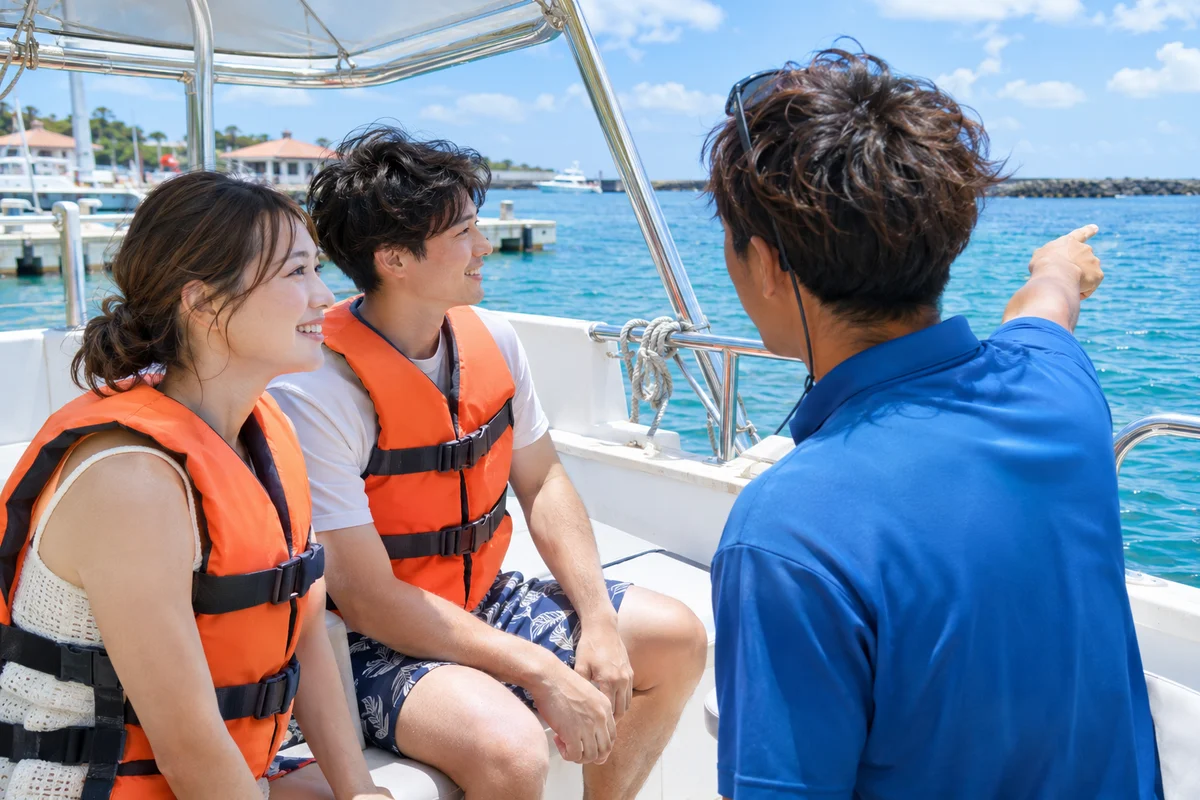
First-time guests do not need to learn every type of rope or fitting. You can still ask about anything that concerns you: “Can you explain the equipment before departure?” or “When should I tell you if something presses uncomfortably against me?”
After putting on a life jacket and supporting equipment, do not smile through discomfort. Tell the crew if something feels too tight or seems to shift as you move. These are sensations only you can describe. Ask staff to check whether an adjustment is needed; do not alter belts or attachment points yourself.
This page cannot provide universal instructions for operating or releasing particular equipment in an emergency. Your actual equipment and the briefing for your trip are what matter. If an unfamiliar term comes up, ask for an explanation in different words.
Move from hearing the briefing to checking your understanding
When you are nervous, one explanation may be hard to remember. Before departure, confirm where to wait, when to move and how to communicate a problem. Knowing those steps makes the experience easier to picture.
You might ask, “If I become worried while we are getting ready, should I tell you immediately?” or “Could you repeat anything I cannot hear?” Ask about unclear points before flying, and follow the actual briefing for signals and waiting areas. Put photography aside while listening, and have your companions listen too.
| What to clarify | Example question before booking or departure | What to establish next |
|---|---|---|
| Operating decision | When and how will we hear whether our departure will operate? | A time to check and a contact method |
| Equipment explanation | Please explain the equipment and how to report discomfort. | Ask staff rather than adjusting it yourself |
| Communication during the activity | What signal should I use if I have a problem? | Listen to and confirm the actual instructions |
| Participation requirements | Can this combination of ages, numbers and weights participate? | Everyone's details and the decision on the day |
Before booking: participation requirements, insurance and cancellation terms
Prepare details for every participant, not just their ages
Kai・la's Scenic Parasailing menu is for healthy participants aged four and over, with bookings starting from two people. Meeting the minimum age does not guarantee that every proposed group can fly together.
Prepare the number of adults and children, their ages and weights, and who would like to fly together. If you would rather not share a weight publicly, raise it privately during the booking conversation. Understating a figure or leaving out a child's details prevents the shop from checking the group you actually intend to bring.
If you have concerns about your condition or participation, read the menu's precautions before booking. Do not decide you are eligible solely from a blog article; discuss the necessary checks with the booking team. Our parasailing weight-limit article explains more about numbers and weights.
Add specific questions to “Is there insurance?”
If insurance concerns you, ask how participation in parasailing is treated and whether there is information you can review. Separate your questions into who is covered, which activities or situations are included, exclusions, and whom to contact if something happens.
Check any travel insurance you have against your own policy documents or insurer's guidance. A policy name mentioning travel injuries does not establish that it applies to every marine activity. Ask your insurer about specific cover and procedures.
Insurance coverage and the operating decision and briefing are separate things to check. An answer about insurance need not leave your equipment or eligibility questions unresolved. It is reasonable to say, “I am concerned and would like to see any information I can review.”
Distinguish weather cancellation from cancelling your own participation
“What happens if I feel too frightened to fly on the day?” is worth asking before you book. A cancelled operation and a guest's decision to withdraw may be treated differently. Explain whether you mean before or after boarding, and whether the whole group or one person would withdraw.
Kai・la's menu includes cancellation information. Check the current course page and booking reply for the applicable terms. Before cancelling on your own or simply missing the meeting, contact the booking team to discuss the situation.
Clarify how costs, including travel to the meeting point, are handled so that you can adapt your plans. Share the answer with companions as well, helping everyone avoid surprises after arrival.
On the day, speak up between arrival and takeoff
Arrive with time to listen without rushing
Rushing into the harbor while sorting bags makes it easy to forget the questions you wanted to ask. Save the meeting location the day before, and allow for parking and the walk to the meeting point. Reaching the harbor and actually meeting the crew are different milestones.
Kai・la's Scenic Parasailing meets at Miegusuku Port in Naha. It is convenient to combine with sightseeing around the airport or Kokusai Street, but allow for traffic and any rental-car return deadline. If you reach the port but cannot find the meeting spot, use the contact details in your reservation.
Keep your booking, meeting time and recent messages easy to display on your phone. Sharing them with a second person, rather than leaving everything with the group organizer, helps if someone steps away to use the facilities or organize belongings.
Report discomfort or changes in how you feel early
“I feel unwell, but I have already checked in.” “Everyone else looks excited, so I do not want to say anything.” Even then, tell staff about a change in your condition or uncomfortable equipment. Before flying, share how you actually feel instead of holding back for your companions.
Simple words are enough: “I started feeling unwell after boarding,” “Something feels uncomfortable around my waist,” or “I have heard the explanation, but I am still worried.” Describe what concerns you and when it started. Check clothing and belongings with staff rather than improvising a solution.
With children, listen to their words and notice their expressions instead of answering “They're fine” on their behalf. Meeting the participation requirements does not decide how a child feels that day. Take a moment to check on them before thinking about souvenir photographs.
Check how to communicate a problem together with your companions
Where necessary, check that a concern raised at reception has also reached the person helping you prepare. Rather than assuming a booking message has been passed on, begin with “About the issue I mentioned when booking…” so that you can confirm it again.
Follow the actual instructions about posture, signals and returning to the boat. Do not try movements seen in a video of another activity or prioritize general advice in an article over your own briefing. Ask again before takeoff if you did not catch part of the explanation.
| When | What to confirm or share | Useful information to keep handy |
|---|---|---|
| Before booking | Everyone's eligibility, concerns and cancellation terms | Notes on ages, numbers and weights |
| Before leaving for the meeting | Your departure's update, meeting point and time | Reservation and contact details |
| Check-in and preparation | How you feel, equipment discomfort and unclear instructions | Notes on questions already discussed |
With Kai・la, discuss both the experience and your wider itinerary
A Naha meeting point and an approximately one-hour tour
Kai・la's Scenic Parasailing meets at Miegusuku Port and has an approximate total duration of one hour. This is the whole tour, not an hour continuously in the air. Allow for changes with conditions, travel and waiting.
Its Naha location makes a sea-view outing followed by time around town an appealing option. Leave room for getting to the harbor and a break afterward rather than packing in distant stops. Discussing the whole schedule helps first-time guests prepare without feeling rushed.
If safety is on your mind, mention your preferred time and next appointment while enquiring. Knowing the tour duration and meeting point in advance makes it easier to leave time for preparation and explanations.
Ask about flying together with everyone's numbers and weights
Kai・la's menu describes simultaneous flights for up to three adults, depending on group size and weight. If flying alongside someone would help with your first experience, mention that preference before booking.
The maximum of three does not mean that every combination is possible. Provide each participant's details as well as your preferred group, then confirm what is possible with the day's conditions. Request a shared flight with the relevant numbers and weights, and follow the final instructions.
Some people find a companion reassuring, while others remain nervous about heights even with a friend beside them. When organizing a group, ask each person what concerns them instead of making decisions solely around the organizer's preference.
Plan smartphone photography after listening and getting ready
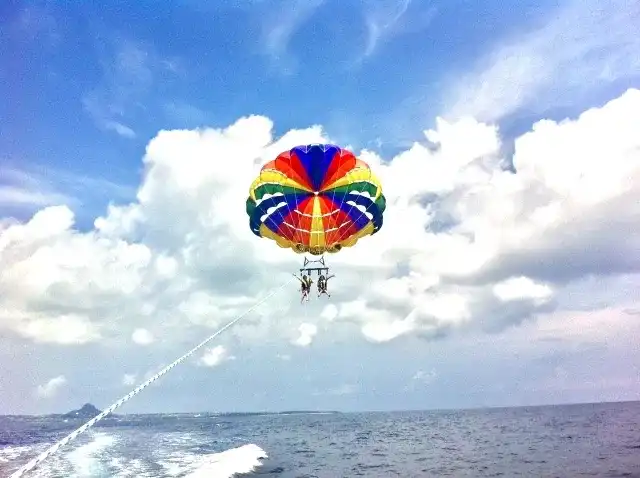
Okinawa's sea from above is a view you may want to photograph. Kai・la's menu says guests may take their own photographs with their smartphones. Ask the crew how to bring your phone and when to use it.
Looking at your screen throughout the preparations can mean missing instructions. First listen and check equipment and belongings, then ask about photography. Do not decide for yourself that you can let go or move your body significantly; follow the instructions on the day.
If taking photographs adds pressure, simply enjoy the view. You do not have to photograph everything. Discussing that preference with your companions helps keep the outing focused on enjoying the experience together.
For a Blue Cave combination, check both locations and each activity's conditions
Kai・la also offers Blue Cave Snorkeling + Scenic Parasailing, combining underwater scenery with a view from the sky. The snorkeling menu describes small groups, breathing practice in shallow water, and underwater photographs taken and given to guests.
The two activities take place in different locations. After the Blue Cave Core meeting point in Onna Village, the course instructions call for guests to travel in their own rental car or other transport to Miegusuku Port in Naha for parasailing. Confirm the transport arrangements and meeting times when booking.
An operating update for one activity does not settle conditions for the other. Plan a combination after checking each activity's operating status, meeting details and arrangements if plans change. Ask in advance what happens if only one part changes.
Frequently asked questions about parasailing accidents and safety
Can we participate if it is sunny and other boats are leaving?
A clear sky or another boat's departure does not decide whether your booked trip can operate. Check your own location, operating boat and current instructions. Even if you have participated at the same place before, you need to check conditions again for this visit.
If the answer is “We plan to operate,” ask when that information was current and how you will hear about a change. A planned departure is not a promise that flying will happen under every circumstance.
On a child-friendly course, are the same checks as for adults enough?
In addition to age, tell the shop your child's size and the number and weights of people hoping to fly together. Ask about unfamiliar equipment during reception or preparation rather than assuming a child needs exactly the same arrangements as an adult.
It also matters whether your child understands the explanation and feels frightened. Saying “We are coming with a child who is a little nervous” helps you organize the questions to discuss before booking.
If I cannot swim, do I still need to ask about precautions?
Kai・la presents parasailing as a plan that people who cannot swim can also consider. That does not remove the need to understand equipment or how to signal a problem. Explain that you are not a confident swimmer and are worried about being out over the sea.
Concerns about swimming, heights and boat movement differ between people. Be specific so that you can hear the explanation you need. For the feeling of floating and the sequence of the outing, see Is parasailing scary?.
What if I become more anxious after booking?
Give your booking name and date, then briefly explain your concern. If it helps to prepare a message, you could start like this:
We have booked for two adults on date. After reading accident news, we have some safety questions. Could you explain the pre-departure briefing, how weather cancellations are communicated, and the terms if we decide not to participate on the day?
If any wording or conditions remain unclear after the reply, ask a more specific follow-up. Contact the booking team early if concerns remain, rather than keeping them to yourself until the day. Mention whether your worry is about how flying works, your condition or a family member.
Should I memorize emergency advice from social media?
A short video may not show the equipment or circumstances involved. Avoid trying a movement described for a different experience. Confirm what to do in the actual briefing for your outing.
Before booking, ask whether emergency instructions are included in the pre-departure explanation. Rather than inventing your own method for releasing equipment, understand how to communicate a problem and follow staff instructions before you participate.
Ask your questions, then plan an Okinawan sky experience with Kai・la
If parasailing accidents worry you, check the source and date of reports, then ask about weather, equipment, explanations and participation requirements. Clarifying insurance and cancellation terms also makes it easier to discuss plans with friends and family.
Kai・la's Scenic Parasailing meets at Miegusuku Port in Naha for an approximately one-hour tour to enjoy Okinawa's sea from above. You can discuss shared-flight preferences or a Blue Cave combination to suit your trip.
Whether you want to ask a few questions before your first booking or check whether your family can fly together, please contact Kai・la for reservations and enquiries. Let's work through your questions and plan something to look forward to in Okinawa.