You want to see Okinawa's Blue Cave, but the thought of breathing with your face in the sea makes you nervous. You might be a confident swimmer and still feel uncomfortable with a mask covering your nose. If this is your first Blue Cave snorkeling trip, it can be hard to know what to ask before booking.
It is fine to start by saying you cannot swim. Adding a detail such as “I can put my face in the water when I can stand” or “I worry about water getting into my mask” makes it easier to discuss what you would like to practice first. Here is what you may feel at the surface, and how to bring up those concerns before booking and on the day.
Nervous about snorkeling at the Blue Cave? Start here
Pick the part that worries you most
You might swim comfortably in a pool where you can stand, but feel nervous floating face down in the sea. Or you might be fine putting your face in the water, then find breathing unfamiliar with your nose covered. Think about which part you feel ready to try and where you start to feel unsure.
“I've only ever stood in the sea. I've never floated with my face in the water” describes your experience more clearly. If you cannot yet put your finger on what bothers you, tell the guide that this is your first time using snorkeling gear with your face in the water.
| What worries you | What to say when booking or checking in |
|---|---|
| Water touching your face | “I get flustered when my face gets wet. Can I start somewhere shallow?” |
| The mask covering your nose | “I'd like to get a feel for breathing through my mouth on land first.” |
| Your feet leaving the bottom | “I'm more worried about floating without being able to stand than about swimming.” |
| Water entering the mask or tube | “How should I let you know if water gets in?” |
| Keeping up with the group | “My companion has snorkeled before. Can we talk about what happens if I need more practice before moving on?” |
Putting your face in feels different, even at the surface
Snorkeling lets you float at the surface and look underwater. When your face is in the water, you breathe through your mouth using a snorkel tube that extends above the surface. The mask covers your eyes and nose. It helps you see underwater, though trying to breathe through your nose out of habit can take you by surprise.
When you stay at the surface, your main concern may be breathing while looking down or floating above a visible seabed. Even if you swim in a pool, tell the guide if the mask and snorkel are new to you. That gives you something specific to check when you try on the gear.
Get a feel for the equipment before entering the sea
Speak up on land if the mask presses on your face or limits your view
When you try on the mask, mention any pressure around your nose or eyes, or if the view feels too narrow. Ask the guide to check the fit before tightening the strap yourself. You can also point out hair under the edge of the mask or explain that you are worried about what you will see without your glasses.
If vision is a concern, tell the crew when you book how you usually correct it. Ask what equipment is available and how to check what works for you. If you want to bring your own mask, ask whether you can use it on the tour and whether the guide can check the fit on the day.
Try breathing through your mouth with the snorkel
As the guide explains the equipment, try the mouthpiece on land. With the mask covering your nose, you may try to inhale through your nose by habit and feel that breathing is harder. Tell the guide if the mouthpiece presses against your mouth, feels difficult to hold or leaves you unsure how to breathe as shown.
“I keep trying to breathe through my nose” or “The mouthpiece presses here” tells the guide exactly what to look at. Ask for any part of the briefing you missed before getting into the sea.
Check the fit and feel of your flotation gear
A life jacket or other flotation aid supports you at the surface. Cape Maeda's management asks snorkelers to wear a life jacket or flotation belt. Check the fit with the guide and mention any discomfort on land, such as the jacket pressing near your neck or making it hard to move your arms. Official Cape Maeda guidance
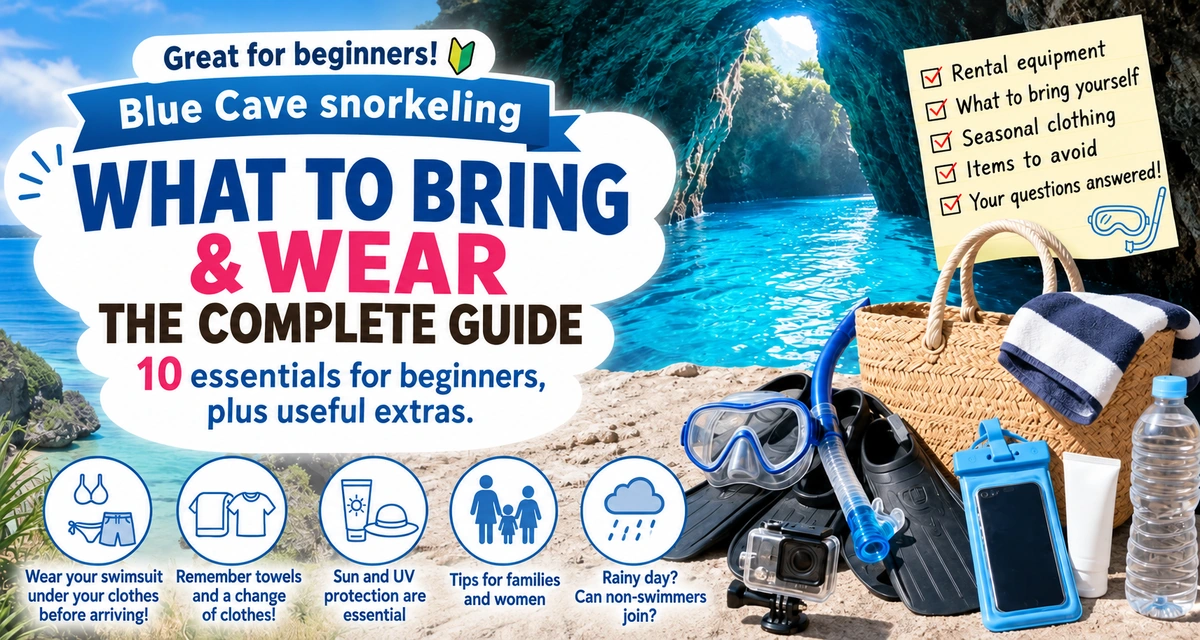
Ask about the gear you will use and how to alert the guide if you need help. Knowing both makes it easier to picture the start of the session. Our Blue Cave snorkeling packing guide covers clothing and what to bring.
If visibility worries you, talk to the guide while wearing the mask
A snorkel mask may let you see straight ahead while making it harder to tell what is happening beside you. Once you try it on, you might realize that noticing people alongside you matters more than pressure around your nose. Ask where to look for the guide when the mask is on.
If fins also make you worry about moving around, ask where you will put them on and what help is available when entering the water. Bringing up mask fit and getting into the sea separately gives the guide a clearer idea of what to explain at each stage.
Start by putting your face in the water where you can stand
Ask when you can take a moment to pause
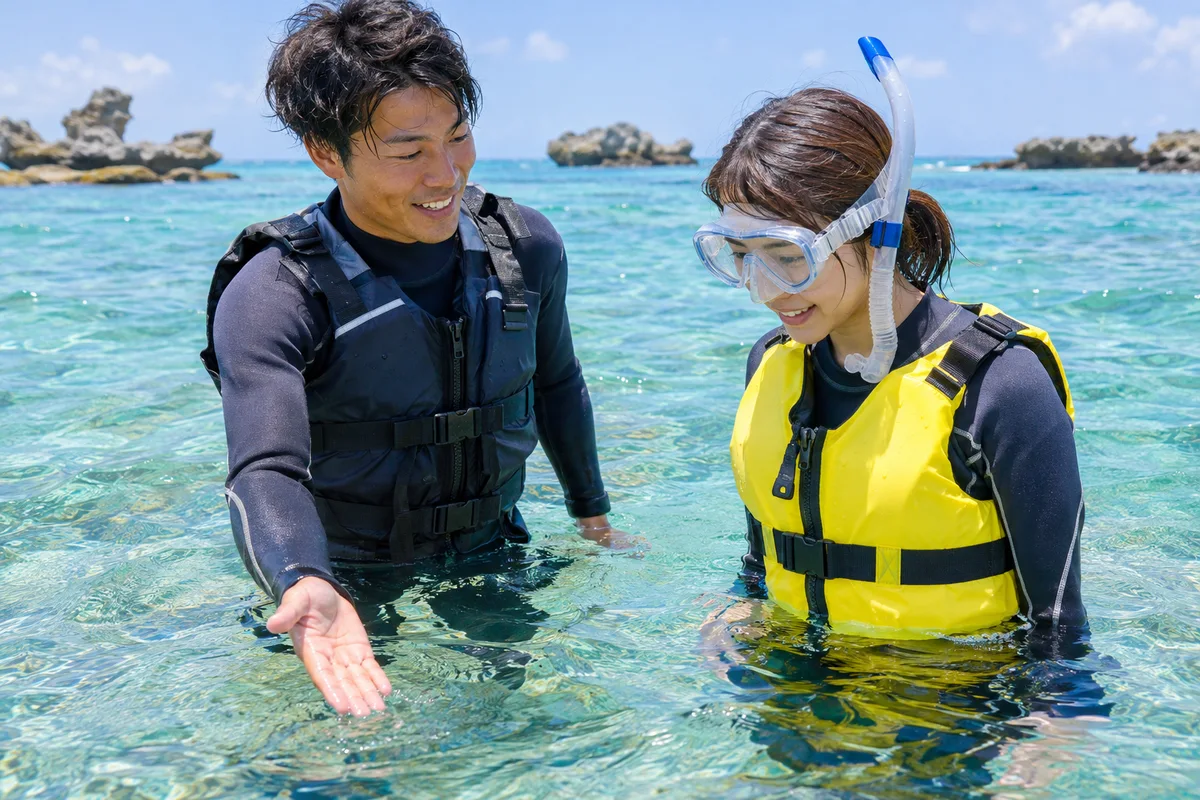
On Kai・la's Blue Cave snorkeling tour, the guide explains the equipment and safety, then you practice breathing in shallow water where you can stand. Before entering the sea, say if you want to try putting your face in while standing or lift your head to check how it feels. Follow the guide's instructions about where and in what order you will practice that day.
Instead of counting how many seconds you managed, tell the guide whether you could breathe through your mouth and what you noticed after lifting your face. Mouthpiece discomfort and uneasiness about the water moving are different things the guide can help you identify.
Ask one question at a time on Kai・la's small-group tour
Kai・la runs its Blue Cave snorkeling tour in small groups. An instructor supports you from the gear briefing through breathing practice in the shallows. If you are comfortable putting your face in but worry about getting water in your mask, say so during the fitting. A small group makes it easier to say how you are feeling at each stage, including if your concern changes once you get in the water.
The course page notes that parties of three or fewer share the tour with other guests. If you are the only beginner in your party and worry about keeping up, try asking when you book, “I've never used a mask before. How do the gear briefing and breathing practice work in a small group?” That helps you picture what you will try and who to ask before setting out.
Putting your face in and lifting your feet are two steps
Standing with your face in the water may feel fine until you start floating. Your body can change position, your feet no longer brace you, and your view is directed down. If one of those things is what worries you, say so. “Putting my face in was fine, but I tense up when my feet lift” is enough to start the conversation.
Before moving into deeper water, ask where you can see how the flotation gear supports you and whether there is a chance to check in with the guide before moving on. Let the guide know how you feel even if the person you came with is ready.
If your instinct is to stand up as soon as your feet leave the bottom, you can ask the guide to watch your position while you float before setting out. Seeing how you are supported with the guide nearby gives you more information to decide how you feel about going farther.
Ask what to do and how to signal if water gets in
Water in the mask and water in the snorkel tube feel different and need different responses. If both worry you, ask the guide to explain both in the shallows. The Japan Coast Guard also advises getting familiar with your equipment and learning what to do if water gets in. Japan Coast Guard Water Safety Guide
If something feels wrong at the surface, signal the guide in the way you practiced and follow their instructions. If you can talk, say whether it is water in the mask or something that feels wrong around your mouth. Ask about these situations during the briefing or in the shallows so you have discussed them before going farther out.
Before leaving the shallows, say what worked and what still worries you
“I could put my face in and breathe through my mouth. I'm still worried about looking around while floating.” If you tend to say yes automatically when someone asks if you are okay, it can help to have one thing that worked and one remaining concern ready to say.
Something that felt manageable on its own can be harder when you are floating, looking down and trying to stay aware of people around you. If you want the guide to look at one movement again, you might ask, “I worry I'll lose my position when I lift my head. Can we check that before leaving?” Then you and the guide can consider the conditions and how you feel.
If you are unsure about continuing, tell the guide you feel comfortable in the shallows and would like to talk before going farther. If it is hard to bring it up when the group is about to move, say at check-in that you would like to make that decision after practice.
Moving at the surface and reaching the cave entrance
Waves change what you see and how your body moves
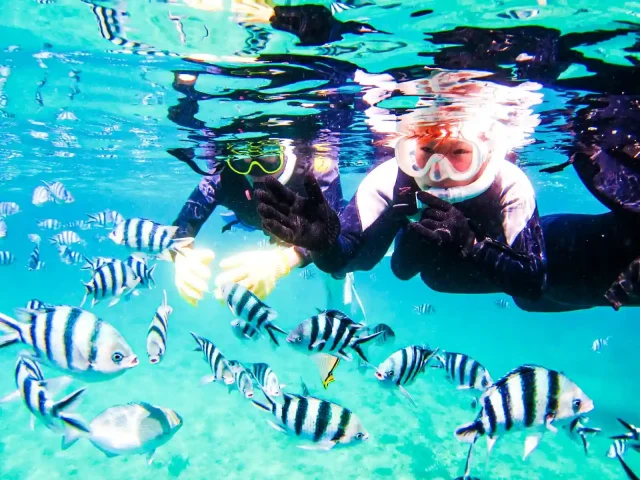
You may feel calm in the shallows, then notice small waves or swell bringing water close to your face as you move. The changing distance to the seabed can make it feel deeper even though you are still floating at the surface. Tell the guide early if the color of deeper water or the movement of the waves worries you.
You may see fish beneath you, and the way the light falls can change what you see. Follow the guide and stay with the group as you enjoy the view. Ask how to signal that you would like to stop before you put your face down.
It can also be hard to tell which way the group is going when you lift your head. Before starting, ask who to follow and how to signal if you lose track of the group. When you feel more comfortable putting your face in the water, the guide can explain how to look around from the surface.
At the surface, say what happened and what you need
If you can lift your face and speak, say what happened and what you would like. “Water is collecting under my eyes. Can you check my mask?” or “The waves are making me nervous. I'd like to pause beside you” is enough. If you cannot tell what caused it, describe what you feel, such as difficulty breathing or feeling too scared to continue. If speaking is hard, use the signal agreed in the briefing.
When the guide shows a signal, ask whether you can try it and have them check it. Your companions can listen too, so everyone hears the same instructions if someone asks to stop. Check the signals and where you can pause with the guide on the day.
Talk to the guide before entering if the cave makes you nervous
Tell the guide during practice if you want to see the cave but think the entrance might make you nervous. The light changes as rock closes in around you. The view at the entrance may feel different from a photo showing only the bright blue water.
Where you can pause and when you can discuss continuing depend on the sea conditions and the group's position. If you are struggling to continue, signal the guide and follow their instructions instead of leaving the group to go back alone. Kai・la may change to another site when the cave is closed. If that possibility concerns you, ask before booking where you would practice at an alternative site.
What to tell the guide before booking and on the day
Describe both the concern and what you want to know
Here’s an example for the booking form.
We're two adults and one of us has never snorkeled. They can put their face in the water where they can stand, but worry about getting water in their mask. Can we practice breathing and signals in the shallows?
It gives the crew your group size and a specific question to answer.
| Your situation | What you can ask ahead of time |
|---|---|
| You swim in a pool but have never put your face in the sea | “In what order do we practice in the shallows?” |
| You got flustered when water entered your mask before | “Can we check the fit and what to do if water gets in before setting out?” |
| Family members or friends have different experience levels | “How would the tour work if one person needs more practice?” |
| You would like to try first and then decide | “When can I discuss whether to continue? What happens to the booking if I sit out?” |
If a companion is asking for you, talk to them about what actually worries you so they can explain it accurately. Saying someone is new is a start. Mentioning a particular concern, such as the mask covering their nose, makes it easier to pick up the same conversation on the day.
Speak up on the day if your concern has changed
You may be looking forward to snorkeling until you try on the gear or stand by the water. It is fine to say, “When I booked I worried about floating. Now I feel unsettled as soon as I put the mask on.” If this is your first briefing, ask to see how to signal that you want to stop.
Check in with companions who thought they were ready as well. If someone is unsure, ask what they want to hear explained again. Check the course page for how to raise any health concerns, and tell the guide if you feel unable to go on.
Give each person space to enjoy a different part of the trip
One person might want to see inside the cave, while another hopes to look underwater for the first time in the shallows. Saying what you hope to do before leaving makes it easier to speak up if the outing goes differently than expected. Friends and families can each name one thing they look forward to and one thing they find difficult.
If someone is unsure about continuing, tell the guide rather than making the arrangements among yourselves. Whether other members can go on and where someone who sits out can wait depend on the tour and conditions. If your group might want different options, ask about this at booking.
Common questions from nervous Blue Cave snorkelers
Can I book if I cannot swim?
Kai・la's Blue Cave snorkeling tour welcomes guests who are not strong swimmers and starts breathing practice where you can stand. Say whether it is hard to put your face in even in shallow water or whether you have floated in a life jacket before. You and the guide can consider how practice goes and the conditions that day before going farther.
Can I sit out if putting my face in turns out to be too hard?
Tell the guide when you find it difficult. What happens next, whether your companions can go on and how the booking is handled depend on the tour and your booking terms. If you might spend time separately, see Can you visit the Blue Cave just to look? for things to do on land at Cape Maeda.
What if I want underwater photos but feel nervous about posing?
Tell the guide if looking at the camera or paying attention to other people while being photographed worries you. Kai・la's staff take underwater photos with a GoPro and give you the pictures. If you are concentrating on breathing and how you float, you can leave the photography to the crew. If you ask to get used to breathing and floating first, you can say how you feel when the guide brings up photos during the tour.
Should I practice in the sea by myself first?
You do not need to go into the sea alone to practice. Tell the crew when booking if you have never handled the gear, so you know where the briefing will begin. Learn to put your face in and handle water getting into the gear in the shallows with a guide.
Try Blue Cave snorkeling for the first time with Kai・la
Water touching your face, the mask over your nose, the feeling of floating. Finding one thing you are unsure about gives you a specific question to ask before booking. If you simply know that you would like to start somewhere shallow, you can tell us that too.
Kai・la's Blue Cave snorkeling tour begins with an explanation of the gear and breathing practice in shallow water. Whether it is your first time putting your face in the sea or you are traveling with family or friends with different levels of experience, ask us through reservations and inquiries.