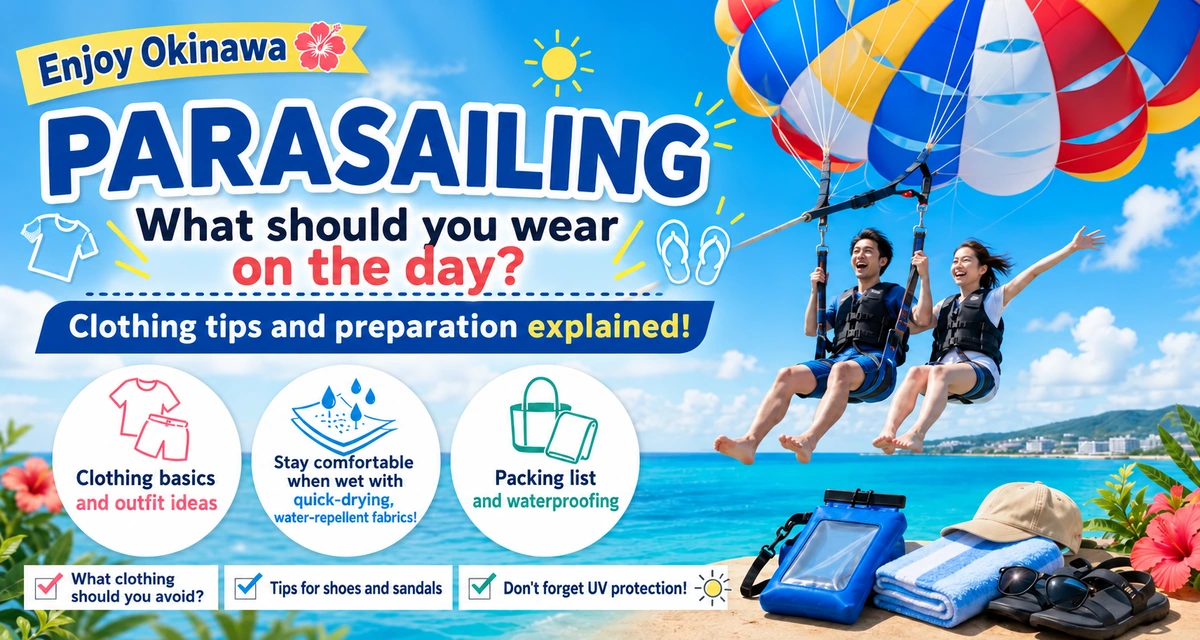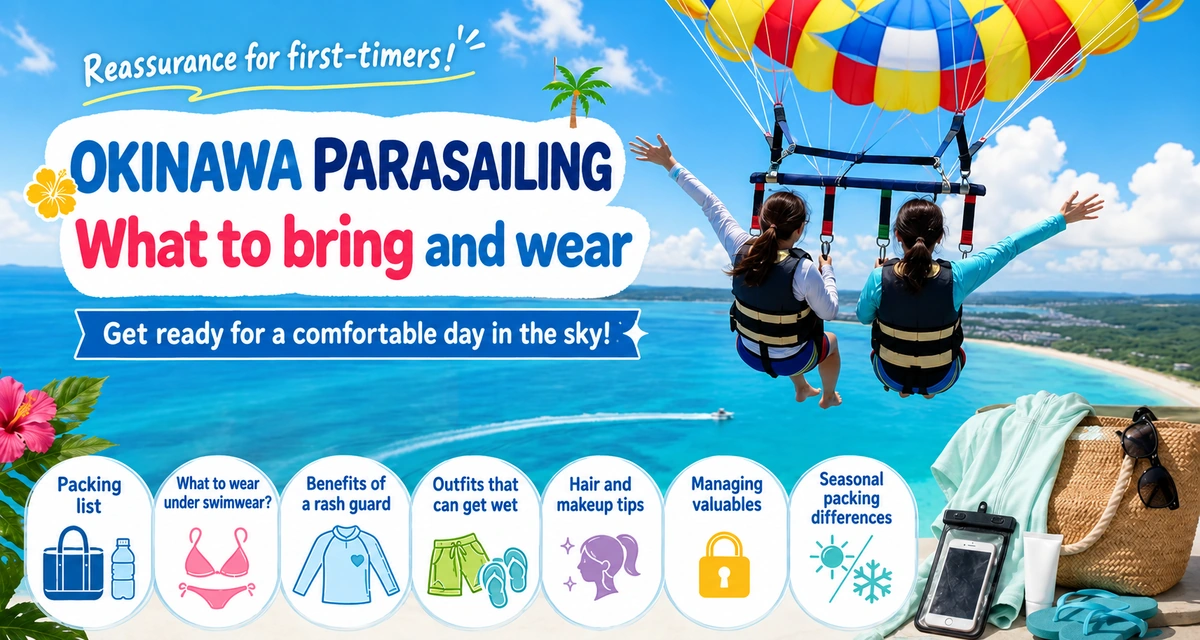
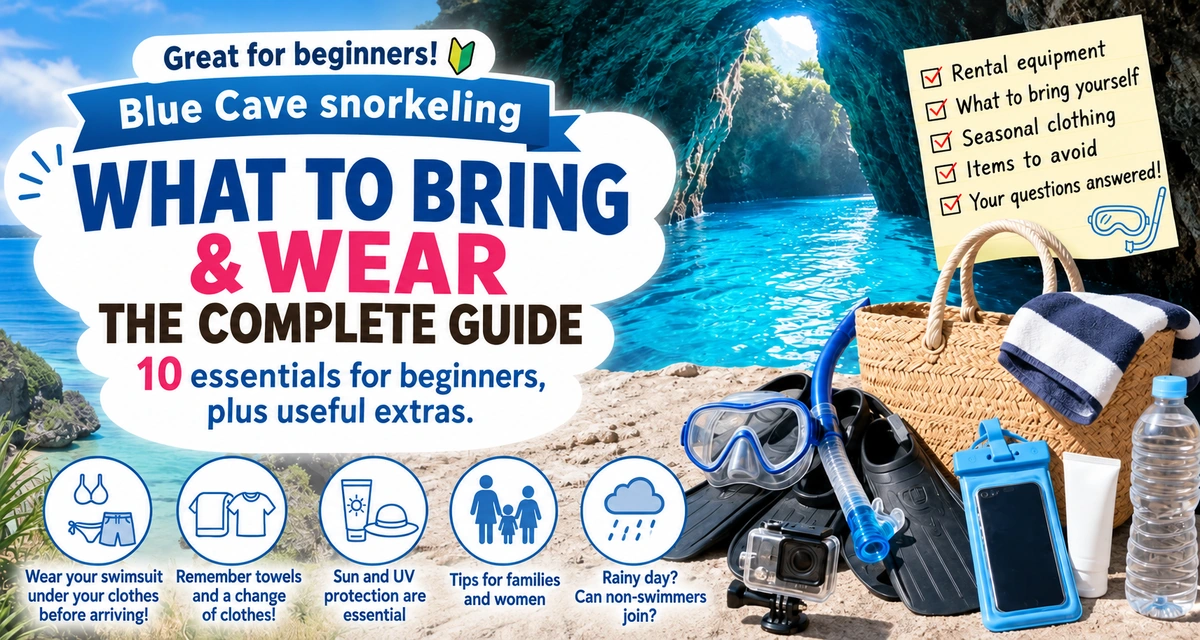
The Blue Cave is a popular highlight of an Okinawa trip. Snorkeling tours entering from Cape Maeda in Onna Village are appealing because even first-time visitors can easily participate. Yet once you book, you may wonder, "What should I bring?" or "What should I wear that day?" To answer directly, equipment such as wetsuits, life jackets, masks, snorkels, and fins is included in rental arrangements at most tour companies. What you need to prepare yourself is mainly personal essentials: a swimsuit, towels, a change of clothes, sunscreen, sandals, and a waterproof phone case. In other words, most tours let you participate simply by wearing your swimsuit under your clothes and bringing a change of clothes and a towel, so arriving nearly empty-handed is fine. This article lists 10 essential items for beginners and explains useful extras, what can and cannot be rented, clothing considerations for summer, spring/autumn, and winter, and items to avoid, such as jeans and heels. It also answers common questions about makeup, hairstyles, and health preparations for women and families with children, whether non-swimmers can join, what to do about glasses and contacts, and arrangements in rainy weather. By the end, you will know what to pack and be ready to enjoy the Blue Cave's spectacular scenery to the fullest.
What is snorkeling at Okinawa's Blue Cave like?
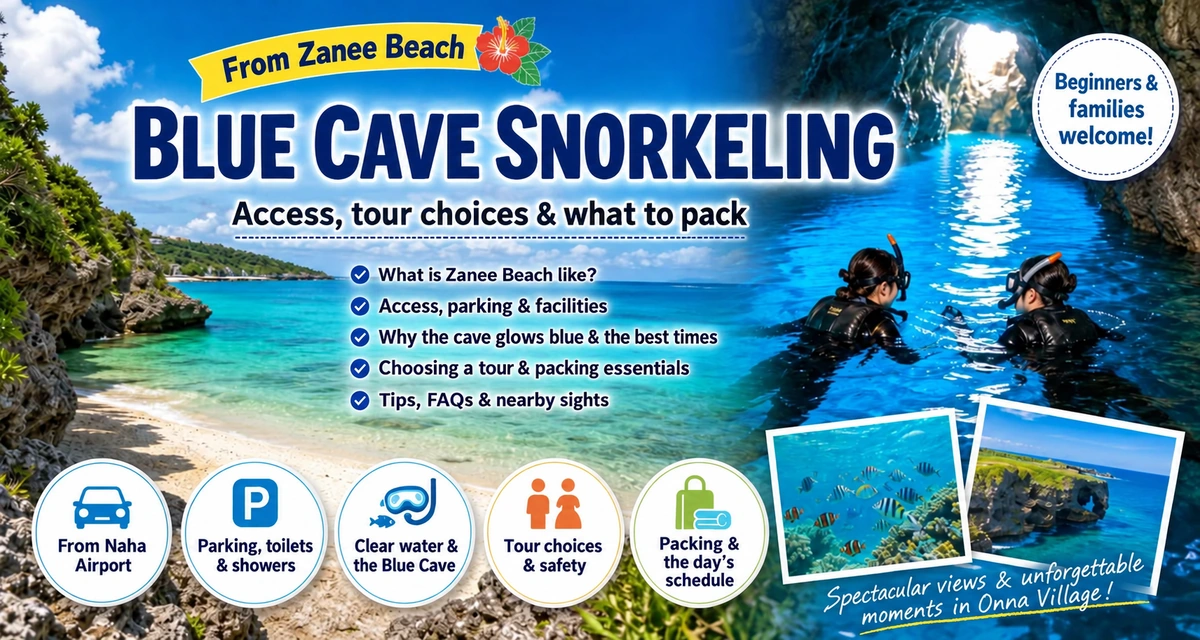
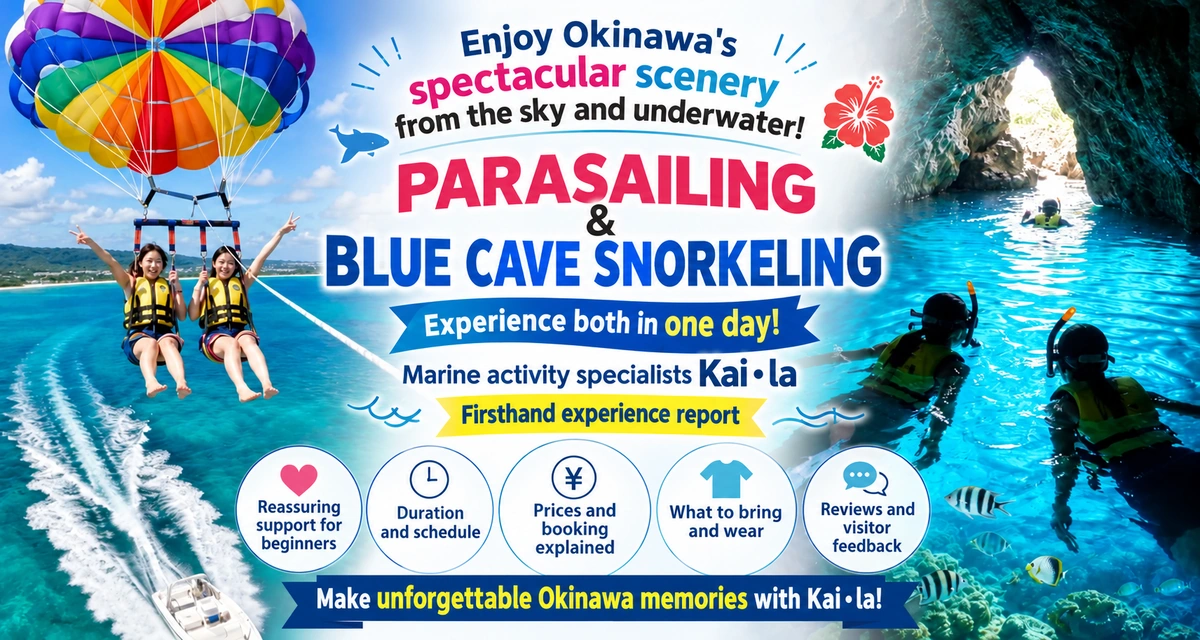
Okinawa's Blue Cave is a popular marine spot where you enter a cave opening in a sea-facing cliff and admire magical scenery as the water's surface shines blue. Looking toward the entrance from the back of the cave, sunlight reaching the seabed reflects, making the entire surface appear a deep blue. This blue glow is the reason for the name Blue Cave and the highlight of a snorkeling tour.
When considering belongings and clothing, it is important to first understand that Blue Cave snorkeling is an activity where you enter the sea and expect to get wet. A change of clothes and towels are naturally necessary, and required equipment also varies with the route to the cave and the time involved. First understand the overall experience, then build your specific preparation list.
Tour shops generally provide equipment such as wetsuits, life jackets, masks, and snorkels. Participants therefore mainly prepare personal items such as swimsuits, towels, and a change of clothes. Many tours are easy to join even if you lack confidence in swimming or bring small children, and they are often chosen as a first marine activity.
The location of Cape Maeda and the crevasses near the Blue Cave in Onna Village
The Blue Cave is at Cape Maeda in Onna Village on the west coast of central Okinawa's main island. It is around 1 hour by car from Naha Airport, generally reached via the Ishikawa or Yaka interchange on the Okinawa Expressway. Onna Village also lies along the route to areas with Churaumi Aquarium and resort hotels, making it easy to include in sightseeing plans.
Cape Maeda has facilities including parking, changing rooms, and showers. From there, you can use the stairs down to the sea for beach entry, or travel by boat from a nearby port for boat entry. The Blue Cave lies farther along the cape's rocks. Its interior extends deeply, and the contrast with the brightness outside makes the blue water stand out even more.
There are also spots called crevasses around Cape Maeda, with terrain resembling split rocks. You can see schools of fish swimming between steep rock faces, and these spots are often introduced together with the Blue Cave. Which spots you visit depends on the tour and the day's sea conditions, so checking the guidance in advance provides peace of mind.
At Cape Maeda,swimming may be prohibited on days with high waves or strong winds, in which case tours are canceled or changed to an alternative spot. Remember while packing that this location is easily affected by weather.
Differences between boat entry and beach entry
There are 2 main ways to reach the Blue Cave: boat entry and beach entry. Your choice affects how much energy you use and which belongings take priority.
| Comparison | Boat entry | Beach entry |
|---|---|---|
| Travel to the cave | Travel near the cave by boat, then enter the sea | Enter the sea from shore and swim to the cave |
| Physical effort | Shorter swimming distance and less exertion | More exertion from stairs and swimming |
| Suitable for | People lacking swimming confidence, families with small children, people concerned about stamina | People wanting longer underwater sightseeing or lower costs |
| Items to consider | Motion sickness medicine, an outer layer | Water shoes, drinks |
| Price tendency | Tends to be slightly higher because a boat is used | Often relatively affordable |
Boat entry involves time aboard a boat, which may rock on days with high waves.If you are prone to seasickness, taking motion sickness medicine 30 minutes to 1 hour before departure offers peace of mind. Wind on the boat can chill your body, so an outer layer helps keep you comfortable in any season.
Beach entry involves walking down Cape Maeda's stairs, entering the sea, and swimming to the cave. Since you walk on stairs and rocks, water shoes that secure the heel are safer than sandals. The longer swimming distance offers more time to observe fish along the way.
Typical tour duration and sequence
A Blue Cave snorkeling tour generally takes around 1 hour 30 minutes to 2 hours from meeting to departure. You spend about 30–60 minutes in the sea; the remaining time is used for check-in, changing, putting on equipment, and explanations. Since it takes less than half a day, many people fit it into their arrival day or the morning of their departure day.
| Step | Details | Estimated time |
|---|---|---|
| 1. Meeting and check-in | Check in at the shop or location and fill out consent and application forms | 10–15 minutes |
| 2. Changing | Change into your swimsuit in the changing room and put on a wetsuit | 10–20 minutes |
| 3. Explanation and preparation | Hear instructions on equipment use, breathing, and safety precautions | About 10 minutes |
| 4. Travel | Travel to the cave spot by boat or on foot | 5–15 minutes |
| 5. Snorkeling | Admire the cave, observe nearby fish, and take photos | 30–60 minutes |
| 6. Cleanup and shower | Return equipment, shower, and change clothes | 15–30 minutes |
Because you may need to complete an application form at check-in,keeping identification and your booking confirmation email readily accessible helps check-in go smoothly. Aim to arrive 10 minutes before the meeting time.
Some shops offer a service where the guide takes underwater photographs during the tour and you receive the data later. If you want to bring your own camera, also prepare a floating strap to prevent it from being lost if dropped.
The cave's appearance changes with the light, and the deepest blue is said to appear from morning to early afternoon, when the sun rises high. Popular times tend to be crowded, however, so choosing an early morning or evening session is another option for a relaxed experience.Temperatures and sunlight strength vary by tour time, so adjust your clothing and sun protection to your booked session.
Okinawa Blue Cave packing list: 10 essentials snorkeling beginners must prepare
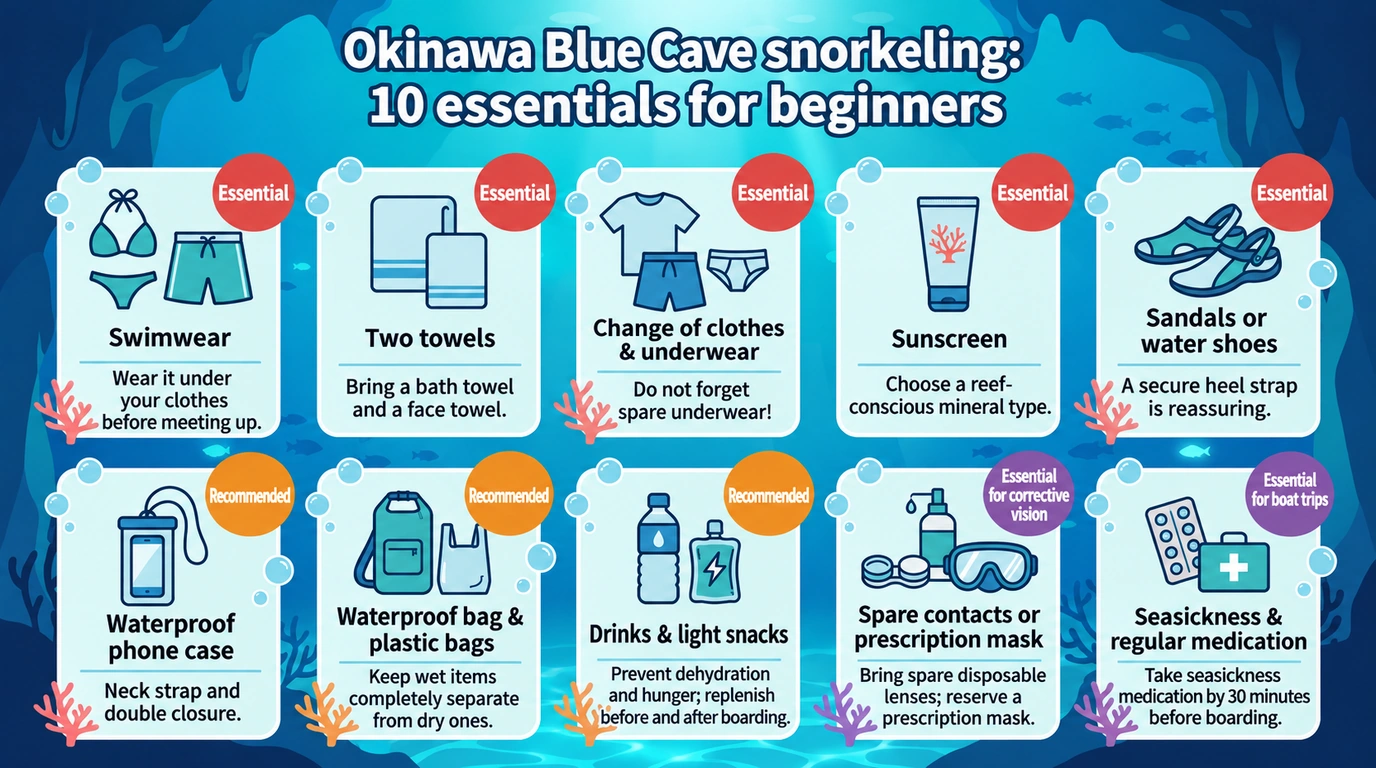
Most equipment for a Blue Cave snorkeling tour, including wetsuits, masks, snorkels, and life jackets, is included in the tour fee. You may therefore wonder if you really can come empty-handed, but there are several items you will need to bring yourself to avoid difficulties that day. Here we narrow the beginner essentials down to 10 items and explain specifically how to choose and use each one.
First, check the overview in the table. It also organizes how easily items are forgotten and how readily they can be obtained locally.
| Item | Importance | Local purchase / Rental | Quick tip |
|---|---|---|---|
| Swimsuit | Essential | Some shops sell them; most do not rent them | Put it on under your clothes at home or your hotel before meeting |
| 2 towels | Essential | Some shops offer paid rentals | Use a bath towel and face towel separately |
| Complete change of clothes and underwear | Essential | Not available | Many people forget spare underwear |
| Sunscreen | Essential | Available at convenience stores and similar shops | Choose a mineral type considerate of the sea |
| Sandals / Water shoes | Essential | Some shops rent water shoes | A type that secures the heel is reassuring |
| Waterproof phone case | Recommended | Available from tour companies and local shops | Choose one with a neck strap |
| Waterproof bag / Plastic bags | Recommended | Available at supermarkets and similar shops | Separate wet swimsuits from dry clothes |
| Drinks / Light snacks | Recommended | Vending machines / Convenience stores | Prevent dehydration and feeling unwell from hunger |
| Spare contacts / Prescription goggles | Essential for people needing vision correction | Prescription masks require advance booking | Give your prescription strength when booking |
| Motion sickness medicine / Regular medication | Essential for boat users | Available at drugstores | Take it at least 30 minutes before boarding |
Swimsuit (generally put it on underneath in advance)
The most important item not to forget for a Blue Cave tour is your swimsuit. Wetsuits and life jackets can be rented from nearly every tour company, but most shops do not rent swimsuits for hygiene reasons. Forgetting yours could mean giving up on participating altogether.
Always put your swimsuit on under your clothes at your hotel or home before meeting. Changing rooms at tour shops around Cape Maeda are small and crowded before departure. If you arrive already wearing it, you only need to put on a wetsuit at the shop, avoiding wasted time.
Choose a simple design that feels comfortable under a wetsuit. For women, bikinis tied at the back or heavily decorated styles may have ties come undone when putting on or removing the wetsuit, or fittings that press painfully against the skin. A one-piece or a non-halter design resembling a sports bra is comfortable. Men's surf shorts are fine, but check that nothing is in the pockets.
Towels (2: a bath towel and a face towel)
Some shops offer paid towel rentals, but they often cost around 300 yen per 1 towel, so bringing your own is recommended. Ideally, prepare 2 towels in total: a bath towel for drying your body and a face towel for frequently wiping your hair and face.
If you bring only 1 towel, it may be soaked after drying your body following snorkeling, leaving nothing to dry your hair. A face towel comes in handy for wiping seawater from your face aboard the boat or wrapping around your neck for shade on sunny days. If bulk concerns you, choosing quick-drying microfiber towels greatly reduces your luggage.
If traveling by rental car, also keep 1 extra towel or picnic sheet in the car to avoid sitting on the seats while wet.
A complete change of clothes and underwear
After snorkeling, your hair and body are wet, and your swimsuit is thoroughly wet even if you wore a wetsuit. Without a change of clothes, you will ride in the car wearing a wet swimsuit, which can chill your body and make you feel unwell.
Spare underwear is particularly easy to forget. Bringing tops and bottoms but forgetting underwear is very common, so check aloud when packing.
Choose breathable clothes that are easy to put on and remove, such as a T-shirt, shorts, or a dress. Assuming you will change in a small changing room, avoid tight skinny pants and fitted tops for an easier process. For a long tour or winter participation, adding 1 hoodie or cardigan also helps regulate your temperature.
Sunscreen (a sea-friendly mineral type)
Okinawa's UV rays are stronger than Honshu's, and reflections from the sea add to them, so even brief exposure can cause more sunburn than expected. Your face, neck, backs of your hands, and behind your ears are particularly vulnerable because a wetsuit does not cover them.
For sunscreen,choosing a mineral type (using UV-scattering ingredients) that considers coral and the marine environment is regarded as good etiquette. Some tour companies provide guidance on permitted sunscreen types, so checking when booking is the surest approach.
Apply it about 20–30 minutes before departure. Applying it immediately before entering the sea may let it wash off, weakening its effect. Choose a waterproof type and keep a small bottle in your bag to reapply during breaks aboard the boat.
Sandals or water shoes
Beach entry involves walking on Cape Maeda's stairs and rocks, which is very dangerous barefoot. Even with boat entry, the boat deck and pier may be wet and slippery.
We recommend sports sandals secured to your feet with heel straps, or water shoes. Flip-flops come off easily, creating a risk of falls when boarding or leaving the boat or walking on rocks, and may drift away and be lost in the sea. Many shops rent water shoes for a fee, so ask about rental availability when booking if you want to reduce luggage.
Expect the shoes or sandals worn during the tour to get wet. Keeping dry footwear for the return trip in your car makes subsequent sightseeing comfortable.
Waterproof phone case
The blue glow inside the Blue Cave is a moment many people want to capture. Some tours include underwater photographs and complimentary data, but a waterproof case is essential if you also want to take photos with your own smartphone.
When choosing one, it is important to select a waterproof case with a neck strap and double-lock construction. Recovering a smartphone dropped into the sea is almost impossible. After buying it, test the empty case by submerging it in a sink at home beforehand to check for leaks.
Some phones respond poorly to touch controls inside a case, so setting the volume button to release the shutter makes underwater photography easier.
Waterproof bags and plastic bags for wet items
After the tour, you have wet swimsuits and towels that absolutely cannot be packed with other belongings. Be sure to prepare waterproof or plastic bags for them.
Bringing 2–3 thick zippered plastic bags is enough, but if your trip includes more time in the sea, 1 roll-top dry bag is convenient for repeated use.Keeping completely separate bags for wet items and dry clothes prevents the rest of your luggage from becoming damp on the way back.
If packing them into your suitcase to take home, leaving them wet can cause odors. If possible, ideally rinse your swimsuit with fresh water and hang it up immediately after returning to your accommodation.
Drinks and light snacks
Wearing a wetsuit makes it hard to notice sweating, and your body loses water even in the sea. With a risk of heatstroke in summer and dehydration even in winter, bringing drinks is essential.
Alongside water and tea, bringing a drink that replenishes electrolytes, such as a sports drink, offers peace of mind. Some tour companies serve drinks aboard the boat, but secure your own supply so you can hydrate before meeting and after finishing too.
Joining a tour on an empty stomach makes seasickness more likely, but being overly full immediately beforehand is also unwise. Eat a light meal 1–2 hours before meeting and put a rice ball, jelly drink, banana, or similar snack in your bag for replenishing energy afterward.
Spare contact lenses or prescription goggles
For people with poor vision, seeing the Blue Cave clearly greatly affects satisfaction with the experience. Glasses cannot be worn over a snorkeling mask, so decide your vision correction method in advance.
If using contact lenses,always bring spare lenses, a lens case, and storage solution so you are prepared if a lens comes out in the sea. A 1-day disposable type is hygienic and reduces the burden of losing a lens. Avoid opening your eyes too widely in the sea, and if water enters your mask, lift your face immediately to drain it; these measures reduce the risk of lenses washing out.
Some tour companies provide prescription snorkeling masks. Available strengths and quantities are limited, so if you need one, always ask about prescription mask availability and supported strengths when booking. If you ask on the day, none may be available.
Motion sickness medicine and regular medication
Boat tours from Cape Maeda to the Blue Cave take only a few minutes each way, but waves can cause considerable rocking. If you are usually prone to motion sickness or unused to boats, prepare motion sickness medicine.
The key to motion sickness medicine working effectively is taking it at least 30 minutes before boarding, rather than after you become sick. Lack of sleep and a hangover from the previous day also contribute significantly to seasickness, so we recommend going to bed early the night before.
Also, people with ongoing medical conditions should always carry their usual medication. Since this activity involves entering the sea, participants must declare their health status. People with heart or respiratory conditions, or who are pregnant, may be unable to participate. If concerned, consult the tour company before booking and seek your doctor's judgment if needed. A small first-aid kit with bandages, insect bite treatment, and similar items for minor injuries is also reassuring.
Useful extra items to prepare for a Blue Cave tour
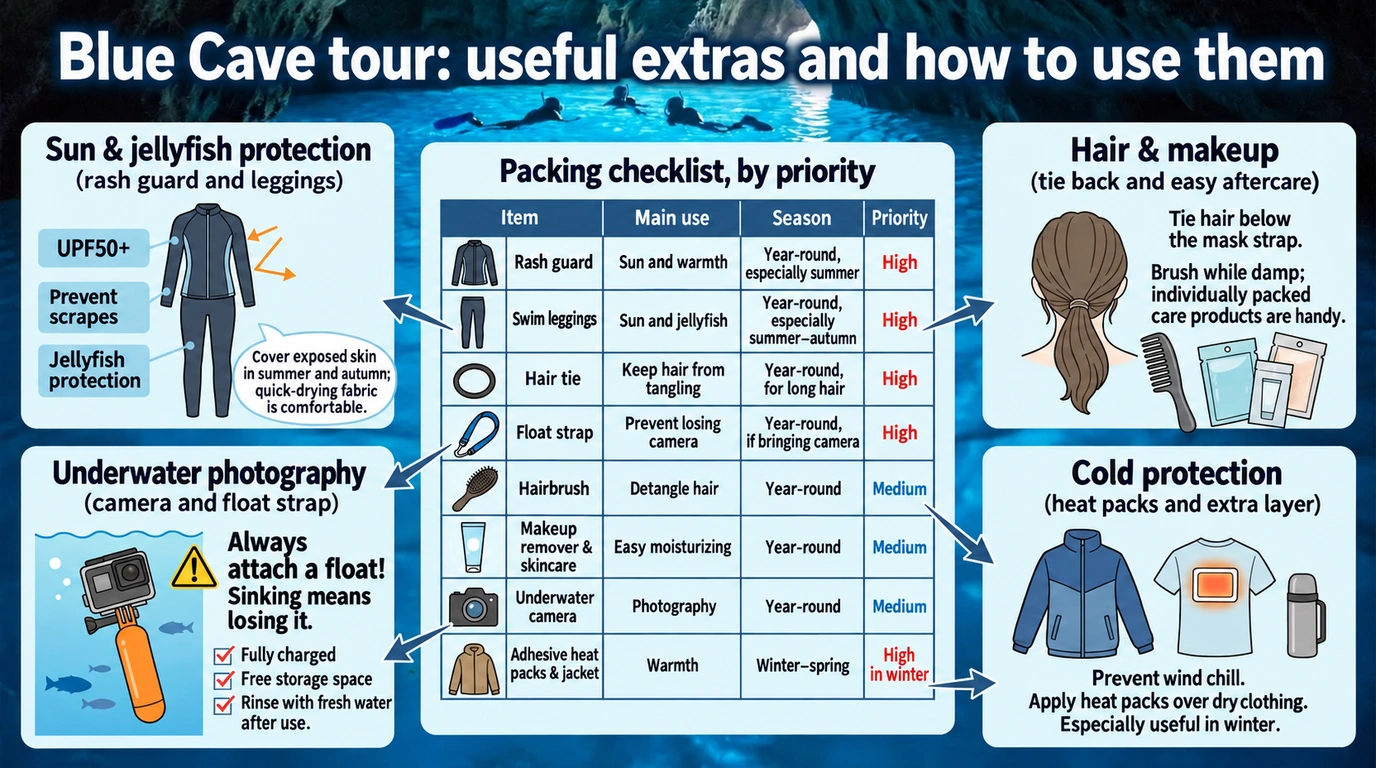
Once you have gathered the essentials, consider items you can participate without but that make a big difference to your satisfaction. Blue Cave snorkeling involves entering the sea around Cape Maeda and admiring the cave glowing blue with reflected light. Although you may float in the sea for only around 30 minutes, before and after it there are surprisingly many small tasks, including changing, traveling, photographing, and preparing to avoid getting chilled. The useful items introduced here anticipate common regrets after participating, such as wishing you had brought something for sun protection, warmth, photography, or personal grooming.
First, check the overview in the table. Choose in order of priority while considering luggage space.
| Useful item | Main purpose | Recommended season | Priority |
|---|---|---|---|
| Rash guard | Sun protection / Prevent chafing / Warmth | Year-round (especially summer) | High |
| Swim leggings / Stirrup leggings | Leg sun protection / Jellyfish protection | Year-round (especially summer–autumn) | High |
| Hair ties / Scrunchies | Prevent hair getting caught in the mask | Year-round | High (for long hair) |
| Hairbrush / Comb | Untangle hair after seawater exposure | Year-round | Medium |
| Makeup remover / Skincare products | Grooming after showering / Dryness protection | Year-round | Medium |
| GoPro or other underwater camera | Photograph the cave and tropical fish | Year-round | Medium |
| Floating strap | Prevent cameras and phones sinking and being lost | Year-round | High (when bringing a camera) |
| Adhesive heat packs | Prevent chilling after leaving the sea | Winter–early spring | High (winter) |
| Outer layer / Windbreaker | Prevent chilling from sea wind and evaporation | Autumn–spring | High (winter) |
Rash guards and leggings for sun and jellyfish protection
Okinawa's UV rays are stronger than Honshu's, and reflections from the sea add to them. Snorkeling in only a swimsuit can leave your shoulders, back, and the backs of your arms bright red with sunburn. Painful sunburn on your first travel day makes later sightseeing uncomfortable, so a long-sleeved rash guard has particularly high priority on the packing list. Sunscreen washes off in the water, but a major advantage of a rash guard is that its protection continues as long as you wear it.
Rash guards come in front-opening zip-up types and pullover types worn like T-shirts. Zip-up types are easy to put on and remove when wet and can double as an outer layer on the boat or during breaks, making them versatile. Pullover types fit the body well and let less water in underwater, suiting people focused on swimming.
Pairing one with swim leggings or stirrup leggings provides reassurance for your lower body. The backs of your thighs and calves are hard to apply sunscreen to yourself and easy to miss. Leggings also prevent scrapes when skin touches rocks or coral. The Blue Cave area has many rocks, so equipment protecting your skin during entry and exit offers greater peace of mind.
Jellyfish may appear in Okinawa's sea from summer to autumn, so clothing that minimizes exposed skin is the most reliable precaution.Tours using wetsuits protect most of your body, but your hands and neck remain exposed. If concerned, choose a long-sleeved or hooded rash guard.
Some tours recommend wearing a rash guard directly under the wetsuit, while others recommend only a swimsuit. Wetsuits retain warmth by using body heat to warm the layer of water between the suit and your body, and adding a thick rash guard can make dressing and undressing difficult. Checking with your booked shop in advance makes changing that day smoother.
What to check when choosing a rash guard
| Check item | Selection guidance |
|---|---|
| UV protection | Choose one with clearly stated UV-blocking performance such as UPF50+ |
| Sleeve length | Long sleeves for sun protection; short sleeves for ease of movement |
| Fastening | Zip-up for easy changing |
| Fit | Avoid an overly tight fit if wearing a wetsuit over it |
| Drying speed | Quick-drying materials such as polyester are comfortable |
Hair ties and a hairbrush for managing your hair
For people with hair longer than their shoulders, hair ties are small but very important. A snorkeling mask's strap goes around the back of your head. Hair caught in it can create gaps and allow water in. Water in the mask not only worsens visibility but requires repeatedly surfacing to drain it, preventing you from enjoying the cave scenery at a relaxed pace.
A low ponytail below the mask strap or pigtails around below your ears keep hair from getting caught and let you swim comfortably.Avoid a bun on top of your head or a high ponytail, which can cause the strap to ride up and shift the mask.
Hair ties can come off underwater, so bringing 1–2 spares is reassuring. Metal parts may rust in seawater, making simple elastic or silicone ties suitable. For bangs, practical options are securing them with small hairpins that do not obstruct goggles or a mask, or simply sweeping them back.
A hairbrush or comb is useful after leaving the sea. Salt makes seawater-soaked hair stiff, and it tangles easily as it dries. After rinsing in the shower, comb it while wet with a wide-toothed comb to avoid damaging it by pulling. Small portions of leave-in conditioner or hair oil reduce dryness even if you head straight to afternoon sightseeing.
Makeup remover and skincare products
Because a snorkeling mask fits tightly against your face, it is realistic to expect makeup to come off. Foundation and face powder in particular stick to the inside of the mask and can fog the lens. Many people remove makeup other than eye or lip makeup before the tour, or participate wearing only sunscreen from the start.
Having makeup remover and skincare products to use after the facility's shower therefore lets you move comfortably to your next plans. The following selection is easy to manage.
| Item | Recommended form | Tip |
|---|---|---|
| Cleanser | Wipes / Individually packaged | Quick to use even when sinks are crowded |
| Toner / Lotion | Mini bottles / Single-use sachets | Quickly condition skin dried by seawater and UV rays |
| Sunscreen | Stick / Mini size | Continue UV protection while sightseeing after the tour |
| Moisturizing lip balm | Stick | Care for lips prone to irritation from sea wind and UV rays |
| Makeup for touch-ups | Minimal pouch | Just brows and lips can create a polished impression |
Showers and changing rooms are shared with other participants and tend to be crowded, so decant cosmetics or use individual packages in a form you can use quickly.Assume you will not have time to lay out large bottles, and gather only the essentials in a small pouch.
Sensitive skin may feel dry or irritated from the combined effects of seawater and UV rays. Bringing a little of your familiar moisturizer helps prevent skin problems while traveling. If you plan to head directly to dining or sightseeing after the tour, compact makeup tools that let you tidy your brows and lips are convenient too.
GoPro or underwater camera and floating strap
The Blue Cave's highlights are the blue glow of the sea when looking from the back of the cave toward its entrance and the colorful tropical fish swimming around. Many people want to capture these scenes with their own cameras, and many participants bring action cameras such as GoPro or waterproof compact digital cameras.
Many tours include a service where the guide takes underwater photographs and gives you the data, but your own camera lets you shoot from your preferred angle and timing. Combining both preserves the guide's photographs and footage from your own viewpoint, an ideal record of your memories.
The item you must never forget is a strap or grip with a float attached to your camera or phone, secured to your wrist or body.Waves and swells can disrupt your balance in the sea, allowing equipment to slip from your hand. With a float, it stays on the surface when dropped and can be recovered; without one, it sinks instantly to the seabed and recovery is effectively impossible. Adding a float to your waterproof phone case as well as a neck strap offers greater reassurance.
Preparation list for successful underwater photography
| Preparation item | Details |
|---|---|
| Battery | Fully charge it the day before and bring a spare battery if available |
| Memory card | Ensure free space or prepare a spare card |
| Strap | Attach a floating grip or wrist strap |
| Waterproof check | Inspect the housing seal for trapped sand or hair |
| Fog prevention | Seal the housing in a dry place to prevent condensation inside |
| Care after photography | Rinse in fresh water and dry, leaving no salt behind |
Becoming absorbed in photography creates risks of drifting away from your guide or colliding with other participants. The Blue Cave is popular, and multiple tours may enter at the same time. Prioritize your guide's instructions and check safety before releasing the shutter. Some tours have rules for equipment you bring, so checking beforehand is reassuring.
After photographing, rinse salt off the camera and waterproof case with fresh water. Leaving seawater on them can cause button malfunctions and corrosion of metal parts. You can do this after returning to your accommodation; a little care helps your equipment last longer.
Heat packs and outer layers useful in winter
Even in winter Okinawa is warmer than Honshu, but your body still gets cold after entering the sea. Particularly important is chilling from evaporation when wind hits your wet body. Even around 20 degrees, your perceived temperature drops quickly after leaving the sea and being exposed to wind. For Blue Cave participation from winter to early spring, cold protection goes beyond being convenient and is essential for comfortable enjoyment.
After showering and changing, placing an adhesive heat pack between your shoulder blades or at your lower back efficiently warms your body from within.Applying it directly to wet skin can cause low-temperature burns or burns, so always dry your body thoroughly and use it over dry clothing. Handheld heat packs also help warm your fingers.
Wind-resistant windbreakers, fleece, and thick hoodies make suitable outer layers. Windbreakers in particular are lightweight, compact, and block sea wind, making them easy to bring when traveling with limited luggage. Warming your neck raises your perceived temperature overall, so adding 1 lightweight neck warmer or scarf is effective too.
Suggested cold protection items by season
| Period | Cold protection items to prepare |
|---|---|
| December–February (12–2) | Adhesive heat packs, fleece or windbreaker, neck warmer, thick socks |
| March–April (3–4) | Thin heat packs, hoodie or windbreaker, long-sleeved base layer |
| October–November (10–11) | 1 outer layer, lightweight outerwear for windy days |
| June–September (6–9) | 1 lightweight long-sleeved layer for air conditioning or sun protection |
Cold feet and hair are easily overlooked. Traveling in wet sandals draws body heat away through your toes, so leaving dry socks and spare shoes in your car greatly improves comfort. Wet hair also continually lets heat escape from your head, so remove moisture thoroughly with an absorbent towel or microfiber hair turban and, if possible, use a hair dryer before going outside. A knit hat is another simple, effective precaution.
In cold weather, bringing a warm drink in a vacuum flask is also recommended. Warming yourself from inside stops shivering sooner and lets you move comfortably to later sightseeing. Even in summer, rental car air conditioning may chill you, so keeping 1 lightweight outer layer in your bag is useful in any season.
Items tour companies rent out and items to prepare yourself
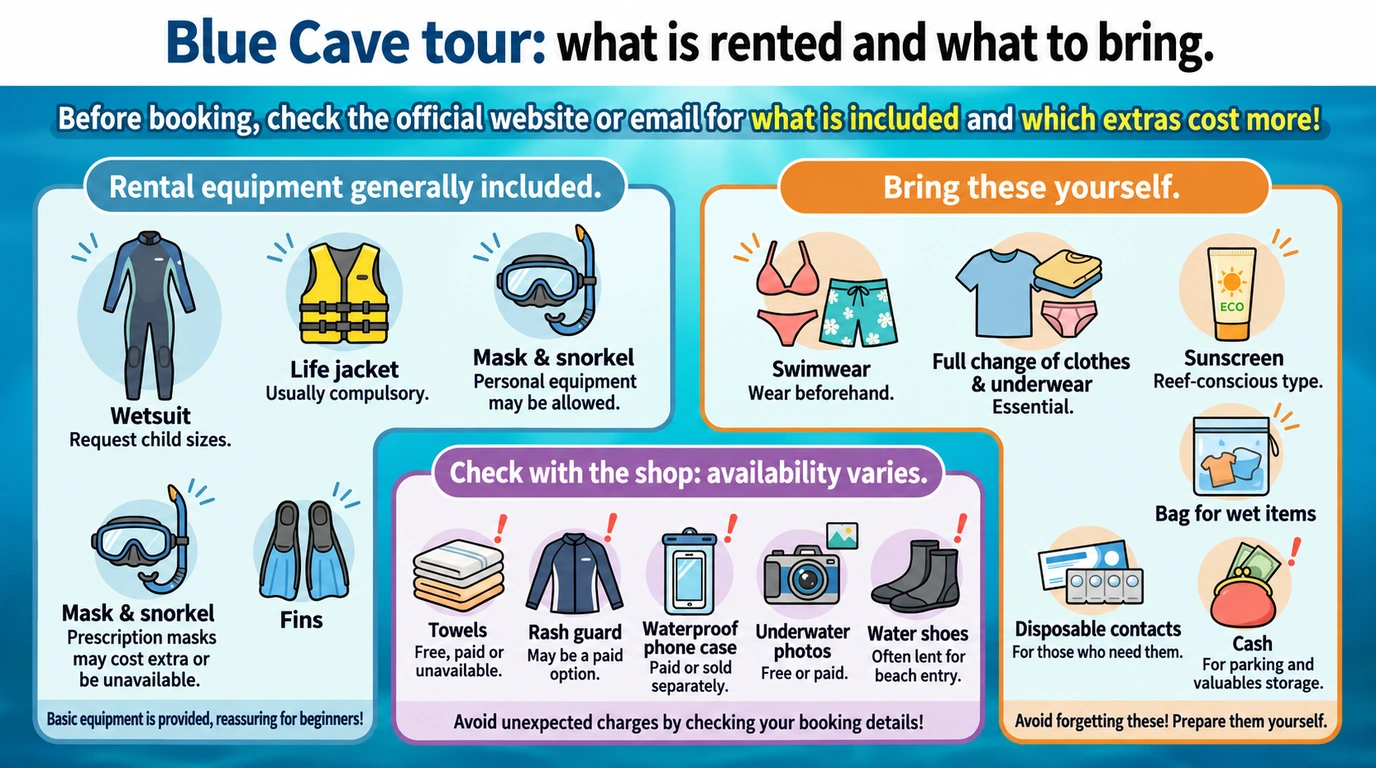
Many Blue Cave snorkeling shops offer plans where all necessary equipment is included in the price. Participants therefore do not actually need to buy many items themselves. However, rental coverage varies between shops, and you may encounter additional charges for something you expected to be free or discomfort from an unsuitable size. Here we clarify what can generally be rented and what you should bring yourself.
Always checking included rental equipment and paid options on the official website or booking confirmation email before booking is the main way to prevent unexpected expenses and forgotten items that day.
Wetsuits and life jackets can generally be rented
Wetsuits and life jackets, which protect your body on Blue Cave tours, are included in the tour price at nearly all shops. In the sea around Cape Maeda in Onna Village, where the Blue Cave is located, long periods in the water draw away body heat even in midsummer, so entry wearing a wetsuit is standard in every season. You need not prepare one yourself; you change into it over your swimsuit at the location.
A life jacket provides buoyancy so people lacking swimming confidence and small children can float in the sea with peace of mind. Wearing one is mandatory on many tours, and it is provided as rental equipment. You do not need to buy one and bring it yourself.
Wetsuits come in different sizes, so you may be asked to provide your height, weight, and shoe size when booking.If your build falls outside standard sizes or children will participate, giving accurate measurements when booking prevents unavailable sizes.Stocks of larger sizes of 3XL or above and small toddler sizes may be limited, so checking beforehand provides reassurance.
Masks, snorkels, and fins
The three-piece snorkeling set—mask (underwater goggles), snorkel (breathing tube), and fins—is also included in most tours' rental fees. Your guide adjusts the mask to your face and explains how to wear it and breathe, so beginners do not need to choose equipment themselves.
If hygiene concerns you or you want equipment that fits your face comfortably, you can also bring your own. A mask's fit to your face directly affects water leakage, so many experienced snorkelers bring their own masks. However, space on boats and in changing rooms is limited, so inform the shop beforehand for a smoother experience.
People with poor vision should check prescription mask availability. Shops offering them provide rentals free or for a small extra charge, but available strengths are limited.For strong nearsightedness, bringing disposable contacts is more reliable than relying on a prescription mask.
Overview of items included in the tour fee and items to prepare yourself
The table summarizes typical rental and bring-your-own items for a Blue Cave snorkeling tour. Some items vary between shops, so use it as a general reference.
| Item | Arrangement | Additional notes |
|---|---|---|
| Wetsuit | Rental (generally included in price) | Height and weight may need to be provided when booking |
| Life jacket | Rental (generally included in price) | Mandatory on many tours |
| Mask / Snorkel | Rental (generally included in price) | You may also bring your own equipment |
| Fins | Rental (generally included in price) | Foot size may need to be provided |
| Water boots / Water shoes | Varies by shop | Often lent on beach-entry tours |
| Rash guard | Varies by shop | May be a paid option; bringing your own is reliable |
| Swimsuit | Prepare yourself | Generally wear it underneath when arriving |
| Towels | Varies by shop | Often paid rentals, so bringing your own is recommended |
| Sunscreen | Prepare yourself | Choose a type considerate of the sea |
| Waterproof phone case | Varies by shop | May be rented for a fee or sold |
| Underwater photo data | Varies by shop | Check whether complimentary or paid |
| Change of clothes / Underwear | Prepare yourself | Always bring a complete set |
The 4 items most likely to vary are towels, rash guards, waterproof phone cases, and underwater photo data.Shops differ on whether they are free, paid rentals, or unavailable, so read even the notes on the booking page.
Points to check about facilities such as showers and hair dryers
When deciding what to bring, the facilities at the meeting shop actually have a greater impact than equipment rental details. Their level of provision changes how many towels and how much personal care equipment you should bring.
First check whether hot showers are available. Salt stays on your body after leaving the sea, so being able to rinse it off greatly affects comfort. Particularly during winter from November (11) to March (3), hot shower availability determines how chilled you become. Some facilities only have basic outdoor showers or unheated water, so checking beforehand is recommended.
Next, check hair dryers. If the facility has them, you need not bring one, but limited numbers often create queues. If your next plans are tightly scheduled or long hair takes time to dry, bringing an extra absorbent hair towel can reduce waiting.
Also check changing rooms and coin lockers. Shops with lockers let you store valuables and clothes and head to the sea unburdened. Without lockers, you may leave belongings in the car or with staff.Regardless of lockers, always minimize the cash in your wallet and leave expensive accessories at your accommodation.
Other facilities and services worth checking are as follows.
| Check item | Reason to check |
|---|---|
| Hot showers | Whether you can rinse salt off and change without getting cold even in winter |
| Hair dryers | Limited numbers may cause waiting |
| Changing rooms | Changing arrangements depend on separate men's/women's rooms and adequate space |
| Coin lockers / Baggage storage | Determines how to manage valuables |
| Parking | If using a rental car, check capacity and fees |
| Restrooms | Use before putting on a wetsuit |
| Powder room / Sinks | Whether makeup touch-ups and skincare are possible |
The Cape Maeda area is popular, and parking is crowded in high season. If traveling by rental car, plan to arrive a little before the meeting time to prepare calmly.
Checklist for before booking and the day of your tour
Finally, here are checks directly related to packing. Reviewing this list when booking and the day before prevents misunderstandings such as buying something that could have been rented or finding that an expected free item costs extra.
| Timing | What to check |
|---|---|
| When booking | Scope of included rental equipment and paid options |
| When booking | Whether wetsuit and fin sizes must be provided |
| When booking | Underwater photography service and how to receive data |
| When booking | Minimum and maximum participant ages and health conditions |
| Day before | Meeting place, meeting time, and parking location |
| Day before | Next day's weather and sea conditions, and cancellation notification method |
| Day before | Final check of towels, clothes, sunscreen, and other belongings |
| Tour day | Whether your swimsuit is on under your clothes |
| Tour day | Whether you have a bag for wet items |
Choosing a tour with comprehensive rentals keeps belongings to essentials such as a swimsuit, towels, clothes, and sunscreen.Put another way, if you reliably prepare these 4 items yourself, you can fully enjoy Blue Cave snorkeling. Then add seasonal clothing and small items that improve comfort.
How clothing for Okinawa's Blue Cave changes by season
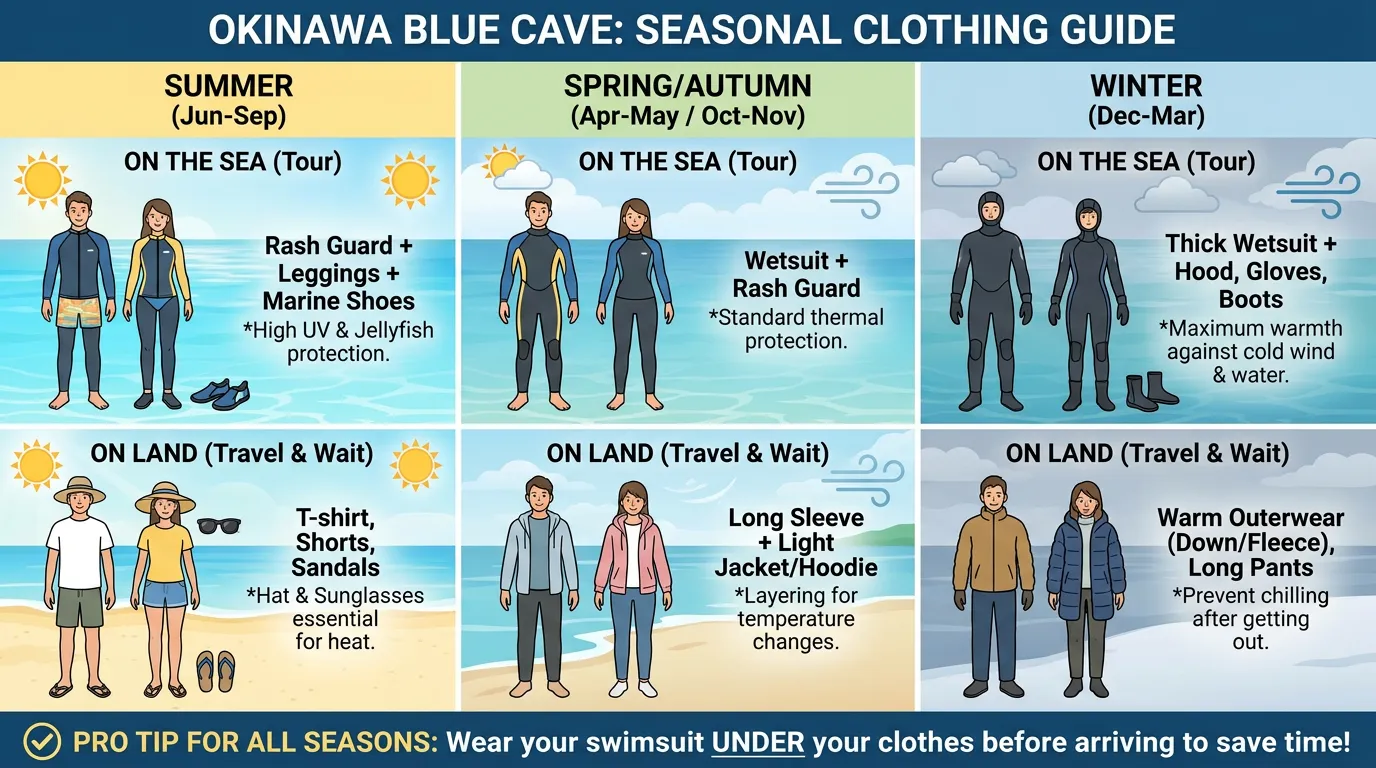
Okinawa is warmer than Honshu, but you spend much time on and in the sea around the Blue Cave, so consider water temperature and wind rather than air temperature when choosing clothing. Immediately after leaving the sea, wind can rapidly draw away body heat even in midsummer. Here we organize seasonal clothing considerations for both the tour itself and your journey there and back.
Seasonal air/water temperatures and clothing guidance for Okinawa's main island
First, check this overview of each season's general climate and clothing suitable for Blue Cave snorkeling. Tour companies often rent wetsuits and rash guards, so these recommendations assume their availability.
| Season | Suggested clothing in the sea | Suggested clothing for travel | Points to watch |
|---|---|---|---|
| Summer (June–September / 6–9) | Swimsuit + rash guard + leggings, or shorty wetsuit | T-shirt, shorts, sandals | Strong UV rays, heatstroke, jellyfish |
| Spring / Autumn (April–May / 4–5; October–November / 10–11) | Swimsuit + rash guard + wetsuit | Long-sleeved shirt, lightweight hoodie, or other outer layer | Morning/evening chill and wind |
| Winter (December–March / 12–3) | Swimsuit + wetsuit (add hood and boots) | Long sleeves + outerwear, comfortable long pants | Lower perceived temperature from northerly winds |
In every season, putting your swimsuit on under your clothes at your hotel or home is the most efficient approach.Even when changing rooms are crowded, you are ready simply by removing outer clothes and can manage your time comfortably.
Summer clothing and heat protection (June–September / 6–9)
From June (6) to September (9), Okinawa has many days with highs above 30°C, making protection from heat outside the sea the top priority. Even if the water feels comfortable, you remain in direct sunshine while waiting aboard the boat or at the meeting place and listening to equipment instructions, so prepare for both heatstroke and sunburn.
Wearing a rash guard over your swimsuit is standard for entering the sea. A wetsuit may feel hot in summer, but some tours require one for buoyancy and safety management. Check the booking guidance in advance. If none is specified, pairing a thin rash guard with swim leggings or stirrup leggings provides both sun protection and ease of movement.
Water shoes provide reassurance for your feet. Beach entry involves rocks and stairs, so bare feet and flip-flops risk injury. Sandals are fine while traveling, but preparing strapped sandals that stay on or water shoes for entry greatly reduces worries about your footing.
For travel, T-shirts and shorts in quick-drying, breathable materials are ideal. Bringing a hat and sunglasses also greatly reduces sunshine exposure while waiting. However, hats can blow away aboard the boat, so choose one with a chin strap or get into the habit of putting it in your bag before boarding.
Preparing for summer UV rays and jellyfish
Okinawa's UV rays are stronger than Honshu's, so stay cautious even on cloudy days. Generally apply sunscreen 20–30 minutes before entering the sea and reapply during breaks. Reducing exposed skin with a rash guard and leggings also reduces the work of reapplying.
Summer is also a time when dangerous creatures such as habu jellyfish are more likely to appear. Long-sleeved, full-length rash guards and wetsuits protect against both sunburn and jellyfish stings.Choose clothing that reduces exposed skin as a safety measure, rather than a matter of appearance.
Spring and autumn clothing (April–May / 4–5; October–November / 10–11)
From April (4) to May (5) and October (10) to November (11), many days are warm enough for short sleeves, while water temperatures have not fully risen or are starting to fall. Dressing lightly based only on air temperature often leaves you chilled and shivering after leaving the sea.
The basic combination during these periods is a rash guard over your swimsuit with a wetsuit over that. Wetsuits can usually be rented from the tour company, so preparing a swimsuit, rash guard, and towel to dry yourself quickly is enough.
Adding an outer layer is the right approach for travel clothing. A long-sleeved shirt, lightweight hoodie, or cardigan that you can put on or remove accommodates temperature differences between the morning meeting and early afternoon.In spring and autumn, layering so you can remove or add a layer keeps you comfortable in any weather.
These periods can also fall before or after typhoon season, and sea conditions change easily on windy days. A lightweight windbreaker helps maintain comfort while waiting aboard the boat or traveling.
Winter clothing and warmth tips (December–March / 12–3)
From December (12) to March (3), some days in Okinawa have lows around 15°C, and northerly winds lower the perceived temperature further. Nevertheless, Blue Cave snorkeling operates year-round, and winter offers appealing high visibility and clear seas. The key is preventing chilling before and after getting wet.
Wear a thick wetsuit in the sea. Some tour companies provide hooded wetsuits, wetsuit boots, and gloves specifically in winter. Heat escapes easily from your head, hands, and feet, so asking whether these can be borrowed when booking greatly changes your underwater comfort.
Putting a thin rash guard over your swimsuit and a wetsuit over that improves insulation and makes the wetsuit easier to put on and remove.The most important winter preparation is being ready to dry yourself immediately after leaving the sea and change into warm clothes.Prepare a large bath towel and an easy-to-wear buttoned or front-opening top.
Items that make a difference in winter
For the Blue Cave in winter, pack non-adhesive disposable heat packs with your clothes to warm your hands immediately after leaving the water. Insulating outerwear such as fleece or down, dry socks, and a bottle of warm drink also greatly reduce fatigue from the cold.
Wet hair rapidly draws heat away from your head, so a towel for drying hair quickly or a knit hat is effective too. Check hair dryer availability beforehand, and if none is available, bring an extra quick-drying towel.
The right clothing for traveling to and from your tour
Choosing clothing for traveling to and from the meeting place can be surprisingly confusing. The basic approach is wearing your swimsuit underneath easy-to-remove clothes. This reduces changing time locally and helps you fit smoothly into the tour schedule.
We recommend a T-shirt or front-opening shirt with shorts or stretchy pants. A front-opening top goes on without touching your face or hair even when your hair is wet, making changing afterward much easier. In contrast, a fitted pullover top is difficult and time-consuming to put on over a wet body.
Choosing synthetic blends or quick-drying materials rather than 100% cotton allows clothes to dry quickly even if slightly damp.Thick, slow-drying materials such as denim and chinos become heavy and cold when wet, so avoiding them even for travel is safest.
Easy-to-remove sandals or slip-on shoes are convenient. If driving a rental car, choose footwear suitable for driving; if walking directly to beach-entry check-in, choose shoes you do not mind getting wet. If you plan to stop at restaurants or sightseeing facilities afterward, keeping dry shoes in the car makes things more comfortable.
Going directly from your hotel versus including sightseeing
If going directly from your hotel to the meeting place and back afterward, fairly casual clothing is fine. If planning sightseeing or meals before or after the tour, prepare an outfit suitable for restaurants and cafes. Put wet swimsuits and towels in waterproof or plastic bags and keep them separate from dry clothes.
Keeping a large towel or picnic sheet in the car to prevent wetting rental car seats also makes cleanup easier. If touring on your final day before heading to the airport, work backward from your flight departure and always allow time for changing and packing.
Items and clothing to avoid for Blue Cave snorkeling
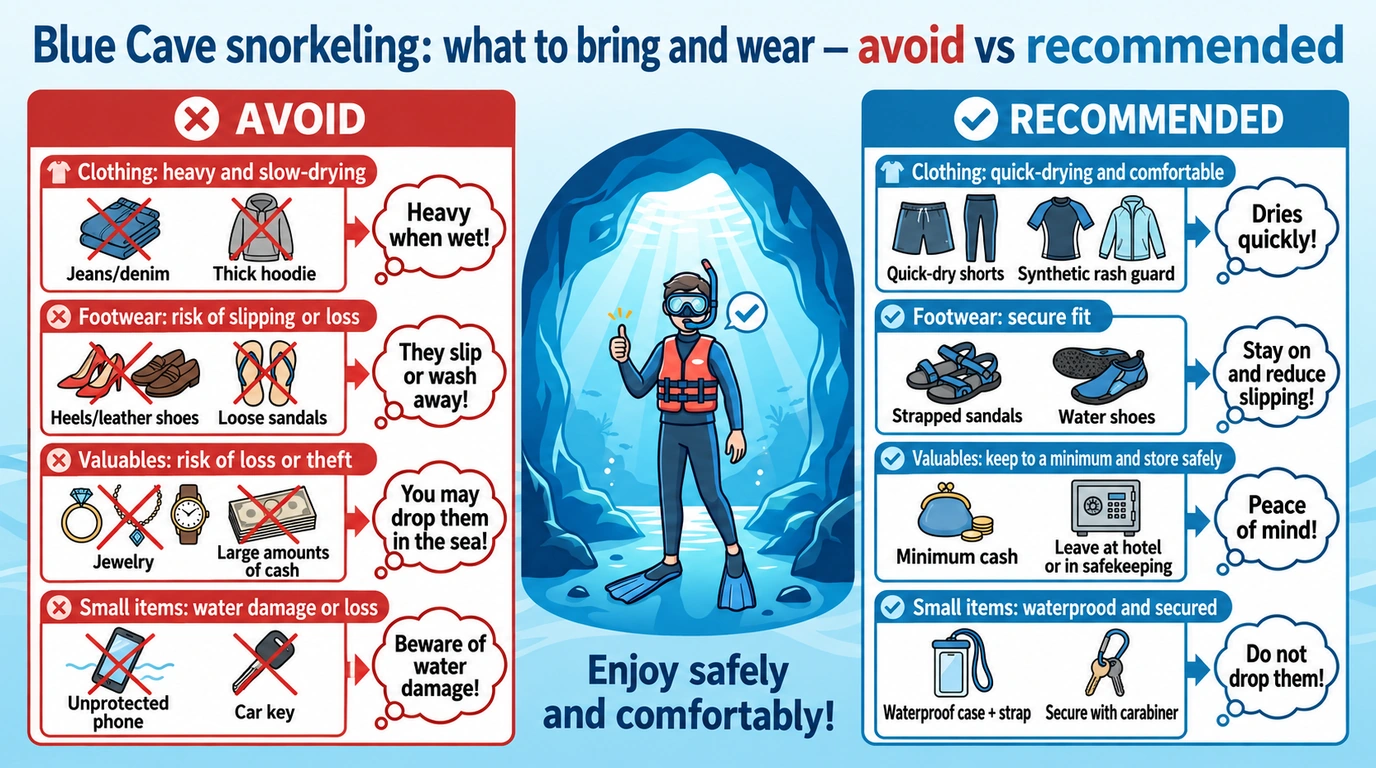
For a Blue Cave tour, deciding what not to bring is just as important as deciding what to bring. Clothing and accessories not intended for entering the sea can greatly reduce comfort and lead to loss or accidents. Here we organize items and clothing that commonly cause problems.
| Item to avoid | Why to avoid it | Alternative |
|---|---|---|
| Jeans / Denim | Heavy and slow-drying when wet; changing takes time | Quick-drying shorts or leggings |
| Thick hoodies / Sweatshirts | Heavy when soaked and remain wet until the return trip | Rash guard or lightweight outer layer |
| Heels / Leather shoes | Dangerous on rocks and slippery stairs | Water shoes that secure the heel |
| Loose flip-flops | Easily drift away and are lost in the sea | Strapped sandals |
| Accessories | Cannot be recovered if they come off in the sea | Remove before departure and leave at your accommodation |
| Large amounts of cash / Valuables | Theft risk in changing rooms or cars | Bring only minimal necessary cash |
Avoid slow-drying clothing such as jeans and denim
The most common clothing mistake on Blue Cave tours is arriving in jeans or denim. Cotton denim absorbs plenty of water, becomes heavy even when slightly wet, and dries slowly in Okinawa's humid climate. If sightseeing or driving a rental car directly after the tour, it may also wet the seats.
Thick hoodies, sweatshirts, and 100% cotton T-shirts also dry slowly. Spending a long time in seawater-soaked clothes draws away body heat and may make you feel cold even in summer.The basic clothing choice for tour day is synthetic material such as polyester or nylon that dries quickly when wet.
Avoiding dresses, long skirts, and thin white T-shirts is also safer. Water-soaked hems may hinder movement, and wet fabric may become see-through, making them uncomfortable. Prepare easy-moving, quick-drying tops and bottoms with entering the sea in mind.
Precautions about heels and loose flip-flops
Footwear directly affects safety. Beach entry at Cape Maeda involves descending stairs from the parking area to the sea and walking on rocks and pebbles. Avoid heels, thin-soled sandals, and leather shoes, which are slippery and risk twisted ankles or cuts.
A surprising pitfall is flip-flops held on only by toe straps. Although fine on land, they come off easily at the shoreline or underwater and are often swept away and lost.Always choose sandals with heel straps or water shoes. For boat entry too, footwear with good grip on a wet deck provides reassurance.
Since you go barefoot when putting on rental fins, ask staff beforehand where to leave removed sandals to prevent forgetting them or having them washed away.
Do not bring valuables or accessories
Necklaces, earrings, rings, and bracelets are almost impossible to recover if they come off in the sea. Rings in particular may slip off naturally when cool water makes your fingers thinner. The more sentimental an item is, the safer it is to leave it in your hotel room or at home before departure.
The same applies to watches. Even waterproof ones may be damaged by impacts when putting on snorkeling equipment or changing into and out of a wetsuit, or lost if the band loosens.The basic Blue Cave tour rule is to wear only items you would not mind losing in the sea.
Carry minimal cash in your wallet and leave credit cards, driving licenses, and other difficult-to-replace items in the car or hotel. However, leaving valuables unattended in a rental car is also something to avoid. Some tour companies offer valuables lockers or storage services, so check when booking or meeting.
Managing small items that are easily lost
Many people drop small items during the busy moments before and after entering the sea on a Blue Cave tour. The following items are particularly easy to lose.
| Easy-to-lose item | Common situation | Precaution |
|---|---|---|
| Smartphone | Slips from your hand into the water while photographing | Attach a strap to the waterproof case and secure it to your neck or arm |
| Contact lenses | Wash away when you open your eyes after water enters the mask | Bring spares and do not rub your eyes hard underwater |
| Hat / Sunglasses | Blown away during boat travel | Add a chin strap or strap |
| Car keys | Left with a towel while changing | Leave with staff or keep together in a waterproof case |
| Hair ties / Hairpins | Come off when putting on or removing a mask and fall into the sea | Bring several spares and avoid metal pins |
An effective rule for managing small items is gathering belongings in one waterproof bag and always returning them to the same place. Scattering luggage whenever you move between changing rooms, parking areas, and boats causes forgotten items.Secure everything taken into the sea to your body or equipment with straps or carabiners, and keep items you are not taking together in one place to greatly reduce loss risks.
For underwater cameras such as GoPro, attaching a floating strap lets you recover the camera if you accidentally release it. Without a float, it sinks and becomes impossible to find, so always attach buoyancy equipment when bringing a camera.
Leaving no litter in the cave or on the beach is also good etiquette. Always take plastic bottles and food wrappers home. Choosing mineral sunscreen considerate of the marine environment also helps preserve the Blue Cave's beautiful scenery.
Belongings and clothing for children and women joining a Blue Cave tour
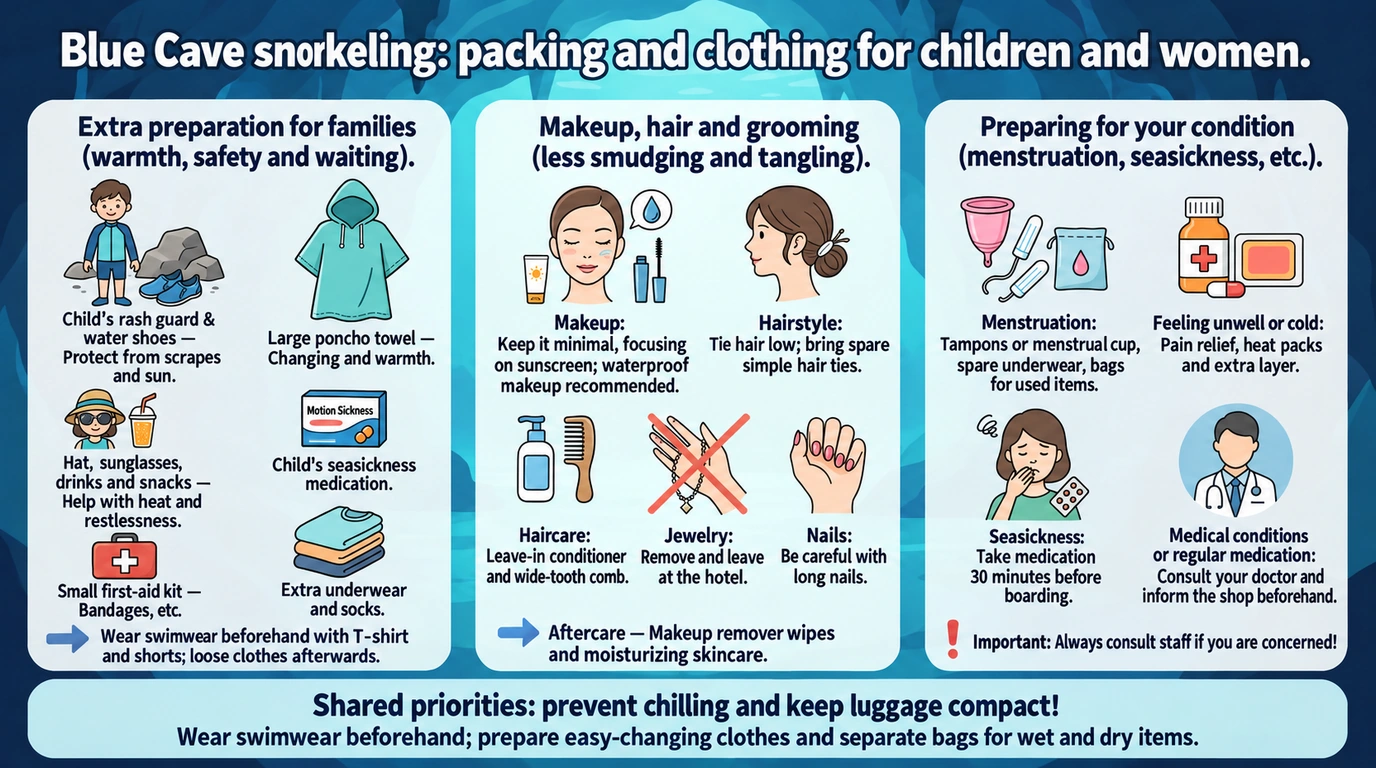
Many shops offer Blue Cave snorkeling plans open to small children, and families and groups of women make up many participants. However, children and women have particular concerns about belongings and clothing compared with groups consisting only of adult men. Here we organize additional preparations and clothing considerations from 3 perspectives: families with children, women's grooming, and health concerns.
Extra preparations for families with children
When visiting the Blue Cave with children, add preparations covering 3 points to the adult packing list: temperature regulation, safety, and waiting time. Seawater draws away body heat even in midsummer, and small children get cold faster than adults. Parents may also be busy managing themselves during the tour, so keeping luggage compact provides reassurance.
| Additional item | Reason / When to use |
|---|---|
| Children's rash guard | Combines sun protection and warmth; long sleeves also prevent scrapes on rocks |
| Large bath towel / Poncho towel | Wrap the body immediately after leaving the sea; ponchos are also convenient for outdoor changing |
| Children's water shoes | Protect feet from rocks and coral fragments during beach entry |
| Hat / Children's sunglasses | Heatstroke and UV protection while waiting at the meeting place or aboard the boat |
| Drinks and ready-to-eat snacks | Refresh the mouth after accidentally swallowing seawater and keep children content while waiting |
| Motion sickness medicine (with children's directions and dosage) | For boat entry, take about 30 minutes before boarding |
| Basic first-aid kit with bandages and disinfectant wipes | Respond immediately to small scrapes on rocks |
| Extra spare underwear and socks | Children get wetter than expected, so 1 more set than for adults is reassuring |
As with adults,the smoothest clothing approach is putting the swimsuit on at home or your hotel and adding a T-shirt and shorts over it. Even with crowded changing rooms, preparation is complete simply by removing the outer clothing. Children often feel cold afterward, so prepare loose sweatshirts or hoodies that go on easily over wet skin.
Many tours have limited children's wetsuit and life jacket sizes. Providing accurate height and weight as well as age when booking avoids sizing problems that day. If someone accompanies an infant or toddler only to watch, also check waiting spaces and shade in advance.
Makeup and hairstyle considerations for women
The questions most frequently asked by women are what to do about makeup and how to tie their hair. To answer directly,expect most ordinary makeup to come off during Blue Cave snorkeling and participate with minimal makeup centered on sunscreen. Because the mask (goggles) seals against your face, thick foundation or primer makes water leakage and fogging more likely.
Makeup approach and the day's routine
Before participating, limit facial products mainly to a thorough application of mineral or coral-conscious sunscreen, and keep eye and brow makeup to waterproof brows and mascara so smudging is less noticeable. If heading directly to sightseeing or dinner afterward, bring makeup remover wipes, small bottles of toner and lotion, your usual foundation, and sunscreen for a quick touch-up after showering. Seawater and UV rays dry the skin more than expected, so prioritize moisturizing care.
Preparing hairstyles and haircare
Hair easily tangles with the mask strap, so styles gathered at the back of the head, such as a low ponytail, bun, or pigtails, are easier to manage. Metal barrettes and large clips can come off and be lost in the sea, so bring several simple hair ties, including spares. For long hair, a pull-on swim cap greatly reduces tangling.
After leaving the sea, seawater can make your hair feel rough. Small portions of leave-in hair milk or conditioner and a wide-toothed comb greatly improve the finish after drying. Hair dryer availability varies by shop, so checking in advance is essential for long hair.
Accessories, nails, and other grooming
Earrings, necklaces, rings, and other accessories cannot be recovered if they come off in the sea. Leaving them at your hotel without wearing them on tour day is most reliable. Gel nails and artificial nails are generally fine, but long artificial nails can snag and break when changing into or out of a wetsuit or damage equipment, so take care.
| Item | Recommended selection / Use |
|---|---|
| Sunscreen | Apply to face, neck, and behind ears; choose a mineral type considerate of the sea |
| Makeup remover | Wipes that work without water are convenient |
| Skincare products | Mini bottles or single-use sachets keep luggage light |
| Hair ties | Simple types without metal fittings; 2–3 including spares |
| Hairbrush / Comb | Untangle seawater-soaked hair; folding types are easy to carry |
| Leave-in conditioner | Reduce roughness and dryness from seawater |
| Spare underwear | Consider colors so clothing over the swimsuit does not become see-through |
Preparing during menstruation or when concerned about your health
Joining Blue Cave snorkeling while menstruating is considered possible, and many people do participate. However, physical condition varies between individuals, so the most important thing is not to push yourself and to consult staff when booking or checking in if concerned. Many shops may discuss changing your date or plan.
Preparations for participating during menstruation
Prepare a tampon or menstrual cup usable in water, along with pads, spare underwear, and an opaque plastic bag for soiled items so you can change before and after the tour. A wetsuit keeps your body warm but can take time to put on and remove, so arriving early allows ample changing time. If prone to menstrual cramps, pain medication and heat packs provide reassurance.
Checks when concerned about your physical condition
Lack of sleep, a hangover, cold symptoms, and being extremely hungry or full increase the likelihood of seasickness and underwater problems. Rest early the previous day and eat a light, easily digested meal before participating. Most shops decline participation for safety reasons during pregnancy, with conditions such as high blood pressure, heart disease, or respiratory disease, or after drinking alcohol. If you have a medical condition or take medication, consult your doctor beforehand and always declare it when applying.
| Concern | Items / Response to prepare |
|---|---|
| Menstruation | Tampon or menstrual cup, spare underwear, pain medication, bag for soiled items; consult staff beforehand |
| Prone to seasickness | Take motion sickness medicine about 30 minutes before boarding; choosing beach entry is another option |
| Get cold easily | Rash guard or base layer, heat packs, outer layer; check hooded wetsuit availability in winter |
| Sensitive skin | Gentle sunscreen, long-sleeved rash guard, moisturizing skincare products |
| Medical condition / Medication | Carry your regular medication and always declare it when applying and checking in |
For both children and women, protection from the cold and keeping luggage minimal are important.Wearing your swimsuit in advance with easy-to-change clothes over it and preparing bags to separate wet and dry items makes preparations and cleanup surprisingly easy. Add items suited to each person's circumstances, leaving you free to truly enjoy the Blue Cave's scenery.
Frequently asked questions about belongings and clothing for Okinawa's Blue Cave
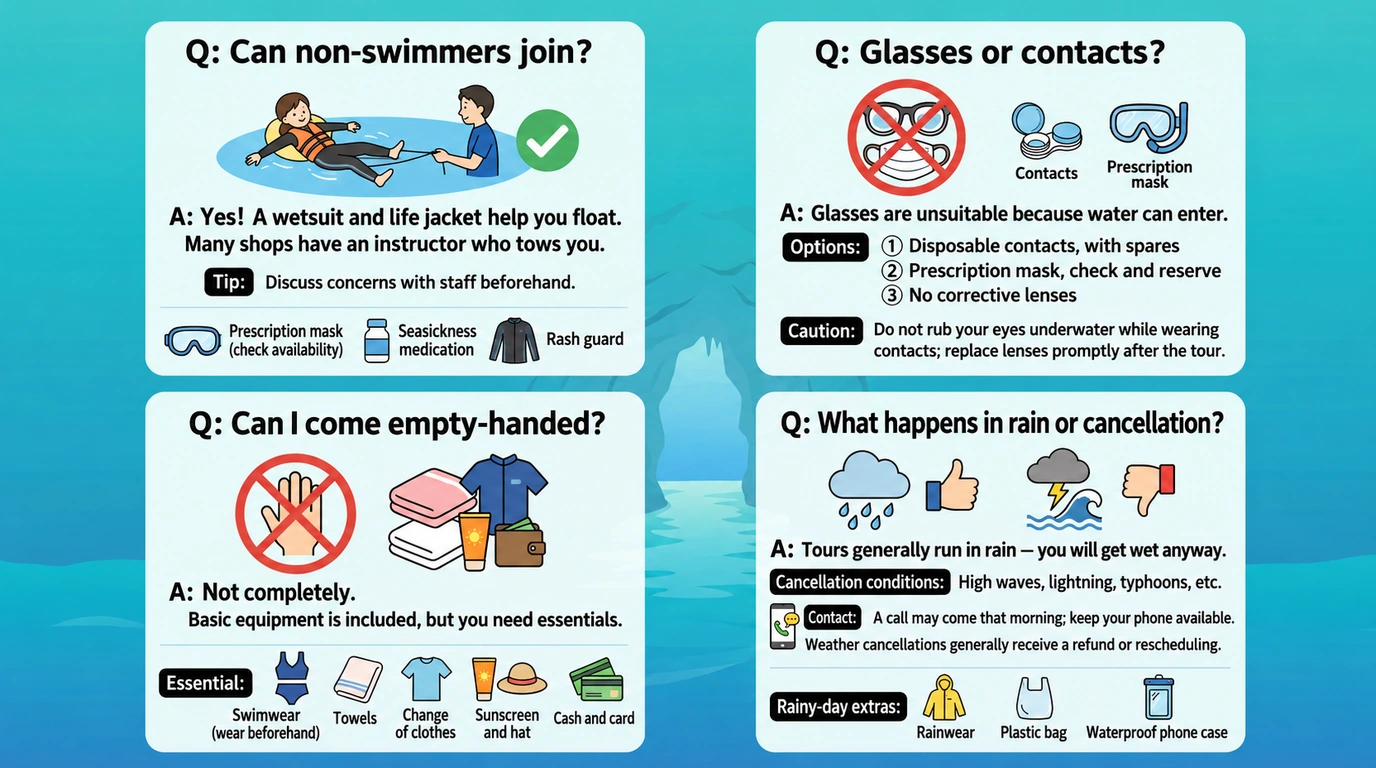
We have explained packing lists and seasonal clothing, but at the booking stage, specific questions arise such as whether you can really participate or what to do in a particular situation. Here we explain questions many people have before booking a Blue Cave snorkeling tour at Cape Maeda in Onna Village, including belongings and clothing considerations. Resolving concerns before booking lets you enjoy the sea confidently even with minimal luggage that day.
Can I participate if I cannot swim?
Yes, non-swimmers can participate in Blue Cave snorkeling tours. Most tours use wetsuits and life jackets, which naturally keep your body afloat at the surface. Many shops also have instructors tow guests holding a swim ring, float, or special buoyancy device, letting you reach the cave without kicking yourself.
What non-swimmers need to prepare is not special equipment but advance communication of their worries to staff.Adding "I cannot swim" or "I am uncomfortable putting my face in the water" in the booking notes or alongside rental requests often allows staff to consider group assignments and instructor placement that day.
Reassuring preparations for people lacking swimming confidence
| Item | Why it helps |
|---|---|
| Declare your prescription goggle needs | Clear vision greatly reduces fear; check rental availability beforehand |
| Motion sickness medicine | With boat entry, anxiety from rocking combined with seasickness makes swimming harder |
| Rash guard | Less exposed skin provides reassurance and makes wetsuit changing easier |
| Drinks | Nervousness can make your throat dry, so hydration before and after the tour is essential |
For children afraid of water or older participants, some shops offer shallow-water beach play where you can stand, or plans just viewing the sea from a boat instead of snorkeling. Choosing a plan suited to everyone's level without pushing yourselves contributes to safety.
Can I participate wearing glasses or contacts?
You cannot put on a snorkeling mask while wearing glasses. The mask seals against your face to prevent water entering, and trapped frames create gaps that leak. People needing vision correction choose among the following 3 methods.
| Method | Features and precautions |
|---|---|
| Wear contact lenses | The most common method; daily disposables provide reassurance, and always bring spares in case they wash away |
| Rent a prescription mask | Availability and prescription strengths vary by shop, so check stock and supported strengths when booking |
| Participate without correction | The cave's blue light and large fish can be enjoyed somewhat without correction, but observing small fish becomes difficult |
When participating with contacts,avoid rubbing your eyes hard if water enters the mask; lift your face before draining it to prevent losing lenses.Seawater also contains germs, so keep spare contacts, a lens case, storage solution, and glasses in a locker or car so you can change to new lenses promptly after the tour.
Glasses and sunglasses may be lost during the tour, so generally do not wear them aboard the boat or in the cave; leave them with your belongings. If bringing glasses, put them in a hard case inside a waterproof bag.
Is it all right to participate empty-handed?
Many Blue Cave tours say that wearing a swimsuit and bringing only a towel is enough. Equipment such as wetsuits, life jackets, masks, snorkels, fins, and water boots is included in the rental price. You can therefore participate with very little luggage.
However, bringing absolutely nothing causes difficulties in situations such as these.
| Difficulty when empty-handed | Minimum items to bring |
|---|---|
| Drying body and hair after the tour | Bath towel, face towel (some shops charge for rental) |
| Traveling in a wet swimsuit | Complete change of clothes, underwear, plastic bag for wet items |
| Exposure to strong sunshine | Sunscreen, rash guard, hat |
| Check-in or payment | Cash or card, identification, booking confirmation screen |
Putting your swimsuit on beforehand at home or your hotel is the smoothest approach and greatly reduces preparation time that day.Many shops sell or rent towels and swimsuits, so if minimizing luggage, ask beforehand about towel rental availability and prices and swimsuit sales. If touring on your flight arrival or departure day, also check lockers or storage spaces for suitcases.
What happens on rainy days or if the tour is canceled?
Blue Cave tours generally operate if it is simply raining. Snorkeling makes you wet anyway, and rain is barely noticeable once underwater. The cave's blue glow depends on the sun's position and underwater clarity, so light rain still allows beautiful scenery.
Cancellation decisions mainly arise from conditions such as these.
| Main cause of cancellation / Change | Possible response |
|---|---|
| High waves from a typhoon or strong wind | Entire tour canceled, date change, refund |
| Waves too high to enter the cave | Change to snorkeling at another nearby spot |
| Thunderstorm advisory issued | Later start or cancellation |
| Exceptionally poor water clarity | Spot change or operation decision on the morning of the tour |
Operation decisions are often communicated on the morning of the tour, so always register a phone number where you can be reached that day and be ready to check incoming calls in the morning.Cancellation fee arrangements vary by shop, but weather cancellations generally incur no fee, with a full refund or rescheduling to another day. Personal cancellations may incur specified charges, so read the terms before applying.
Extra items useful on rainy days
Since tours are likely to operate even in rain, rain-specific preparations make a big difference to comfort. Umbrellas break easily in seaside winds, so rainwear or a windbreaker that leaves both hands free is more practical.
| Item | Use |
|---|---|
| Rainwear / Windbreaker | Travel from check-in to the sea; prevent cooling after the tour |
| Several large plastic bags | Store wet towels, clothes, and shoes separately |
| Spare socks and shoes | Wet feet while traveling cause chilling and make feeling unwell more likely |
| Picnic sheet or towel for the car | Prevent rental car seats getting wet |
| Waterproof phone case | Communicate and photograph in rain; prevent water damage inside luggage |
Also research several indoor alternatives, such as Churaumi Aquarium, Okinawa World, and large shopping facilities, in case of cancellation, so schedule changes do not leave you flustered. Sea conditions at the Blue Cave tend to be more stable in the morning, so if your itinerary allows, booking a morning session early in your stay makes rescheduling for a later day easier if canceled.
Conclusion
Tour companies rent much of the equipment for snorkeling at Okinawa's Blue Cave, including wetsuits, life jackets, masks, snorkels, and fins, so participants do not need to prepare many belongings themselves. Still, these 10 items are essentials affecting comfort and safety: swimsuit, towels, complete change of clothes, sunscreen, sandals, waterproof phone case, waterproof bag, drinks, contacts or prescription goggles, and motion sickness medicine. Having them ready lets even beginners enjoy the sea without rushing that day.
The basic clothing approach is wearing your swimsuit beforehand and adding easy-to-change clothes over it. In summer, a rash guard protects against sunburn and jellyfish; in spring and autumn, add an outer layer; in winter, add heat packs and warm clothing to reduce chilling after leaving the sea. Avoid slow-drying materials such as denim, heels, loose flip-flops, and expensive accessories, which cause problems from getting wet, coming off, or being lost.
For children, spare clothes and a rash guard provide reassurance; for women, hair ties and makeup remover are useful. Many tours let non-swimmers participate with a life jacket and guide. If concerned about your health or the weather, checking with the organizer beforehand is the best preparation. Getting belongings and clothing ready is the most direct way to truly enjoy the Blue Cave's blue light.