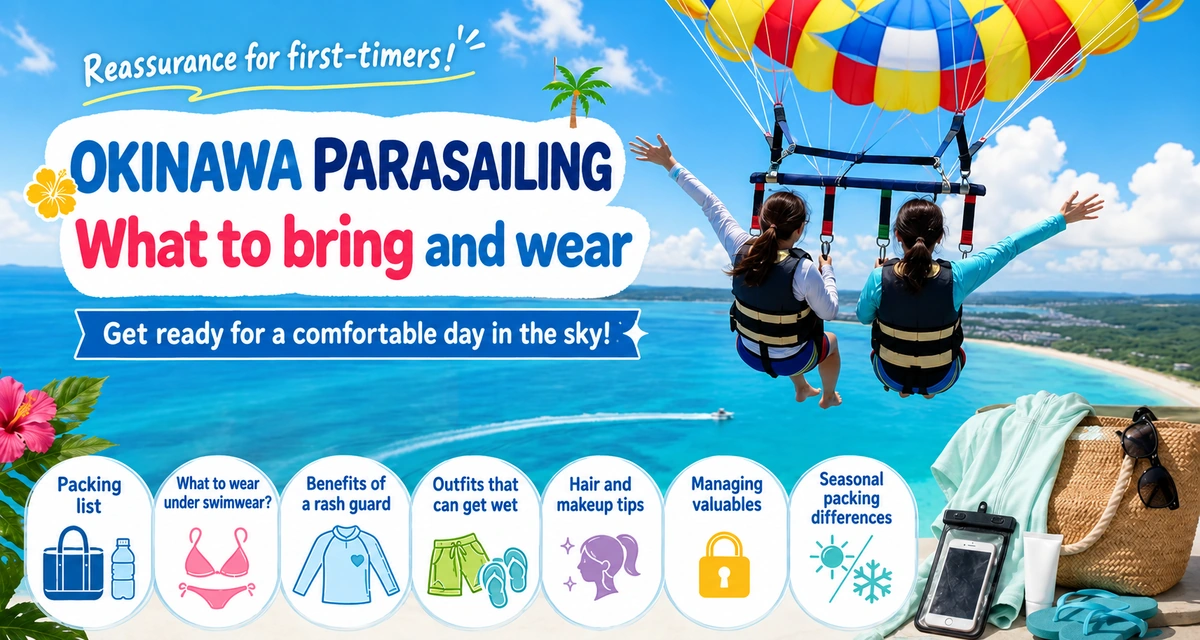
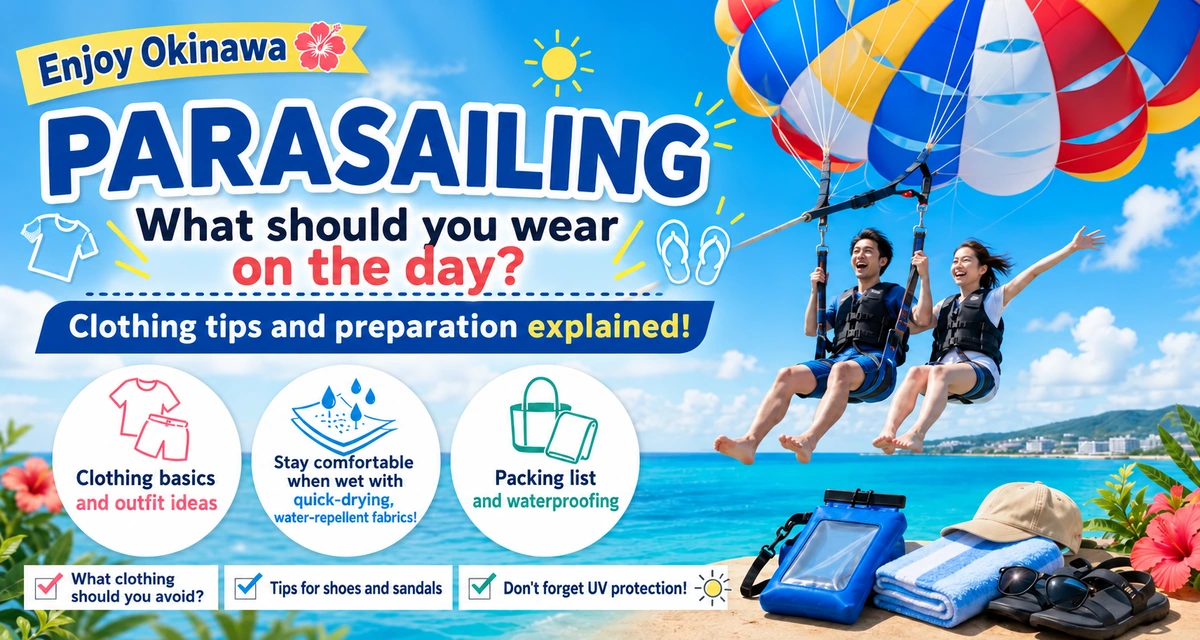
Have you booked parasailing in Okinawa but found yourself wondering, ‘What should I wear on the day?’ Since this activity takes you flying over the sea, the most important way to avoid choosing the wrong outfit is to assume that you may get wet. This article covers everything from the basics of choosing clothes suited to parasailing to recommended outfits for men, women, couples, and families; selecting quick-drying and water-repellent fabrics that stay comfortable when wet; preparing items such as a change of clothes and towels; and waterproofing valuables and electronics. We also explain unsuitable clothes to avoid, points to consider when choosing shoes and sandals, and protection from UV rays. By reading this article, you can resolve your concerns about what to wear and prepare thoroughly to enjoy Okinawa's sea to the fullest.
The basics of choosing the right clothes for parasailing in Okinawa
What kind of activity is parasailing?
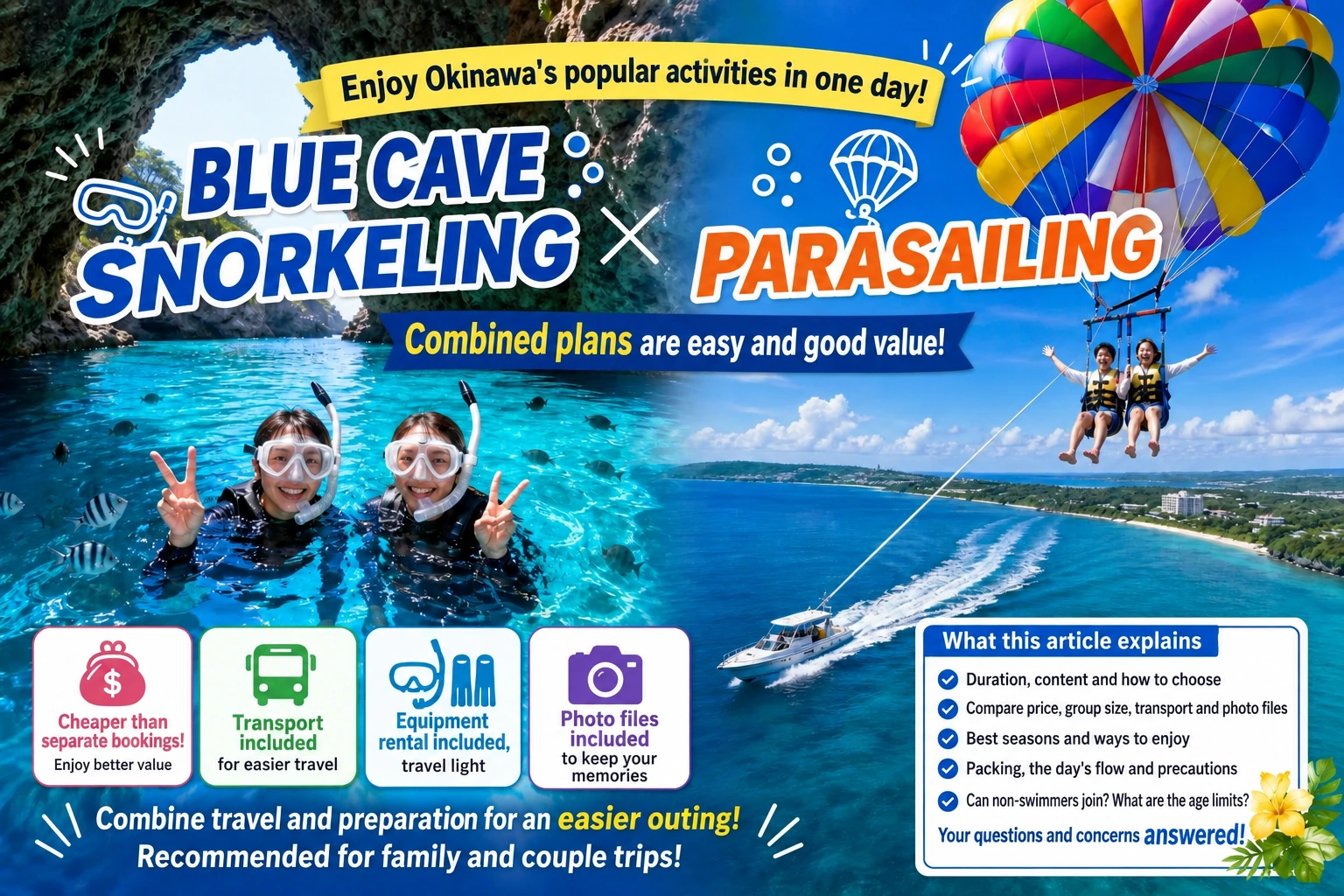
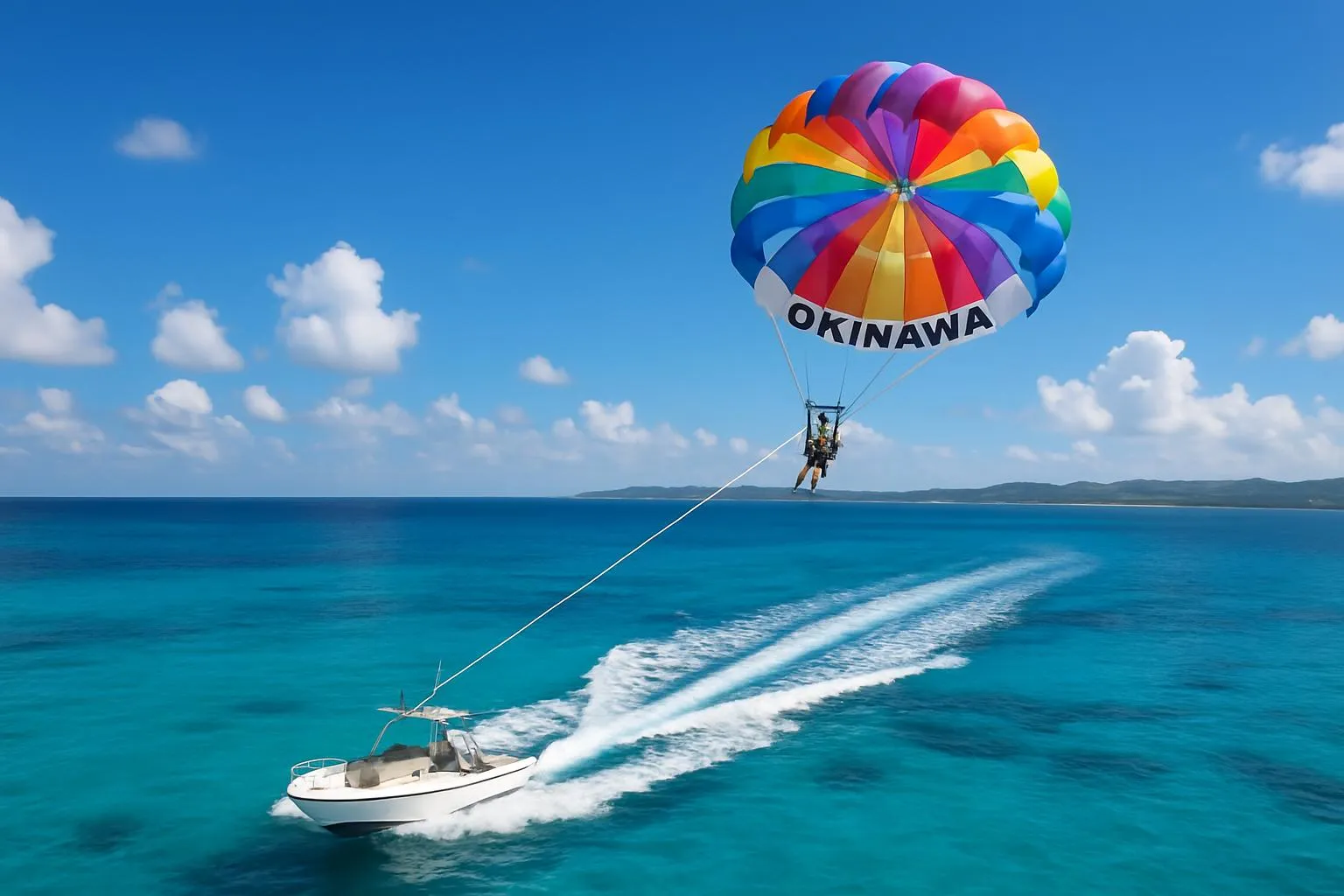
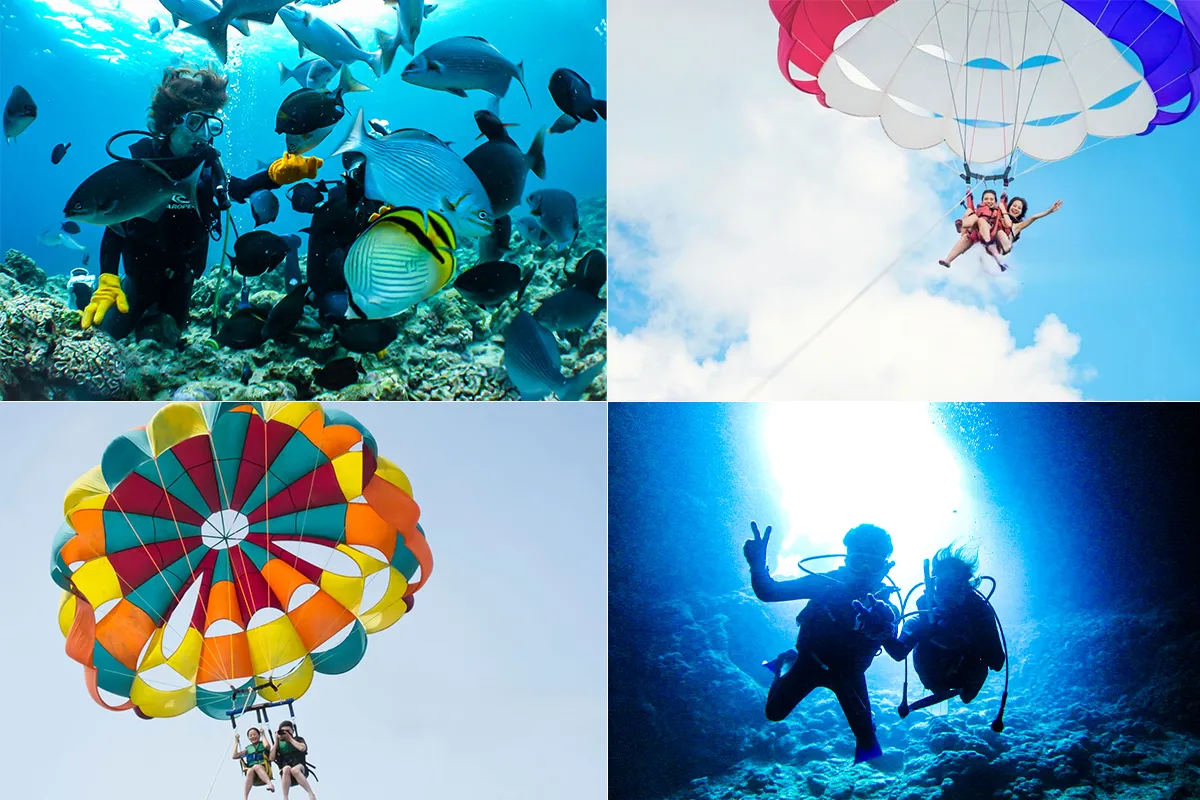
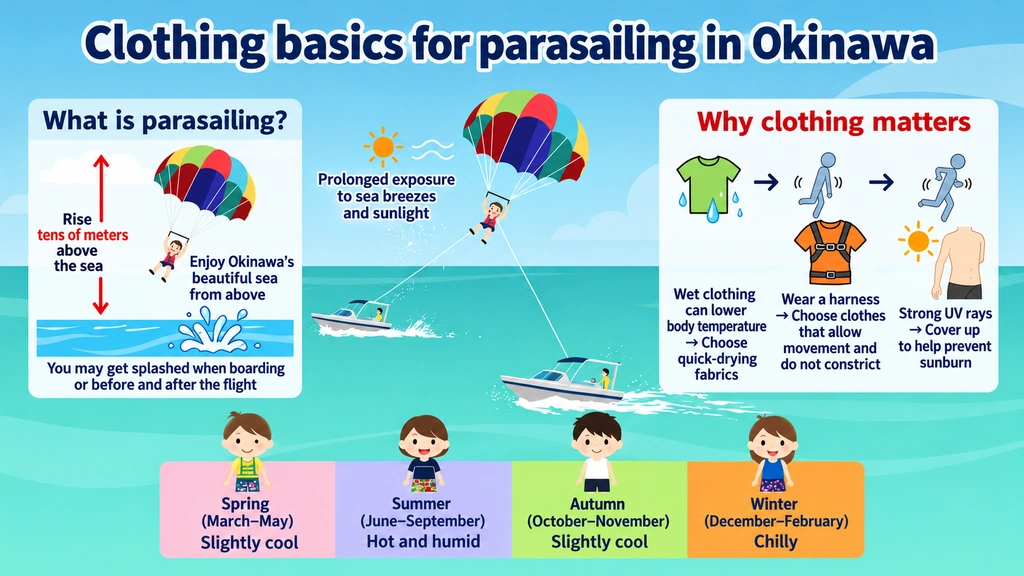
Parasailing is a marine activity in which you wear a specially designed parachute and soar gracefully above the sea while being pulled by a boat. Its greatest attraction is that you rise tens of meters above the surface and enjoy panoramic views of Okinawa's beautiful sea from the sky. You rarely land in the water, and your body seldom gets wet during the flight, but you may be splashed by seawater or spray when boarding or leaving the boat or before and after departure. That makes it essential to prepare clothes with the possibility of getting wet in mind. You should also understand that you travel offshore by boat and spend considerable time directly exposed to sea breezes and sunlight.
Why choosing your clothes matters
Clothing choices for parasailing in Okinawa matter because they affect both comfort and safety. Spending a long time in wet clothes makes it easier to lose body heat and can cause you to feel unwell, so choosing quick-drying fabrics is fundamental. You also wear safety equipment called a harness, so clothes that restrict movement or fit too tightly can interfere with the activity. In addition, extended exposure to Okinawa's strong UV rays increases the risk of sunburn if your outfit leaves much of your skin uncovered. Clothing therefore determines how comfortable your experience is and also directly affects your safety and health.
How clothing differs by season and weather
The right clothes for parasailing in Okinawa vary with the season and weather. In summer, both air and water temperatures are high, so light clothing such as a swimsuit and rash guard is fine, but the sunlight is extremely strong, so clothes that also provide UV protection are recommended. In early spring, early fall, and winter, temperatures may drop, and it feels even cooler out at sea, so having a hoodie, windbreaker, or another warm layer to put on offers reassurance. Tours often operate in cloudy weather or light rain, but windy days can feel colder at sea, so it is a good idea to choose clothes that can be layered. The following is a guide to clothing by season and weather.
| Season | Typical temperature conditions | Recommended clothing |
|---|---|---|
| Spring (March–May, 3–5) | Slightly cool | Swimsuit and rash guard, with an extra layer |
| Summer (June–September, 6–9) | Hot and humid | Light clothes such as a swimsuit, quick-drying T-shirt, and shorts |
| Fall (October–November, 10–11) | Slightly cool | A light jacket in addition to a rash guard |
| Winter (December–February, 12–2) | Chilly | A windbreaker or warm long-sleeved clothing |
Recommended outfits for parasailing in Okinawa
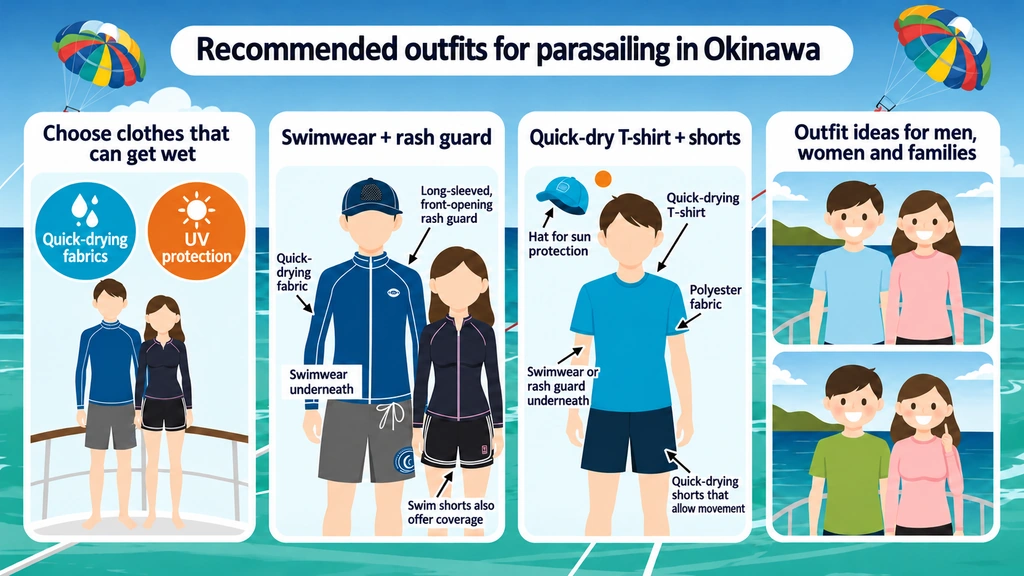
Many people wonder what to wear when enjoying parasailing in Okinawa. The basic key to choosing well is to assume that your clothes may get wet. Here, we introduce specific outfit ideas in detail for different genders and occasions.
Combining a swimsuit with a rash guard
The most standard and practical outfit for parasailing is a swimsuit with a rash guard. You may touch the surface of the sea during takeoff or landing, so wearing a swimsuit underneath lets you enjoy yourself without worrying about getting wet. A rash guard not only protects against UV rays but also shields your skin from wind and sunshine aboard the boat.
Rash guards come in front-opening and pullover styles; if ease of putting it on and taking it off matters to you, a front-opening style is recommended. Choosing long sleeves also improves protection against sunburn and provides excellent protection from Okinawa's strong UV rays.
A quick-drying T-shirt and shorts outfit
A quick-drying T-shirt and shorts are also recommended if you prefer not to wear a swimsuit or want clothes that dry quickly after touching the water. Quick-drying garments made of synthetic fibers such as polyester dry faster than cotton and help you stay comfortable.
However, wearing a rash guard or swimwear under your T-shirt can prevent it from becoming see-through or feeling chilly if you get wet. Choosing quick-drying activewear shorts instead of cotton ones also makes a difference to your comfort.
Recommended clothing combinations for men
For men, pairing board shorts or swim trunks with a quick-drying T-shirt is popular. Wearing a rash guard over your swimwear can both protect against sunburn and help keep you warm. The following table summarizes typical combinations.
| Item | Recommended fabric | Key points |
|---|---|---|
| Board shorts or swimwear | Polyester or nylon | Quick-drying and easy to move in even when wet |
| Rash guard | UV-protective fabric | Helps prevent sunburn and keep you warm |
| Cap or hat | Quick-drying mesh | UV protection; a strap to prevent it from falling offers reassurance |
Wearing swimwear under your shorts reduces the effort of changing clothes and also prepares you for unexpected splashes.
Recommended clothing combinations for women
For women, wearing a rash guard over a bikini or one-piece swimsuit is a standard choice. If you are concerned about your figure, a striped or dark-colored rash guard can make it less noticeable. Pairing it with swim shorts or skirt-style swim bottoms combines ease of movement with style.
Remember to bring a hair tie or scrunchie to keep your hair together, which helps prevent it from becoming disheveled in strong winds aboard the boat. If you are concerned about sunburn, using these together with a face cover and sunscreen offers added reassurance.
Clothing tips for couples and families
When enjoying parasailing as a couple or family, many people plan their outfits with souvenir photos in mind. Coordinating the colors of your rash guards or choosing matching items creates a photogenic look.
If you are participating with children, choosing swimsuits and rash guards that are easy to put on and take off makes changing easier. Bringing changes of clothes and towels for the whole family together makes preparation on the day smoother. For small children, a long-sleeved rash guard and hat are also recommended for UV protection.
Choosing fabrics and belongings that cope well with water
How to identify quick-drying and water-repellent fabrics
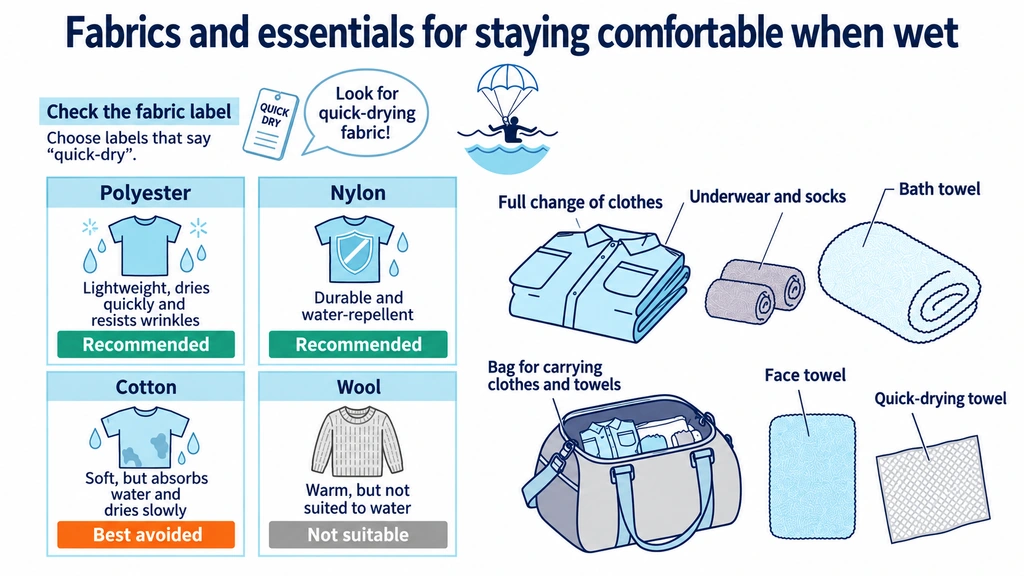
You may touch down in the water while parasailing, so choosing fabrics that are both quick-drying and water-repellent is the first step toward staying comfortable. When checking fabric labels, look for synthetic fibers such as polyester and nylon. These materials do not absorb water easily and dry quickly.
Cotton, on the other hand, feels pleasant against the skin but becomes heavy when wet and takes a long time to dry. Remaining wet for an extended period makes it easier for your body to get cold, so cotton is unsuitable for parasailing, where you spend a long time aboard a boat. When buying clothes, check the fabric information on the label and choose items marked ‘quick-drying’ or ‘quick dry’ to reduce the chance of choosing poorly.
| Type of fabric | Characteristics | Suitability for parasailing |
|---|---|---|
| Polyester | Lightweight, quick-drying, and resistant to wrinkles | Recommended |
| Nylon | Durable and water-repellent | Recommended |
| Cotton | Soft against the skin but highly absorbent and slow to dry | Best avoided |
| Wool | Retains heat well but does not handle water well | Unsuitable |
Preparing a change of clothes and towels
After parasailing, your clothes are often wetter than you expect, so it is important to always bring a full change of clothes. Preparing a complete set, including underwear and socks, lets you move on smoothly after the experience.
It is useful to bring 2 types of towels: a large bath towel and a face towel. Besides drying your body, a bath towel can also provide shade when the sun is strong. Quick-drying towels are less bulky and reduce the burden of your luggage.
Putting wet towels and clothing in a plastic bag or waterproof bag when taking them home prevents your other belongings from getting wet. Several zippered bags are useful because they let you pack wet and dry items separately.
Waterproofing valuables and electronics
Many people want to photograph the scenery with a smartphone or camera aboard the boat, but taking pictures at sea involves the risk of splashes and dropping your device, making waterproof protection essential. Bringing a waterproof case or a waterproof pouch with a strap offers reassurance.
As a general rule, we recommend leaving valuables such as your wallet and keys in lockers provided by the tour company or inside your car rather than bringing them onto the boat. If you must bring them, placing them in a zippered waterproof pouch and adding a neck strap helps prevent loss.
If you wear glasses or contact lenses, spray may impair your vision, so disposable contacts or sunglasses with a strap can help you stay comfortable.
Points to consider when choosing clothes for parasailing in Okinawa
Unsuitable clothing and items to avoid
When enjoying parasailing in Okinawa, it is important to avoid clothing that compromises safety or comfort. Your choices need to account for ease of movement aboard the boat, sea breezes, and spray.
First, avoid denim pants and jeans. They become extremely heavy when wet and take a long time to dry, causing your body to lose heat. Clothes with many decorations, such as ruffles and ribbons, also require caution because they can catch on boat equipment or ropes.
Footwear that lacks stability aboard a boat, such as heels and business shoes, is also unsuitable. Hats that blow away easily and accessories that come off easily also risk falling or getting lost, so it is wise to avoid wearing them.
| Items to avoid | Reason |
|---|---|
| Denim and jeans | Become heavy when wet and dry slowly |
| Heavily decorated clothes | May catch on ropes or equipment |
| Heeled shoes | Slippery and dangerous aboard a boat |
| Hats that blow away easily | May fall into the sea and be lost |
| Delicate accessories | Easy to lose when putting them on, taking them off, or in the water |
UV protection and items to prevent sunburn
Okinawa's sunlight is much stronger than on Japan's main island, and reflected light at sea makes it an environment where sunburn can develop even in a short time. Your skin is exposed for an extended time during parasailing, so preparing UV protection beforehand is essential.
Choose waterproof sunscreen that resists sweat and water; a product around SPF50 and PA++++ that is gentle on the skin is recommended. Reapplying it immediately before boarding, as well as before leaving, helps its effect last.
Wearing a rash guard or a long-sleeved UV-protective hoodie also protects your skin from UV rays that sunscreen alone cannot fully block. Be sure to apply sunscreen carefully to areas that are easy to miss, such as your neck and behind your ears.
It is also important to choose sunglasses with UV protection to shield your eyes from reflected sunlight. A style with a strap offers reassurance that they will not blow away while you wear them.
Points to consider when choosing shoes or sandals
During parasailing, from boarding to touching down in the water and leaving the boat, your feet may get wet many times, making appropriate footwear important. Boat surfaces are often slippery with water, so you need to choose footwear with safety in mind.
Sports sandals with heel straps and shoes suitable for both land and water are recommended. They are hard to slip off and made from fabrics that dry quickly when wet, helping you stay comfortable.
By contrast, styles without secured heels, such as flip-flops, require caution because they can come off when touching the water or boarding. Going barefoot may hurt your feet on slippery boat floors or hot decks, so always wear footwear.
| Type of footwear | Suitability |
|---|---|
| Sports sandals with straps | Recommended for their stability and secure fit |
| Land-and-water shoes | Quick-drying and provide reliable protection for your feet |
| Flip-flops | Come off easily and may be lost when touching the water |
| Bare feet | Not recommended due to slipping and injury risks |
Summary
The most important point when choosing clothes for parasailing in Okinawa is to assume that they may get wet. A rash guard over a swimsuit, or a quick-drying T-shirt with shorts, is ideal because these combinations dry quickly and protect your skin from UV rays.
Since how warm or cold it feels varies by season and weather, prioritize sun protection in summer and bring an extra layer on windy days or during cooler periods. Preparing a change of clothes and towels ahead of time, and carrying valuables, smartphones, and other electronics in waterproof cases, also reduces worries at sea.
Avoid unsuitable items such as denim, thick cotton fabrics, and sandals that come off easily; choosing marine shoes or aqua shoes that secure your heels improves safety. Remember to combine a hat, sunglasses, and sunscreen for UV protection.
Choosing clothes with these points in mind lets you enjoy parasailing in Okinawa comfortably and safely.