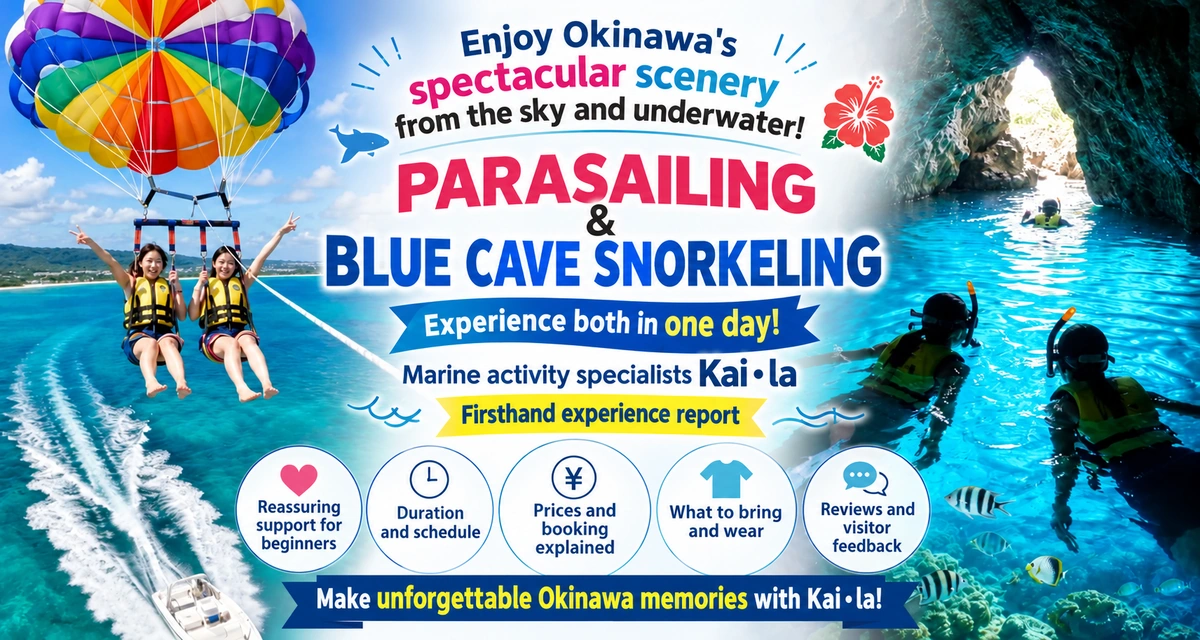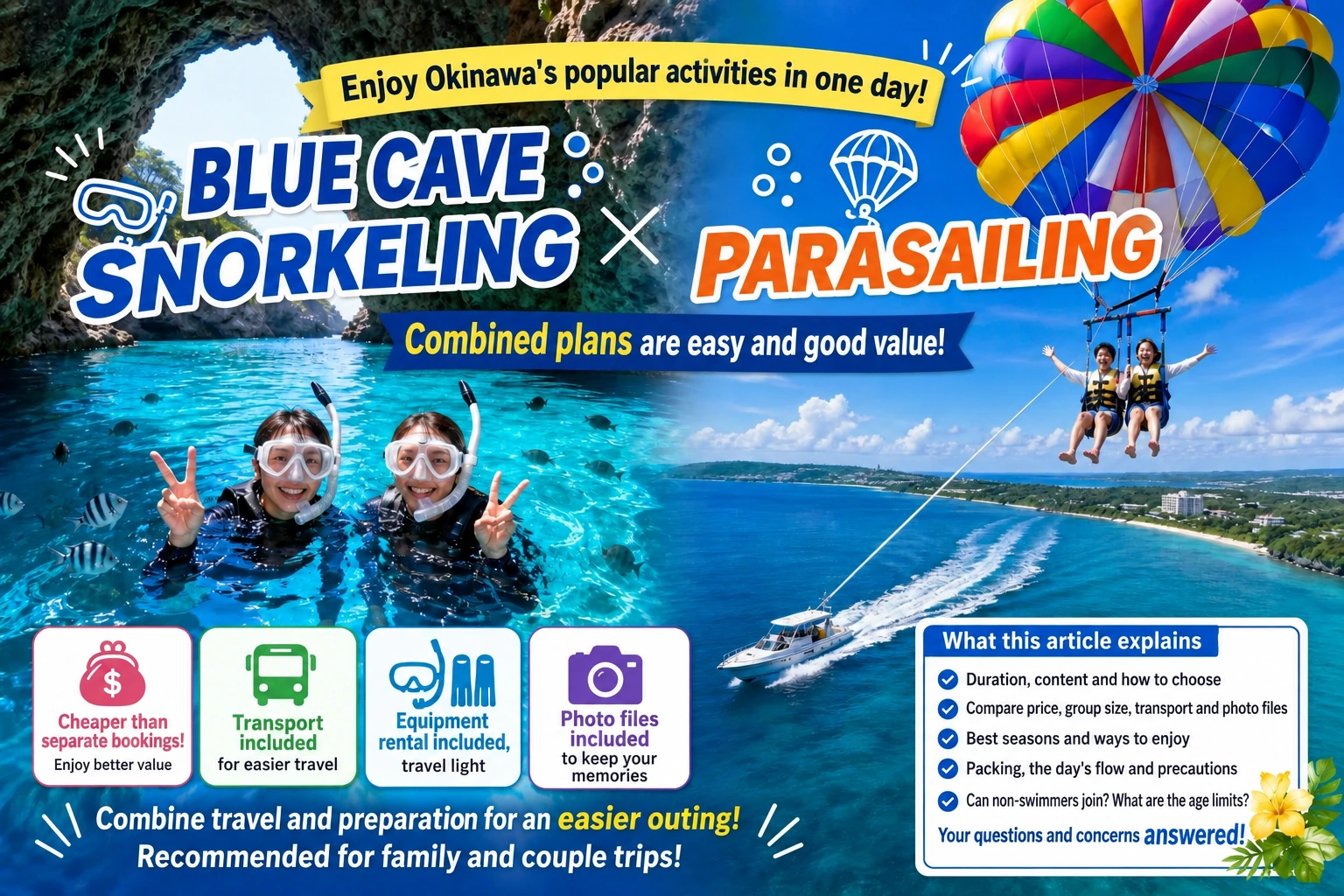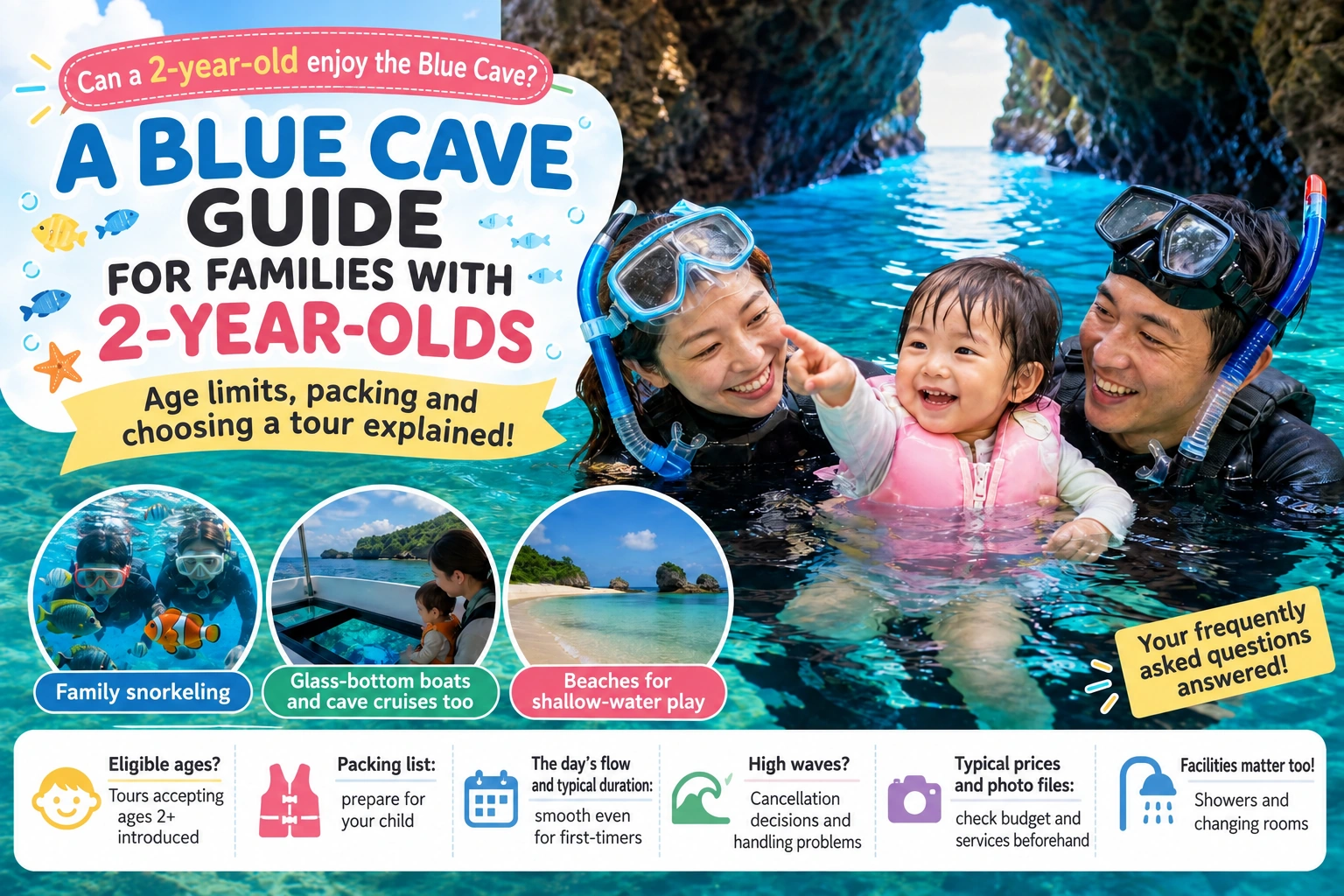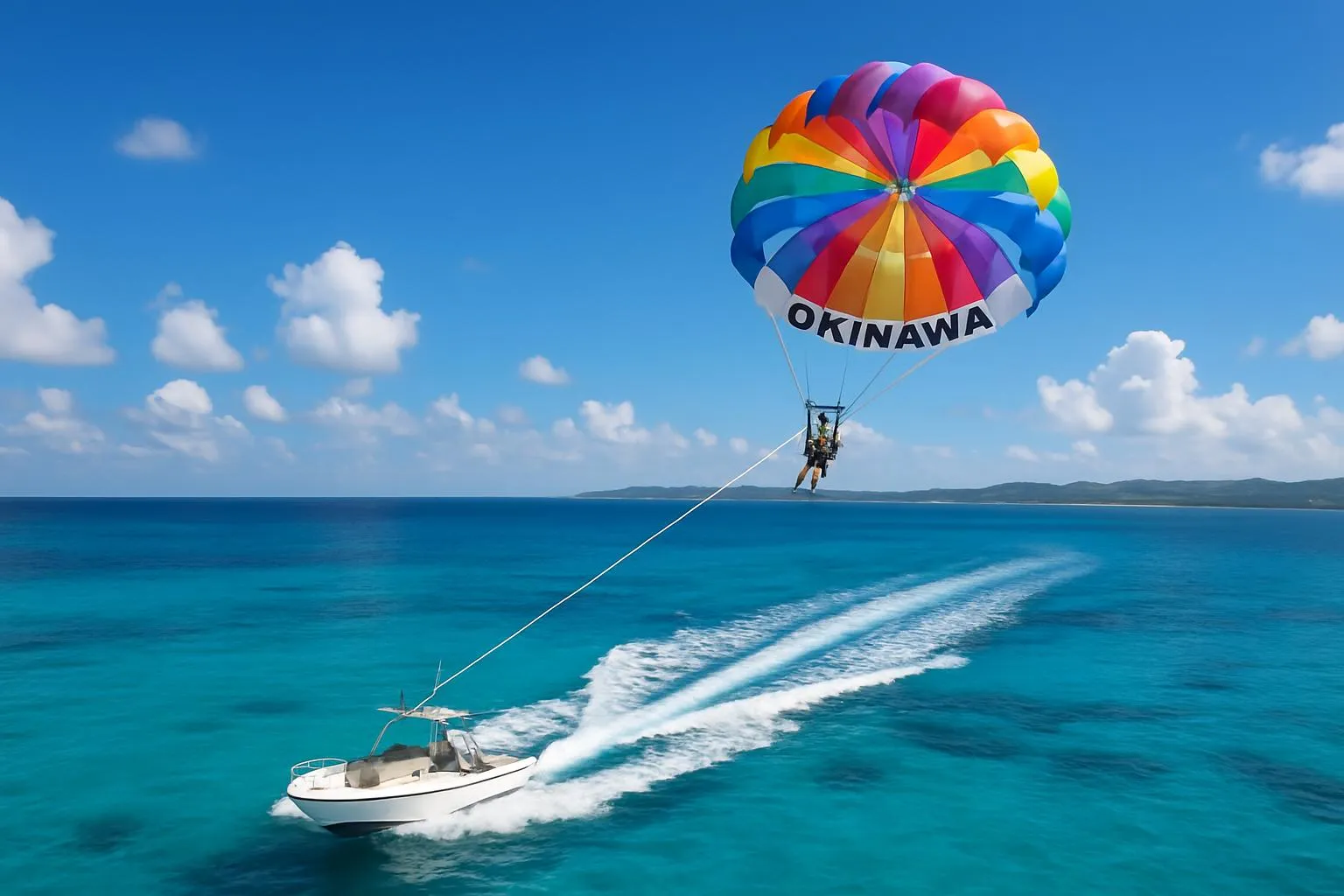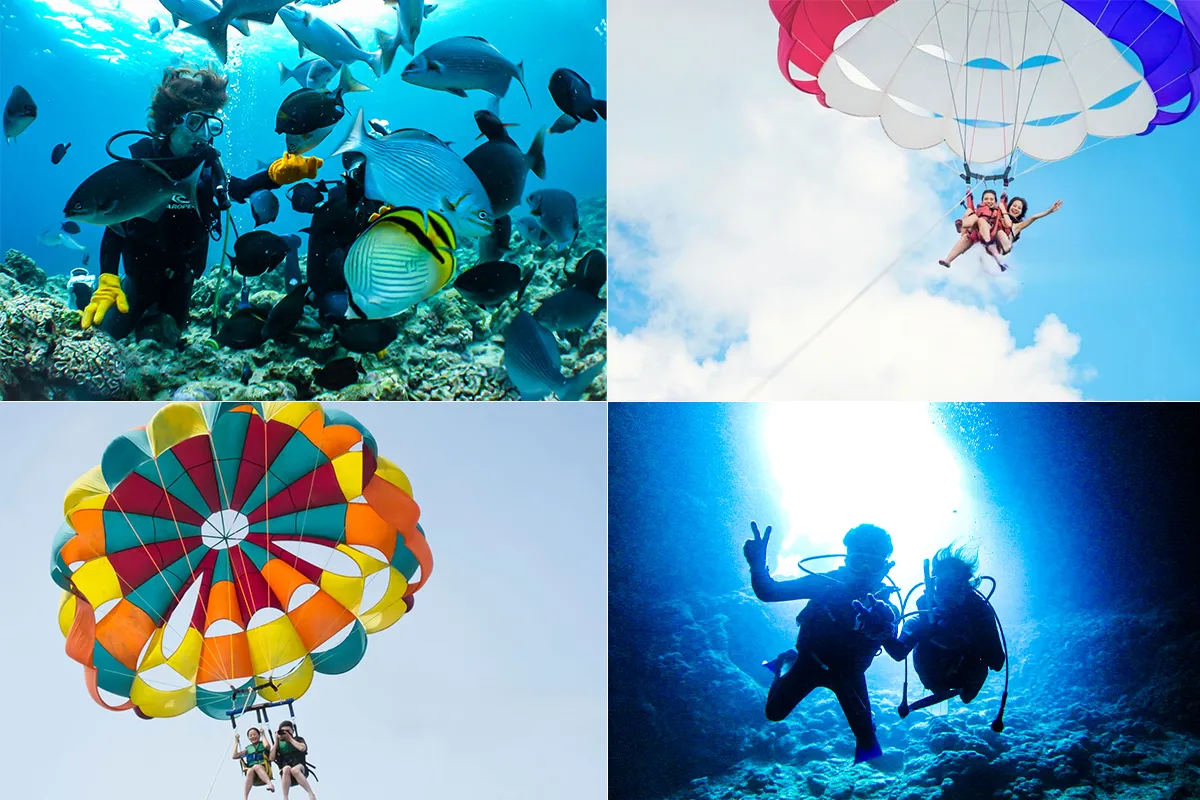
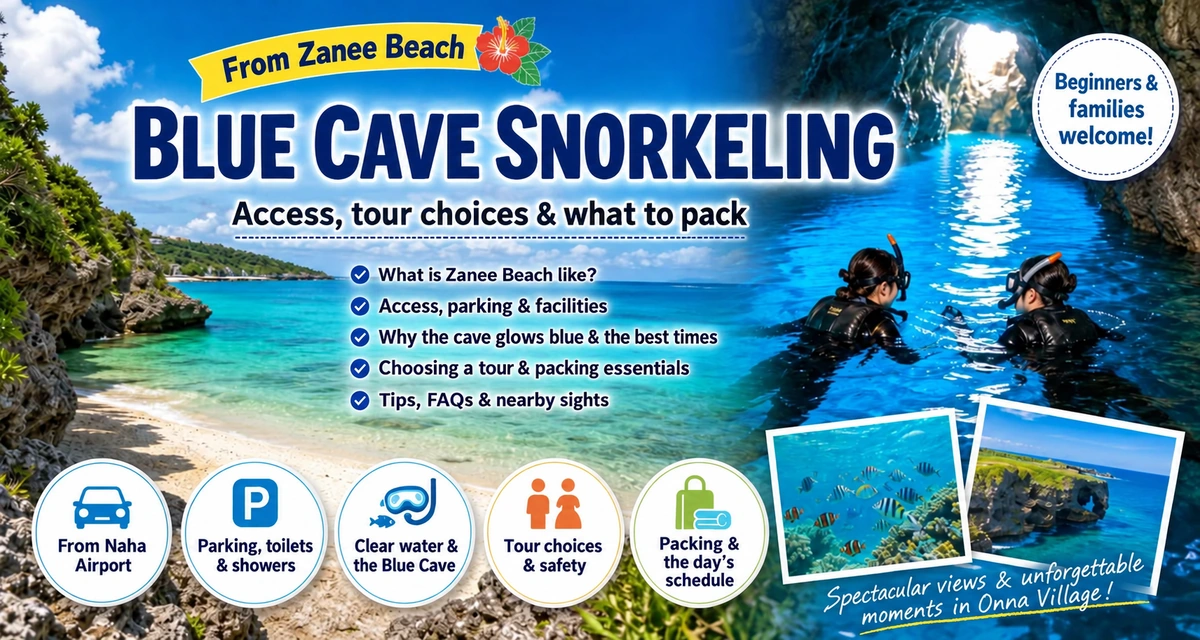
Zanee Beach in Onna Village on Okinawa's main island is known as one of the beaches providing access to the popular Blue Cave. Entry from Cape Maeda is famous, but tours departing from Zanee Beach are a strong option for people wanting to avoid crowded parking and stairs or enjoy relaxed snorkeling in a small group. This article explains what Zanee Beach is like, from basic information such as its relationship to Cape Maeda and water clarity to rental car routes from Naha Airport, expressway interchange access, parking, restrooms, showers, and other facilities. We also cover considerations before booking, including why the Blue Cave glows blue, when the light looks most beautiful, differences between beach and boat entry, changes in the sea between summer and winter, and cancellation arrangements during high waves or typhoons. When choosing a tour, important points include small-group guiding, what the price includes, perks such as photo data and fish feeding, reviews, and safety measures. We also answer questions about essentials such as swimsuits and towels, sunscreen, rash guards, and waterproof cases, the day's sequence, precautions involving rip currents and coral protection, Onna Village sightseeing spots such as Cape Maeda, Cape Manzamo, and Cape Zanpa, and participation by non-swimmers and families with children. By the end, you should be ready to choose a suitable tour and enjoy the day with confidence.
What kind of beach is Zanee Beach in Onna Village, Okinawa?
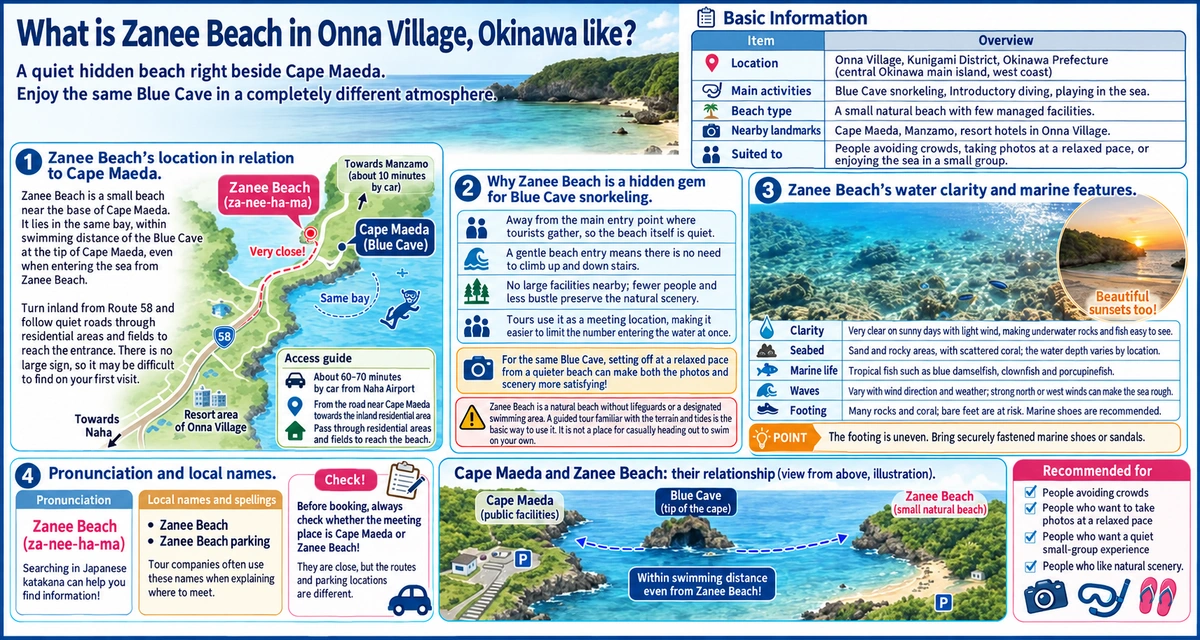
Onna Village, a resort area on the west coast of central Okinawa's main island, has small beaches popular with local people and repeat visitors who enjoy the sea, alongside famous tourist beaches. One is Zanee Beach. Located near Cape Maeda, known as a starting point for Blue Cave snorkeling, it attracts attention as a spot where you can head for the same Blue Cave while enjoying the sea in a very different atmosphere.
Unlike large resort beaches, Zanee Beach has minimal facilities and is not particularly large. Its great appeal, however, is entering Okinawa's sea in quiet surroundings with few people. Here we introduce its location, relationship to Cape Maeda, reasons it is called a hidden gem, sea characteristics, and pronunciation.
| Item | Overview |
|---|---|
| Location | Onna Village, Kunigami District, Okinawa (central Okinawa main island / West coast) |
| Main activities | Blue Cave snorkeling, introductory diving, swimming-style water play |
| Beach type | A small natural beach with few management facilities |
| Famous nearby spots | Cape Maeda, Cape Manzamo, Onna Village resort hotels |
| Suitable for | People avoiding crowds, taking photos at leisure, or enjoying a small-group experience |
Zanee Beach's location and relationship to Cape Maeda
Zanee Beach lies near the base of Cape Maeda along Onna Village's west coast. Cape Maeda is nationally known as a major entry point for Blue Cave snorkeling and diving and has public facilities including parking, showers, and shops. Zanee Beach, by contrast, has barely been developed for tourism despite being just along the coastline from Cape Maeda.
Geographically, Cape Maeda and Zanee Beach lie within the same bay-like terrain, and entering the sea from Zanee Beach puts the Blue Cave at the tip of Cape Maeda within swimming distance. Some tour companies therefore use Zanee Beach rather than Cape Maeda as the meeting and entry point, offering plans that snorkel from there to the cave.
The beach entrance is reached by turning off Onna Village's main National Route 58 onto a slightly inland road through peaceful houses and fields. Without large signs or commercial facilities, first-time visitors may find it difficult to locate, but this adds the special feeling of a beach reached only by those in the know.
Why Zanee Beach is called a hidden spot for Blue Cave snorkeling
Blue Cave snorkeling is one of Okinawa's most popular marine activities. During high season, Cape Maeda's parking fills and crowds can stretch down the stairs into the sea. Zanee Beach is called a hidden gem mainly because these crowds are easier to avoid.
- Away from the main entry point attracting tourists, the beach itself is quiet
- Gentle entry from the beach means no queuing on stairs
- No large facilities nearby, with natural scenery and little everyday noise or crowding
- Only limited tours use it as a meeting point, helping reduce simultaneous entry numbers
If heading to the same Blue Cave, swimming out leisurely from a less crowded beach rather than entering from a crowded place offers greater satisfaction with photos and scenery. A less hectic environment particularly reassures families with small children and people worried about swimming. Being able to listen carefully to guides and practice equipment use calmly are other advantages of this hidden spot.
However, being a hidden spot means it is not a swimming beach with permanent lifeguards, swimming-area buoys, or a monitoring system. Therefore,using a guided tour with knowledge of the terrain and currents is the basic approach when heading from Zanee Beach to the Blue Cave. Understand that it is not a place for casually swimming out independently.
Water clarity and sea characteristics at Zanee Beach
Onna Village's west coast has a Ryukyu limestone coastline with developed coral reefs. Zanee Beach is similar, featuring clear seas and terrain mixing rocks and reefs. On stable-weather days, visibility may allow you to see sandy seabeds, rocks, and swimming fish just by looking from the surface.
The beach mixes white sand, pebbles, and rocks, rather than the fine texture of a sand-only resort beach. Rocks and coral fragments underfoot may hurt or cut your soles when walking barefoot.Preparing water shoes or sandals that secure your heel greatly improves safety and comfort when enjoying Zanee Beach.
| Sea element | Characteristics around Zanee Beach |
|---|---|
| Clarity | Very high on sunny, low-wind days, making underwater rocks and fish easy to see |
| Seabed | A mix of sand, rocks, and coral reefs; depth varies by location |
| Wildlife | Tropical fish such as sapphire damselfish, clownfish, and porcupinefish may be seen |
| Waves | Change with wind direction and weather; strong northerly or westerly winds often cause rough conditions |
| Footing | Many rocks and coral fragments make bare feet dangerous; water shoes recommended |
Facing the west coast, it also offers evening views of the sun setting into the sea. Waiting on the shore for sunset after snorkeling is an enjoyment unique to quiet beaches such as Zanee Beach. However, footing becomes difficult to see and dangerous after sunset, so leave the sea and finish packing while it is still light.
Pronunciation and local names
The Japanese name 「ザネー浜」 is pronounced "Zanee Hama." Okinawa has many distinctive place names, and this is one whose pronunciation may confuse people seeing it written for the first time. Searching the katakana spelling 「ザネー浜」 also makes it easier to find Blue Cave snorkeling tour information.
Locally it is also called Zanee Hama Beach, and tour meeting directions use labels such as 「ザネー浜」 (Zanee Beach) and 「ザネー浜駐車場」 (Zanee Beach parking).Always checking whether your meeting place is Cape Maeda or Zanee Beach when booking prevents getting lost or arriving late. Although nearby, their driving routes and parking locations differ, making them easy to confuse.
Cape Maeda is overwhelmingly famous as a Blue Cave entry point in Onna Village, creating a strong association between the two. Simply knowing the name Zanee Beach therefore puts you a step ahead in planning around crowds and choosing quiet surroundings.
The Blue Cave's appeal and advantages of going from Zanee Beach
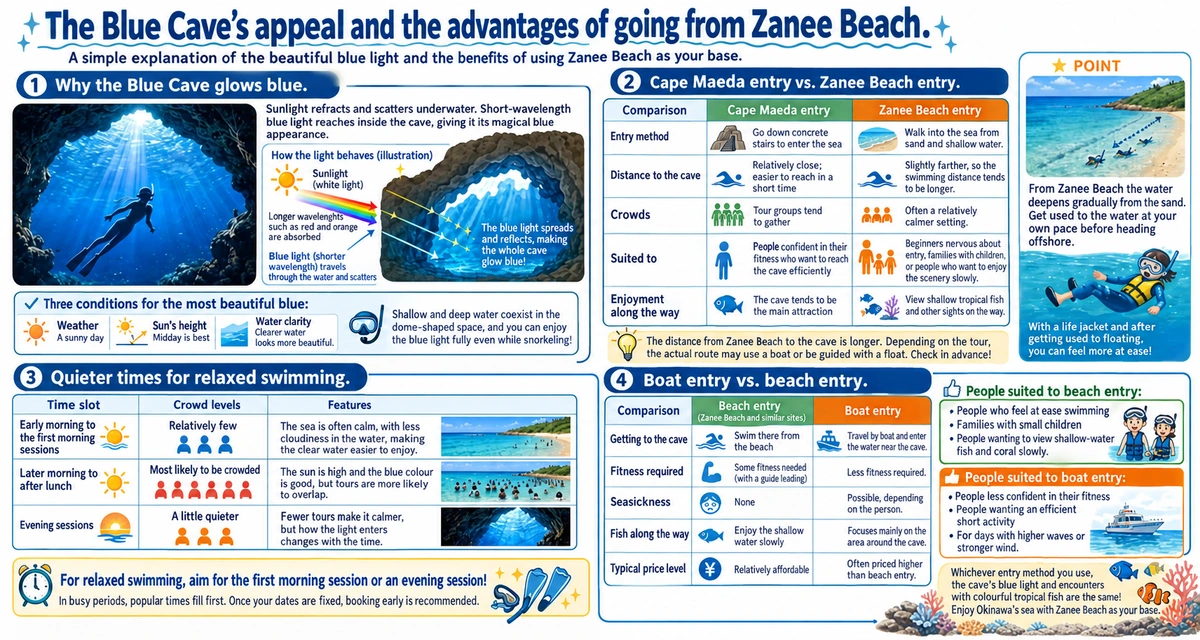
The Blue Cave at Cape Maeda in Onna Village on Okinawa's main island is one of Okinawa's leading popular spots, known for magical blue water inside the cave. Many tours enter from Cape Maeda's stairs, but more plans are using nearby Zanee Beach as their departure and return point. Here we explain the cave's appeal and the advantages of deliberately approaching from Zanee Beach.
Why the Blue Cave glows blue
The Blue Cave looks blue because sunlight entering from outside refracts and scatters in the sea, allowing only blue light to reach your eyes when looking up toward the entrance from the back. Water readily absorbs longer wavelengths such as red and orange, leaving shorter blue wavelengths to pass through. This blue light reflects off white sand and rock surfaces, enveloping the cave in blue as though it glows itself.
The Blue Cave's beauty is therefore greatest when 3 conditions align: weather, sun height, and water clarity.Sunny daytime brings plentiful light and a more vivid blue inside. It can still look blue on cloudy or rainy days, but color depth and brightness change, so booking with a flexible schedule improves your chances of ideal conditions.
Inside, shallow and deep areas mix within a dome-shaped space with a high ceiling. Even floating at the surface while snorkeling lets you fully enjoy the expanse of blue, so experiencing this spectacular view without a diving license is a major attraction.
Differences between Cape Maeda entry and Zanee Beach entry
Beach entry for swimming to the Blue Cave can begin at Cape Maeda's stairs or from Zanee Beach. Their characteristics differ, so choose according to your stamina and companions' ages.
| Comparison | Cape Maeda entry | Zanee Beach entry |
|---|---|---|
| Entry method | Descend concrete stairs into the sea | Walk into the sea from sand and shallows |
| Distance to cave | Relatively close and easy to reach quickly | Slightly farther, often involving longer swimming |
| Crowding | Tour groups tend to gather | Often allows calmer preparation |
| Suitable for | People confident in stamina and wanting efficient cave access | Beginners anxious about entry, families with children, people wanting relaxed photography |
| Enjoyment along the way | Mainly focused on the cave | Enjoy the journey too, including tropical fish in the shallows |
Cape Maeda has many steps, and climbing them while wearing fins and a wetsuit is sometimes said to strain the legs and back. In contrast,Zanee Beach gradually deepens from the sand, with the major advantage that first-time snorkelers can enter at their own pace while getting used to the water.You can try floating in a life jacket before heading offshore, offering reassurance even if worried about swimming.
However, the swimming distance from Zanee Beach to the cave tends to be longer, so some tours also use a boat or have guides lead part of the way using rings or floats. Checking the route beforehand makes the day easier to picture.
Times for relaxed swimming away from crowds
The Blue Cave is popular, with many groups gathering inside during high-season daytime. Other participants may appear in your photos or queues may form, so timing greatly affects satisfaction.
| Time | Crowding tendency | Characteristics |
|---|---|---|
| Early morning–early morning sessions | Relatively few people | Often calm seas with little cloudiness, making clarity noticeable |
| Late morning–early afternoon sessions | Most likely to be crowded | High sun produces vivid blue, but group visits often overlap |
| Evening sessions | Somewhat fewer people | Fewer tours create calmer conditions, but light angles change with the season |
For relaxed swimming, aiming for the first morning or evening session is effective.In particular, mornings often retain the sea's calm from the previous day and have lighter winds, sometimes making the swim to the cave easier. Popular sessions fill first during summer vacation and Golden Week, so book early once your dates are decided.
Comparing boat entry and beach entry
There are 2 main access methods: beach entry, swimming from the shore, and boat entry, traveling near the cave by boat. Both have advantages, so choose based on stamina, seasickness susceptibility, and the day's sea conditions.
| Comparison | Beach entry | Boat entry |
|---|---|---|
| Travel to cave | Swim there yourself | Travel by boat and enter near the cave |
| Required stamina | Somewhat necessary (with guide assistance) | Less necessary |
| Seasickness concern | None | Possible depending on the individual |
| Fish observation along the way | Enjoy at leisure from the shallows | Mainly around the cave |
| Price tendency | Relatively affordable | Often priced higher than beach entry |
Some tours using Zanee Beach generally start from the sand but operate flexibly, switching to boats according to wind direction and wave height that day.Beach entry suits people worried about seasickness and families with small children; boat entry suits people less confident in their stamina or wanting an efficient, short cave experience.
Either method offers the same beautiful blue light inside the cave and enjoyable encounters with tropical fish such as sapphire damselfish and false clownfish. Starting from Zanee Beach also allows leisurely observation of shallow-water coral and fish, creating a day that fully embraces Okinawa's sea.
How to access Zanee Beach and the Blue Cave
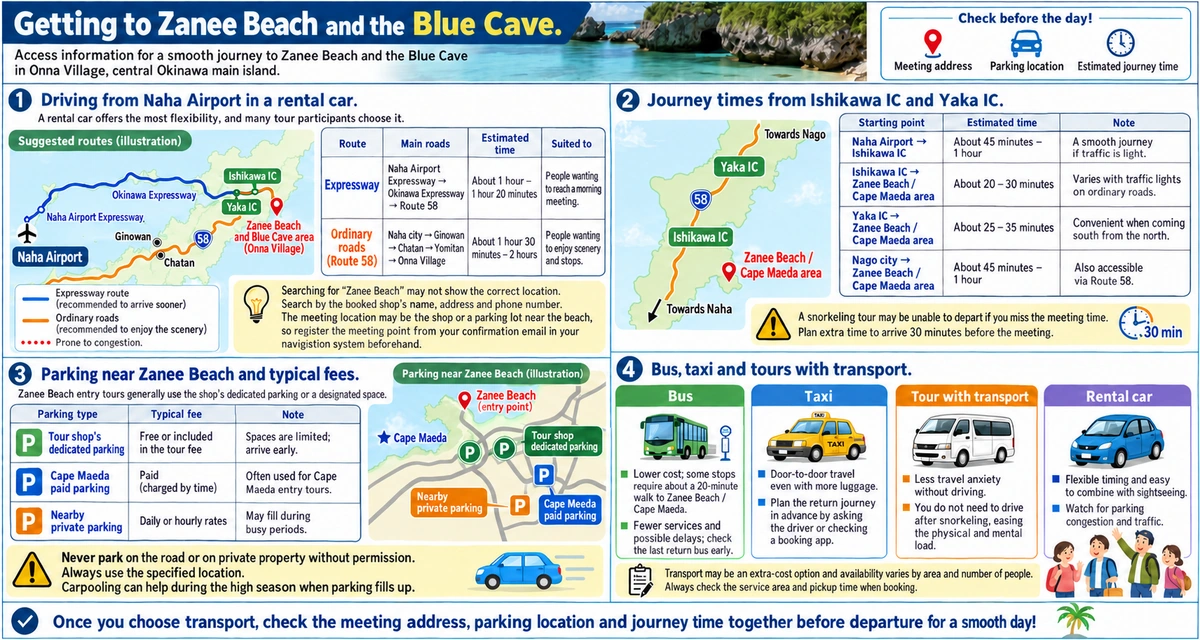
Zanee Beach and the Blue Cave are in Onna Village on the west coast of central Okinawa's main island. They are generally reached from Naha Airport using the expressway and National Route 58. Their location near the center of the resort area makes access easy from both Naha and the north. Here we organize access information from 4 perspectives—rental car, expressway, parking, and public transportation—to avoid getting lost that day.
Rental car route from Naha Airport
For access to Zanee Beach and the Blue Cave,a rental car offers the greatest flexibility, and many tour participants choose to drive. After renting at Naha Airport, there are 2 main routes: using the expressway or heading north along the coast on National Route 58.
To save time, the basic route takes the Naha Airport Expressway onto the Okinawa Expressway and exits at an interchange near Onna Village. If you have more time, heading north on Route 58 through Yomitan Village while enjoying sea views is popular too. However, Route 58 often has congestion around Chatan and Kadena, and morning commuting hours or evenings may greatly extend travel time.
| Route | Main course | Estimated travel time | Suitable for |
|---|---|---|---|
| Expressway | Naha Airport Expressway–Okinawa Expressway–National Route 58 | About 1 hour–1 hour 20 minutes | People meeting early in the morning |
| Regular roads (National Route 58) | Naha City–Ginowan–Chatan–Yomitan–Onna Village | About 1 hour 30 minutes–2 hours | People enjoying scenery and stops along the way |
When using car navigation or smartphone maps, the name Zanee Beach may not accurately display the destination.Setting your destination with the booked shop's name, address, or phone number is most reliable. Meeting places vary between shop offices and parking areas near the beach, so register the meeting point listed in your booking email beforehand.
Travel times from Ishikawa and Yaka expressway interchanges
When using the Okinawa Expressway, Ishikawa Interchange is often recommended as the nearest exit to Onna Village's Blue Cave area. After exiting, head west on prefectural roads to join Route 58, then toward Cape Maeda and Yamada. If coming south from the north or staying around Nago or Kin, using Yaka Interchange is another option.
| Departure point / Exit | Estimated travel time | Additional notes |
|---|---|---|
| Naha Airport–Ishikawa Interchange | About 45 minutes–1 hour | Smooth travel with little congestion |
| Ishikawa Interchange–Zanee Beach / Cape Maeda area | About 20–30 minutes | Varies with traffic lights on regular roads |
| Yaka Interchange–Zanee Beach / Cape Maeda area | About 25–35 minutes | Convenient when heading south from the north |
| Central Nago–Zanee Beach / Cape Maeda area | About 45 minutes–1 hour | Travel via Route 58 is also possible |
All times are estimates and vary with tourist season and weather.Snorkeling tours may be unable to depart if you arrive late, so planning to arrive 30 minutes before meeting is reassuring. Route 58 around Onna Village is especially busy during summer vacation and Golden Week, so allow extra time when setting out.
Parking around Zanee Beach and estimated fees
Houses and fields lie near Zanee Beach, and no large public parking area has been developed. Therefore,tours entering from Zanee Beach generally use dedicated parking or designated spaces provided by the shop. Many tours describe participant parking as free or included, but conditions vary, so check when booking.
| Parking type | Estimated fee | Tip |
|---|---|---|
| Tour shop's dedicated parking | Free or included in the tour price | Limited spaces make early arrival reassuring |
| Cape Maeda paid parking | Paid (hourly pricing) | Often used by Cape Maeda entry tours |
| Nearby private parking | Daily or hourly pricing | Likely to fill during busy periods |
Pricing may change, so confirm current information with your booked shop or signs locally. Roads near meeting places may also be narrow.Absolutely avoid street parking and unauthorized parking on private property; using only designated places is a fundamental requirement at Zanee Beach. Parking may fill in high season, so sharing cars when arriving in multiple vehicles is considerate too.
Access by bus or taxi and tours with transfers
You can reach Zanee Beach and the Blue Cave without a rental car. One method is a scheduled bus from Naha Bus Terminal or Naha City toward Nago, getting off at a stop along Route 58 in Onna Village. However,walking from Route 58 bus stops to Zanee Beach or Cape Maeda often takes over 20 minutes and includes slopes, making it fairly demanding before snorkeling. Services are less frequent than in cities, so check the return timetable too beforehand.
Another option is a taxi. From some resort hotels in Onna Village, the area is around 10–20 minutes away by taxi, a practical option for families with luggage. A return taxi may be difficult to arrange, so tell the outward driver your return time and reserve, or check whether a ride-hailing app is available.
The easiest method is choosing a plan with transfers. Some tour companies offer hotel transfers within Naha City or around Onna Village and Chatan.A tour with transfers removes worries about getting lost and the need to drive after snorkeling, letting you enjoy the experience with more physical and mental ease. Transfers may be a paid option or vary by area and group size, so always check coverage and pickup times when applying.
| Transportation | Advantages | Precautions |
|---|---|---|
| Rental car | Flexible timing and easy to combine with sightseeing | Ensure parking and watch for traffic |
| Scheduled bus | Lower cost | Long walks from bus stops and limited services |
| Taxi | Door-to-door travel even with much luggage | Arrange a return taxi beforehand |
| Tour with transfers | No driving or travel worries | Check areas covered and fees |
Zanee Beach and the Blue Cave are conveniently located within Onna Village, but parking and meeting places can still be confusing after arrival.Once you choose transportation, checking these 3 points together before departure—the meeting address, parking location, and travel time—is the best way to keep the day smooth.
Facilities and amenities at Zanee Beach and the Blue Cave
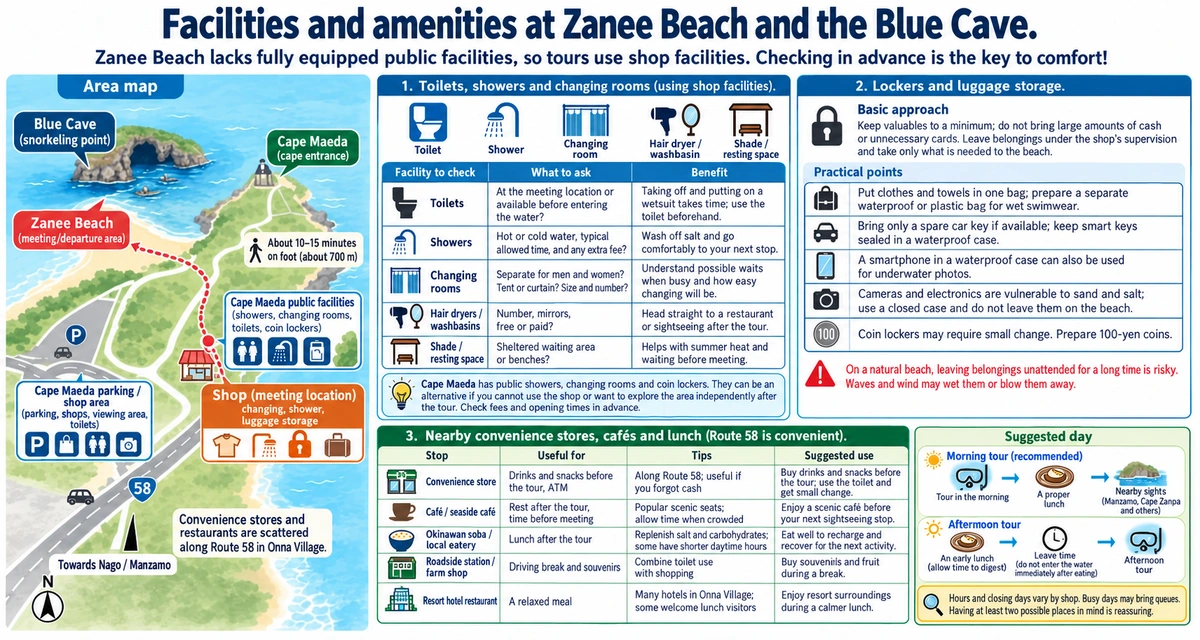
Zanee Beach is a quiet coast beside Cape Maeda in Onna Village, without comprehensive public facilities on the beach itself like Cape Maeda's parking and shop area. Therefore, when enjoying Blue Cave snorkeling from Zanee Beach,checking beforehand how much of the local shop's facilities you can use is the biggest factor for comfort. Here we organize facility information directly affecting the day, from restrooms, showers, and changing rooms to baggage storage and nearby dining and shopping.
Availability of restrooms, showers, and changing rooms
Zanee Beach does not have large public facilities like Cape Maeda, so you generally use the organizing tour shop's restrooms, showers, and changing rooms. Many shops have changing rooms and showers in their offices or stores. The usual sequence is changing at the meeting place, going to the sea, then returning after swimming to shower and change.
However, facilities vary greatly by shop. Always check hot showers, shower numbers, separate men's/women's changing rooms versus simple curtained spaces, hair dryers, and amenities before booking. In particular,hot shower availability greatly changes comfort in winter and cooler seasons, making this a priority check.
| Facility to check | What to check | Benefit of checking |
|---|---|---|
| Restrooms | Available at the meeting place and usable before entering the sea? | Use beforehand because removing and putting on a wetsuit is cumbersome |
| Showers | Hot or cold, approximate use time, additional fees? | Rinse salt off and move comfortably to your next plans |
| Changing rooms | Separate by gender, simple tents or curtains, size and number? | Understand waiting times and ease of changing when busy |
| Hair dryers / Wash area | Number, mirrors, free or paid? | Head directly to restaurants or sightseeing after the tour |
| Shade / Rest space | Covered waiting areas or benches? | Useful for summer heatstroke prevention and waiting before meeting |
Cape Maeda, within walking distance of Zanee Beach, has public showers, changing rooms, coin lockers, and similar facilities. Knowing about these alternatives is reassuring if you want to continue enjoying the sea independently after the tour or the shop facilities are crowded. Fees and hours may change, so confirm current information before visiting.
Using lockers and baggage storage
Naturally, you cannot swim carrying your wallet, smartphone, and car keys. Many shops store luggage on office shelves, in simple lockers, or in locked spaces, but the basic approach is minimizing valuables and avoiding carrying large amounts of cash and unnecessary cards, rather than leaving them at your accommodation or in the car. Leaving them in the car is also inadvisable for security, so reducing luggage before setting out is wise.
Here are practical tips for using baggage storage.
- Gather clothes and towels in one bag and prepare a separate waterproof or plastic bag for wet swimsuits
- If you have a spare car key, bring only that; put smart keys in a waterproof case and request storage
- A smartphone in a waterproof case can also be used for underwater photography
- Cameras and electronics are vulnerable to sand and salt, so keep them in closable cases rather than directly on sand
- Paid lockers may require coins, so prepare several 100-yen coins
Zanee Beach is a natural coast, unlike large beaches with permanent shops and lifeguards. Leaving belongings on sand or rocks for a long time risks them getting wet or blowing away in waves and wind.Leaving luggage under the shop's management and taking only minimal essentials to the beach is the safe, reliable approach.
Nearby convenience stores, cafes, and lunch spots
Convenience stores and restaurants do not line the beachfront at Zanee Beach, but Route 58 in Onna Village has scattered convenience stores, cafes, Okinawa soba shops, and sea-view restaurants. Planning shopping and dining before and after the tour around this road is efficient.
Buying drinks and light food at a roadside convenience store before the tour provides reassurance. Bring extra fluids in summer for heatstroke prevention, and eat lightly because overeating immediately before the sea can make you unwell. Afterward, allow time for a proper meal to replenish salt and water.
| Stop type | When to use | Tips |
|---|---|---|
| Convenience store | Drinks and light food before the tour, ATM use | Scattered along Route 58; convenient for cash for local payments |
| Cafe / Seaside cafe | Rest after the tour or fill time before meeting | Sea-view seats are popular; allow waiting time when busy |
| Okinawa soba / Diner | Lunch after the tour | Replenish salt and carbohydrates; some have short lunch hours |
| Roadside station / Farm shop | Driving break, souvenir shopping | Combine restroom breaks and local ingredient purchases |
| Resort hotel restaurant | A leisurely meal | Onna Village has many accommodation facilities, some serving lunch |
Many Blue Cave snorkeling tours offer morning and afternoon sessions, and joining in the morning, having a relaxed lunch, then visiting nearby Cape Manzamo or Cape Maeda in the afternoon is a classic plan that uses time efficiently. For an afternoon session, eat lunch early and allow some time before entering the sea for greater comfort.
Shop hours and closing days may vary seasonally, and lunchtime queues are common during busy periods. If you need a firmly scheduled meal, check operating details beforehand and prepare at least two choices to keep plans stable.
How to choose a recommended Blue Cave snorkeling tour from Zanee Beach
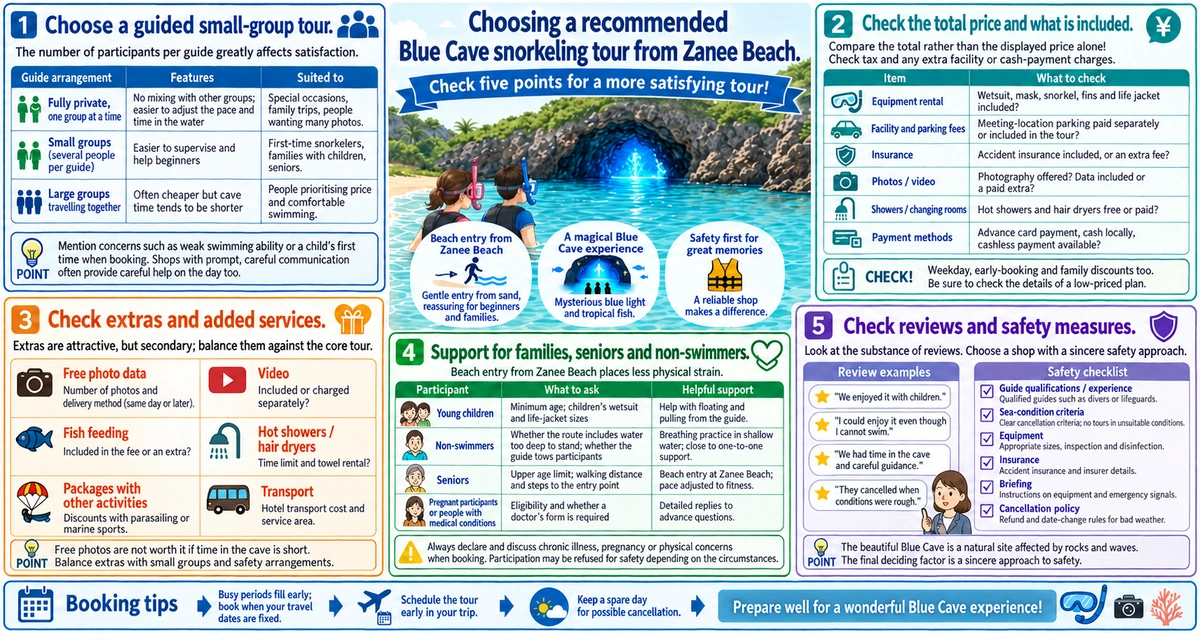
For Blue Cave snorkeling in Onna Village, choosing a tour entering from Zanee Beach greatly affects crowding and satisfaction. Compared with Cape Maeda's stair entry, Zanee Beach offers gentle entry from sand, making it easier for beginners and families with children. However, dozens of marine and diving shops around Onna Village operate Blue Cave tours, and prices and content can seem similar. Here we organize checks for a satisfying tour choice from 5 angles: small groups, price, perks, participation conditions, and safety.
When comparing tours, do not choose solely by low price; always check the number of guides per 1 group and sea-condition decision criteria. Even at the same Blue Cave, a tour carefully guiding a small group differs greatly in cave time and photo numbers from one leading a large group in a line.
Tips for choosing a small-group guided tour
The biggest influence on Blue Cave snorkeling satisfaction is the number of participants per 1 guide. The cave is not particularly spacious, and many people entering at once leave little time to admire the glowing blue surface. Check booking descriptions for small-group, private, or dedicated guide per 1 group wording, and prioritize plans with a clearly stated maximum group size.
Small-group tours also adjust easily to participants' pace. A guide can support anxious swimmers with rings or buoyancy equipment, while experienced groups may visit coral areas outside the cave. Entry from Zanee Beach deepens gradually from sand, providing time to get used to the water and pairing well with small groups.
| Guiding arrangement | Characteristics | Suitable for |
|---|---|---|
| Fully private / Dedicated to 1 group | No mixing with others; easier flexible scheduling and time adjustments | Anniversaries, family trips, people wanting many photos |
| Small group (several participants per 1 guide) | Easier supervision and attention even for beginners | First-time snorkelers, families with children, seniors |
| Large group operation | Easier to reduce costs, but cave time tends to be shorter | Budget-focused people comfortable swimming |
Telling the shop in the booking message that you are not a strong swimmer or your child is a first-timer may allow them to prepare accordingly. A shop replying promptly and carefully to inquiries is also more likely to provide attentive service that day, another useful consideration.
Checking typical prices and what is included
Blue Cave snorkeling with beach entry is relatively affordable. However, what the displayed price includes differs between shops. Particularly important are additional local expenses such as Cape Maeda parking, facility fees, equipment rentals, and insurance. Zanee Beach plans may use the shop's dedicated parking and meeting place instead of Cape Maeda parking, creating a different price structure.
Always checking tax inclusion and additional local payments before booking, then comparing total prices, is the main way to avoid problems.
| Check item | What to examine |
|---|---|
| Equipment rental | Are wetsuit, mask, snorkel, fins, and life jacket included? |
| Facility / Parking fees | Is meeting-place parking paid separately or included? |
| Insurance | Is accident insurance provided, and is enrollment charged separately? |
| Photos / Videos | Is photography offered, and is data free or a paid option? |
| Showers / Changing rooms | Are hot showers and hair dryers free or paid? |
| Payment method | Advance card payment, local cash payment, and cashless availability |
Some shops raise prices during busy periods such as summer vacation and long holidays. Others offer weekday-only or early-morning discounts, so compare multiple sessions if your schedule is flexible. Extremely cheap plans may charge separately for equipment or assume large groups, so check whether the breakdown is clear.
Perks such as free photo data and fish feeding
Blue Cave snorkeling tours have additional services varying by shop. Free photo data, letting you keep commemorative pictures without preparing a waterproof camera, is especially popular. The cave is dark, making good photographs difficult with a smartphone waterproof case; a guide with underwater lights and strobes can produce very different results.
Another standard perk is feeding tropical fish. Along the route from Zanee Beach and around the cave are spots where sapphire damselfish, sergeant majors, and other fish gather. Scattering food lets you enjoy suddenly being surrounded by fish. Some tours also guide you to clownfish areas, making memorable experiences for children.
| Common perk | Details and checks |
|---|---|
| Free photo data | Photo limits and delivery method (immediate transfer or later delivery) |
| Video recording | Whether videos are included and edited |
| Fish feeding | Included in the tour price or additional charge |
| Hot showers / Hair dryers | Free availability and towel lending |
| Packages with other activities | Combination discounts for parasailing or marine sports |
| Transfers | Free Onna Village hotel transfers and area coverage |
Perks are appealing, but they are extras. Even free photo data will not provide good photos if cave time is short. Choose by balancing perks with small groups and safety arrangements.
Reassuring plans for families, seniors, and non-swimmers
Blue Cave snorkeling proceeds while floating in a life jacket, so many tours accept people without swimming confidence. Entry from Zanee Beach allows walking from the sand without descending Cape Maeda's steep stairs, a significant advantage in reduced physical effort. For people concerned about knees or backs and families with small children, this alone makes a Zanee Beach departure worth choosing.
Before booking, check minimum and maximum ages and accompaniment conditions. Shops differ, with limits such as ages 3 and up or elementary-school age and up, and may allow only 1 preschooler per 1 guardian. Older participants are generally asked to declare health status as well as meeting the age limit.
| Participant type | What to check | Reassuring arrangements |
|---|---|---|
| Families with small children | Minimum age, children's wetsuit and life jacket sizes | Rings and buoyancy equipment, hands-on guide assistance |
| Non-swimmers | Whether the route passes water too deep to stand and whether a guide tows you | Shallow-water practice, near one-to-one support |
| Seniors | Maximum age, walking distance and steps to entry point | Zanee Beach entry, breaks during the tour |
| Pregnant participants / People with medical conditions | Participation criteria and doctor's certificate requirements | Careful responses to advance consultation |
If you have a current or previous medical condition or take medication, always declare it when booking and ask the shop whether you can participate. The day's application form includes health checks, and some answers may lead to refusal for safety reasons. Advance consultation may also allow alternative plans to be suggested.
Checking reviews and safety measures
Reviews are useful, but read their content rather than just star ratings. Especially helpful are reviews by people with circumstances similar to yours. Specific comments such as joining with children, enjoying it despite being unable to swim, or receiving clear waiting-time guidance when the cave was crowded help you imagine the day.
Also read reviews about responses to cancellations from poor sea conditions or explanations when switching to Cape Maeda. The Blue Cave is easily affected by wind and waves, and tours cannot operate on some days. Whether alternatives and refunds are explained sincerely best reveals a shop's attitude.
| Check item | Guidance |
|---|---|
| Guide qualifications / Experience | Are instructor qualifications from training organizations and first-aid course history stated? |
| Sea-condition criteria | Are cancellation criteria for wave height and wind direction explained, without unsafe operation? |
| Equipment management | Are sizes varied and cleaning/disinfection described? |
| Insurance | Is accident insurance provided with coverage explained? |
| Advance instruction | Is time allocated to mask use, breathing, and emergency signals? |
| Cancellation terms | Are refunds and date changes for rough-weather cancellations clearly stated? |
Shops clearly providing this information on their websites and plan descriptions can be considered conscious of safety management. If only prices and perks are emphasized without precautions or cancellation criteria, consider carefully.Behind the Blue Cave's beautiful scenery are rocks and wave effects, so we recommend making sincerity about safety the final criterion for tour choice.
Popular shops fill early during busy periods. For a well-reviewed small-group tour, book once travel dates are set and schedule it early in the trip to allow backup days for weather changes.
The sequence of a Blue Cave snorkeling tour
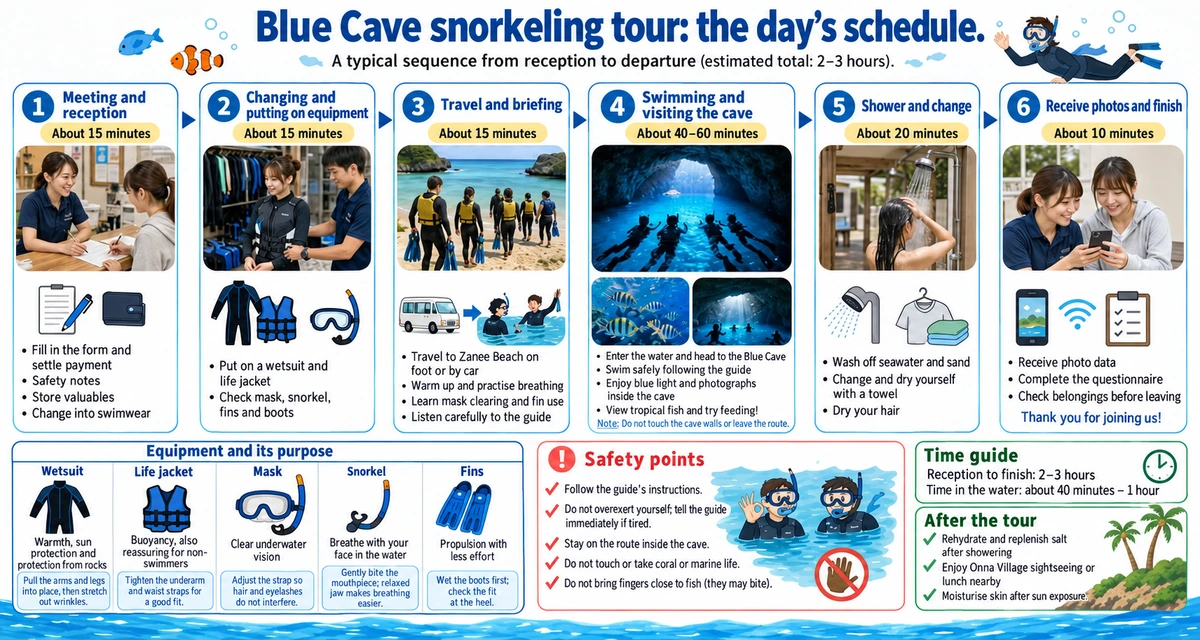
Blue Cave snorkeling tours from Zanee Beach generally have a clear sequence from check-in to departure so first-timers know what to do. Here we introduce the chronological flow from meeting and entering the sea to admiring blue light in the cave, changing, and leaving. Picturing the day helps you prepare comfortably and maximize limited time. Details and durations vary by shop, so always prioritize your booking email and information booklet.
From meeting to check-in and application forms
Many shops ask you to reach the store or local meeting point 10–15 minutes before the tour starts. Around Zanee Beach along Onna Village's coast, some routes pass narrow roads between houses and fields, so first-time visitors should set navigation to the shop address and allow extra time. Route 58 can become slow in the morning and evening.
At check-in, fill in your name, age, contacts, and medical conditions or allergies on the application/consent form. Pregnancy, histories of heart disease, respiratory disease, or epilepsy, and feeling unwell that day may prevent participation, so discuss concerns when applying. Participation after drinking alcohol is also prohibited.
Allow around 15 minutes just for check-in, including forms, payment, and explanations of precautions, to avoid rushing that day.
After check-in, leave valuables in lockers or storage boxes and change into your swimsuit. Wearing it under your clothes before arriving reduces changing time efficiently. Then receive equipment and travel to Zanee Beach's entry point on foot or by car.
Putting on a wetsuit and life jacket
Before entering the sea, put on equipment including a wetsuit, life jacket, mask, snorkel, fins, and water boots. The guide selects sizes for your build, but speak up if anything is too tight or loose. Even a single hair caught at the mask's edge can cause leakage, so lift your bangs clear when fitting it.
A life jacket is a lifeline providing buoyancy. Secure its zipper, belts, and crotch strap fully to prevent it riding up in the water.
| Equipment | Purpose | Fitting tips |
|---|---|---|
| Wetsuit | Warmth, sun protection, protection from rocks and jellyfish | Pull up from ankles and wrists in sequence and smooth wrinkles |
| Life jacket | Buoyancy reassuring even for non-swimmers | Fasten the crotch belt for a body fit |
| Mask | Underwater visibility | Adjust the strap without trapping hair or fingers |
| Snorkel | Breathe with your face in the water | Bite the mouthpiece lightly and close your lips to prevent water entering at the corners |
| Fins | Propulsion for longer swimming with little effort | Put on after boots and check the heel fit |
Once equipped, practice breathing in the shallows. The guide demonstrates clearing water from the snorkel with a strong exhalation, draining the mask, and flutter kicking with fins. How carefully you practice greatly affects later comfort.
Entering from Zanee Beach and swimming to the cave
After warmups, it is time to enter. Zanee Beach mixes sand and rocks with gradually increasing depth, letting you acclimatize from shallows where you can stand. Without Cape Maeda's steep stairs, it places less strain on people with limited stamina or families with small children.
After entry, follow the guide in a line or fan-shaped group toward the Blue Cave entrance. Anxious swimmers can hold the guide's ring or special equipment while moving, allowing participation without independent swimming. If the pace feels too fast, raise your hand to signal immediately.
Inside the cave, some places are too deep to stand and others have protruding rocks, so stay on the guide's route and do not touch rocks or stand up on your own for safety.
After reaching the cave's back, turn toward the entrance and look at the sea surface. Light entering from outside reflects off the seabed, creating a moment when the entire surface glows blue. Everyone usually spends a few minutes treading water or holding rings, with time provided for photos.
Encountering tropical fish and clownfish and taking underwater photos
After leaving the cave, continue snorkeling along nearby reefs. Onna Village's coastal sea has developed coral reefs and many colorful tropical fish, including sapphire damselfish, scissortail sergeants, butterflyfish, and parrotfish. You may also encounter false clownfish swimming around anemones, a particularly popular highlight for children.
Many tours offer fish feeding. When the guide scatters special food, schools surround you in a magical scene. Fish may bite fingers held close during feeding, so keep your hands closed while watching.
The guide takes underwater photos and videos with waterproof cameras or GoPro. Delivery varies, from immediate smartphone transfer after the tour to later downloads. Check beforehand whether it is free or costs extra. If bringing your own camera, always secure a drop-prevention strap to your wrist and keep one hand free to respond to guide signals.
Duration and what to do after the tour
The whole tour generally takes 2–3 hours including check-in and departure, with around 40 minutes–1 hour actually in the sea. Completing it within half a day lets you join in the morning and sightsee afterward, or use time after a flight arrival or before departure.
| Timeline | Details | Estimated time |
|---|---|---|
| Meeting / Check-in | Forms, payment, precaution explanations | About 15 minutes |
| Changing / Equipment | Change into swimsuit, put on wetsuit and life jacket | About 15 minutes |
| Travel / Instruction | Travel to Zanee Beach, warmup and breathing practice | About 15 minutes |
| Swimming / Cave visit | Entry, Blue Cave, tropical fish observation and feeding | About 40–60 minutes |
| Shower / Changing | Rinse salt off, change, dry hair | About 20 minutes |
| Photo delivery / Departure | Receive photo data, complete questionnaire | About 10 minutes |
Afterward, rinse seawater and sand thoroughly in the shower and pack wet swimsuits and towels in plastic bags. Wet hair can leave you chilled in the car, so ask about hair dryers at check-in.
Unlike diving, snorkeling does not readily accumulate nitrogen in the body, so there is generally no waiting-time restriction before flying. However, physical exertion and sunburn leave fatigue, so we recommend a manageable schedule that day.
Onna Village, home to Zanee Beach, has scenic places such as Cape Maeda and Cape Manzamo, cafes using local ingredients, and roadside stations. After leaving the sea, replenishing water and salt while heading to nearby sightseeing or lunch is standard. If concerned about sunburn, moisturizing after changing helps keep you comfortable for the rest of your trip.
Packing list for Zanee Beach and Blue Cave snorkeling
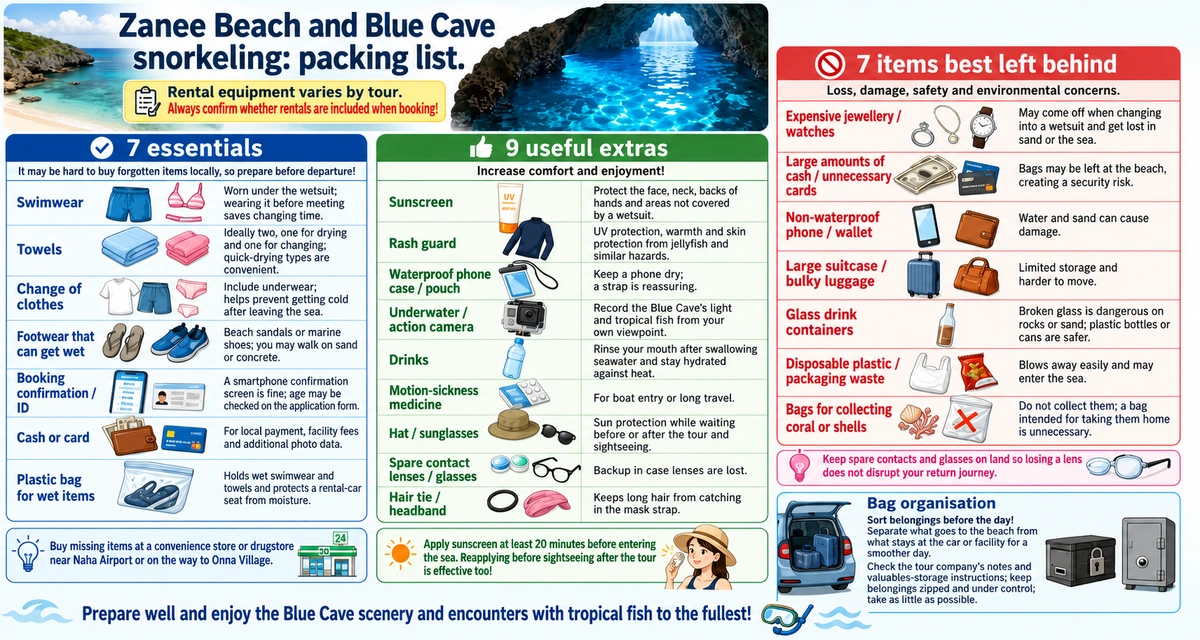
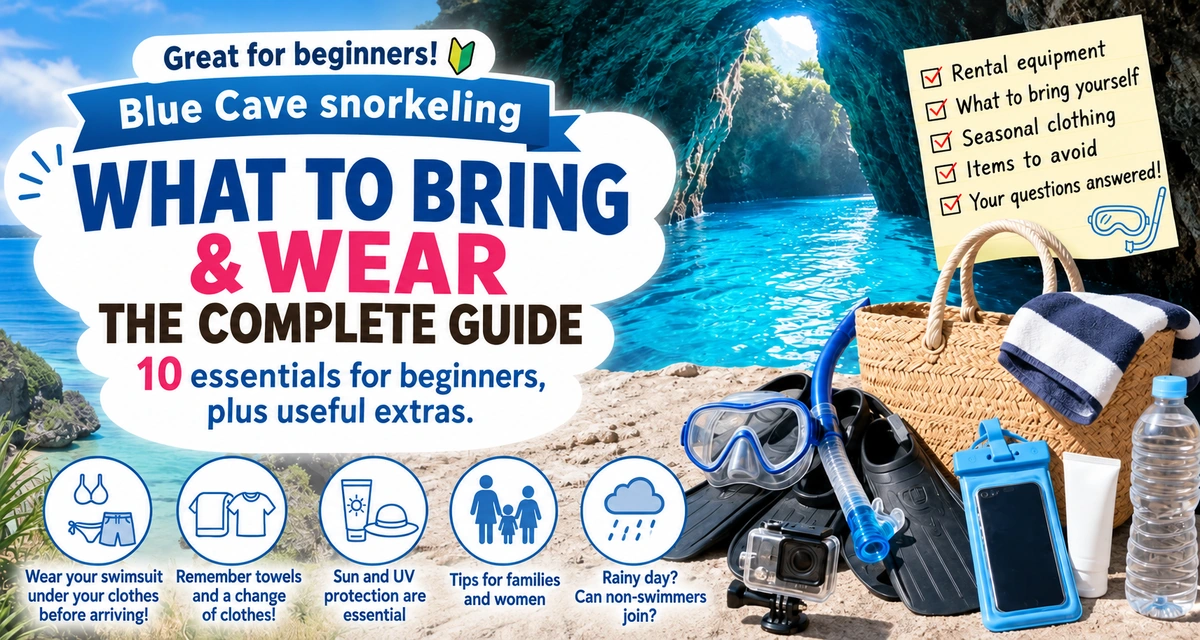
For snorkeling from Zanee Beach to the Blue Cave, tour companies usually lend major equipment such as wetsuits, life jackets, masks, snorkels, and fins. Many people therefore wonder what to bring, but items you need to prepare yourself are surprisingly simple. Here we organize them into 3 groups: essentials, useful extras that greatly improve comfort, and items better left behind.Equipment rental coverage differs by tour, so checking whether rental is included when booking is the first step in preparation.
Essentials to prepare
Start with items whose absence makes participation difficult or very inconvenient. Zanee Beach is a relatively quiet beach without large tourist facilities like Cape Maeda, so obtaining missing items locally is difficult.Buying anything missing near Naha Airport or at convenience stores and drugstores on the way to Onna Village is reassuring.
| Essential | Purpose and tips |
|---|---|
| Swimsuit | Wear under a wetsuit; putting it on before meeting saves changing effort |
| Towels | 2 for body and hair improve comfort; quick-drying types are convenient |
| Complete change of clothes | Include underwear; prevent chilling after leaving the sea |
| Footwear that can get wet | Flip-flops or water shoes; you may walk on rocks or concrete |
| Booking confirmation / Identification | Smartphone booking screen is acceptable; contact details may be checked on forms |
| Cash or card | For locally paid tours, parking, and extra photo data purchases |
| Plastic bag for wet items | Holds wet swimsuits and towels; essential for keeping rental car seats dry |
Swimsuit, towels, and a change of clothes
A swimsuit goes under the wetsuit for snorkeling, so choose one that moves easily without excessive tightness. For women, designs with many frills or ties catch when changing into or out of a wetsuit, making simple one-piece or sporty styles easier.Putting your swimsuit on at your accommodation or in the rental car before meeting greatly reduces changing time locally.
Separate a large body towel and a small hair/face towel for easier use. Wet towels can dry surprisingly slowly in Okinawa's sunshine, so groups should bring enough for every person. Quick-drying microfiber towels are compact and suitable for reducing travel luggage.
Bring both a top and bottom and remember underwear. Wind draws away body heat after leaving the sea, making it feel chilly even in summer. Especially from November (11) to March (3), a hoodie or windbreaker keeps you comfortable through later sightseeing.
Flip-flops and shoes that can get wet
Zanee Beach includes rocky, uneven terrain as well as sand. Barefoot walking may hurt your soles, so always bring footwear. Flip-flops are simple, while water shoes or sandals securing the heel prioritize safety.Choosing a strapped type that stays on prevents sandals being washed away at the shoreline.
Many tours lend fins, so you leave footwear ashore while swimming. Ask your guide where to put it and gather it where waves cannot wash it away. Some use old sneakers, but they dry slowly and can be inconvenient in the car afterward, making water shoes with drainage holes more practical.
Useful extras
Here are nonessential items that greatly affect tour satisfaction. Sun protection and photography equipment in particular often lead to wishing afterward that you had brought them.
| Useful item | Reason recommended |
|---|---|
| Sunscreen | Prevent sunburn on face, neck, and hands not covered by a wetsuit |
| Rash guard | UV protection, warmth, and protection from jellyfish and similar creatures |
| Waterproof case / Phone pouch | Bring a phone without getting it wet; straps provide reassurance |
| Underwater / Action camera | Record Blue Cave light and tropical fish from your viewpoint |
| Drinks | Rinse your mouth after swallowing seawater and hydrate to prevent heatstroke |
| Motion sickness medicine | Prepare for boat-entry tours or long car journeys |
| Hat / Sunglasses | Sun protection while waiting before/after tours or sightseeing nearby |
| Spare contacts / Glasses | Backup if a lens washes away |
| Hair tie / Headband | Prevent long hair tangling in the mask strap |
Sunscreen and rash guards
Okinawa's UV rays are stronger than Honshu's, and sea reflections add to them, so even short snorkeling can cause considerable sunburn. A wetsuit still leaves your face, neck, ears, and hands exposed, so apply sunscreen before meeting.Apply it at least 20 minutes before entering the sea and reapply before sightseeing after the tour because sweat and seawater wash it off.
Awareness is also growing of so-called coral-friendly sunscreen without ingredients identified as affecting coral reef ecosystems. The Blue Cave's waters have coral and tropical fish, making this worth considering for environmental care. Some tour companies provide sunscreen guidance; follow any instructions given.
Rash guards provide expected warmth as well as sun protection. They are not essential when tours lend wetsuits, but wearing one underneath prevents chafing and eases changing. Long-sleeved types also conveniently serve as an outer layer while traveling before and after the tour.
Waterproof cases and cameras such as GoPro
Light entering the Blue Cave and coloring the surface blue creates spectacular scenery you will want to photograph or film. Many guides take underwater photos and provide data free or for a fee, but bring equipment if you want freedom to shoot yourself.Because light inside is limited, low-light-capable action cameras or wide-angle equipment capture the blue more beautifully.
A waterproof case or pouch is essential for smartphone photography. Combining a neck strap or wrist-secured floating grip reduces the risk of sinking equipment if released. The route from Zanee Beach includes swimming, so fastening equipment while leaving both hands free is important.
Some tour companies impose safety conditions on personal cameras. Ask your guide when booking or checking in about selfie stick permission and cave photography rules to avoid problems.
Motion sickness medicine and drinks
Beach entry from Zanee Beach involves no boat, so seasickness is generally not a concern. However, boat-entry plans or days with remaining waves can involve rocking. If susceptible to motion sickness,medicine is more likely to work when taken 30 minutes to 1 hour before meeting, so prepare ahead to avoid rushing on arrival.
Prepare around 1 bottle of water or sports drink per 1 person. High summer temperatures and humidity cause sweating and mild dehydration even in the sea. Being able to rinse your mouth after swallowing seawater also improves comfort. Vending machines and convenience stores are not always nearby, so buying drinks on the way to Onna Village is reliable.
Items better left behind
Some items are better avoided for Zanee Beach and Blue Cave snorkeling because of loss or damage risks and safety or environmental considerations. Minimize luggage and generally leave valuables in the car trunk or at your accommodation.
| Item to avoid | Reason |
|---|---|
| Expensive accessories / Watches | Come off when changing wetsuits and are easily lost in sand or sea |
| Large amounts of cash / Unnecessary cards | Leaving belongings at the beach creates security risks |
| Phones / Wallets without waterproofing | Water or sand may damage them |
| Large suitcases / Excess luggage | Limited storage and obstruction during travel |
| Drinks in glass containers | Broken glass is dangerous on sand and rocks; plastic bottles or cans are safer |
| Disposable plastic / Packaging waste | Easily blown into the sea, creating environmental harm |
| Bags for coral or shells | Collection should be avoided; tools for taking them home are unnecessary |
Many soft contact lens users wear them under masks, but the risk of losing a lens is not zero.Keeping spare 1-day disposable lenses or glasses in the car prevents trouble driving home if a lens is lost.
Separating belongings for the beach from those left in the car or facilities beforehand makes the day smoother. Facilities around Zanee Beach are limited, so ask at check-in about baggage storage and valuables services and manage items according to guidance. With preparation complete, you can focus on Blue Cave scenery and tropical fish.
Best seasons and weather for Zanee Beach and the Blue Cave
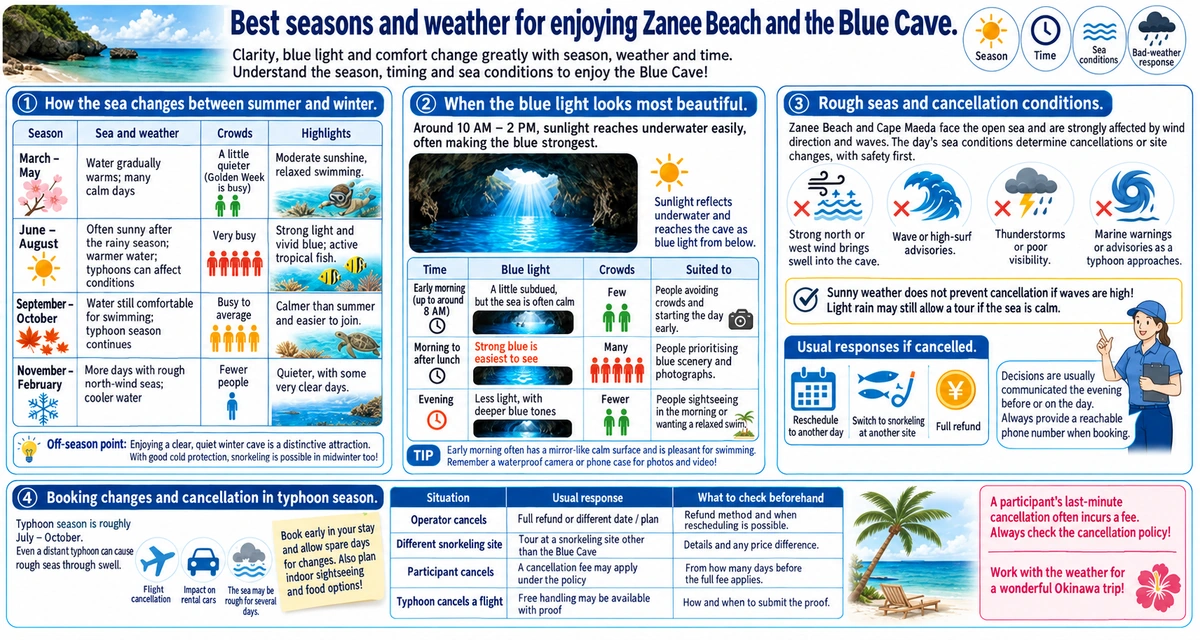
Blue Cave snorkeling operates year-round, but clarity, the appearance of the blue light, and comfort vary greatly by season, weather, and time. Zanee Beach is a small sandy beach south of Cape Maeda surrounded by rocks, making sea conditions sensitive to wind direction. Here we organize seasonal, timing, and sea-condition considerations for fully enjoying the Blue Cave in Onna Village, plus rough-weather arrangements.
How the sea changes between summer and winter
Okinawa's main island swimming season is generally around April (4) to October (10), when water temperatures are high and wetsuits allow comfortable swimming. Especially from July (7) to September (9) after the rainy season, strong sunshine brings more light into the cave and many vivid-blue days. Summer is also tourism high season, with visitors from Japan and overseas crowding the area, so aiming for early morning or evening is effective.
Winter water temperatures fall, but tour companies often prepare insulating full suits and hooded vests, making midwinter snorkeling possible with cold protection. Fewer tourists and some days with less plankton causing cloudiness mean leisurely Blue Cave enjoyment in clear, quiet seas is a distinctive winter attraction. However, strong northerly winds readily raise waves and increase cancellations, so allowing flexibility is reassuring.
| Period | Sea / Climate tendencies | Crowding | Recommended points |
|---|---|---|---|
| March–May (3–5) | Water gradually warms; many calm days | Somewhat lower (Golden Week crowded) | Sunshine not too strong; relaxed swimming |
| June–August (6–8) | Many sunny days and warm water after the rainy season; typhoon effects | Very high | Plentiful light produces vivid blue; active tropical fish |
| September–October (9–10) | Water still comfortable; typhoon season continues | High to normal | Calmer participation than summer |
| November–February (11–2) | More waves from northerly winds; cooler water | Lower | Uncrowded with some high-clarity days |
When the blue light looks most beautiful
The Blue Cave's color comes from sunlight entering from outside, reflecting in the sea, and reaching the cave as blue light from the seabed. Therefore,around 10 a.m. to 2 p.m., when the sun is high and light reaches underwater easily, is said to produce the deepest blue. The blue is visible even on cloudy days, but contrast is clearer in strong sunshine under clear skies.
This is also the busiest time. People wanting relaxed swimming and thorough photography should choose less crowded early-morning sessions. The sea is often calm then, sometimes with a mirror-like surface on the way to the cave. Evening sessions have less light and a subdued blue, but fewer people suit leisurely visitors.
| Time | Blue appearance | Crowding | Suitable for |
|---|---|---|---|
| Early morning (through the 8:00 hour) | Somewhat subdued, but often calm seas | Low | People avoiding crowds or filling the rest of the day's schedule |
| Morning–early afternoon | Deepest blue most likely | High | People prioritizing blue beauty or photography |
| Evening | Less light and paler blue | Lower | People sightseeing in the morning or preferring relaxation |
High waves and conditions causing cancellation
Zanee Beach and Cape Maeda face the open sea and are strongly affected by wind direction and wave height. Strong northerly or westerly winds bring swells and whitecaps near the cave entrance, preventing safe entry. Tours then generally cancel or switch to a calmer alternative spot.
Cancellation or alternative decisions are usually made that morning by observing local sea conditions as well as forecasts.Remember that Blue Cave tours cancel in high waves even under sunshine and operate in light rain if the sea is calm. Notifications often arrive by phone or email from the previous evening through that morning, so provide a number where you can be reached while traveling.
- Swells from strong northerly or westerly winds bring waves inside the cave
- Wave advisories or high-wave forecasts
- Rough weather with thunder or poor visibility
- Marine warnings or advisories as a typhoon approaches
Cancellation generally leads to rescheduling, snorkeling at another spot, or a full refund. Arrangements vary by company, so always check before booking.
Booking changes and cancellations during typhoon season
Okinawa's typhoon season is roughly July (7) to October (10). Even without a direct hit, swells from distant typhoons can leave the sea rough for several days. Approaching typhoons also cause flight cancellations and affect rental car operations, so allowing flexibility in the entire travel schedule is important.
Many tour companies charge no cancellation fee when they cancel because of typhoons or rough weather. However,last-minute personal cancellations often incur specified fees, so always check the cancellation policy when booking.
| Situation | General response | What to check beforehand |
|---|---|---|
| Organizer cancellation | Full refund or date/plan change | Refund method and eligible rescheduling period |
| Alternative spot | Snorkeling somewhere other than the Blue Cave | Alternative content and price differences |
| Personal cancellation | Fees according to policy | How many days beforehand fees begin |
| Flight cancellation from typhoon | Free cancellation may apply with proof | Required communication method and deadline |
During typhoon season, a wise approach is booking the Blue Cave early in your stay and allowing rescheduling later if canceled. Preparing indoor sightseeing and dining alternatives for rough-sea days also lets you enjoy Okinawa regardless of weather.
Precautions and etiquette at Zanee Beach and the Blue Cave
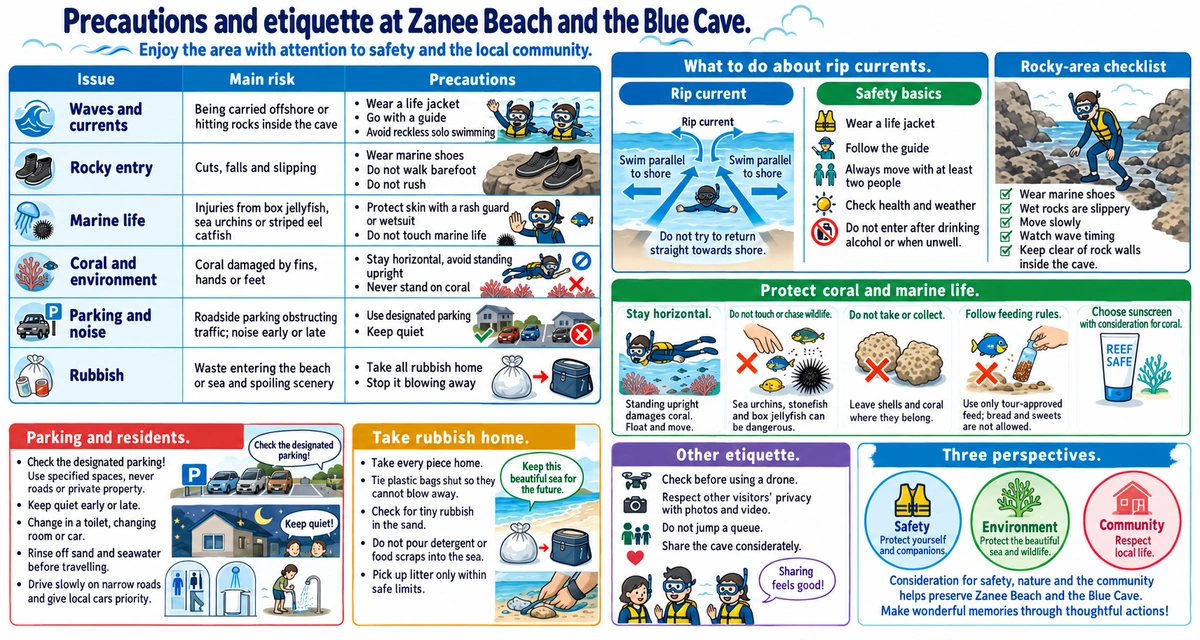
Zanee Beach and the Blue Cave are popular snorkeling spots in Onna Village with clear water, tropical fish, and coral. They are also natural seas facing the open ocean, with rocks and currents requiring care. Zanee Beach lacks Cape Maeda's large tourist development and lies within a residential area near houses and fields.Awareness of both safety and local residents is fundamental to enjoying Blue Cave snorkeling from Zanee Beach comfortably. Here we explain common local problems and traveler etiquette.
| Concern | Main risk / Problem | Precautions |
|---|---|---|
| Waves / Currents | Being swept offshore or struck against cave rocks | Wear a life jacket, accompany a guide, avoid unsafe solo swimming |
| Rocks / Entry | Cuts, falls, slipping | Wear water shoes, avoid bare feet, do not rush |
| Marine life | Harm from habu jellyfish, sea urchins, striped eel catfish, and similar creatures | Protect skin with rash guards or wetsuits; do not touch creatures |
| Coral / Environment | Coral damage from fins, hands, or feet | Avoid treading water; stay horizontal and do not stand on coral |
| Parking / Noise | Obstructing traffic with street parking, early/late noise | Use designated parking and act quietly |
| Litter | Waste reaching beach or sea, damaged scenery | Always take litter home and prevent it blowing away |
Safety around rip currents and rocks
The route from Zanee Beach to the Blue Cave passes open-sea waters. Even when the weather appears calm, offshore swells or changing currents from wind direction may occur. Around complex capes and rocks, waves returning offshore readily create strong rip currents, risking even confident swimmers being unable to return.If you feel swept away, generally swim parallel to shore to leave the current rather than trying to return straight toward shore. Avoid panic and prioritize floating first.
The Zanee Beach entry area has rocks and rough terrain that can cut bare soles. Wear water shoes or heel-secured sandals and move slowly, assuming wet rocks are slippery. Inside the Blue Cave, waves may push you toward rock walls, so keep your distance and follow the guide's instructions on moving forward or back.
The most reliable safety approach is using a tour with a guide who knows the terrain and tides thoroughly. Always wear a life jacket, avoid solo behavior even during free swimming, and stay with at least two people. Avoid swimming after drinking, when unwell, or sleep-deprived because accidents become more likely. With children, guardians should supervise within reach even in shallow water.
Avoiding harm to coral and wildlife
Coral and small reefs dot the seabed from Zanee Beach to the Blue Cave, home to clownfish, damselfish, and many tropical fish. Lowering your feet to stand while snorkeling may break coral with fins or toes. Coral takes many years to grow, so when tired, rest floating on your back with your life jacket's buoyancy instead of standing; this is a sea-friendly break. Stay parallel to the surface and avoid large fin movements in shallows.
Avoid forcibly catching or chasing fish, starfish, and sea cucumbers too. Touching sea urchin spines, striped eel catfish venomous spines, or habu jellyfish risks injury. Rash guards and wetsuits reducing exposed skin help prevent contact injuries as well as sunburn. Avoid taking shells and coral fragments as souvenirs because it affects ecosystems and beach maintenance.
Even on fish-feeding tours, use the guide's food as instructed and do not scatter bread, sweets, or other food you brought yourself. Doing so disrupts marine diets and ecosystems. Choosing sea-friendly sunscreen avoiding ingredients identified as affecting coral also allows more environmentally considerate enjoyment.
Parking etiquette and consideration for local residents
Zanee Beach lacks large tourist parking like Cape Maeda and is close to houses, fields, and narrow local roads.Street parking and unauthorized private-property parking disrupt local lives and may create serious problems obstructing emergency vehicles. Always use designated spaces or the operator's parking, and follow attendants' instructions if full.
On early tours, loud conversations, car doors, and revving engines create noise for residents. Remember nearby homes and act quietly. Change only using restrooms, changing rooms, or privacy screens in cars, avoiding outdoor changing. Using showers and foot-washing areas to avoid walking around covered in sand and saltwater is also good etiquette.
Consider passing vehicles on narrow roads and agricultural traffic too. Slow down in rental cars and allow local vehicles priority. These small acts of consideration help keep Zanee Beach open to tourists.
Taking litter home and environmental conservation
Zanee Beach often lacks permanent trash bins, so taking your own bottles, wrappers, and sunscreen containers home is the rule.Plastic and shopping bags easily blow into the sea and may be swallowed by sea turtles and fish, so tie them closed and keep them in a weighted bag. After beach meals especially, small litter hides in sand, so develop the habit of checking around before leaving.
The Blue Cave's beautiful color is possible because water clarity is maintained. Basic care such as keeping detergent, food scraps, and oils out of the sea, boat, and beach lets future visitors see the same spectacular view. If you see washed-up litter, picking it up and taking it home within reasonable limits also contributes to conservation.
Drone photography may be restricted by location, so check with operators or managers beforehand. Alongside respecting privacy when posting photos of other visitors and not cutting queues,considering safety, environment, and the local community is the biggest factor in preserving Zanee Beach and the Blue Cave as destinations enjoyed for years.
Onna Village sightseeing spots to visit with Zanee Beach and the Blue Cave
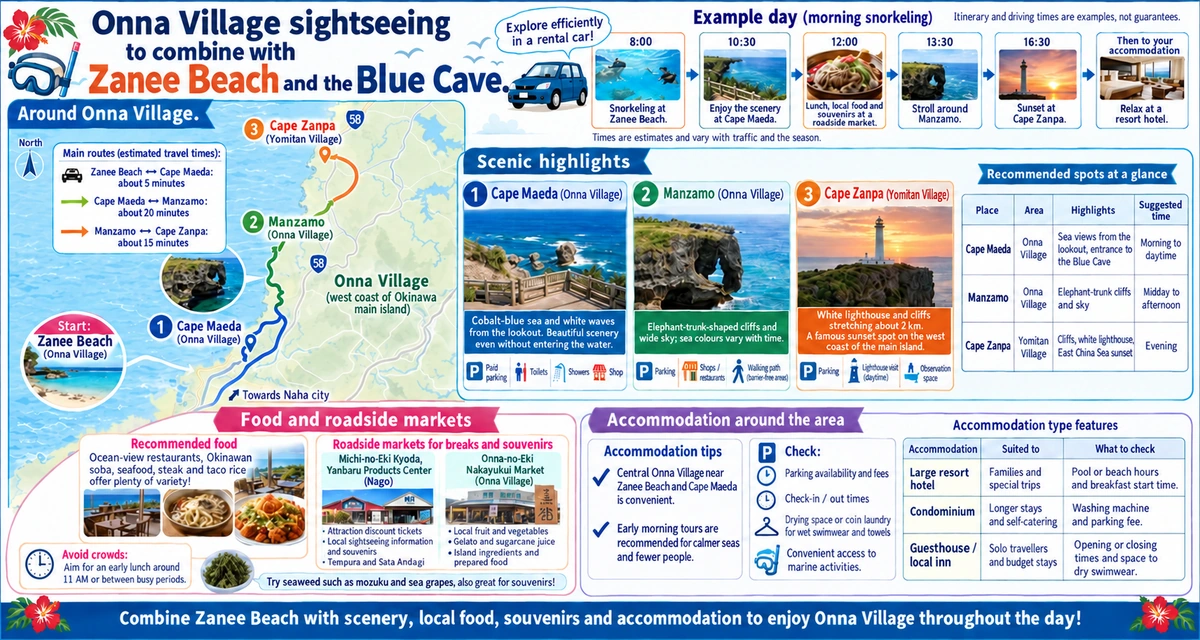
Many Blue Cave snorkeling plans from Zanee Beach take around 2 hours in the morning or finish before evening with an afternoon start, leaving half a day free. Since you have traveled to Onna Village, combine nearby scenery, food, and resort hotels after the sea to fill 1 day with Okinawa's west coast appeal. Onna Village has sightseeing landmarks scattered along Route 58, easily visited efficiently by rental car. Here we introduce classic post-snorkeling stops and tips for visiting them.
Cape Maeda and nearby scenic spots
The nearest sightseeing spot to Zanee Beach, known as a major Blue Cave entry point,Cape Maeda is worth visiting just for observation-platform views without entering the sea. From the viewing deck at the cape's tip, you see sheer rocks, crashing white waves, and cobalt-blue sea beyond. On clear days, the coastline toward Cape Zanpa may be visible in the distance.
Cape Maeda has parking, showers, restrooms, and shops, making it convenient for a rest after snorkeling. Parking is paid, however, and often fills during high-season daytime. Driving a few minutes there after your Zanee Beach tour is relatively smooth. Paths and stairs to the observation platform are slippery when wet, so change from flip-flops to sneakers or grippy sandals for reassurance.
The coastal road heading north from Cape Maeda is itself a popular driving route. Route 58, with blue sea to your left, offers characteristic Onna Village scenery. Simply stopping at small viewpoints and sea-view cafes along the way greatly improves trip satisfaction.
Cape Manzamo and Cape Zanpa
Two leading scenic places representing Onna Village are Cape Manzamo and Cape Zanpa. Both are within 30 minutes by car from Zanee Beach and commonly visited together with Blue Cave snorkeling.
Cape Manzamo features an elephant-trunk-shaped Ryukyu limestone cliff and natural grassland above.The sea below changes appearance with weather and time, showing particularly vivid gradients on sunny afternoons. The Manzamo Area Revitalization Facility now includes restaurants, souvenir shops, and parking, making an easy sightseeing base. Paths are maintained but some sections run close to cliffs, so stay inside fences and hold small children's hands.
Cape Zanpa is in Yomitan Village south of Onna Village. Tall cliffs extend about 2km, with the white Cape Zanpa Lighthouse at the tip, creating an iconic west-coast scene. The lighthouse opens for interior visits on some days, and climbing its spiral stairs reveals a 360-degree East China Sea view. Facing west,Cape Zanpa is known as one of the main island west coast's leading sunset spots. A morning Blue Cave tour, afternoon Cape Manzamo visit, and evening Cape Zanpa visit let you travel efficiently while enjoying changing light.
| Spot | Area | Highlights | Recommended time |
|---|---|---|---|
| Cape Maeda | Onna Village | Sea views from the platform, Blue Cave entrance | Morning–midday |
| Cape Manzamo | Onna Village | Elephant-trunk-shaped cliff and grassland | Midday–afternoon |
| Cape Zanpa | Yomitan Village | Cliffs, white lighthouse, East China Sea sunset | Evening |
Recommended food and roadside stations in Onna Village
Snorkeling makes you hungrier than expected. The sea draws away body heat and swimming uses energy, making the post-tour meal a major travel pleasure. Route 58 in Onna Village offers many types of restaurants, including Okinawa soba, seafood, steakhouses, and cafes popular for taco rice and burgers.
Especially popular are ocean-view cafes and restaurants where you can eat overlooking the sea; early lunch or later dining avoids busy hours. Morning Blue Cave tours may finish around 11:00, so heading directly to early lunch reduces waiting.
For souvenirs and breaks, Roadside Station Kyoda Yanbaru Products Center is convenient. In Nago City north of Onna Village, it sells northern Okinawa attraction tickets, local produce, fresh-fried tempura, sata andagi, and other light food. Within Onna Village, Onna-no-Eki Nakayukui Market is another classic, with local fruit and vegetables, gelato, sugarcane juice, and light meals using island ingredients, perfect for a driving break. Hours and products may change seasonally, so check beforehand.
Onna Village is also known for marine products such as mozuku seaweed and sea grapes. Ordering a dish using them or buying them at a market to take home is another fitting enjoyment for a day at sea.
Nearby accommodation and resort hotels
Onna Village has one of Okinawa's highest concentrations of resort hotels, with large hotels lining the coast along Route 58. Its appeal is choosing according to budget and style, from full resort hotels with private beaches, pools, and spas to room-only condominiums, small-group guesthouses, and family-run inns.
If planning a Blue Cave snorkeling tour,choosing accommodation in central or southern Onna Village near Zanee Beach and Cape Maeda lets you handle early meeting times comfortably. Earlier morning sessions tend to have calmer seas, fewer people, and more consistent blue views, making staying nearby the previous night advantageous.
When choosing accommodation, check parking availability and fees, check-in/out times, spaces to dry wet swimsuits and towels, and coin laundry. Your belongings are wet after snorkeling, so these facilities affect comfort. Some hotels also have marine activity desks arranging Blue Cave tours.
| Accommodation type | Suitable for | What to check |
|---|---|---|
| Large resort hotel | Families, anniversary trips | Pool and beach hours, breakfast start time |
| Condominium | Long stays, people wanting to cook | Washing machine availability, parking fees |
| Guesthouse / Family-run inn | Solo travelers, budget-conscious visitors | Curfew, swimsuit drying space |
Onna Village accommodation fills early during busy periods such as summer vacation, Golden Week, and New Year. Booking accommodation together with the Blue Cave tour also simplifies travel planning. Centering your sea activities on Zanee Beach and combining Cape Maeda, Cape Manzamo, Cape Zanpa, food, and roadside stations creates a fulfilling Okinawa itinerary around Onna Village.
Frequently asked questions about Zanee Beach and the Blue Cave
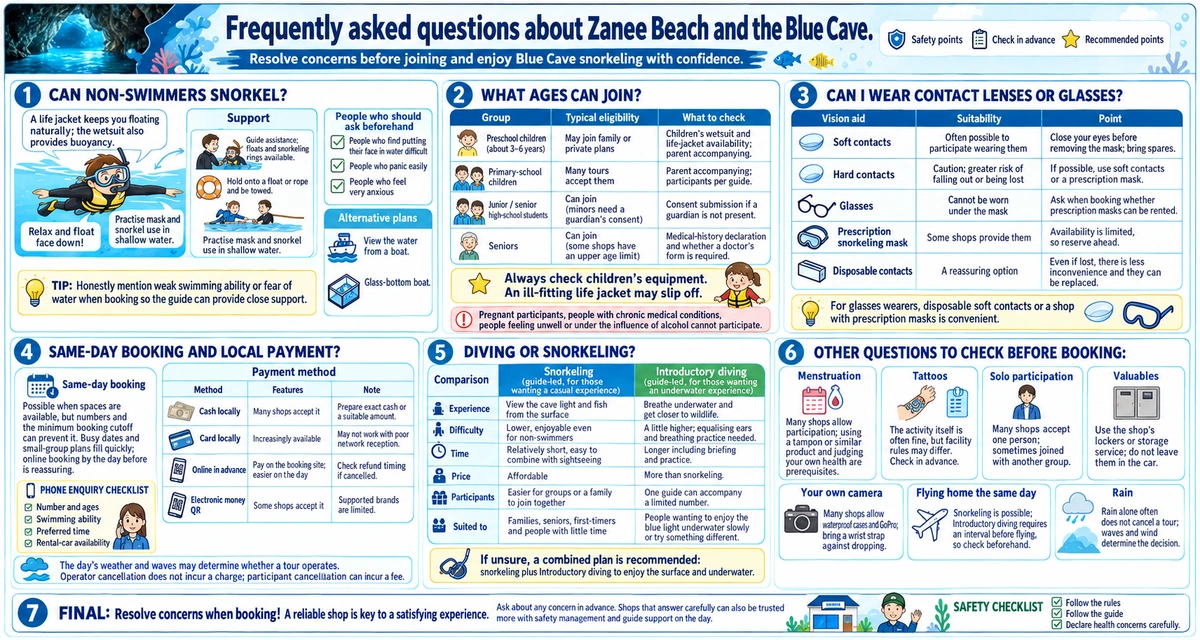
Snorkeling tours from Zanee Beach to the Blue Cave are highly popular Okinawa activities. First-timers also often worry about whether non-swimmers can join and minimum ages for children. Here we organize common questions in Onna Village's Zanee Beach / Blue Cave area and points to know before participating. Use them for booking decisions and checking preparations.
Can non-swimmers snorkel?
Yes, non-swimmers can participate in Blue Cave snorkeling. Tours always use life jackets, ensuring buoyancy when entering the sea.A correctly worn life jacket naturally keeps your body floating, so you will not sink even where you cannot stand. Wetsuits also provide buoyancy, so simply relaxing at the surface allows underwater scenery enjoyment.
Many shops also provide rings or snorkeling rings, with guides towing anxious participants using handles or ropes. Breathing uses a snorkel tube, so being able to breathe through your mouth with your face in the water is sufficient. Tours generally provide shallow-water practice with masks and snorkels before entry.
However, if putting your face in water strongly frightens you or you panic easily, consult the shop when booking.Honestly saying you cannot swim or are uncomfortable with water when applying is the main way to achieve a safe, enjoyable experience. Guides can arrange to stay nearby from the start. If still anxious, alternatives include viewing the surface from a boat or taking a glass-bottom boat.
What is the minimum age?
Age limits differ by shop. Blue Cave tours around Zanee Beach and Cape Maeda generally divide between plans open to preschoolers and those requiring elementary-school age or above. Besides age, height, weight, and wetsuit/life jacket fit are decision criteria.
| Group | Participation guidance | What to check |
|---|---|---|
| Preschoolers (around ages 3–6) | May participate in family or private plans | Children's wetsuit/life jacket stock and guardian accompaniment conditions |
| Elementary-school children | Accepted by many tours | Guardian accompaniment and participant count per 1 guide |
| Junior/senior high students | Can participate (minors need guardian consent) | How to submit consent if guardians do not accompany |
| Seniors | Can participate (some shops set maximum ages) | Medical conditions and doctor's certificate requirements |
With small children, always check children's equipment availability as well as minimum age beforehand. An ill-fitting life jacket can slip off, so shops advertising children's support provide reassurance. Private family or small-group tours also allow closer guide supervision and swimming distances and times adjusted to children's pace.
Pregnant participants, people with heart or respiratory conditions, and anyone unwell or having consumed alcohol that day are refused participation. This is a common safety rule, so do not push yourself and adjust dates.
Can I participate wearing contacts or glasses?
This is especially common among people concerned about vision. The basic approach is as follows.
| Vision option | Availability | Tips |
|---|---|---|
| Soft contact lenses | Often usable during participation | Close eyes before removing the mask; bring spare lenses |
| Hard contact lenses | Easily dislodged with high loss risk | Consider soft lenses or a prescription mask if possible |
| Glasses | Cannot be worn under a mask | Ask about prescription mask rental when booking |
| Prescription snorkeling mask | Available at some shops | Limited prescription strengths make advance booking essential |
| Disposable contacts | The most reassuring choice | Less loss if washed away and easy to bring spares |
Masks seal against the face, so glasses create gaps allowing water in. Therefore,practical solutions for glasses users are bringing disposable soft contacts or choosing a shop offering prescription masks. If wearing contacts, drain water entering the mask with your eyes closed to prevent lenses washing out.
The Blue Cave's interior takes on magical blue shades with the light, but blurred vision prevents fully appreciating its beauty. Tours including photo data also let you examine images afterward of details you could not see clearly.
Are same-day bookings and local payment possible?
Some shops accept same-day bookings if space remains, but Blue Cave tours around Zanee Beach and Cape Maeda are popular and often fill several days ahead during summer vacation, long holidays, and weekends.To secure preferred dates and small-group plans, online booking at least several days ahead is recommended.
Payment methods include the following. Conditions vary with booking sites and shop websites, so always check the application screen.
| Payment method | Features | Precautions |
|---|---|---|
| Local cash payment | Accepted by many shops | Prepare change and sufficient cash for all participants |
| Local card payment | Increasingly available | Bring backup cash because network conditions may prevent use |
| Advance online payment | Completed through booking sites, speeding up the day | Check when cancellation fees begin |
| Electronic money / QR payment | Available at some shops | Supported brands are limited |
For same-day bookings, that day's operation may be decided in the morning according to weather and waves. When calling, provide participant numbers, ages, swimming ability, desired time, and whether you have a rental car. Weather cancellations generally incur no charges, while personal cancellations incur specified fees.
Which is recommended: diving or snorkeling?
Both snorkeling and introductory diving are available at the Blue Cave. The choice depends on what you want to do underwater and how you want to allocate time and budget.
| Comparison | Snorkeling | Introductory diving |
|---|---|---|
| Enjoyment | Look down at blue cave light and fish schools from the surface | Dive underwater and get closer to wildlife |
| Difficulty | Low; easy participation even for non-swimmers | Somewhat higher; equalizing and breathing practice needed |
| Duration | Relatively short and easy to combine with sightseeing in half a day | Longer including explanations and equipment |
| Price | Affordable | Higher than snorkeling |
| Group size | Easy participation for whole families or groups | Limits on simultaneous participants per 1 guide |
| Suitable for | Families, seniors, first-timers, people seeking easy enjoyment | People wanting thorough underwater observation and an extraordinary experience |
Snorkeling suits first-time Blue Cave visitors and families wanting to share the experience together. Floating in a life jacket lets you admire glowing blue water and clownfish or tropical fish schools from above, with lightweight equipment and little strain.
In contrast,introductory diving is more satisfying if you want to enter the underwater world and swim at fish-eye level. After equipment and breathing explanations, you dive holding an instructor's hand, so no license is needed. However, difficulty equalizing, nasal congestion, or feeling unwell that day may prevent diving.
If undecided, choose a package combining snorkeling and introductory diving. Experiencing both on the same day lets you compare views from the surface and underwater and fully enjoy the Blue Cave's appeal. With time in your itinerary, morning snorkeling and afternoon Onna Village sightseeing is physically manageable.
Other details to check before booking
The following questions are also common for Zanee Beach and Blue Cave tours. Although detailed, they directly affect comfort that day.
| Common question | Answer guidance |
|---|---|
| Can I participate during menstruation? | Many shops allow it, assuming tampon use and decisions based on physical condition |
| Are tattoos acceptable? | Often fine for the sea activity itself, but check facility use beforehand |
| Can I join alone? | Many shops accept 1 participant; you may join other groups |
| What about valuables? | Use shop lockers or storage and do not leave them in cars |
| Can I photograph with my own camera? | Many shops allow waterproof cases or GoPro; remember a drop-prevention strap |
| Can I participate on a flight day? | Snorkeling yes; introductory diving needs time before flying, so consult the shop |
| Does it operate in rain? | Rain alone often does not cancel tours; waves and wind determine operation |
Unresolved questions on the day prevent fully enjoying the Blue Cave.Asking the shop when booking and resolving concerns individually is the direct route to a satisfying experience. Shops answering carefully also tend to offer trustworthy safety management and guiding that day.
Conclusion
Zanee Beach in Onna Village on Okinawa's main island offers relatively calm surroundings despite being near Cape Maeda and serves as an entry point for Blue Cave snorkeling. Avoiding crowds more easily than Cape Maeda stair entry and suiting people seeking relaxed sea enjoyment are major reasons it is called a hidden gem.
The standard access route uses a rental car from Naha Airport via the Okinawa Expressway. Public transportation is not particularly convenient, making tours with transfers another option. Facilities, restrooms, and showers vary by operator, so always check when booking.
For a successful tour choice, check small-group arrangements, price inclusions, photo data, rental coverage, support for children and non-swimmers, safety measures, and reviews together. A swimsuit, towels, and clothes form the basic packing list; sunscreen, a rash guard, and a waterproof case improve comfort.
Sea conditions may cause cancellation or location changes, decisions made with safety first. Avoid harming coral and wildlife, follow parking etiquette, take litter home, and fully enjoy Okinawa's distinctive blue sea alongside Onna Village sightseeing such as Cape Manzamo and Cape Zanpa.