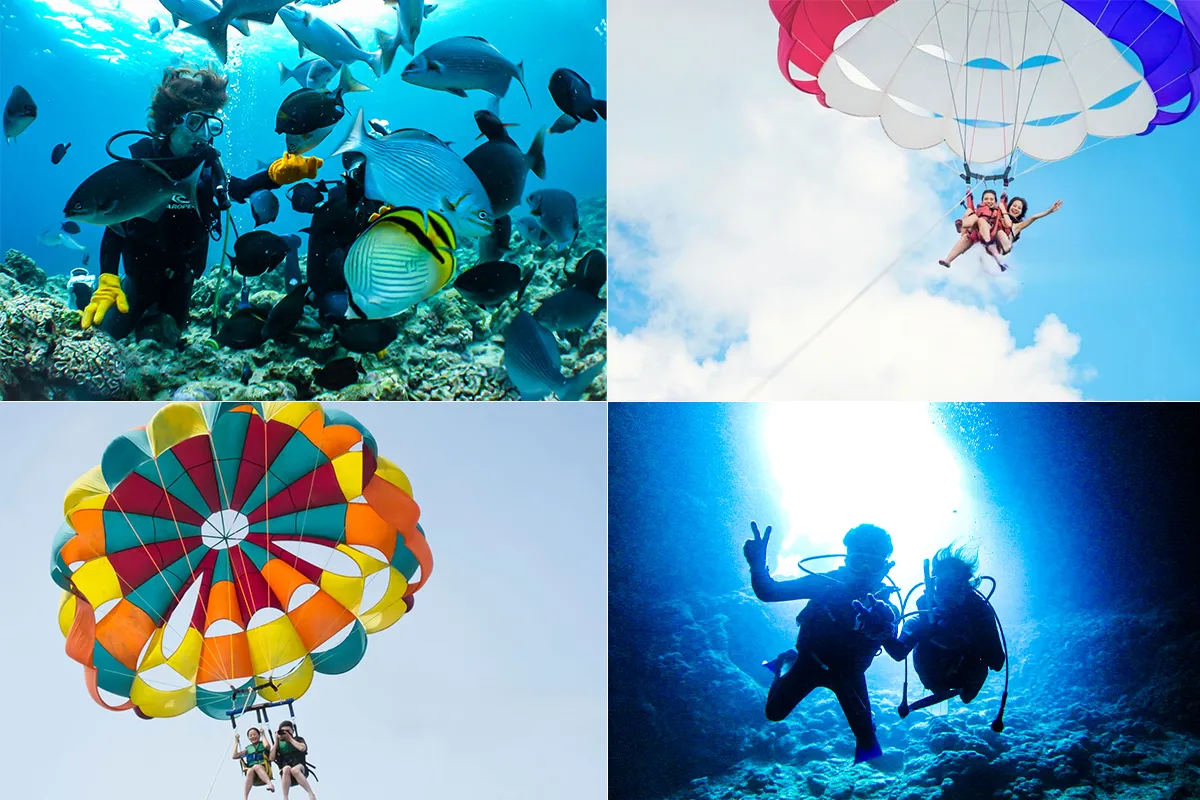
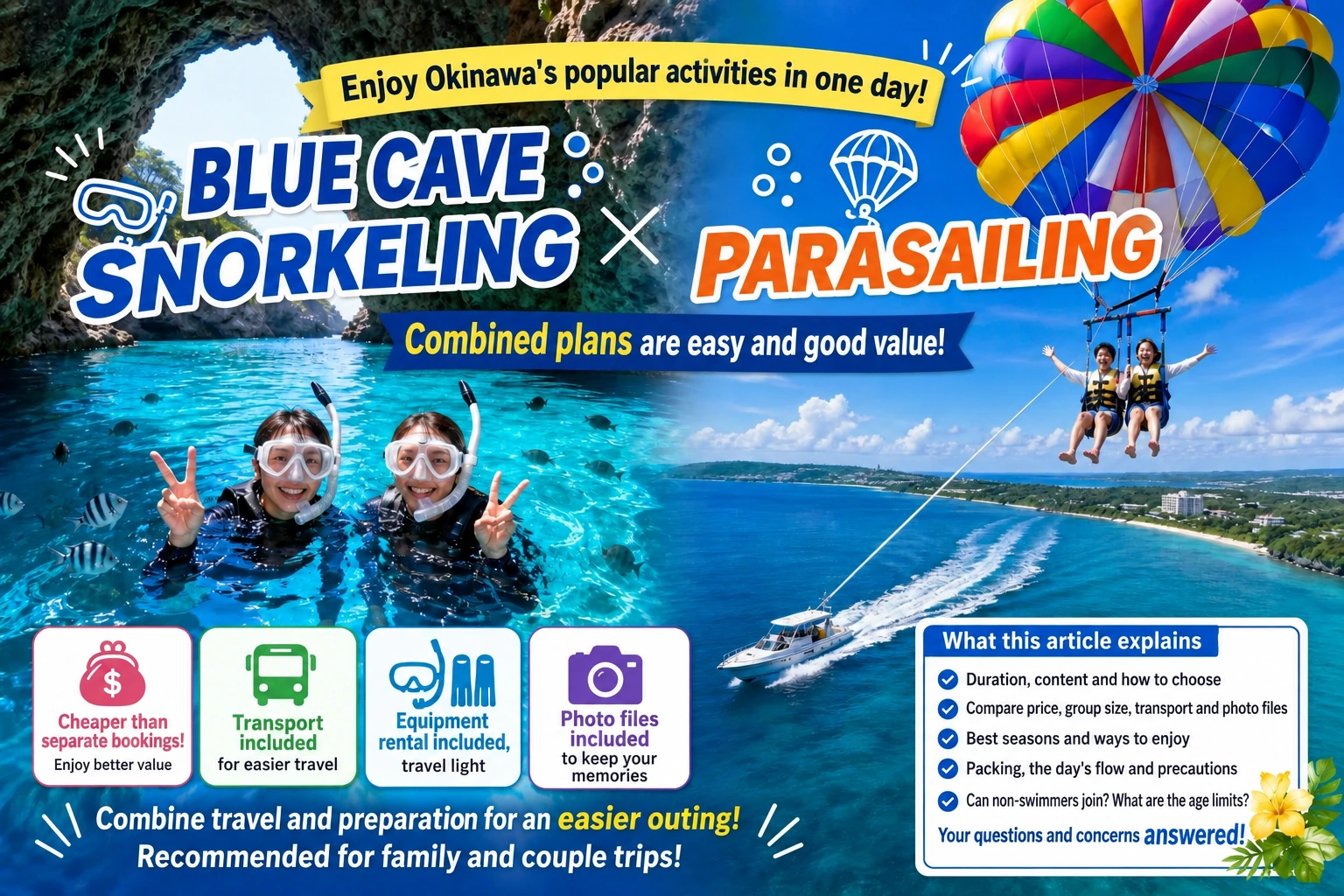
Blue Cave snorkeling and parasailing are two must-do, highly popular marine activities for an Okinawa trip. However, booking them separately makes transfers and meeting times difficult to coordinate and often costs more. A combined plan is therefore worth considering: it lets you experience the Blue Cave near Cape Maeda and parasailing together in 1 day or half a day. This article explains comparison points, from the basic content and duration of combined plans, choosing between snorkeling and diving, and typical parasailing heights and flight times to prices, group sizes, transport availability, and photo data policies at popular shops in Onna Village, Chatan, and Naha. Ultimately, the greatest reason Okinawa travelers choose combined plans is that they cost less than separate bookings and greatly reduce the effort of travel and preparation by including transport and equipment rental. We also cover ways to enjoy both summer's swimming season and spring and fall, when visibility improves and crowds ease, the process from booking to the day itself, and a packing checklist including swimsuits, towels, sunscreen, and motion sickness medicine. We answer concerns such as whether non-swimmers can participate and what restrictions apply to children and ages, so that after reading you can confidently choose the best plan for your family or couple's trip and approach the day with peace of mind.
What is a combined plan for enjoying the Blue Cave and parasailing together?
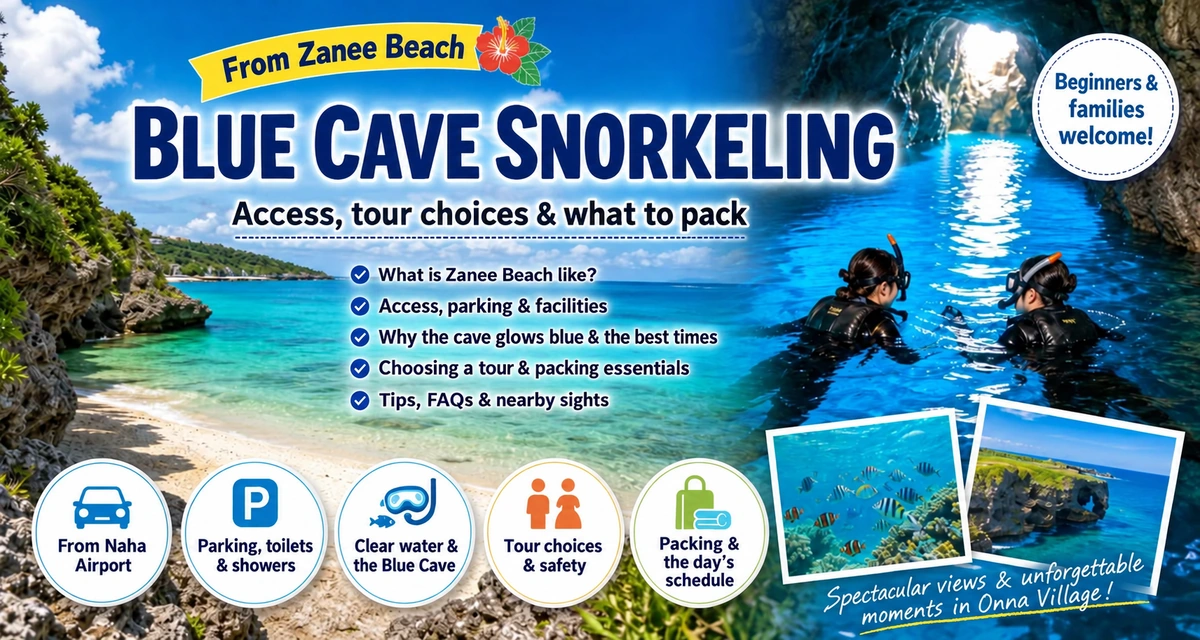
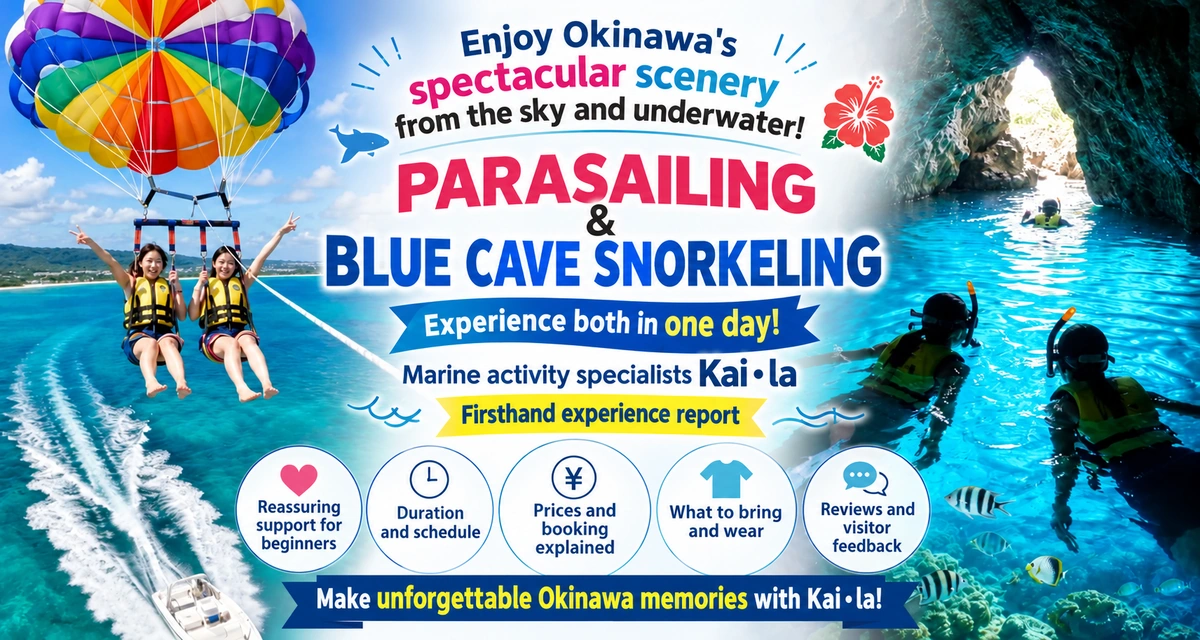
The Blue Cave, located at Cape Maeda in Onna Village on Okinawa's main island, is one of Okinawa's signature popular spots, where sunlight reflected underwater turns the cave a mysterious blue. Parasailing, meanwhile, is a marine activity in which a boat tows you as a parachute carries you into the sky, offering panoramic views of emerald-green seas and Okinawa's island silhouettes. A Blue Cave × parasailing combined plan lets you experience these 2 activities together in 1 day or half a day.
Many Okinawa visitors have limited stays, and numerous marine shops offer combined plans to meet the desire to experience both underwater and the sky. They are popular because they cost less than booking each activity individually and require travel and check-in only once, allowing efficient memory-making even on a first Okinawa trip.
The greatest appeal of a combined plan is experiencing both the underwater blue of the Blue Cave and the blue sea seen from the sky while parasailing in 1 day.
Differences between Blue Cave snorkeling and diving
There are 2 main ways to experience the Blue Cave: snorkeling and introductory diving. Your choice changes the time required, price, and scenery you see, making it an important factor when considering a combination with parasailing.
Snorkeling involves floating at the surface in a life jacket and observing underwater through a mask while using a snorkel, a tube for breathing. Because you remain afloat, it is accessible even to people who struggle with swimming and is less physically demanding. It also takes less time, allowing a relaxed schedule even when combined with parasailing.
Introductory diving, on the other hand, involves wearing a tank and going underwater to observe schools of fish and the cave's interior more closely. You can participate without certification under an instructor's guidance, but equipment explanations and underwater breathing practice are required, so it takes longer than snorkeling.
| Comparison | Snorkeling | Introductory diving |
|---|---|---|
| Style | Float at the surface and observe underwater | Wear a tank and descend underwater |
| Certification | Not required | Not required for introductory diving |
| Swimming ability | Accessible even to non-swimmers | Non-swimmers can participate, but instruction is required |
| Physical demands | Relatively light | Somewhat greater due to heavy equipment |
| Typical pricing | Relatively affordable | Higher than snorkeling |
| Suitable for | Families with small children, beginners, and people wanting a short experience | People wanting close-up fish views or prioritizing an extraordinary experience |
Combining parasailing with snorkeling is the most common option, with many choices available. A combination with introductory diving often requires 1 full day, so it is reassuring to schedule it on a day with plenty of time rather than your arrival or departure day.
If your group includes people who struggle with swimming or small children, we recommend first considering snorkeling plus parasailing.
Access to the Blue Cave: boat entry and beach entry
There are also 2 ways to reach the Blue Cave: boat entry and beach entry. Boat entry takes you from a port to near the cave by boat, conserving energy and shortening travel time. Beach entry involves descending the steps at Cape Maeda and swimming from shore; it tends to cost less but uses more energy because of the climb down and back up.
With a parasailing combined plan, you often travel to a port and board a boat the same day, so meeting points and transport vary by plan. Checking the entry method and whether transfers are required when booking helps the day go smoothly.
Typical parasailing height and flight time
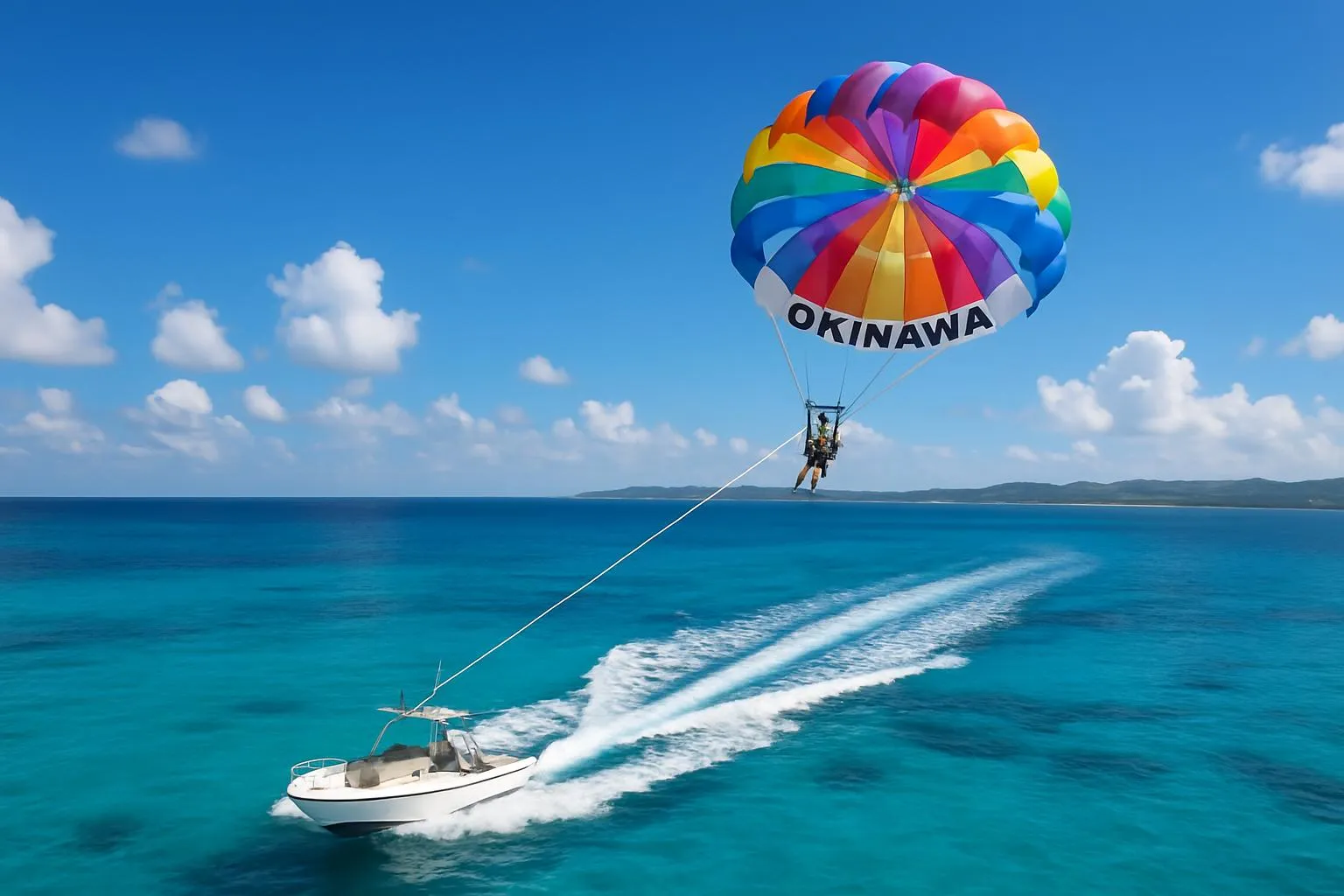
Parasailing is an activity in which you ride a parachute connected by rope to a specially designed boat and rise into the sky using the wind. You do not need to steer it yourself; you wear a harness and enjoy an aerial stroll while seated, making it easy even for beginners to participate. From above, you can see reefs along the coast of Onna Village, where the Blue Cave is located, and sometimes nearby outlying islands in good weather.
Height and flight time, which many people are curious about, vary by shop, plan, and the day's wind direction and waves. General guidelines are as follows.
| Item | General guideline | Key point |
|---|---|---|
| Height above the sea | Around 50m; some plans offer courses exceeding 100m | A longer rope lets you rise higher and broadens the view |
| Time in the air | Usually around 5–10 minutes | Like height, the duration varies by plan |
| Total duration including the boat ride | Around 60–90 minutes | Includes travel from the port to the location and cruising time |
| Number flying | Many plans allow around 1–2 people to fly together | Check whether couples or parents and children can fly side by side |
Many people worry whether it is okay if they dislike heights, but parasailing rises and descends slowly without the sudden acceleration or drops of a roller coaster. Many people who dislike thrill rides say they enjoyed it. You remain securely connected by rope while ascending, and staff adjust the height using a winch.
Many parasailing plans allow participation without getting wet, so you can comfortably enjoy it before or after snorkeling.
The order for enjoying the Blue Cave and parasailing on the same day
Combined plans arrange Blue Cave snorkeling in the morning and parasailing in the afternoon, or the reverse. Generally, sunlight entering the Blue Cave and sea conditions are considered more stable in the morning, so the combination of a morning cave visit and an afternoon aerial stroll is often chosen.
However, the shop may adjust the order depending on the day's tide level, wind direction, and crowds. If your flight or next activity has a fixed time, specifying your preferred time slot when booking and checking the expected finishing time offers reassurance.
What combined plans generally include
Many combined plans include the basic equipment and support needed for the experience. Understanding what is included and what costs extra makes it easier to compare shops.
| Category | Often included | Often extra-cost options |
|---|---|---|
| Equipment | Wetsuit, life jacket, mask, snorkel, fins, harness | Marine boots and underwater camera rental |
| Support | Instructor guidance and instruction, insurance | Private bookings and requesting a specific instructor |
| Photos | Free underwater photo data, depending on the shop | Aerial photos, video data, prints |
| Other | Shower and changing room use, fish feeding | Transport from accommodation, parking, facility fees |
Photo data and transport availability in particular can greatly change your actual costs even when plans appear similarly priced. Check not only the advertised price but also whether you will have to pay anything extra on site.
Features of combined plans chosen by Okinawa travelers
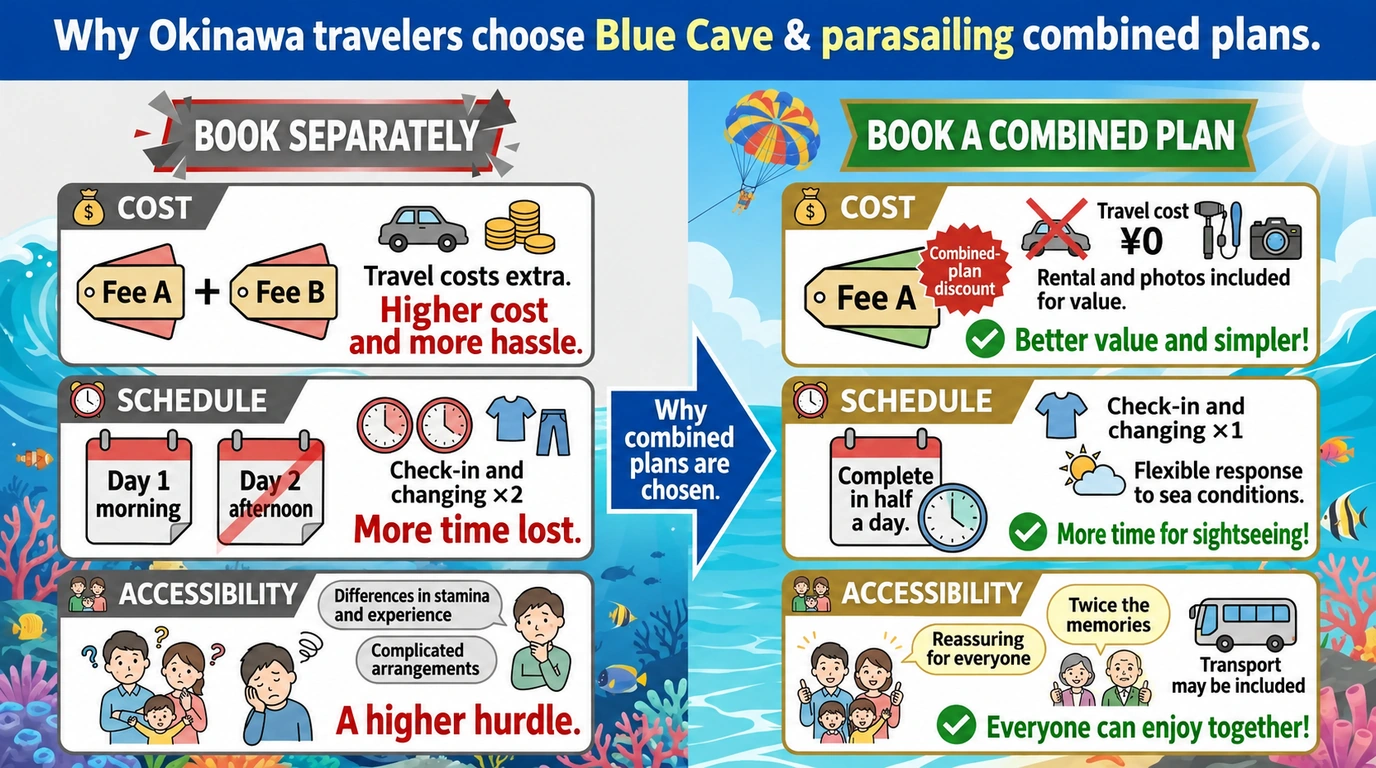
Around Onna Village and Cape Maeda on Okinawa's main island, you can book Blue Cave snorkeling and parasailing separately, but many travelers actually choose a plan combining both. Beyond enjoying contrasting underwater and aerial scenery within 1 day, it offers practical advantages by reducing waste in costs, travel, and time. Here, we organize the reasons combined plans are popular among many marine activities from 3 perspectives: costs, schedules, and participant groups.
Good value for money
Booked individually, Blue Cave snorkeling and parasailing each cost several thousand yen per 1 person. Booking them as a combined plan with the same shop often applies a package discount, making it cheaper than adding the separate prices together.The greatest appeal of combined plans is that booking together makes it easier to reduce the total cost than arranging the same activities with separate shops.
Another easily overlooked cost is incidental expenses. Combining separate bookings at 2 shops adds travel costs between them, such as rental car fuel, parking, or taxi fares. A combined plan handles everything from check-in to departure at 1 base, avoiding these small extra expenses.
| Comparison | Booking each activity separately | Booking a combined plan |
|---|---|---|
| Pricing approach | Simply add the prices of 2 activities | A combined-plan discount often applies |
| Travel costs between shops | Extra fuel, parking, and similar expenses | Generally unnecessary, with 1 base |
| Rental equipment | Must be checked with each shop | Wetsuits, masks, life jackets, and other equipment provided together |
| Photo and video data | Free or paid policies vary by shop | Both may be included together as a benefit |
| Booking process | Registration, payment, and communication for 2 bookings | Completed with 1 booking |
Whether the price includes equipment rental such as wetsuits, life jackets, and marine boots needed for snorkeling also greatly affects actual value.Even if the advertised price looks low, separate equipment rental, facility, and insurance fees increase the final amount payable, so always check what is included and what costs extra when comparing.
A schedule that makes effective use of your time
Okinawa trips are commonly 2 nights and 3 days or 3 nights and 4 days, with activities such as Naha sightseeing, Churaumi Aquarium, Kouri Island, and shopping on Kokusai Street packed into a limited stay. Putting the Blue Cave and parasailing on separate days uses up a morning or afternoon on each of 2 days.
With a combined plan, check-in, changing, and explanations happen just 1 time, so completing 2 activities in around half a day provides a major time advantage. You can participate in the morning and visit the north in the afternoon, or see Churaumi Aquarium in the morning and enjoy marine sports in the afternoon.
| Use of time | Separate days and shops | Combined plan |
|---|---|---|
| Check-in and explanations | Required separately for every activity | Completed together 1 time |
| Changing and showers | 2 times at separate bases | Generally only 1 time |
| Travel | Car transfers between bases required | Easily completed within the same base |
| Effect on itinerary | Uses half a day on each of 2 days | Completed within half a day to 1 day, compatible with sightseeing |
The Blue Cave area may also close on the day depending on wind direction and wave height. With separate bookings on different days, if one is canceled you may not be able to secure another date. Because the same shop manages both activities in a combined plan,its greater ability to respond flexibly by changing locations or swapping times according to sea conditions is another benefit worth considering. Checking rescheduling and refund terms when booking offers reassurance.
Why combined plans are recommended for families and couples
Combined plans are structured to help groups with varying stamina and experience share time together. Blue Cave snorkeling generally involves wearing life jackets with an instructor guiding the group, while parasailing involves riding a boat and taking turns going into the sky.Neither requires strenuous exercise, making the combination accessible even to people who lack confidence in swimming or struggle with physical activity.
Different types of participants find the following attractions.
| Participant type | Why a combined plan suits them |
|---|---|
| Families with children | Experience feeding tropical fish at the Blue Cave and watch family members from the boat during parasailing. Some plans let you fly together if age requirements are met |
| Couples and married couples | Parasailing with 2 people side by side also suits anniversaries. Photos against the cave's blue light are easy to take |
| Groups of friends | Enjoy lively moments aboard the boat even while waiting. Group rates may be available for larger groups |
| Older adults | Short swimming distances and seated parasailing reduce physical strain |
| Marine sports beginners | An instructor accompanies you and carefully explains equipment use from the basics |
Combined plans also offer advantages for preserving memories. With 1 participation, you obtain both snorkeling photos taken with an underwater camera and photos of the blue East China Sea viewed from above.Choosing a plan with free photo data lets you preserve ample memories even if you participate empty-handed without a camera. Delivery methods, such as AirDrop on the day or downloading later, and approximate photo counts vary by shop, so we recommend checking beforehand.
A plan with free transport from hotels or central Naha also accommodates travelers who have not arranged a rental car. Removing the burden of driving means the flexibility to fit it into spare time on your arrival day or the day before departure increases the practicality of combined plans.
Comparing popular shops' Blue Cave and parasailing combined plans
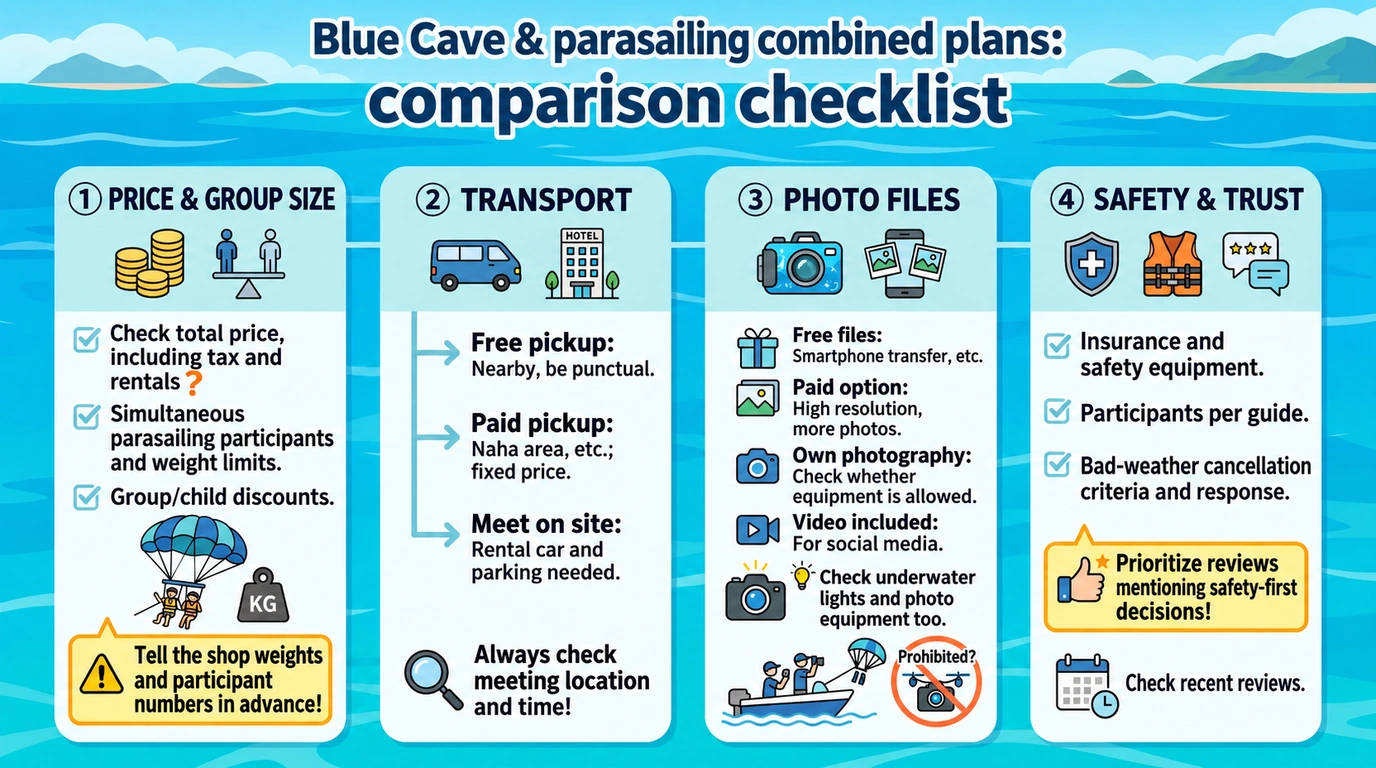
Many marine shops around Onna Village and Cape Maeda in Okinawa offer plans combining Blue Cave snorkeling and parasailing. Even if plan names and descriptions look similar, actual contents differ greatly in pricing, supported group sizes, transport areas, and photo data policies. Here, we organize key comparison points and summarize criteria for selecting a plan suited to your itinerary and budget.
When choosing a shop, the key to avoiding mistakes is comparing total costs, including whether tax and equipment rental are included and whether there are extra fees, rather than advertised low prices alone.
Compare prices and supported group sizes
Plans combining Blue Cave snorkeling and parasailing are generally priced lower than booking each activity separately. Typical individual prices are around 3,000 to 5,000 yen for snorkeling and around 6,000 to 9,000 yen for parasailing; combined plans often total around 10,000 to 15,000 yen.
Prices are generally advertised per 1 person, but many shops use parasailing equipment that allows 2 people to fly simultaneously. Check beforehand whether couples or parents and children can fly together. The following are pricing and group-size points to confirm when comparing.
| Item to check | Common patterns | What to confirm |
|---|---|---|
| Advertised price | Tax included or excluded | Whether the booking website price includes tax and whether extra charges apply on the day |
| Equipment rental | Included or extra | Policies for wetsuits, life jackets, masks, and fins |
| Facility fees | Included or paid on site | Whether showers, changing rooms, and lockers cost extra |
| Parasailing group size | Flights for 1, 2, or 3 people | Number who can fly together and maximum combined weight |
| Group discounts | Available or unavailable | Discount conditions for 4 or more people, students, repeat customers, and others |
| Child prices | Separate rates or same as adults | Elementary-school child rates and whether young children can participate |
Pay particular attention to parasailing's combined weight limit. Flights for 2 people often have a maximum total weight, and failure to meet the requirements may mean changing to flights for 1 person at a time on the day, possibly with additional charges.Providing the number and composition of participants and each person's approximate weight when booking helps avoid changes on the day.
Whether a shop promotes small groups is another important comparison point. Shops with fewer participants per 1 guide tend to give more thorough explanations inside the Blue Cave and can more easily allow time for photos. Shops accepting larger groups, meanwhile, often offer lower prices and suit travelers who prioritize cost.
Compare transport availability
Marine shops on Okinawa's main island are concentrated in central areas such as Onna Village, Chatan, and Yomitan. Travelers using rental cars can meet on site without difficulty, but for those staying at hotels in Naha without renting a car, transport availability affects their plan choice.
| Transport type | Main service areas | Features |
|---|---|---|
| Free transport | Nearby hotels in Onna Village, Yomitan, Chatan, and similar areas | Applies to accommodation close to the shop, with specific pickup times |
| Paid transport | Naha, Chatan, Mihama, and similar areas | Fixed additional fee per 1 person; may become expensive for larger groups |
| On-site meeting only | Shops around Cape Maeda | Lower prices; assumes a rental car and parking arrangements |
If choosing a plan with transport, expect the pickup time to be considerably earlier than the meeting time. Naha to Onna Village takes around 1 hour each way even using the expressway, and longer in traffic.Your morning arrangements change depending on whether pickup is outside the hotel lobby or on a nearby main road, so always check the booking confirmation email.
For rental car users, whether parking is free or paid and whether the shop's vehicle takes you from the shop to Cape Maeda are also comparison factors. Cape Maeda's parking lot becomes crowded in busy periods, so meeting at the shop and traveling in its vehicle offers the advantage of avoiding the effort of finding parking.
Checking whether travel to an alternative location is included if poor weather prevents Blue Cave entry also offers reassurance. On days with strong north winds, swimming at Cape Maeda may be prohibited, and the tour may move to another beach or operate only the parasailing portion.
Compare plans with photo data
Both the Blue Cave and parasailing are photogenic activities, so photo and video data services directly affect satisfaction. Many shops provide underwater photography, but their policies broadly fall into the following categories.
| Photography service type | Details | Suitable for |
|---|---|---|
| Free gift | Receive data photographed by the guide for free | People wanting to minimize extra costs |
| Paid option | Purchase for several thousand yen per 1 group | People prioritizing photo count and quality |
| Take your own photos | Bring a waterproof camera or action camera | People with specific compositions in mind |
| Video included | Includes footage inside the cave or during flight | People wanting social media posts or a record of memories |
Do not judge solely by the word ‘free’; check delivery methods and approximate photo counts too. Data may be transferred to your smartphone on the spot, provided through a download URL sent later, or sent by social media message, affecting whether you can receive it during your trip.Because light levels inside the Blue Cave are low, shops using underwater lights or strobes can preserve the glowing blue color more beautifully.
For parasailing, key points are whether staff aboard the boat take aerial-style shots and whether your expressions during flight can be photographed. Many shops prohibit bringing cameras or smartphones during parasailing, and selfies may be unavailable to prevent dropping devices. If you want photos, choosing a plan that includes a photography service is the surest approach.
Many Blue Cave plans also include fish feeding, and photos surrounded by fish are popular. Whether fish food is included or purchased separately is another small but useful comparison point.
How reviews and safety practices help identify a reliable shop
Safety management deserves as much attention as prices and benefits. Both Blue Cave snorkeling and parasailing take place at sea or underwater, and the quality of guides and staff determines your peace of mind. Check the following before booking.
| Point to check | Assessment guideline |
|---|---|
| Insurance | Whether participation in leisure insurance or liability insurance is stated explicitly |
| Number of guides | Whether a maximum participant count per 1 guide is specified |
| Boat safety equipment | Whether life jackets are mandatory |
| Cancellation criteria | Whether poor-weather and swimming-prohibition decisions and cancellation fees are clearly explained |
| Review content | Specific descriptions of staff service and careful explanations, beyond review counts alone |
| Communication after booking | Whether meeting point, time, and belongings guidance arrives in advance |
When reading reviews, pay attention to their dates. Marine shops experience staff turnover, so feedback from the most recent few months offers a closer picture of current conditions. Also,shops with reviews saying they suggested cancellation or rescheduling rather than forcing activities on a windy day can be considered more reliable because this reflects a safety-first operating policy.
If booking through a reservation website, cancellation policies are another comparison point. Same-day cancellation fees, full refunds for weather-related cancellation, and rescheduling availability relate to managing risks across your whole trip. If you are undecided between shops and the price difference is only a few hundred yen, choosing one with thorough safety arrangements and information disclosure leads to greater satisfaction.
Ways to enjoy combined plans by season and period
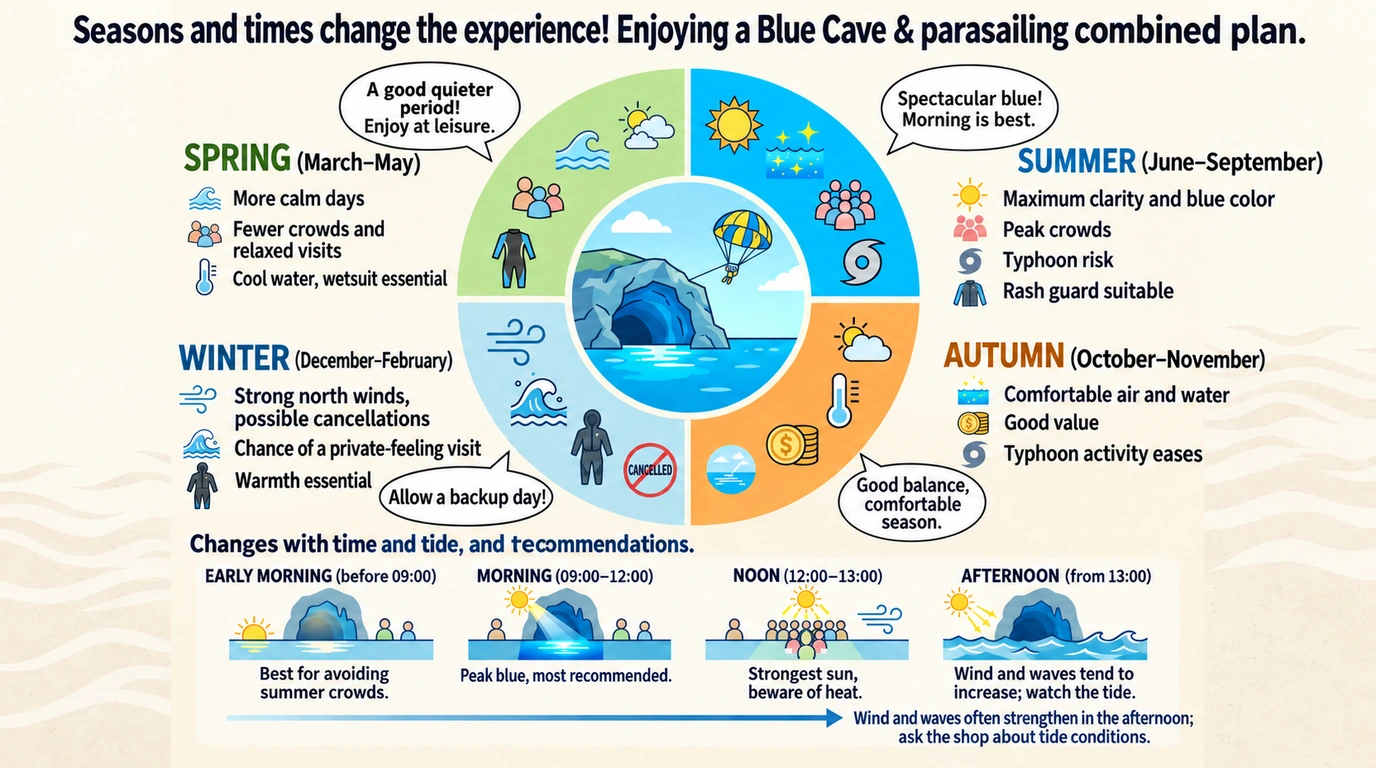
Blue Cave and parasailing combined plans operate year-round, but actual satisfaction varies greatly with when you visit. The Blue Cave is a cave along the coast near Cape Maeda, glowing blue from sunlight reflected underwater, so it is sensitive to sunlight, water clarity, wind, and waves. Parasailing also operates according to decisions based on wind speed and wave height.Understanding seasonal tendencies in sea conditions and weather is therefore the greatest key to fully enjoying a combined plan.
Here, assuming Okinawa's main island west coast area, we explain seasonal characteristics, ways to enjoy the activities, and how to choose the time of day.
Quick guide to seasonal sea conditions and combined plans
First, review tendencies throughout the year in the table. Water temperatures and wind directions vary by year, so these are general guidelines only.
| Period | Sea condition tendencies | Wetsuit use | How to enjoy a combined plan |
|---|---|---|---|
| March–May (3–5, spring) | North winds weaken and calm days increase | Needed | Fewer crowds allow leisurely viewing inside the cave |
| June–September (6–9, summer) | Warm, comfortable water, but typhoon effects possible | Optional; a rash guard is also acceptable | Best expectations for water clarity and vivid blue color |
| October–November (10–11, fall) | Fewer typhoons and still relatively warm water | More comfortable with one | A good opportunity balancing air temperature, sea conditions, and prices |
| December–February (12–2, winter) | Strong north winds make cancellation and rescheduling more likely | Essential; a hood offers reassurance | Low-cost enjoyment if your itinerary allows spare days |
Recommended plans for the summer season
At the height of summer from July to September (7–9), warm water and improved clarity make it the most luxurious season for appreciating the Blue Cave's vivid blue and Okinawa's emerald-green sea from parasailing on the same day. You are less likely to feel cold without a wetsuit, and your body is less likely to chill when moving from snorkeling to parasailing. It is also the most accessible period for families with small children and couples trying Okinawa's marine activities for the first time.
A morning start is strongly recommended in summer
When booking a summer combined plan, choosing an early morning time slot is the basic approach. There are three main reasons.
The first is avoiding crowds. During summer vacation and the Obon holiday period, the Blue Cave is one of Japan's most popular spots, so it becomes crowded inside in the afternoon and photography takes longer. The second is changing winds. Okinawa tends to have stronger winds and more waves in the afternoon, affecting parasailing operating decisions. The third is protection from heatstroke: rather than spending noon, when sunshine is strongest, aboard a boat, completing the main activities in the morning and using the afternoon for indoor sightseeing is also easier on your body.
Things to consider when booking during typhoon season
Summer is also typhoon season. An approaching typhoon cancels cave entry and boat departures, and lingering swells may cloud the sea for several days afterward.When booking in summer, it is important to put the activities in the middle of your trip rather than on the first day and check cancellation fees and rescheduling conditions beforehand.Many shops waive cancellation fees or allow date changes when poor sea conditions prevent operation.
Enjoying favorable sea conditions in spring and fall
Though surprisingly easy to overlook, spring and fall are excellent opportunities for comfortably enjoying a Blue Cave and parasailing combined plan.
In spring, north winds begin to ease around late March (3), and calm days increase through April and May (4–5). Except during Golden Week, crowds are less concentrated, and a major advantage is enjoying the cave leisurely with fewer other people appearing in photos, even on plans with photo data. Water temperatures remain low, so wearing a wetsuit is assumed, but shops provide rentals and there is no need to worry. Sunburn is also less demanding than in summer, making this season suitable when participating with people concerned about stamina or older adults.
Fall centers on October and November (10–11), when typhoon activity eases while water temperatures remain high, combining comfort with stable sea conditions. After summer vacation, accommodation and airfare drop, and many shops return their combined plans from busy-season pricing to normal rates, making it suitable for travelers who prioritize value.
Three benefits of avoiding high season
Specific advantages of booking a combined plan in spring or fall are summarized below.
| Benefit | Details |
|---|---|
| Easier reservations | Easier to choose preferred time slots, small-group plans, and private plans |
| More attention from guides | Fewer participants make thorough explanations and support easier to receive |
| Lower total travel costs | Airfare, rental car rates, and hotel prices tend to decrease |
Tips for participating in winter
From December to February (12–2), many days have strong north winds and waves tend to rise around Cape Maeda, where the Blue Cave is located, increasing the likelihood of cancellation or rescheduling. However, some days become calm when the wind changes direction, and catching such a day can feel like having a quiet cave with few visitors to yourself.
When participating in winter, checking beforehand for hooded wetsuits and boots, hot showers, and changing room facilities makes a great difference to comfort. Also,the most effective way to avoid disappointment in winter is to reserve a spare day in your itinerary so that you can reschedule if canceled. Parasailing cannot depart if wind-speed standards are not met either, so understand that only one part of the combined plan may operate or snorkeling may move to another location on a day when cave entry is difficult.
How the Blue Cave's appearance changes with time and tide
Along with the season, the time of day affects satisfaction. The Blue Cave is considered to look most beautifully blue when the sun is high and light enters the cave, with morning to early afternoon generally considered a good opportunity.
Tide levels also affect its appearance. Near low tide, water inside the cave becomes shallow and care is needed to avoid touching rocks, while near high tide, boat and entry conditions may change. Judging independently is difficult, so asking the shop directly when booking which time the blue will look most beautiful on that day is the surest approach. Local guides understand daily sea conditions and how light enters, and can suggest the best schedule, including the order of combination with parasailing.
Approximate recommended start times by season
| Season | Recommended start time | Reason |
|---|---|---|
| Spring | Morning | Enjoy calm sea conditions before winds increase |
| Summer | Early morning to morning | Avoid crowds, strong sunshine, and afternoon winds |
| Fall | Morning to early afternoon | Light enters easily and temperatures are comfortable |
| Winter | Prioritize periods with light winds | Operation depends on wind direction |
As you can see, even the same combined plan can vary greatly in quality depending on the chosen season and time. If your travel dates are fixed, adjusting the start time and its placement in your itinerary to suit that period is key to enjoying both the Blue Cave and parasailing with high satisfaction.
From booking a combined plan to the day itself
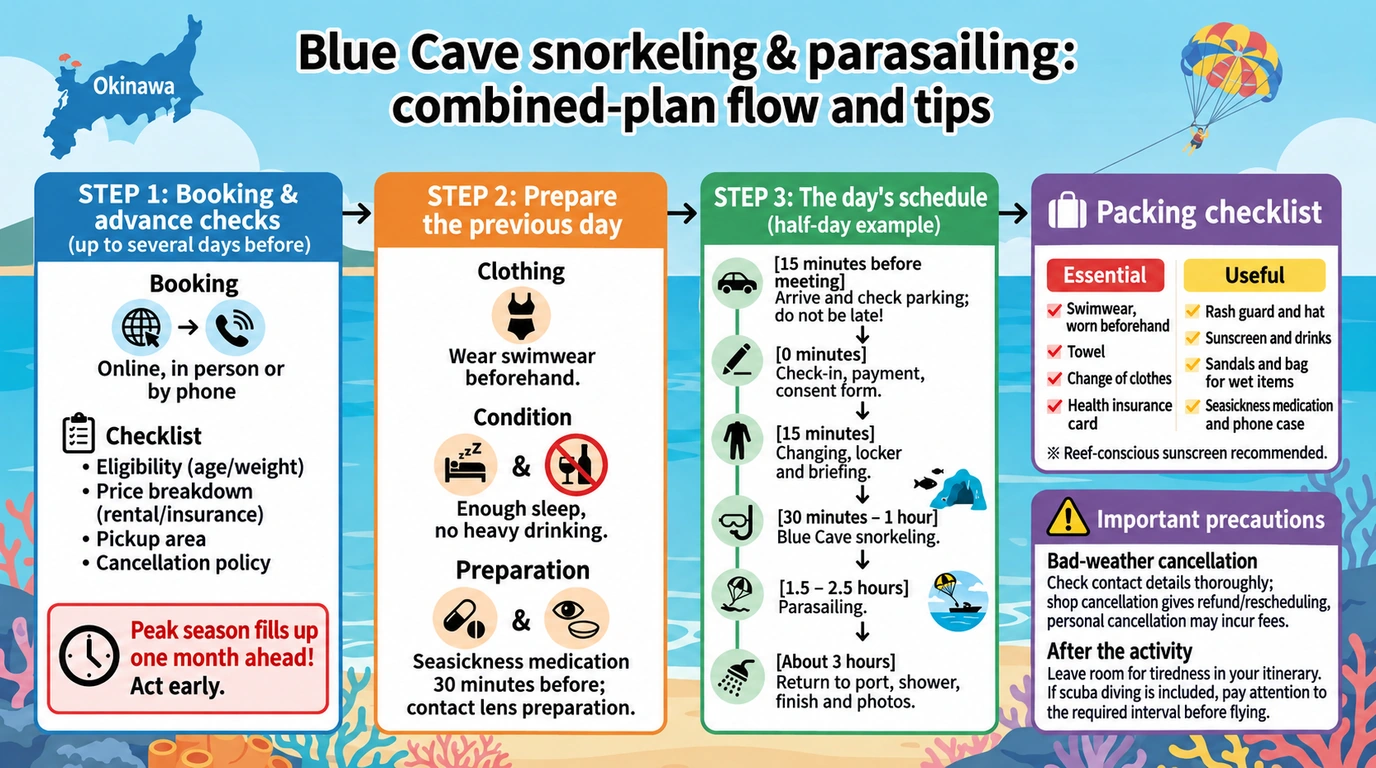
Many marine shops based around Onna Village and Cape Maeda on Okinawa's main island operate Blue Cave snorkeling and parasailing combined plans. These activities are popular, so acting early once travel dates are set affects satisfaction. Here, we explain the whole process from booking to meeting on the day and completing the experience, along with belongings that are easy to forget.
Booking methods and advance preparation
There are generally 3 ways to book a combined plan: online through an activity booking website, directly through the shop's official website, or by phone. Online booking lets you immediately check availability and prices, and sometimes apply exclusive discounts, making comparison easy even for first-time participants in Okinawa's marine activities. Direct booking, meanwhile, makes it easier to discuss meeting times and rental equipment.
Items you should always check when booking
Before completing the application form, checking the following helps avoid problems on the day. Height, weight, and age limits and transport service areas vary by shop and need particular attention.
| Item | What to check |
|---|---|
| Participation requirements | Age restrictions, maximum and minimum height and weight, and whether pregnant participants are accepted |
| Duration | Total time from meeting to departure and time spent on snorkeling and parasailing separately |
| Price inclusions | Equipment rental, life jackets, insurance, facility fees, and photo data availability |
| Additional fees | Boat fare, parking, wetsuit and marine boot rental |
| Transport | Service areas such as Naha, Chatan, and Onna Village, hotel pickup availability, and meeting point |
| Cancellation policy | When cancellation fees begin, refunds for cancellation due to severe weather, and rescheduling policies |
Particularly during busy periods such as summer vacation, Golden Week, and Silver Week, it is not unusual for plans to sell out more than 1 month ahead. The Blue Cave may be inaccessible on days with high waves, so if your itinerary allows flexibility, booking early in your stay makes it easier to reschedule if the tour is canceled.
Preparations to finish by the day before
After booking, complete the following preparations by the day before. First, wearing your swimsuit at the hotel makes changing on site smoother. Having a rash guard for sun protection shields your skin from strong UV rays. You encounter wind aboard the boat while parasailing, so 1 extra layer offers reassurance.
Managing your physical condition is another important preparation. Avoid heavy drinking the night before because it increases decompression and seasickness risks, and get enough sleep. If you are worried about seasickness, taking motion sickness medicine around 30 minutes before boarding offers reassurance.
If you wear contact lenses, they may wash away while snorkeling, so prepare disposables or check beforehand whether prescription masks are available to rent.
The day's schedule and packing check
Most combined plans are structured to finish within half a day in either a morning or afternoon slot. Here, we describe a general itinerary using a morning start as an example. Actual order and timing vary with the shop and sea conditions, so use this only as a guide.
A typical timetable for the day
| Approximate time | Details |
|---|---|
| 15 minutes before meeting | Arrive at the shop or designated meeting point and check parking |
| Immediately after meeting | Check in, complete consent and registration forms, and pay |
| After 10–15 minutes | Change and put on a wetsuit; leave valuables in lockers |
| After 20–30 minutes | Safety explanation and snorkeling equipment instruction |
| After 30 minutes to 1 hour | Travel by boat to the Blue Cave; snorkel and feed fish inside the cave |
| After 1 hour 30 minutes to 2 hours | Transfer to the parasailing boat; put on a harness and receive instructions |
| After 2 hours to 2 hours 30 minutes | Take turns parasailing and view the sea toward the Kerama Islands from the sky |
| Around 3 hours | Return to port, shower and change, receive photo data, and finish |
Arriving late for the meeting time affects subsequent boat departure schedules and may prevent one of the activities from operating. Okinawa's main island is prone to traffic congestion, particularly along National Route 58, so when traveling by rental car we recommend leaving around 30 minutes earlier than planned.
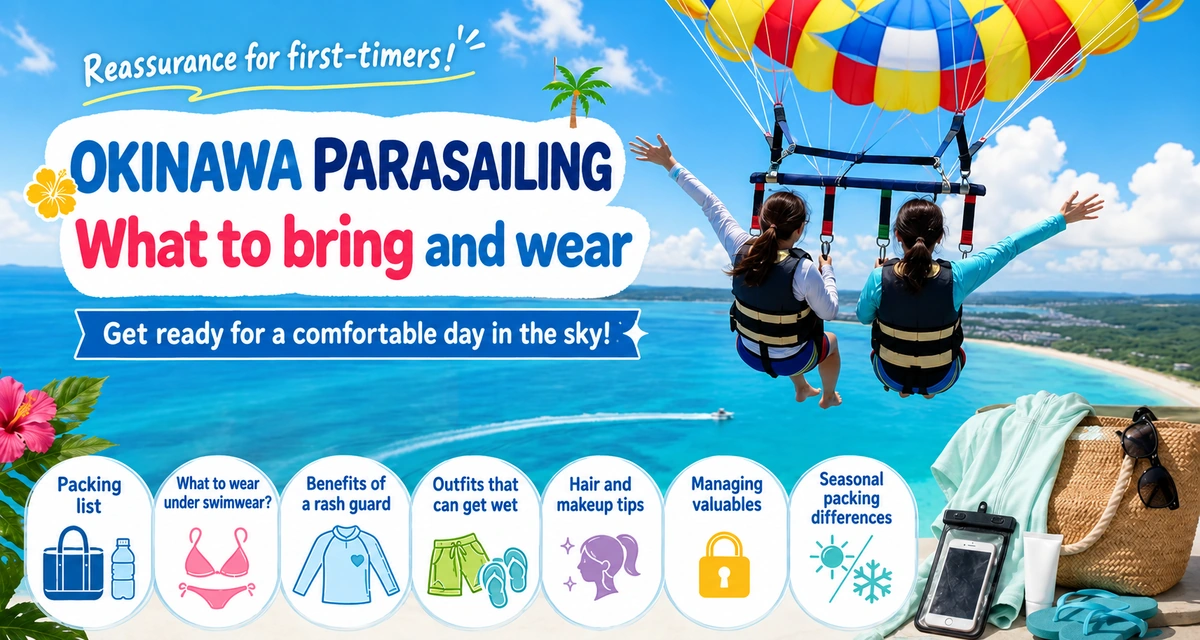
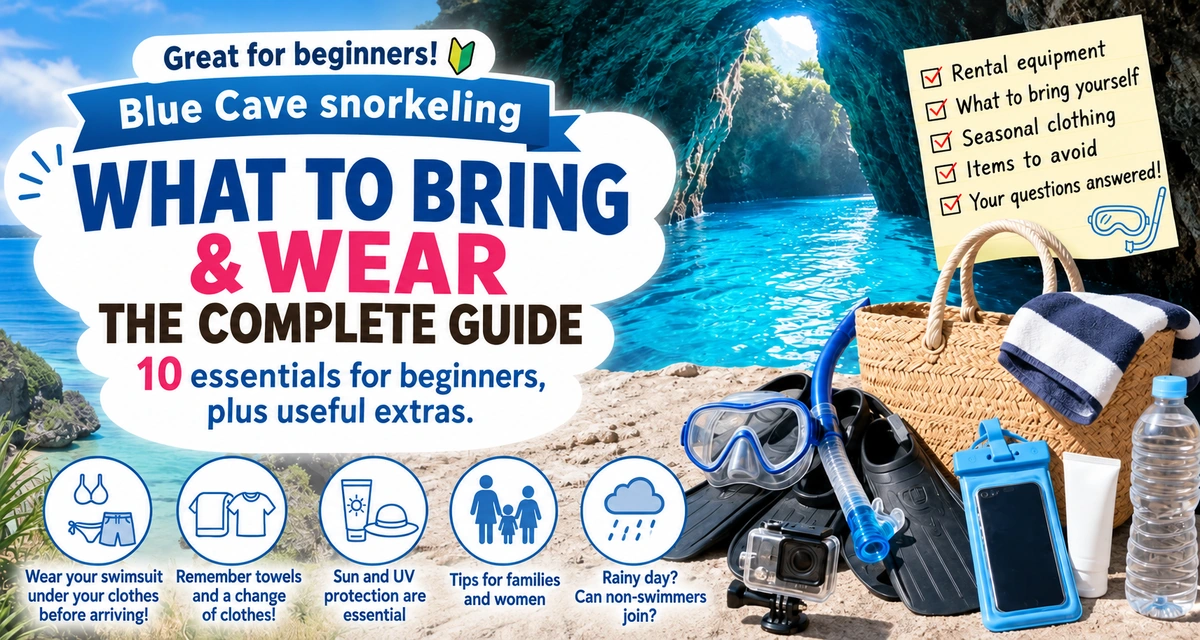
Packing checklist
Many shops include basic equipment such as wetsuits, life jackets, masks, snorkels, and fins in the price. Participants therefore need to prepare surprisingly few items themselves. Check the following list before departure.
| Category | Items | Tips |
|---|---|---|
| Essential | Swimsuit, towel, change of clothes | Wearing your swimsuit underneath lets you prepare immediately after check-in |
| Essential | Health insurance card or a copy | Carry it in case of injury or illness |
| Useful | Rash guard, hat, sunglasses | Protection against strong sunlight and reflected glare |
| Useful | Sunscreen, drinks | Bring plenty of fluids to prevent dehydration |
| Useful | Flip-flops, bag for wet items | Useful for taking wet swimsuits and towels home |
| Optional | Motion sickness medicine, waterproof phone case | For people prone to seasickness or wanting to take their own photos |
Some shops restrict sunscreen use when entering the sea to protect coral reefs. Check the precautions before participating and, as needed, choose ingredients that consider coral or switch to physical sun protection using a rash guard.
What happens in severe weather or cancellation
The Blue Cave is sensitive to north winds and waves, and may close according to sea conditions from winter to early spring. Parasailing is also canceled according to wind speed and wave height. Cancellation notices often arrive between the previous evening and the morning of the activity, so keep the phone number and email registered when booking readily accessible.
If only one activity can operate, common responses include changing the fee to cover only the activity that proceeds or switching to another beach-entry location.When the shop decides to cancel, in most cases there is no cancellation fee and you receive a full refund or date change, but cancellation for personal reasons incurs the stipulated fee. Even on a day with uncertain weather, avoid deciding independently to be absent without notice; always consult the shop.
Things to consider after the experience
Unlike diving, snorkeling and parasailing combined plans have a low decompression risk, so restrictions after the experience are relatively relaxed. However, if you choose a plan including introductory diving, you need to leave a specified interval before boarding a flight.When booking a diving-inclusive plan on the last day of an Okinawa trip, work backward from your return flight time and allow plenty of time.
After the experience, you may have used more energy than expected and may be more prone to fatigue from sunburn. Avoid packing too much afternoon sightseeing, such as Churaumi Aquarium or Shuri Castle, into your schedule; a relaxed itinerary helps you enjoy your whole Okinawa trip comfortably.
Frequently asked questions about Blue Cave and parasailing combined plans
Plans combining Blue Cave snorkeling and parasailing attract many Okinawa travelers trying marine activities for the first time, and advance worries and questions are common. Here, we organize frequent questions actually received by shops around Cape Maeda in Onna Village and in the Chatan and Ginowan areas by topic, explaining what to know before participating.
Can non-swimmers participate?
The answer is that non-swimmers can participate in a Blue Cave snorkeling and parasailing combined plan. For Blue Cave snorkeling, every participant wears a wetsuit and life jacket. Wetsuit material itself is buoyant, so relaxing lets your body float naturally, and sinking is rare even where you cannot touch the bottom. Instructors also provide swimming rings or kickboards and support swimming by holding your hand as needed, so plans generally do not require you to swim independently.
For parasailing, the standard approach is to put on a harness on the boat, rise straight into the sky, and land back aboard. You do not enter the sea, so even people uncomfortable with water or wanting to keep their hair and face dry can enjoy it with peace of mind. Whether cameras and smartphones are allowed varies by shop policy, so check when booking if you want to preserve memories.
However, if you have a strong fear of putting your face in the water, snorkel practice may take longer. Telling staff before meeting that you cannot swim or are nervous about submerging your face lets the assigned staff member support you nearby from the start, so we recommend sharing this without hesitation.
Age restrictions and concerns about stamina
A combined plan joins 2 activities, so you must meet the participation requirements for both. Note that Blue Cave snorkeling and parasailing each have different age guidelines.
| Item | Blue Cave snorkeling | Parasailing |
|---|---|---|
| Approximate starting age | Many shops accept children from around elementary-school age | Some accept young children, provided a guardian accompanies them |
| Approximate maximum age | Broad participation possible if health is not an issue | Broad participation possible if health is not an issue |
| Weight and build requirements | Restrictions depend on available wetsuit sizes | A maximum total weight may apply |
| Accompaniment requirements | Minors need a guardian's consent form | Small children generally fly paired with an adult |
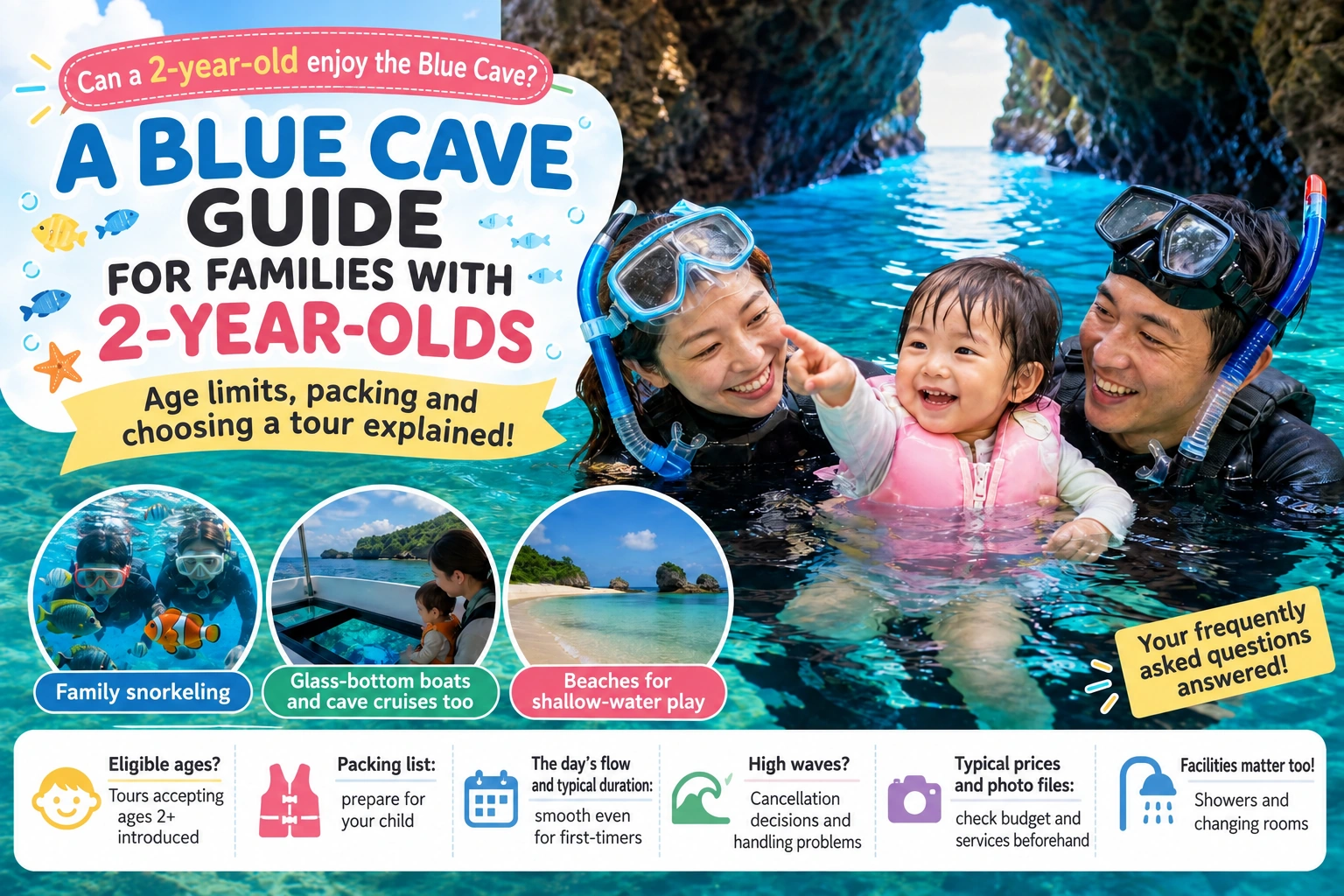
Since numerical limits differ by shop,when considering a family combined plan, always provide children's ages, heights, and weights before booking and confirm eligibility. Particularly for children from age 3 to the early elementary grades, accompanied parasailing may be possible while snorkeling is not. In such cases, some shops offer plans allowing children to switch to beach play or shallow-water snorkeling.
Regarding stamina, Blue Cave snorkeling has courses entering after descending Cape Maeda's steps and courses traveling by boat to the front of the cave. If climbing steps concerns you or you lack confidence in your stamina, a less physically demanding boat-entry plan offers reassurance. Parasailing lifts you while you remain seated, so no special athletic ability is required.
Cases where it is better to refrain from participating
For safety, participation may be restricted under conditions such as the following.
| Situation | General response |
|---|---|
| Pregnancy | Many shops prohibit participation in both activities |
| Treatment for heart disease, respiratory disease, high blood pressure, or similar conditions | A doctor's assessment is required; always disclose this when booking |
| After drinking alcohol | Participation prohibited; also avoid heavy drinking the previous night |
| Feeling unwell or sleep-deprived on the day | Do not push yourself, as this may lead to seasickness or accidents |
| Immediately before boarding a flight | Plans including diving require a specified interval before flying |
The last day's schedule deserves particular attention. With snorkeling alone, boarding a flight the same day may be possible, but a combined plan including introductory diving requires a specified interval between finishing diving and boarding a flight to avoid decompression sickness. Tell the shop your return flight time and discuss which time slots allow participation.
Weather-related cancellation or changes and cancellation fees
Okinawa's sea is strongly affected by wind direction, and Blue Cave entry may be restricted particularly during winter-to-spring north winds or when a typhoon approaches in summer. Parasailing may also be canceled according to wind speed or wave height. At many shops,the standard policy for organizer-decided cancellation is no cancellation fee and a full refund or rescheduling. However, terms differ by shop, so always read the conditions in your booking confirmation email.
If the Blue Cave is inaccessible, some tours operate with snorkeling at a different nearby location. If you would want to cancel when unable to enter the cave, checking policies for alternative operation ahead of time helps prevent problems on the day.
Questions about belongings, clothes, and rentals
A common question about combined plans is where the line falls between rentals and items you must prepare yourself. General guidelines are as follows.
| Category | Details |
|---|---|
| Often included in shop rentals | Wetsuit, life jacket, mask, snorkel, fins, marine boots, harness |
| Items to prepare yourself | Swimsuit, towel, change of clothes, sunscreen, motion sickness medicine, spare contact lenses |
| Often paid options | Rash guard, underwater camera, photo and video data, fish feeding |
Wearing your swimsuit before meeting shortens changing time. If you wear glasses, check prescription mask availability; if you use contact lenses, bring spares in case they wash away.
Are photo data and videos included?
Underwater Blue Cave photos and aerial-style parasailing shots are popular travel souvenirs. Plans vary from giving all data free to paid options or no photography service.Comparing prices alone may overlook extra photo costs that change the total, so comparing the total including data fees is the key to avoiding mistakes. Online sharing is now the main delivery method rather than handing over an SD card on the spot, and data often arrives between the same day and a few days later.
Duration and planning your 1 day
Many combined plans fit within around half a day from meeting to departure, with morning and afternoon trips generally available. Mornings tend to have calm seas and high visibility and are considered a beautiful time for light entering the Blue Cave. Afternoon trips allow more time for morning travel, making them easier to fit into a same-day trip from Naha to Onna Village.
Groups also frequently ask whether participants can split into those doing only snorkeling and those doing only parasailing. Some shops allow different activities within the same group, so it is worth discussing if family members or friends differ in stamina.
Payment methods, meeting points, and parking
Alongside cash payment on site on the day, more shops accept credit cards and advance online payments. Meeting points are mainly shops or ports around Cape Maeda; rental car users should check parking availability and whether they must pay parking fees themselves.Some plans offer free transport from Naha, Chatan, or Onna Village hotels, so participation is entirely possible even without renting a car. Transport has area and group-size conditions, so providing your accommodation's name when booking and confirming is the surest approach.
Summary
The greatest appeal of a plan combining the Blue Cave and parasailing on an Okinawa trip is experiencing Okinawa's sea from 2 perspectives: highly transparent underwater scenery and spectacular aerial views. Such plans often cost less than separate bookings and handle transfers and check-in just once, making them an efficient option for travelers wanting to use limited time effectively.
If you are unsure which plan to choose, compare not just prices but 4 points: transport availability, free photo data, supported group sizes and minimum participant requirements, and duration. Parking often becomes crowded particularly around Onna Village and Cape Maeda, so a plan with transport offers reassurance if you are not using a rental car.
As for timing, summer is most popular for calm seas and high temperatures, but spring and fall offer fewer people and relaxed enjoyment with less strain from sunburn and heat. While the Blue Cave can be enjoyed in any season, waves or wind on the day may lead to cancellation or a location change, so booking with flexibility in your itinerary is a good idea.
Snorkeling generally requires life jackets and instructor support, so many plans accommodate non-swimmers. Parasailing also takes off from a seated position aboard the boat, making it accessible even to people lacking confidence in their stamina. Age limits and health requirements vary by shop, so always check the official website before booking.
A Blue Cave × parasailing combined plan creates lasting memories for both family and couple's trips. Popular seasons fill early, so we recommend booking promptly once your travel dates are set.