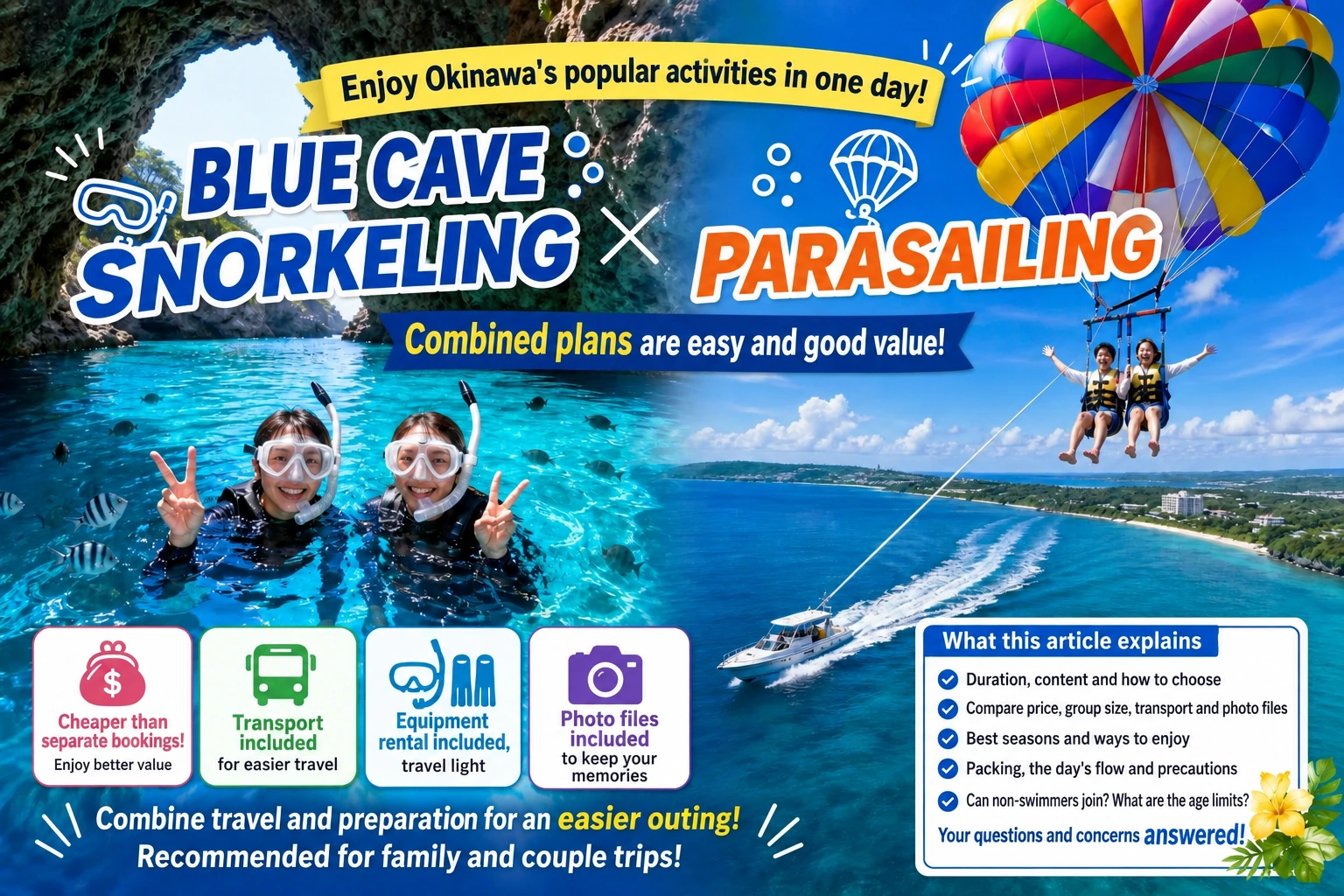
Parasailing is an unforgettable part of a trip to Okinawa. The blue sea and white beaches seen from the sky are extraordinary, but first-time participants often have worries and questions: ‘What should I bring?’ ‘Should I wear anything under my swimsuit?’ ‘What clothes are okay to get wet?’ This article thoroughly covers the information you need to avoid problems on the day, from a packing list for parasailing in Okinawa to whether you can participate in just a swimsuit, the benefits of wearing a rash guard, and recommended clothes that can get wet. We also explain hairstyle and makeup considerations, how to manage valuables when leaving your belongings, and how what you bring changes with the season. Reading this article will help you prepare to enjoy your flight with peace of mind, without regretting that you should have brought something or worn a different outfit. Whether this is your first time or your first attempt in a while, please use it as a reference.
What kind of activity is parasailing in Okinawa?
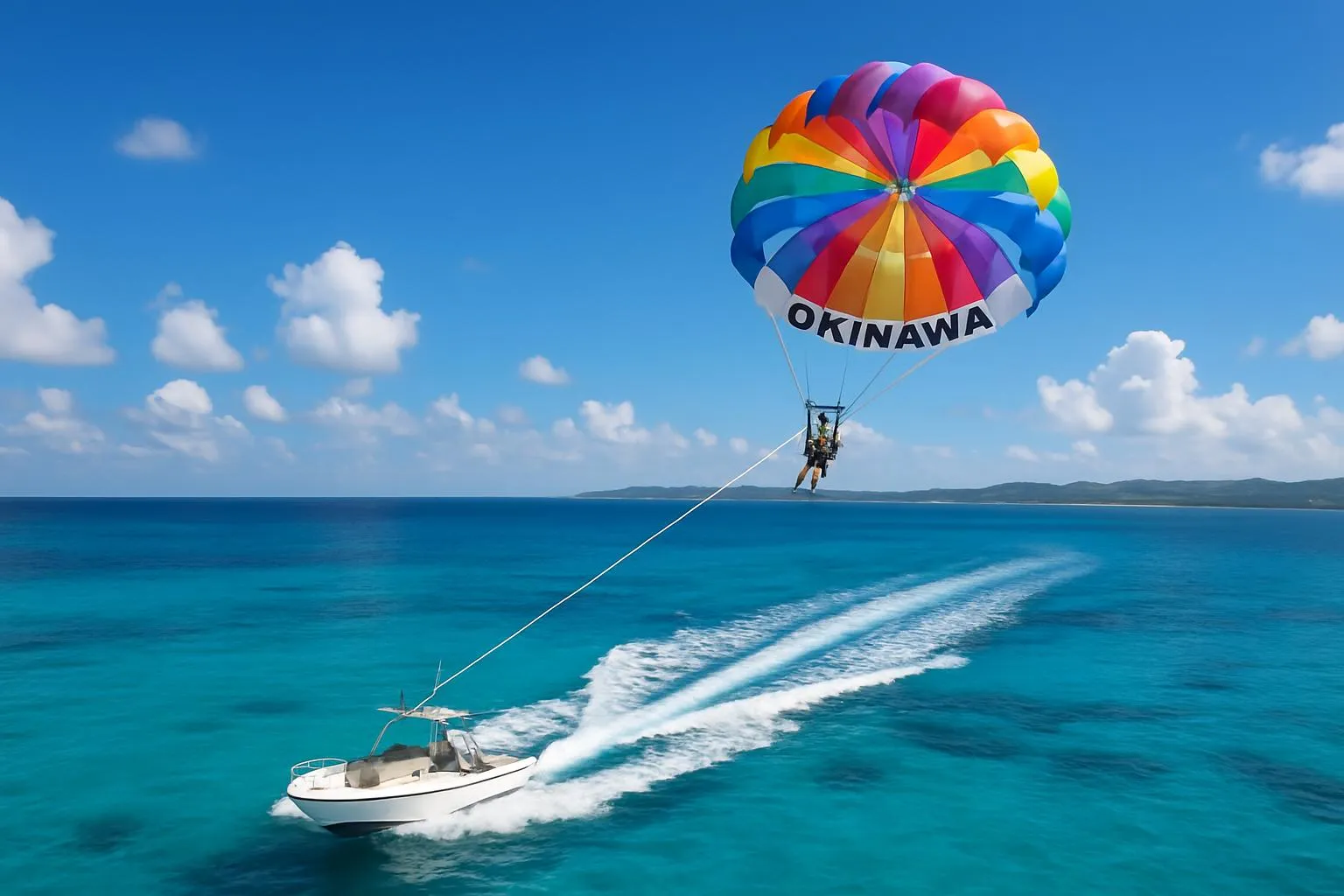
Parasailing is a marine activity in which you attach a specially designed parachute-shaped parakite to your body and soar into the sky while being pulled by a motorboat. You rise to a height of approximately 50 to 100 meters above Okinawa's beautiful sea, enjoying an extraordinary experience with panoramic views of emerald-green water, coral reefs, and blue skies. Because you fly seated in a specially designed harness, you do not need advanced skills like those required for paragliding, and being able to participate easily in a swimsuit is a major attraction.
Parasailing tours operate in many beach resort areas throughout Okinawa Prefecture, including Okinawa's main island, Miyako Island, Ishigaki Island, Onna Village, and Uruma City. It is known as an activity you can enjoy all year round as long as weather conditions are suitable. Takeoff and landing happen on the boat's deck, so there is no need to jump into the sea or swim, allowing even people who dislike getting wet or lack confidence in swimming to participate with peace of mind.
Why parasailing is popular in Okinawa
One reason parasailing in Okinawa appeals to so many visitors is the exceptional scenery, with breathtaking views of highly transparent seas from the sky. In particular, the waters around the Kerama Islands and Onna Village are known for their beautiful color, described as ‘Kerama Blue.’ Looking down from above lets you capture the whole scene on camera.
Another reason for its popularity is that parasailing requires no special athletic ability or experience and can be enjoyed by a broad range of ages, from children to older adults. Many tours accept participants from around elementary-school age, accommodating a variety of travel styles, including family trips, couples, and groups of friends. Its simplicity—participating by merely putting specially designed safety equipment over your swimsuit—also makes it a choice for travelers who want to enjoy marine activities efficiently during their limited time in Okinawa.
In recent years, it has also attracted attention as an activity that looks great on social media, and an increasing number of operators offer services with accompanying photographers who take pictures and videos from the sky. These added-value services also support the popularity of parasailing in Okinawa.
Duration and the day's itinerary
The duration of parasailing in Okinawa varies somewhat by operator and plan, but the total time from check-in to completion is generally around 60 to 90 minutes. The actual flight is relatively short, around 10 to 15 minutes, but check-in, changing clothes, getting to the boat, and the safety briefing take additional time.
| Step | Details | Approximate time |
|---|---|---|
| Check-in and meeting | Complete the registration form and pay at the shop or beach reception | About 10 minutes |
| Changing and preparation | Change into a swimsuit, leave belongings, and put on a life jacket | About 10 minutes |
| Boat transfer | Travel by boat from the pier to the activity location | About 10 minutes |
| Safety briefing | Staff explain the equipment and precautions | About 5 minutes |
| Flight experience | After putting on the harness, enjoy an aerial stroll while parasailing | About 10 to 15 minutes |
| Touchdown and return to port | After landing on the boat, return to the pier and finish | About 10 minutes |
You are advised to arrive with time to spare so that you are not late for the meeting time. Many operators accommodate cancellation or postponement in poor weather, and the tour itself may be canceled for safety if conditions fail to meet safety standards for wind speed, wave height, and other factors. Checking the cancellation policy when booking offers reassurance. Some flight plans allow several people to fly simultaneously, and many tours let couples or parents and children enjoy an aerial stroll together.
Packing list for parasailing in Okinawa
Essentials you should always bring
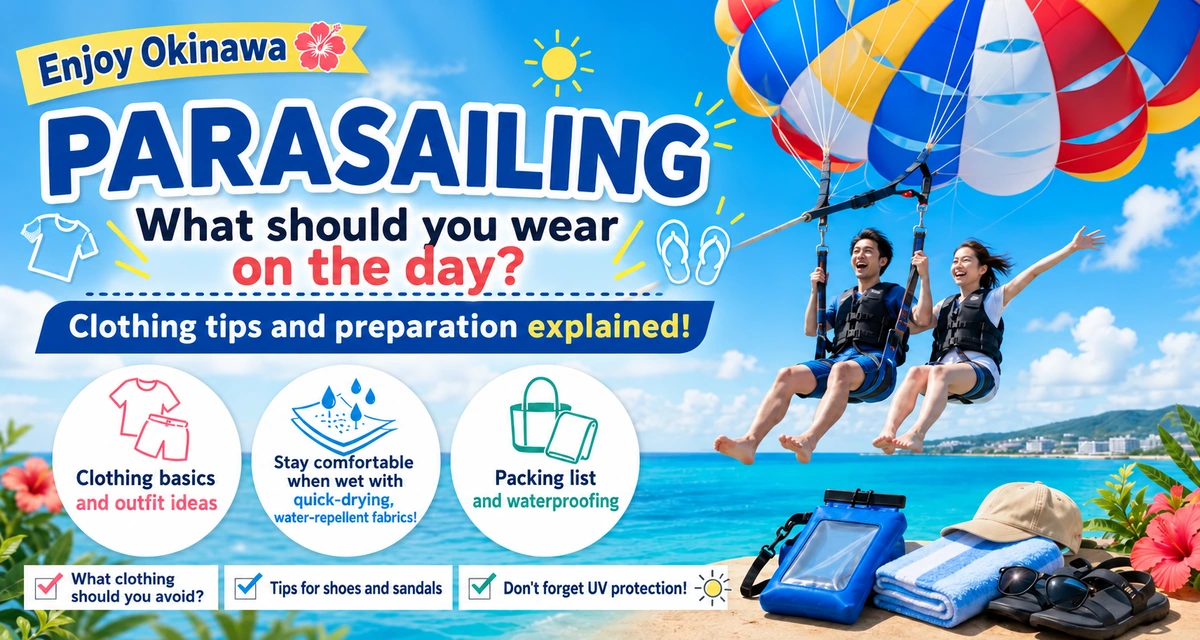
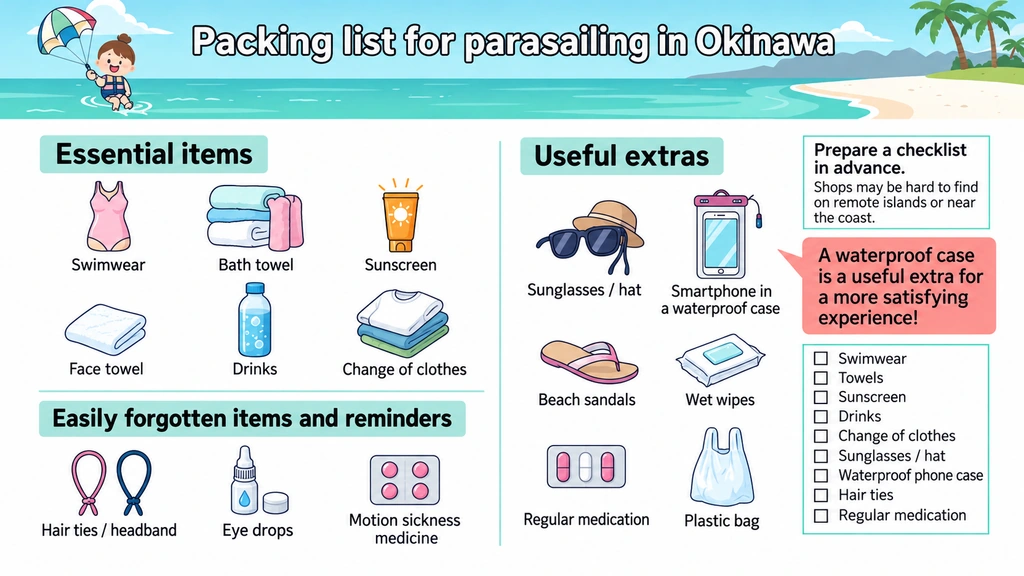
Preparing in advance helps make parasailing in Okinawa comfortable. You must wear a swimsuit, so putting it on at home or your accommodation beforehand makes things smoother. Since parasailing takes place at sea, a bath towel or face towel for drying your body is indispensable. Sunscreen is another essential for protection from Okinawa's strong sunshine. Bringing drinks for boat waiting times and transfers also offers reassurance against heatstroke.
| Item | Reason or use |
|---|---|
| Swimsuit | Basic clothing for the parasailing experience |
| Towel | For drying your body and hair |
| Sunscreen | To protect skin from strong UV rays |
| Drinks | For hydration aboard the boat |
| Change of clothes | Clothing to wear after the experience |
If you forget these items on the day, buying them locally may be difficult, so we recommend making a checklist ahead of time. Take particular care with shops on Okinawa's outlying islands or along the coast, where there may be no convenience store or kiosk nearby.
Useful extras to bring
Some items are less important than the essentials but make the experience more comfortable. For example, sunglasses and a hat reduce glare while you enjoy views of Okinawa's sea from above during parasailing. They can blow away easily, so choosing versions with straps offers reassurance. A smartphone or camera in a waterproof case also lets you take panoramic photos from the sky.
| Item | Why it is useful |
|---|---|
| Sunglasses and hat | Protect your eyes and head from UV rays and reflected light |
| Smartphone in a waterproof case | Useful for taking photos and videos at sea |
| Flip-flops | Make boarding, leaving the boat, and walking on sand easier |
| Wet wipes | Easily remove seawater and sand from your hands and body |
| Regular medications | Preparation for seasickness or feeling unwell |
In particular, a waterproof case is not essential but can greatly increase your satisfaction. Photographing Okinawa's clear sea from above is one of parasailing's special attractions, so bring one if you want to preserve the memories.
Items that are easy to forget and things to consider
An item that is surprisingly easy to overlook is a hair tie or headband to keep your hair together. Strong winds blow at flight height during parasailing, so long hair can block your view or become tangled if you do not tie it back beforehand. If you wear contact lenses, the wind can also dry your eyes, so bringing eye drops offers reassurance.
Managing valuables is another point you must remember. Wallets, cash, smartphones, and similar belongings are generally left in boat lockers or waterproof bags, and you often cannot keep them on your person during the experience, so minimizing your luggage beforehand makes preparation smoother. In addition, motion sickness medicine tends to work more effectively when taken the day before or at least 30 minutes before boarding rather than on the morning of the tour.
| Items that are easy to forget | Points to consider |
|---|---|
| Hair tie or headband | Long hair can tangle in the wind if not secured |
| Eye drops | Contact lens wearers should bring them to address dryness |
| Motion sickness medicine | Take it well before boarding |
| Plastic bag | Useful for taking wet swimwear and towels home |
To avoid rushing on the day, we recommend packing these belongings together in a bag the day before. Particularly given Okinawa's strong sunshine and sea breezes, small differences in preparation greatly affect comfort on the day.
What to wear under your swimsuit
When trying parasailing in Okinawa, many people wonder what to wear under their swimsuit. Although parasailing takes you flying over the sea, you may get wet with seawater during takeoff and landing, so what you layer with your swimsuit greatly affects your comfort. Here, we explain in detail whether you can participate in just a swimsuit, the purpose of a rash guard, and tips for choosing underwear.
Can you participate in just a swimsuit?
The answer is that you can participate in parasailing wearing just a swimsuit. Parasailing involves traveling offshore by boat and flying above the sea suspended from a parachute, so you do not spend a long time underwater as you would with scuba diving or snorkeling. You generally fly tens of meters above the surface, so getting wet is limited to takeoff, touchdown, or the moment you descend from the boat to the water.
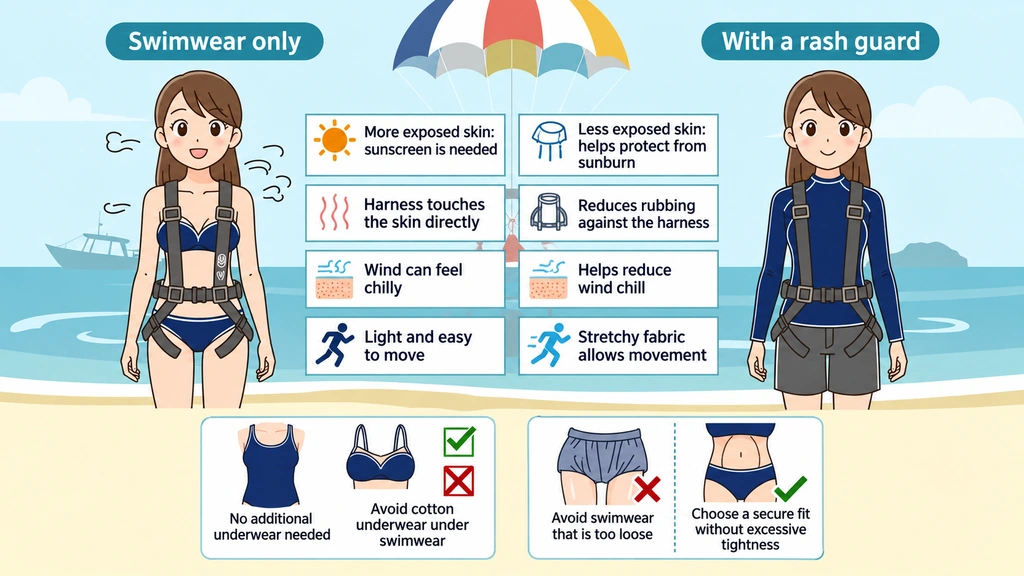
However, there are several things to consider if you participate in just a swimsuit. First, the wind feels stronger in the sky than on the ground, so exposing more skin makes it easier to feel cold. In particular, just a swimsuit may feel chilly in the morning, evening, or on cloudy days. Extended skin exposure in strong sunshine can also lead to sunburn-related skin problems, so remember UV protection.
On many parasailing tours in Okinawa, you fly wearing a harness, so direct contact between the harness and your skin may cause chafing. Wearing a lightweight rash guard or T-shirt over your swimsuit reduces this strain on your skin, so consider your constitution and the day's weather when deciding whether to participate in just swimwear.
Benefits of wearing a rash guard
A rash guard, a standard item for sea activities in Okinawa, is also extremely useful for parasailing. Originally developed for marine sports such as surfing, it is stretchy functional clothing that offers several benefits when worn over a swimsuit.
The greatest benefit is protection from UV rays. Okinawa receives more UV radiation throughout the year than mainland Japan, and reflected light at sea adds to the effects, often increasing damage to the skin. A rash guard protects skin in areas that sunscreen alone cannot fully cover.
Another benefit you should not overlook is preventing chafing and friction from equipment such as harnesses and ropes touching your skin directly. During parasailing, a harness is firmly secured to hold your body, and bare skin may turn red from pressure or friction. A rash guard adds a layer that helps prevent these skin problems.
Because winds are stronger in the sky than at ground level and it is easier to feel cold, a rash guard can also provide a degree of protection from the cold. Considering a rash guard helps you stay comfortable, particularly if you book parasailing outside summer or during the morning or evening.
The following table compares wearing a rash guard with not wearing one.
| Feature | With a rash guard | Without a rash guard (swimsuit only) |
|---|---|---|
| UV protection | Less exposed skin makes sunburn less likely | You need to rely on sunscreen alone |
| Skin chafing | Reduces friction with the harness | Direct skin contact makes chafing more likely |
| Warmth | Reduces the chilling effect of wind at flight height | More likely to feel chilly |
| Ease of movement | Stretchy fabric is less likely to restrict movement | Swimwear alone feels lightweight |
Tips for choosing underwear and clothes
As for underwear beneath a swimsuit, the swimsuit itself generally also serves as underwear, so there is no need to wear additional underwear. In fact, cotton underwear under a swimsuit may absorb water, take a long time to dry, or become see-through, so it is better avoided.
For women, bikinis can sometimes shift while worn, so for activities such as parasailing that secure your body with a harness, a well-fitting design that stays in place, such as a halter-neck or one-piece swimsuit, offers reassurance. For men, board-short-style swimwear combines ease of dressing with a secure fit.
When choosing clothes, keep in mind a design that is neither too tight nor easy to slip off. Parasailing lets you look down at the sea from a high place, where you are exposed to wind resistance, and overly loose swimwear or clothing can shift unexpectedly or ride up. We recommend trying clothes on beforehand to check that they fit your body.
Swimwear with many decorations, such as metal fittings or beads, can catch on the harness or dig into your skin and hurt, so choosing a simple swimsuit design is another key point. Selecting your swimsuit and any clothes layered underneath with both safety and comfort in mind is the first step toward fully enjoying parasailing in Okinawa.
Recommended clothes that can get wet
Why choose quick-drying fabrics?
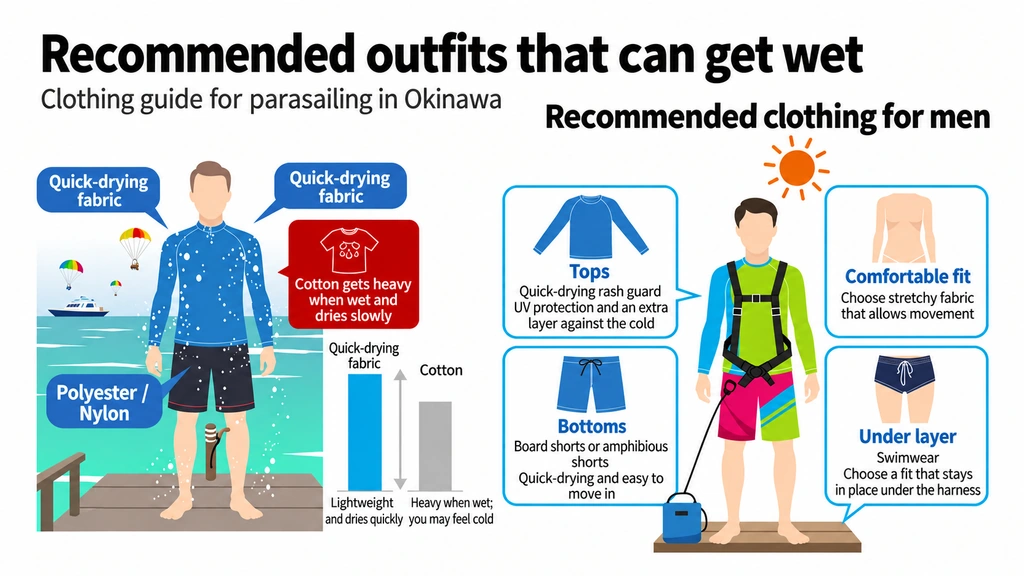
Although parasailing in Okinawa does not involve landing in the water, you need to choose clothes assuming your whole body may get wet from sea spray and the speed of travel. Cotton T-shirts and other cotton garments become heavy when wet and take a long time to dry, making it easier to lose body heat and causing discomfort. Choosing quick-drying fabrics made from synthetic fibers such as polyester or nylon is therefore key to staying comfortable. These fabrics resist absorbing water and dry quickly just from exposure to wind, so you can move on to sightseeing or a meal straight after parasailing with peace of mind. Stretchy fabrics also ensure ease of movement when wearing a harness, making it important to consider both comfort and functionality when selecting fabrics.
Recommended outfit examples for men
For men, the most common and recommended outfit combines land-and-water shorts or board shorts with a quick-drying rash guard or T-shirt. You can participate in just swim trunks, but exposing more skin in Okinawa's strong sunshine can cause more sunburn than you expect, so putting a rash guard on your upper body provides both UV protection and prevention of body heat loss. Quick-drying polyester is ideal, and avoiding cotton-blend T-shirts is more comfortable. The table below summarizes recommended combinations for men.
| Item | Recommended fabric | Tips for choosing |
|---|---|---|
| Top | Quick-drying rash guard | Choose one that provides both UV protection and warmth |
| Bottoms | Board shorts or land-and-water shorts | Choose a quick-drying pair with a length that allows easy movement |
| Underlayer | Swimsuit | Choose a style that stays in place when wearing a harness |
Recommended outfit examples for women
For women, a rash guard and leggings-style bottoms over swimwear are popular. A dress-style rash guard is easy to put on and take off, covers your body's contours, and provides sun protection, offering reassurance for first-time participants. Combining it with shorts-style bottoms meets both the need for easy movement and the desire to limit exposed skin. It is best to avoid skirt-style swimwear and clothes with many decorations, which can get in the way or become disheveled in wind and spray. The table below summarizes recommended combinations for women.
| Item | Recommended fabric | Tips for choosing |
|---|---|---|
| Top | Quick-drying rash guard | A zippered style is convenient and easy to put on and take off |
| Bottoms | Leggings or shorts | Choose a close-fitting style that does not ride up easily in the wind |
| Underlayer | Swimsuit | A halter-neck style that is hard to slip out of offers reassurance |
Hairstyle and makeup considerations on the day of parasailing in Okinawa
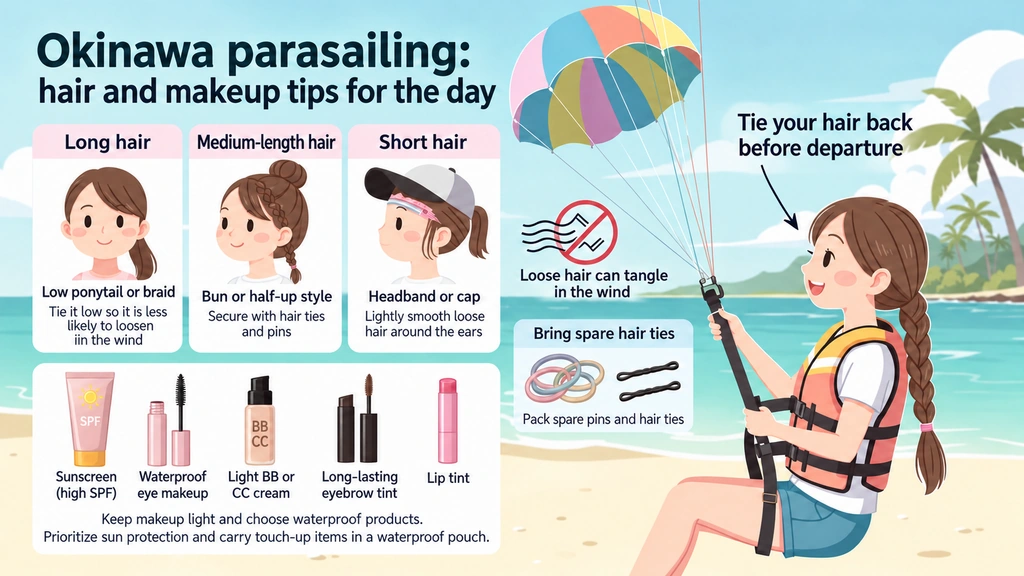
Hairstyles that stay in place when wet
Because parasailing takes you flying over the sea, you encounter stronger wind than you may imagine. Leaving your hair down can cause tangles or let it fall across your face, leading to discomfort, so we recommend securing it beforehand. In particular, people with long hair can enjoy themselves comfortably by tying it securely.
Recommended hairstyles are as follows.
| Hair length | Recommended hairstyle | Tips |
|---|---|---|
| Long hair | Low ponytail or braid | Secure it low, as a high style can come undone easily in the wind |
| Medium-length hair | Bun or half-up style | Using hairpins as well as a hair tie offers reassurance |
| Short hair | Use a headband or cap | Lightly smooth down stray hairs around the ears with wax if they bother you |
Also, choose a strong hair tie and bring a spare for reassurance. Retieing your hair at sea is difficult, so secure it firmly before departure. Small items such as hairpins and scrunchies may also fall into the sea, so manage them carefully as you would valuables.
Why light makeup is the basic approach
Although parasailing takes you flying above and away from the surface of the sea, you may be splashed when the boat departs or when touching down in the water. Take care, because wearing your usual full makeup may result in smudging or skin problems caused by sweat and sea breezes.
Keeping the following makeup tips in mind on the day offers reassurance.
- Use sunscreen as a base and prioritize UV protection
- Choose waterproof products
- Use a light BB cream or CC cream instead of heavy foundation
- Use a long-lasting eyebrow product such as a tint
- Choose a lip tint instead of lipstick for longer-lasting color
In particular, UV protection is essential in Okinawa's strong sunshine, so we recommend sunscreen with a high SPF and frequent reapplication. Bringing makeup touch-up products in a waterproof pouch is convenient because you can freshen up immediately after the experience.
Things to consider when leaving your belongings
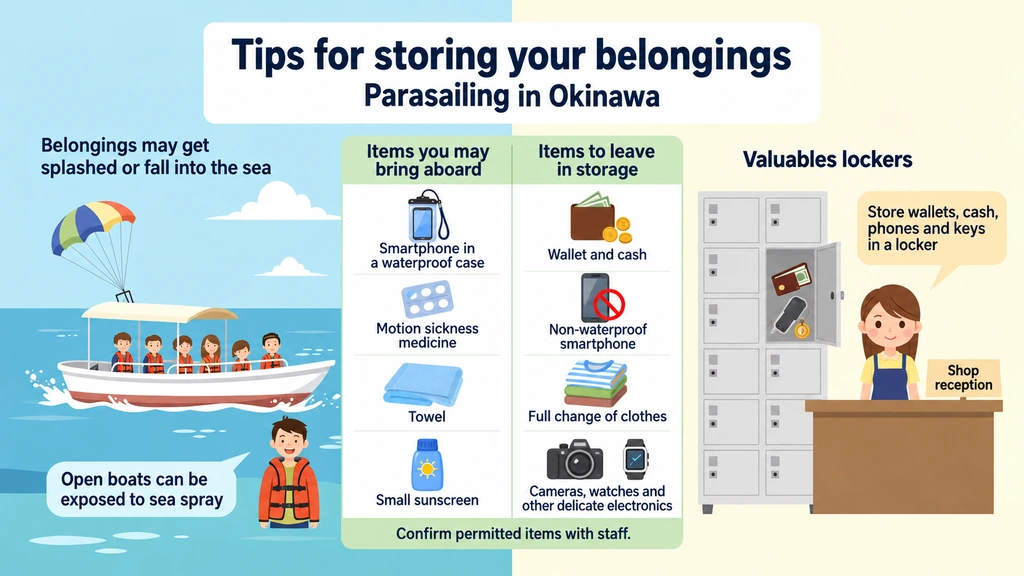
Many shops offering parasailing in Okinawa have a system for leaving your belongings before boarding. Since parasailing is an activity where you may be splashed or even fall into the sea, understanding beforehand how to manage valuables and belongings you do not want to get wet offers reassurance. Here, we explain in detail the difference between items you can bring aboard and those you should leave behind, and how to manage valuables safely.
The difference between items to bring aboard and items to leave behind
Most parasailing boats are open and have no roof, so you can expect seawater splashes while traveling or flying. As a general rule, items that must not get wet are therefore left in waterproof boxes or lockers provided by the shop rather than brought aboard. On the other hand, keeping items used to regulate body temperature, such as a towel or a lightweight jacket to wear over your rash guard, close at hand is useful.
| Items you can bring aboard | Items to leave behind |
|---|---|
| Smartphone in a waterproof case | Wallet and cash |
| Motion sickness medicine | Smartphone without waterproof protection |
| Towel | Full change of clothes |
| Sunscreen in a small container | Precision devices such as cameras and wristwatches |
What you may bring aboard varies by boat operator or tour company, so always checking with staff when booking or at check-in on the day helps prevent problems. Space aboard is particularly limited, so it is generally best to leave large or bulky belongings in lockers on land or inside your car.
How to manage valuables
The safest way to manage valuables such as your wallet, cash, smartphone, and keys during parasailing is to leave them in lockers at the facilities on land or with shop staff rather than keep them on your person. Many marine activity facilities have free or paid valuables lockers, so checking their size and usage conditions beforehand offers reassurance.
If you must bring your smartphone aboard, we recommend using a completely waterproof neck-hanging case or a zip-lock-style waterproof pouch. However, since you cannot use both hands during parasailing, it is also worth considering using the staff's photography service and leaving your own smartphone on land.
If you visit the facility in a rental car, do not leave valuables unattended inside; always carry them with you or use the facility's lockers. To avoid problems such as car break-ins, remember that you are responsible for managing your valuables and combine several precautions.
How parasailing belongings in Okinawa differ by season
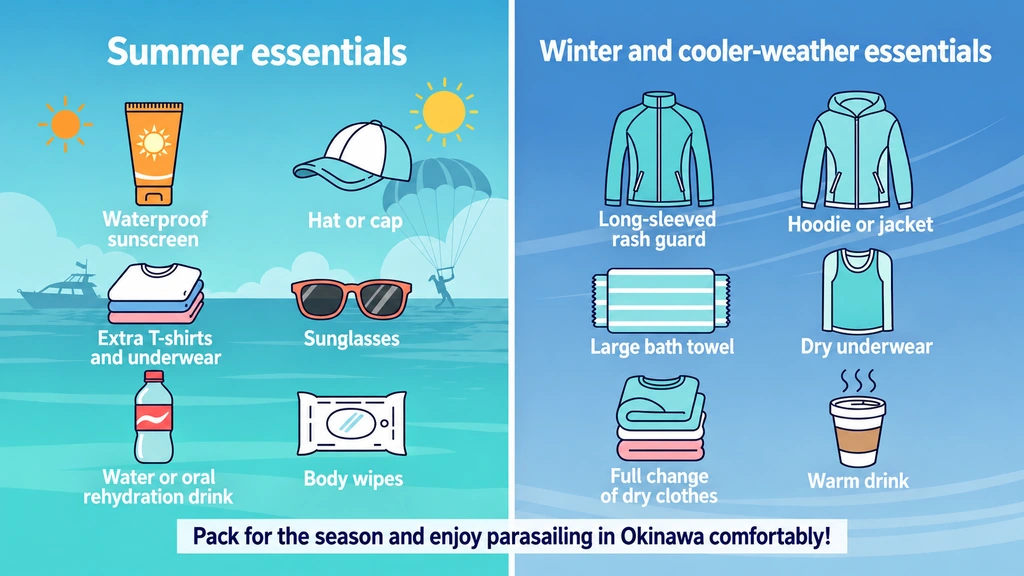
Okinawa has a warm climate throughout the year, but how warm or cold it feels at sea and the strength of the sunshine differ greatly by season. Since parasailing takes you flying over the sea, preparing belongings suited to the season makes the experience more comfortable. Here, we introduce in detail what to prepare for summer and winter.
Items to prepare in summer
Summer sunshine in Okinawa is very strong, making UV protection essential. Particularly during parasailing, reflected light from the water means you need to be even more thorough with sun protection than on land. Choose waterproof sunscreen that does not wash off easily in seawater and apply it about 30 minutes before the experience for effective protection.
You also sweat more in summer, so bringing extra T-shirts and underwear to change into offers reassurance. Some facilities have showers you can use after the experience, but they may not be available immediately during busy periods, so bringing body wipes is useful.
| Item | Use or reason |
|---|---|
| Waterproof sunscreen | To protect skin from strong UV rays and reflected light from the sea |
| Hat or cap | To avoid direct sunlight while waiting aboard the boat |
| Sunglasses | To protect eyes from strong sunlight and glare |
| Oral rehydration solution or other fluids | To prevent heat-related dehydration |
| Body wipes | To quickly wipe away sweat before and after the experience |
Summer also brings a higher risk of heatstroke, so make a point of drinking fluids regularly before and after the experience. Depending on the tour company, the waiting area may have little shade, so a folding parasol or arm covers are also recommended.
Protection from the cold in winter and chilly periods
Okinawa is often thought of as warm even in winter compared with Japan's main island, but wind at sea makes it feel colder than on land. Particularly from December (12) through February (2), morning and evening temperatures may fall, and many people feel chilly during parasailing.
If participating in winter, wearing a long-sleeved rash guard over your swimsuit and bringing a hoodie or windbreaker for before and after the experience offers reassurance. Wind on a wet body rapidly draws away heat, so it is important to prepare a towel and dry clothes to change into immediately afterward.
| Item | Use or reason |
|---|---|
| Long-sleeved rash guard | To protect skin from wind at sea and provide warmth |
| Hoodie or jacket to put on | To avoid getting cold while waiting before and after the experience |
| Large bath towel | To quickly dry a wet body and prevent heat loss |
| Full set of dry clothes | To prevent chilling immediately after the experience |
| Warm drink | To warm the body from within after the experience |
Even in winter, UV levels can be surprisingly high on sunny days, so carrying sunscreen offers reassurance in every season. Depending on the weather, the operator may decide to lend wetsuits, so it is a good idea to ask about preparations for warmth when booking.
Summary
Preparing your belongings beforehand is the key to a comfortable parasailing experience in Okinawa. Essentials include a swimsuit, towel, change of clothes, sunscreen, and sandals, so remember to have them ready. Preparing useful extras such as a waterproof case, drinks, and motion sickness medicine also offers reassurance.
For clothing, wearing a rash guard over your swimsuit helps prevent sunburn and chafing and keeps you comfortable. Quick-drying fabrics are recommended because they reduce discomfort after getting wet. An updo that stays in place when wet and light makeup let you enjoy yourself without worrying about your appearance becoming disheveled at sea.
When leaving belongings, take steps to prevent loss or damage, such as entrusting valuables to the person responsible aboard the boat or wearing them in a waterproof pouch. Necessary belongings also vary by season: sun protection in summer and preparations for warmth in winter are essential.
Preparing with these points in mind will let you enjoy parasailing in Okinawa to the fullest with peace of mind.