
You would love to fly over the sea in Okinawa, but the thought of your feet leaving the boat makes you nervous. It looks fun in photos. What if you start swaying once you are up there? These are natural questions to have before booking a parasailing trip.
Picture the experience one stage at a time, from boarding to landing back on the boat. If the boat's motion bothers you, you will have different questions from someone who worries about lift-off or looking down from a height. Here is what the floating sensation and the movement can feel like, along with questions to ask before booking or setting off.
Is parasailing scary? Start with the part you are worried about
In parasailing, a boat tows you under an open parasail. A harness supports you as you fly with the sea below your feet. It is a chance to see the water and islands from above, though having your feet off the ground or noticing how high you are can feel unsettling.
Someone who is uncomfortable with heights might enjoy looking into the distance and only feel nervous when looking straight down. Others might be comfortable with the view but worry about being unable to stop the movement themselves. Which of these stages are you most concerned about?
| Stage | What you might notice | What you can ask in advance |
|---|---|---|
| Boarding and the boat ride | The boat rises and dips with the waves, and you feel the wind as it moves | Where to sit and what to expect while waiting on board |
| Takeoff | Your feet leave the deck and the boat gets farther away | The preflight briefing and what position to take |
| In the air | Height, feet off the ground, wind and swaying | How the flight works and how to signal if you need help |
| Landing back on the boat | The deck comes closer and you have to know when to put your feet down | Your landing position and the crew's instructions |
Find out what happens before deciding how you feel about it
If the drop on a roller coaster makes you nervous, ask what happens between your feet leaving the deck and your return to the boat. A walk-through makes the part that concerns you easier to picture. If looking down from a tall observation deck bothers you, ask what the water looks like from the air and where you will sit relative to the person flying with you.
You can simply say, “I get nervous at heights, but I enjoy looking out at distant scenery.” The more specifically you describe your concern, the easier it is for the crew to know what to explain about that day's trip.
From boarding to takeoff: boat motion and the moment you lift off
You may first notice movement as the boat gets underway
The water may look calm at the harbor. When the boat starts moving, the wind reaches you from a different direction and you can feel the boat rise and fall with the waves. On an unfamiliar boat, it can take a little time to get used to the motion. If you know that rocking boats bother you, tell the crew at check-in and ask where to wait on board and who to speak to if you feel unwell.
If swaying in the air is what brought you here, remember that the trip also includes a boat ride. If you are planning to wait and see how you feel, you can ask how late you can decide to sit out.
Meet at Miegusuku Port in Naha and ask questions before boarding
Kai・la's scenic parasailing tour meets at Miegusuku Port, within easy reach of Naha Airport and Kokusai Street. If you are staying in Naha, it is easy to fit the trip around sightseeing in the city. The tour page lists several meeting times, so you can choose one that leaves room for travel. If it is your first time, check the route and how long it takes to reach the port the day before so you can arrive ready to get started.
At the port, you meet the crew, check in and complete the application form before getting ready. If you are worried about the boat's motion or takeoff, you can ask at check-in, “Could you walk me through what happens up to the point we get back on the boat?” If talking to someone you have just met feels harder once you are on board, having one question in mind makes it easier to start the conversation at the port.
Once your gear is on, check your position and signals before lift-off
Follow the crew's instructions when putting on your life jacket and harness. During the briefing, find out when you will lift off, what to do with your hands and feet, and who to ask if you need anything explained again. That will make it easier to follow along when your turn comes.
If it is hard to picture what happens between boarding and your turn, ask if you can watch another group get ready or take off from the designated spot on the boat. Seeing it can give you a clearer idea of which way riders leave the deck and when the crew calls out as they come back. If your group is first, you can ask the crew to talk you through the movements in order.
Speak up if the gear digs in, your position feels awkward, or you missed part of the briefing. Even if your flight partner has understood everything, you can ask the crew to go over it again. You can still ask questions after you have put the equipment on.
At takeoff, the view beneath your feet changes
When the launch is from the boat, the deck drops away from your feet as the boat tows you upward. The boat recedes and the view opens out across the water. Some people are startled by the change. Others notice the view opening up first. The way you rise and how the movement feels also depend on the wind and sea conditions that day.
If the moment your feet leave the deck worries you, ask during setup if the crew can let you know just before you lift off. Follow the instructions your crew gives you for that day's flight and signals.
What do the floating sensation, swaying and height feel like?
Floating feels like settling into the harness with your feet free
Under the parasail, the harness takes your weight and there is nothing to stand on. Your body is supported in a different way from when you are standing on the ground. You may notice that sensation before you notice the view. If you ask which parts of your body the harness supports, it is easier to picture how you will sit in it.
The view under your feet changes during takeoff. In the air, the line where the sea meets the sky comes into view ahead. Which moment feels more unnerving varies from person to person. When looking at photos or videos, it can help to see both a launch from the boat and a shot taken once the view opens up in the air.
The boat and the parasail move in different ways
On the boat, you feel the hull move with the waves through your feet or seat. In the air, the wind and the movement of the boat affect how you turn and sway, as well as the way the view moves in front of you. Your body is supported differently in each setting. If both parts worry you, ask how long you will spend on the boat and how long you will be in the air. Kai・la's scenic parasailing tour takes about 60 minutes from check-in to the end of the tour, including setup and boat travel. If time in the air is your concern, ask for a separate estimate of flight time when you book.
Wind can be hard to judge by sight, and it can feel different offshore than it does in the harbor. Knowing the wind and weather conditions matters for operational decisions. If you are worried about the wind, ask the crew about conditions that day before you decide whether to fly. The US National Transportation Safety Board's parasailing study also discusses the importance of tracking weather conditions during operations.
The view straight down feels different from looking ahead
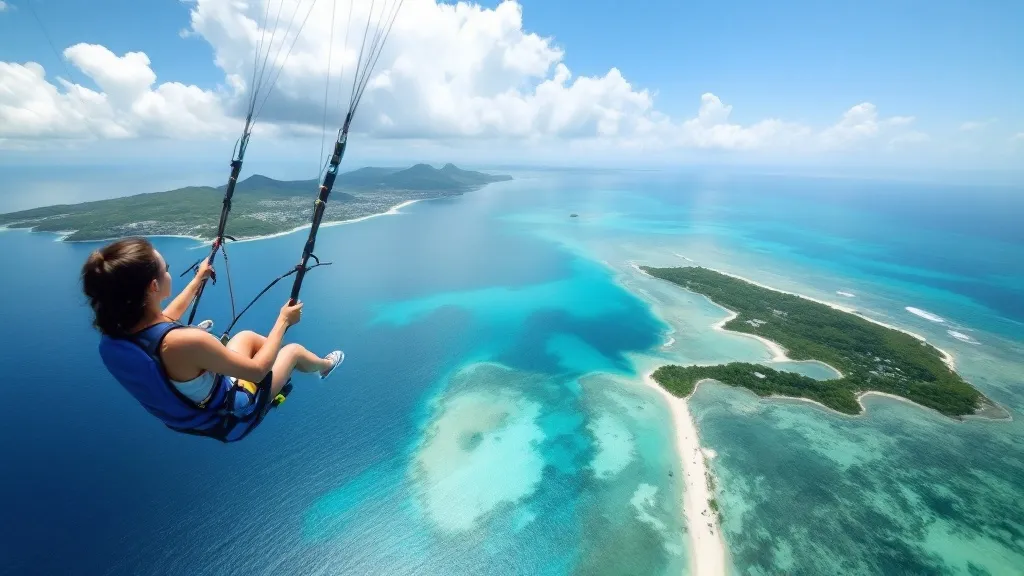
When you look down, the boat and its white wake look small, which can make you more aware of how far you are from the water. Lift your gaze and you may see the horizon and the Okinawa coastline. If the height bothers you, follow the crew's guidance on posture and start with a direction that feels comfortable to look in.
That applies to videos too. A shot looking straight down gives a different impression from a view along the coast. If a downward-facing clip made you nervous, try looking at a photo taken near eye level to see what sort of view you might enjoy.
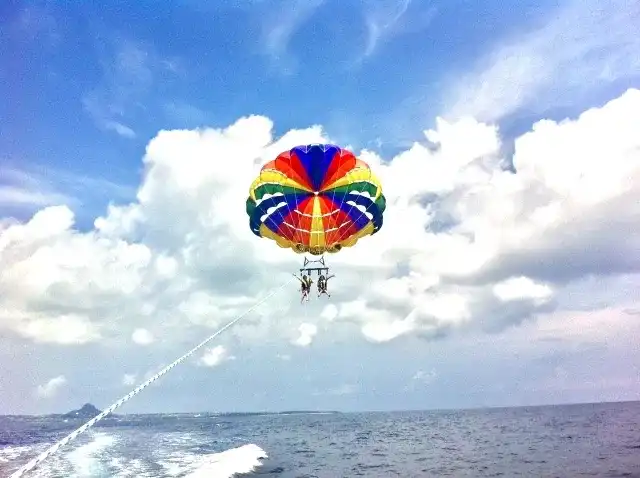
See Okinawa's west coast from above and decide before flying if you want photos
One highlight of Kai・la's tour is the clear water along Okinawa's west coast. Look toward the horizon and the sky and sea open up in front of you. When the sun comes out, you can see how the color changes between the shore and the open water. If a video looking straight down made you nervous, have a look at the scenery and the riders' seated position in the tour photo gallery. It can help you picture what you would like to see from the air.
The tour page says you can take your own photos with your smartphone. If you would like to take your phone on the flight, check with the crew beforehand about how to carry it and when you can use it. If taking pictures sounds like a distraction, give yourself time to enjoy the view first. The colors of the sea and the moment you share with your travel companion can be the memories that stay with you.
What to ask before booking if you are uncomfortable with heights
Describe a situation you have experienced
“I can look out from an observation deck, but a glass floor makes me nervous.” “I tense up when I feel a strong wind somewhere high.” Examples like these can be easier to explain than a general fear of heights. If you have little experience at heights, you can say, “I've never been on a ride with my feet off the ground, and I'm nervous about it.”
If you are excited to fly but the person traveling with you is nervous, talk about what concerns them before booking. You can then work out which questions to ask. If they would rather someone else ask, you can tell the crew that both of you would like to go over how the trip works.
Ask about height, communicating in the air and sitting out
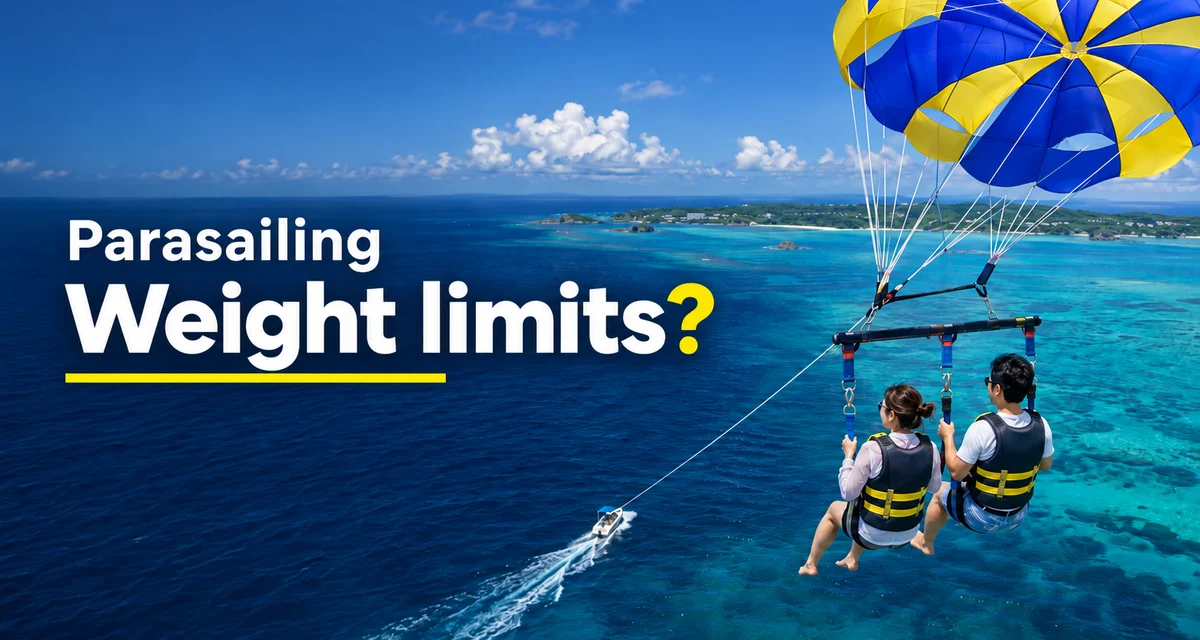
If you would prefer to fly lower, or would feel more comfortable flying with someone who has done it before, ask before booking. The flight height and rider groupings depend on the wind and sea conditions, the riders' number and weight, and operational decisions. Share your preference and ask what can be considered. Our guide to parasailing weight limits explains how Kai・la approaches rider groupings.
| Concern | What to ask before booking |
|---|---|
| Flight height or how the flight works | “I'm uncomfortable with heights. Can I ask about options for the flight height?” |
| Flying with your travel companion | “I'd like to fly with the person I'm traveling with. What should we tell you ahead of time?” |
| During the flight | “If I get very nervous in the air, is there a way to let the crew know?” |
| Deciding to sit out on the day | “If I feel unable to fly at the harbor or after boarding, how late can I discuss sitting out?” |
Here’s an example for the booking form.
There are two of us, both first-timers. One of us is nervous about heights and the moment our feet leave the deck. Can you tell us if we can fly together and how takeoff and landing work?
This lets the crew know your group size and what you want to ask in one message. If you have booked already, include the date, time and name on the booking.
If the height alone does not tell you how you might feel, ask how the flight goes from takeoff to landing as well. Wind and distance can make it difficult to hear a voice from the air. Ask the crew about any available signals and what they can do during the flight. It is easier to make a decision when you have asked those questions on the boat.
Nervous about flying alone? Ask Kai・la about sharing a flight
If being high up on your own sounds daunting but seeing a friend or family member beside you would help, ask about flight groupings before booking. Kai・la's scenic parasailing tour takes bookings for two or more people. Depending on group size and weight, up to three adults may be able to fly together. If three friends are traveling together and would like to share the same view without anyone flying on their own, let the crew know when you book.
For three people, you could say, “There are three adults in our group, and one of us is nervous about heights. We'd like to share a flight if possible. What information should we give you in advance?” That tells the crew how many people are coming and why flying together matters to you. The grouping also depends on operating conditions on the day. Talk with your companions ahead of time about what you would prefer if the first choice is unavailable.
If you fly together, listen to the takeoff and landing briefing as a group. Even simple comments like “I'm nervous about the moment my feet lift off” or “I'd like to look at the horizon once we're up” help everyone understand what their companions are thinking about.
Returning to the boat and dealing with nerves on the day
On the way back, focus on what the crew tells you
As you return, the boat that looked distant comes closer. You can see the landing area and people on deck. It is natural to pay attention to the boat's movement and how far away the deck is. Ask ahead of time where to put your feet and when to move. As you come in, let the crew guide your timing.
If it is the return that you are having trouble picturing, it is enough to say, “I'd like to know how to move when my feet touch the deck.” For an idea of how the day can look in Okinawa, see our parasailing and Blue Cave snorkeling trip report.
If you feel more nervous on the day, say so before setting out
You might have been excited when you booked, then feel a wave of nerves when you see the boat or parasail at the harbor. Let the crew know at check-in or during the briefing before boarding. One concern is enough to start the conversation, such as “I'm worried about seasickness” or “Could you explain takeoff one more time?”
If you are supporting a travel companion, ask what part they want to know more about and offer to listen to the explanation together. Some people decide whether to fly after the briefing or after asking about the wind that day. If you are thinking about sitting out, whether you can stay on the boat and how your booking is handled will depend on the tour terms and the day's operation. Ask when you book, including whether you might need to split up from your companion.
Allow about an hour for the tour plus travel to and from the port
Miegusuku Port is easy to reach from central Naha. If it is your first time, leave some space between check-in and your next plan so you have time to ask questions and consider the briefing. The full Kai・la tour takes about an hour. When picking a meeting time, factor in travel to the port and the time it takes to get to your next stop. You might fly after sightseeing in Naha in the morning or head to Kokusai Street for a meal after the tour. The port's location makes both easy to plan.
It is also worth checking how your booking would be handled if you decide not to fly. Kai・la's tour page describes its guest cancellation terms and notes that operations may be called off because of sea conditions or equipment issues. Before booking, ask about the situations that matter to your plans, such as sitting out while your group goes ahead or the tour itself being canceled.
Common questions about your first parasailing trip
Can I fly without looking down?
If seeing the water beneath you makes you nervous, look ahead at scenery you are comfortable seeing. Follow any posture or viewing instructions from the crew. If you say before takeoff that you are uncomfortable looking down, you can ask what to focus on during the briefing.
Does it feel like a roller coaster?
In parasailing, the boat tows you upward and you fly with your body resting in the harness. If it is the sensation of dropping on a roller coaster that bothers you, ask how the parasail moves at takeoff and when you return to the boat. People experience swaying and floating differently, and the sensations can change with the wind and operating conditions.
Will it sway less if the wind looks light?
What you see from the harbor will not tell you what it is like offshore or how much you will sway in the air. Wind and waves can change with the time and location. At check-in, ask what the sea conditions are like and what to keep in mind on the boat and in the air. The crew decides whether the tour goes ahead based on the day's conditions.
Can I book with a friend who is nervous?
When you book together, tell the crew if you want to fly as a group or if someone would like to decide after hearing the briefing on the day. Whether your preferred grouping is possible also depends on the day's conditions, so ask when you book.
Flying with a child? Share their age and who they want to fly with
Kai・la's scenic parasailing tour is open to guests aged four and over who are in good health. If a child says they are nervous about heights but would like to try with a parent, provide their age and your group size when booking. Ask who they might be able to fly with and whether the crew can explain the steps to them during setup. Knowing how many family members actually want to fly makes it easier to plan together.
Even when the tour looks fun to an adult, a child may get nervous at the sound of the boat or the sight of the equipment. If they feel comfortable talking about it, try asking whether getting on the boat or going up in the air worries them more. You can bring up their answer when you hear the briefing together.
See Okinawa from the air and the water with the Blue Cave combo
If you want to see the west coast from the sky and take a look beneath the surface too, Kai・la offers a Blue Cave snorkeling and scenic parasailing combo. Parasailing opens up a view of the coastline, while snorkeling lets you see fish and the cave's blue light from the surface. If you choose the combo, tell the crew what concerns you about each activity. One person might be nervous at heights while another has never put their face in the sea. Both can ask about the parts they want to understand before starting.
The activities take place in different locations, and guests arrange their own travel between them. Check the meeting order and allow travel time so you can hear the briefing for both. With a Naha-based parasailing tour and a combo that includes the Blue Cave, you and your companions can choose the day you would enjoy most.
Take your first flight over Okinawa with Kai・la
Are you most concerned about your feet leaving the deck or about the height when you look down at the sea? Pinpointing one concern makes it easier to ask a question before booking. Once the briefing helps you picture the flight, you can look forward to seeing Okinawa's water from above and watching the boat trace its white wake.
Kai・la's scenic parasailing tour leaves from Miegusuku Port in Naha. If it is your first time, or you want to know whether you can fly with your travel companion, tell us what you are concerned about. You can also get in touch through reservations and inquiries to ask how the day works if heights make you nervous.