

Seeing that blue light from underwater sounds like a good reason to visit Okinawa’s Blue Cave. But it’s easy to hesitate over booking when you start wondering how you’ll breathe through your mouth, what it will feel like when your feet leave the bottom, or whether the cave will be too dark. You might be the only one in your group who still feels unsure.
Start by identifying the moment you’re worried about and when you can pause to talk it through. If putting your masked face in the water is what worries you, shallow-water practice can help you decide. If enclosed or dark spaces are the concern, ask when you can decide whether to go into the cave.
This guide covers breathing, depth, ear equalization and the darkness of the cave for anyone considering an introductory dive. You’ll find questions you can use when booking, as well as ways to tell your instructor if you start feeling uneasy on the day.
What makes diving at the Blue Cave feel scary?
“I’m scared of diving” can mean several things. Picture the equipment briefing, putting your face in the water for the first time, losing contact with the bottom and approaching the cave entrance. Walking through those steps can help you pinpoint what to ask. If two moments worry you, tell your instructor about both.
| Moment that worries you | What to ask ahead of time |
|---|---|
| Breathing feels difficult with your face in the water | Where can I stand while I practice, and what will we try first? |
| Losing contact with the bottom or looking down | When will my feet leave the bottom, and can I pause to talk it through? |
| Ear pain on descent | When will you explain equalization, and how should I signal discomfort? |
| Darkness or losing sight of the exit | Can I check in before entering? Can I finish the dive outside the cave? |
Start with the first moment you might feel uneasy
If you can put your face in the water at a pool but feel uneasy when your feet can’t touch the seabed, ask what happens when you leave the shallow practice area. Even a confident swimmer may feel uneasy breathing with their nose covered by a mask. Swimming ability tells you only part of how you might feel on a dive.
You can ask about the equipment and the order of activities ahead of time. How you react to movement at the surface or to floating free of the bottom is something you’ll learn in the water. Tell the instructor what you’d like to try before deciding whether to continue.
Tell the instructor whether you’re unsure or would prefer to skip the dive
If you want to try but feel nervous, you can say, “I’d like to hear the briefing and practice in shallow water before I decide.” If you already know you’d prefer to skip the cave, say, “I’d like to spend time in the sea, but I don’t want to enter a dark cave.” That gives the shop a clearer sense of which experience might suit you.
Talk with your companions before booking. You can make plans together and have different preferences about how far to go. Whether members of a group can split up on the day depends on the course and staffing, so check with the operator first.
If you’re worried about breathing underwater
Find out what mouth breathing feels like before entering the sea
On an introductory dive you breathe through the mouthpiece of a regulator connected to a tank. You can breathe in and out with your face submerged, but it feels different from breathing through your nose. Tell your instructor if the mouthpiece feels too large or awkward to hold.
Understanding how a regulator works and getting used to how it feels take different amounts of time. At first you might be too focused on breathing to look around. Take the briefing and a short practice session as a chance to see how it feels, then talk with your instructor about the next step.
Ask what you’ll practice in shallow water
On Kai・la’s Blue Cave introductory dive, the equipment and safety briefing is followed by breathing practice in shallow water where you can stand. If you had pictured swimming straight to the cave, ask where the briefing takes place, where you’ll first put your face in the water and how you can ask to pause during practice.
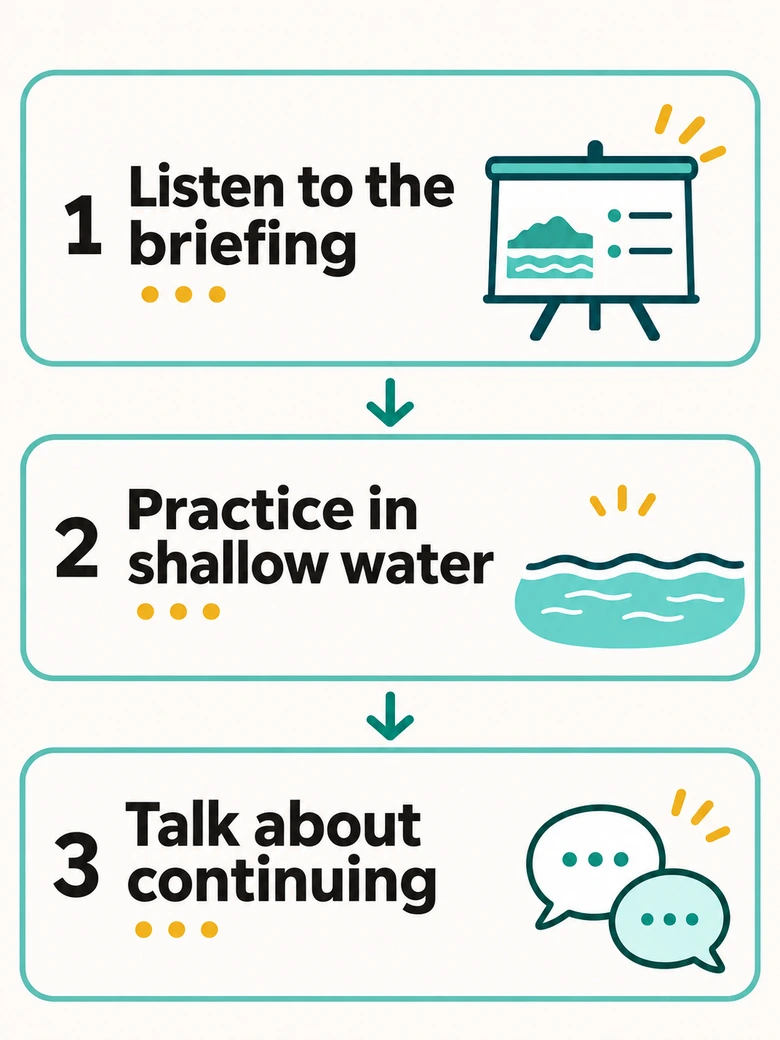
You might say, “I’d like to try breathing through the regulator before I put my face in the water,” or “I think I can put my face in, but I’m nervous about what comes next.” Follow your instructor’s directions for practice. They’ll take the sea conditions and how you’re doing into account.
Pay attention to how your breathing feels as well as how it sounds
Underwater you can hear the bubbles you exhale and the sound of breathing through the regulator. That unfamiliar sound can be startling. If it surprises you during practice, tell your instructor so you can go over the equipment and the next step. If it feels hard to breathe or something feels wrong, pause and tell the instructor before continuing.
Keep breathing underwater and signal any problem the way your instructor showed you. PADI’s participant guide for introductory diving also covers keeping your breath flowing and signaling the person supervising you if something feels wrong. Learn what to do directly from your instructor before getting in the water.
If you’re worried about depth or equalizing your ears
Think about what happens when your feet leave the bottom
The same patch of water can feel different when you’re standing on the bottom and when you’re floating above it. Being able to see the seabed or spot the instructor ahead can also affect how you feel. A specific description helps, such as “I feel uneasy when my feet lose contact” or “Seeing how far away the bottom is makes me nervous.”
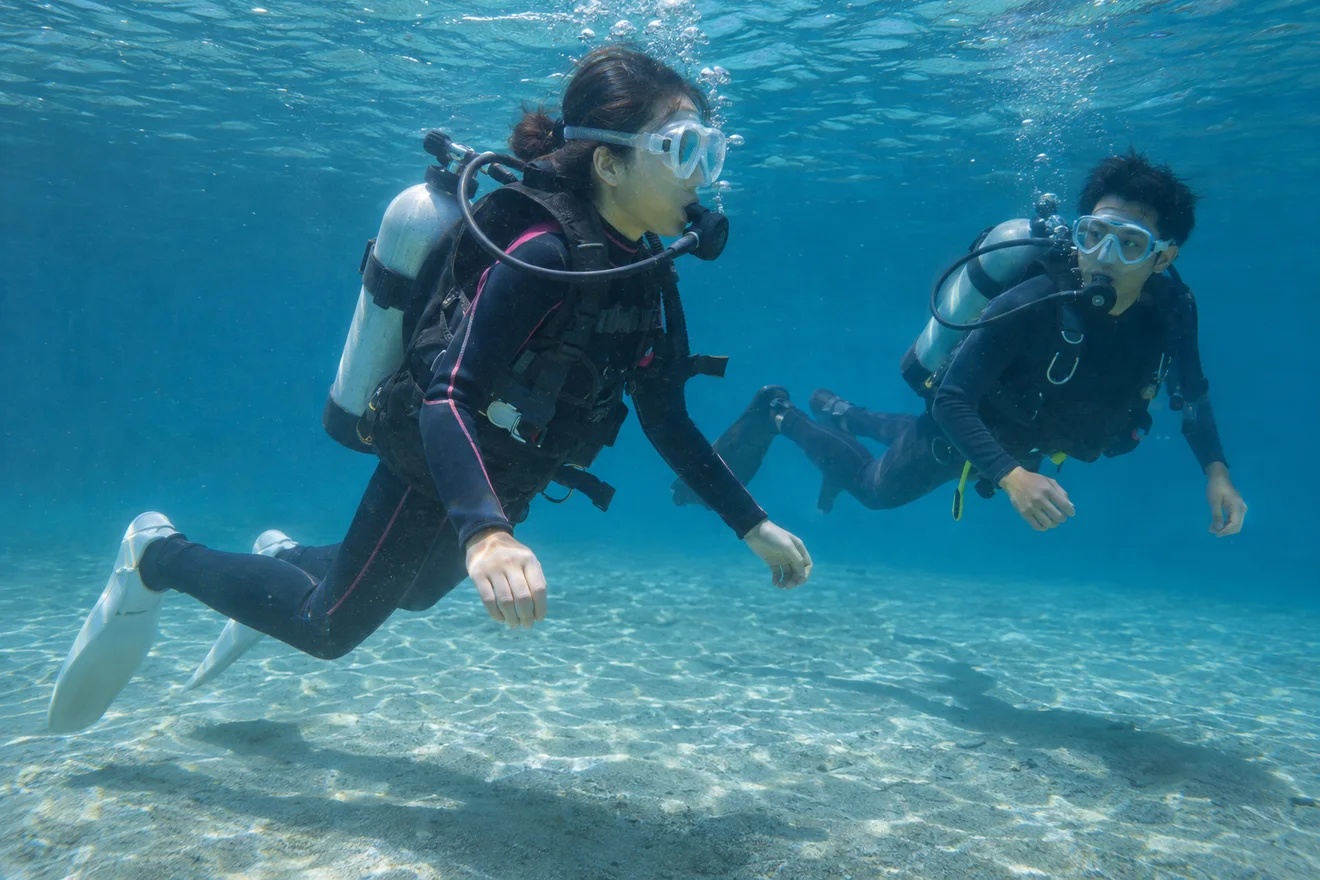
The depth of the seabed and the depth at which you’ll actually dive are different. A photo showing the bottom far below doesn’t tell you where a participant will swim. Ask about the likely route before booking and confirm it before your dive. It helps to know when you’ll leave standing depth and whether there’s a point where you can pause before that happens.
Describe how you feel about floating, even if you’re a confident swimmer
Swimming at the surface under your own power feels different from entering the water in scuba gear and finding yourself in unfamiliar positions. You can be comfortable swimming and still tell your instructor, “I get nervous when the view below my feet changes.”
When your feet leave the bottom, listen to the instructor and see whether you feel ready for the next step. If you’re having trouble, signal your instructor first. Avoid making sudden movements to get back or trying to adjust unfamiliar equipment on your own.
Signal ear discomfort before it becomes painful
The pressure around you changes as you descend. Equalizing helps balance that pressure across your ears, so start as instructed during the descent. At the briefing, ask how to equalize and how to signal if it isn’t working.
If an ear starts to feel blocked or painful, stop descending and signal your instructor. Avoid forcing equalization or putting up with pain to keep up with the group. Divers Alert Network’s guide to ear equalization advises avoiding force and ending the dive if you can’t equalize.
If you already have concerns about your ears or health before the trip, contact the shop in advance. Ask a doctor if you need individual guidance about past symptoms or medication. Bring up those concerns even if you expect to stay in shallow water.
If the Blue Cave feels too dark or enclosed
Picture the approach as well as the blue light in the photos
Pictures of the Blue Cave often frame the spot where light comes in. As you approach from open water, more of your view fills with rock and shade. Moving from a wide view of the sea and sky to the shadowed entrance can feel quite different from being out in the open.

Darkness and feeling enclosed can affect people differently. You might be fine in dim light if you can see the space around you, or feel uneasy surrounded by rock even when there’s light. Tell your instructor if losing sight of the exit concerns you. Ask where the view changes along the route and where you’ll be able to check in.
Tell the instructor if you want to decide before the entrance
Once you’re underwater, you can’t explain a concern at length. Mention it while you’re still able to talk, for example at the equipment briefing. You can say, “I’d like to check in with you before the cave entrance and decide there how far to go.”
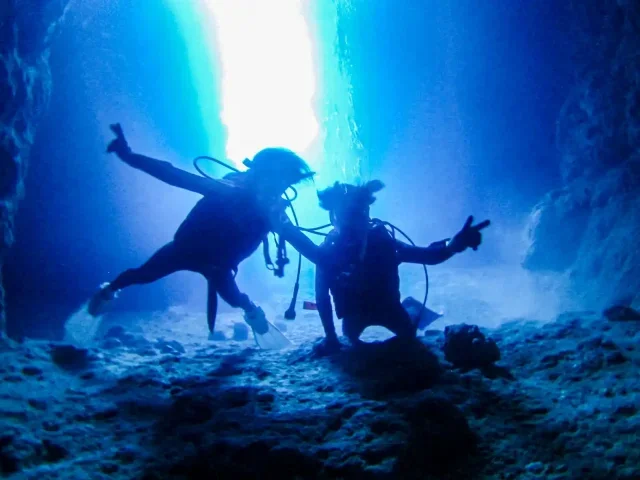
Where you can pause and whether you can finish outside the cave depend on the route and sea conditions. Agree with your instructor on when you’ll make the decision before setting off. If the plan needs to change underwater, use the signal you learned and follow the instructor’s directions.
The cave can be open and you can still decide how far to go
Cape Maeda’s management posts swimming restrictions on the official sea conditions page. Kai・la’s course information also says the dive site may change if sea conditions close the cave. Check both the local restrictions and the operator’s guidance about whether and where the tour will run.
When your companions are excited to go inside, it can feel awkward to ask to stop. Before booking or once you’ve met up, say, “Even if the cave is open, I’d like to see how practice goes before I decide.” It’s easier to revisit the conversation if your instructor knows what you’re weighing up.
Three things to ask before booking
Tell the shop about your diving experience, the moment you’re worried about and what you’d like to try before making a decision. For example, “This is my first dive. I get nervous when my feet can’t touch the bottom, so I’d like to practice in shallow water before deciding whether to continue.”
1. Where can I practice breathing and signaling?
If even putting your face in the water worries you, mention that first. Ask what the practice area is like, whether the instructor explains the equipment on land and when you can ask for more time to practice.
“Can a first-timer join?” is a good opening question. Follow it with something specific to you, such as “Can I start by practicing putting my face in the water?” or “Can I talk to my instructor if I’m still uneasy about how it feels to breathe?”
2. How do I signal ear pain or that I want to stop?
Before entering, ask the instructor to show you the signals for a problem, ear discomfort and wanting to stop. Use the signals you’re taught on the day. If you’re unsure, check the meaning aloud: “Does this signal tell you that I want to pause?”
3. Can I check in before we enter the cave?
If darkness concerns you, say, “I’m nervous about entering the cave. Can I decide before we go in?” Ask in advance if some of your group want to continue and others may want to stop. Check the operator’s terms for changes or ending partway through if you need those details.
| Example question | What you’re looking to find out |
|---|---|
| Can I start by practicing breathing through my mouth? | Where practice starts and when you can speak to the instructor |
| How do I signal ear discomfort or that I want to stop? | The signals you’ll learn before entering the water and what they mean |
| Can I decide before we approach the cave entrance? | The planned route and what happens if you choose to stop |
If you have less experience than your companions, speak up for yourself
Kai・la’s introductory dive is private to your group. People in the same group can still have very different comfort levels. If the most experienced person books for everyone, let the shop know about individual concerns. You can also say at the briefing, “I’d like to check how much time I’ll have to practice in the shallows.”
What if you feel more scared on the day?
Booking a dive leaves room for you to decide how far to go on the day. How you communicate depends on whether you’re on land, at the surface where you can talk or underwater. Bring up your concern while you can still speak if you can.
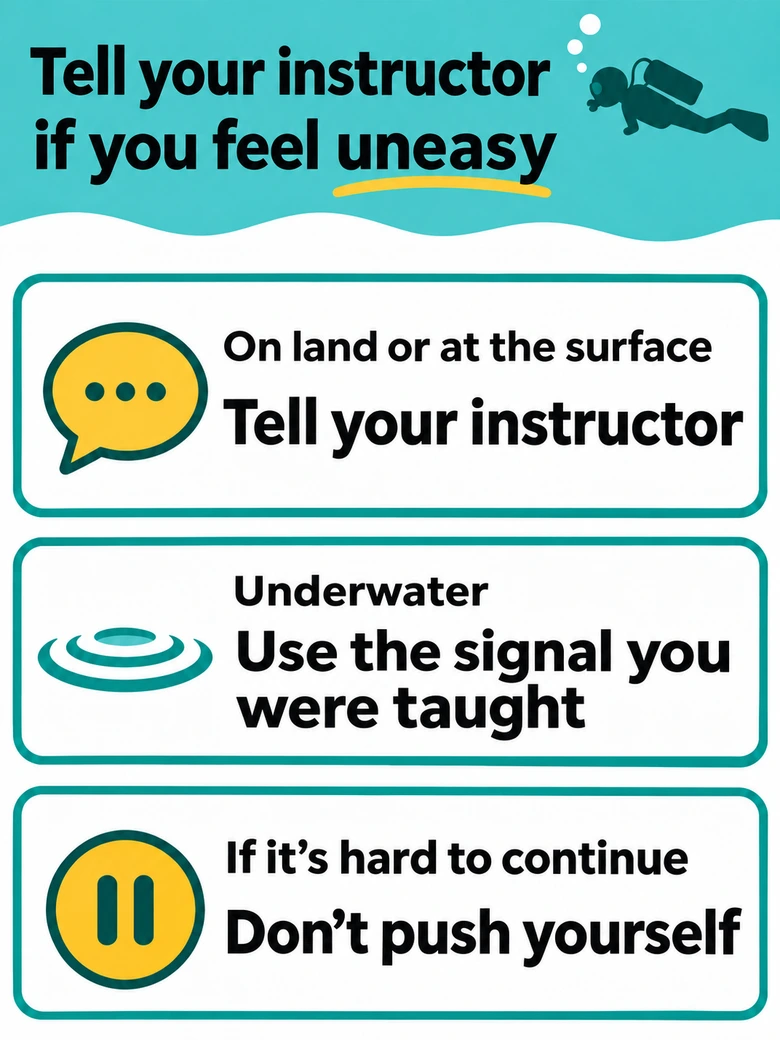
Say what’s bothering you while you’re on land or at the surface
During the equipment briefing, say if you’re nervous because you can’t picture how the breathing will feel. After practice, describe what went well and what still worries you: “I could breathe with my face in the water, but I’m still nervous about leaving the shallow area.”
A short sentence such as “I’d like to pause” or “Could you explain that again?” is enough to start. If the movement at the surface is bothering you, name that immediate concern so your instructor knows what you’re experiencing.
Underwater, signal and wait for the instructor’s directions
Use the signal you agreed on during the briefing. If you have difficulty breathing, ear pain or feel you can’t keep going, signal early. Follow your instructor’s directions and avoid surfacing suddenly or turning back on your own.
It can be harder to communicate what’s wrong once the worry builds. Divers Alert Network’s guide to preventing panic discusses speaking up before a dive and addressing discomfort early. A signal is enough to let your instructor know you need help.
| When the worry builds | What you can do then |
|---|---|
| During the equipment briefing | Explain what worries you and review the practice steps and signals |
| After shallow-water practice | Say that you’re still deciding and ask what comes next |
| During the dive | Use the signal you learned and follow your instructor’s directions |
| When you can’t settle enough to continue | Tell your instructor you’d like to end the dive |
Stopping can be what you decide after practice
Practice in the shallows is a chance to learn how you feel. Some days you’ll be ready to go farther. On another day it may feel right to stop, even if your companions feel ready to continue.
If you got used to breathing but realized you’d prefer to stay out of the cave, say so. Remembering those two details can help you choose an activity next time. How you feel in the water is part of deciding whether to continue, along with how much you’d like to see the cave.
Common questions about trying a Blue Cave dive
Can I try the Blue Cave dive if I can’t swim?
Kai・la’s introductory course includes an equipment briefing and breathing practice where you can stand, with people who are less comfortable swimming in mind. Tell the shop whether your worry is swimming itself, putting your face in the water or losing contact with the bottom. Ask about participation requirements and the sea conditions on the day.
What if I’ve had trouble equalizing my ears before?
Tell the shop before booking if your ears hurt during a previous dive or you couldn’t descend because you couldn’t equalize. Ask a doctor about recurring symptoms or a history of ear problems. On the day, signal at the first sign of discomfort instead of waiting until it hurts.
Will I definitely get to dive somewhere else if I skip the cave?
A site change because the cave has closed and a participant deciding to stop because of the dark are handled separately. What the operator can arrange in the second case depends on the route and the day’s operations. Ask before booking what happens if you choose to finish without going inside.
Which will feel easier, diving or snorkeling?
Snorkeling usually means looking into the water from the surface, while scuba diving takes you underwater breathing through a regulator. Consider that difference if staying underwater worries you. If putting your face in the water or feeling the waves is what bothers you, snorkeling can bring those feelings up as well. Our guide to snorkeling and diving at the Blue Cave goes into the two experiences.
Is it OK to say I’m having second thoughts on the day?
Yes. Speak to the instructor on land or at the surface. If you’re underwater when you realize you want to stop, use the signal you learned and follow the instructor’s directions. Letting the instructor know early gives you a chance to discuss the next step.