When looking for an aerial experience on your Okinawa trip, have you wondered how parasailing differs from paragliding? Their names and appearance can seem similar, but comparing the connection to a boat, the person in control and the launch location helps explain what each activity offers.
Perhaps you want to fly beside a friend above the sea, share a flight with a pilot, or learn to control a wing yourself. Let’s sort out the two activities so you can choose something that matches that wish. Later, we’ll look at the parasailing experience described on Kai・la’s official course pages and how it can fit into your holiday.
Parasailing and paragliding differ in what connects you during flight
Start by looking at how the person in the air is connected to the surroundings. Are they attached by a tow rope to a boat at sea, or gliding beneath a wing? Understanding this makes it easier to distinguish tours with similar names.
Sea parasailing in Okinawa is an experience in which a boat tows you into the air. A typical unpowered paraglider glides with a wing supported by airflow. Wind matters to both, but the flight mechanism and the participant’s role are different.
Parasailing takes you above the sea while connected to a boat
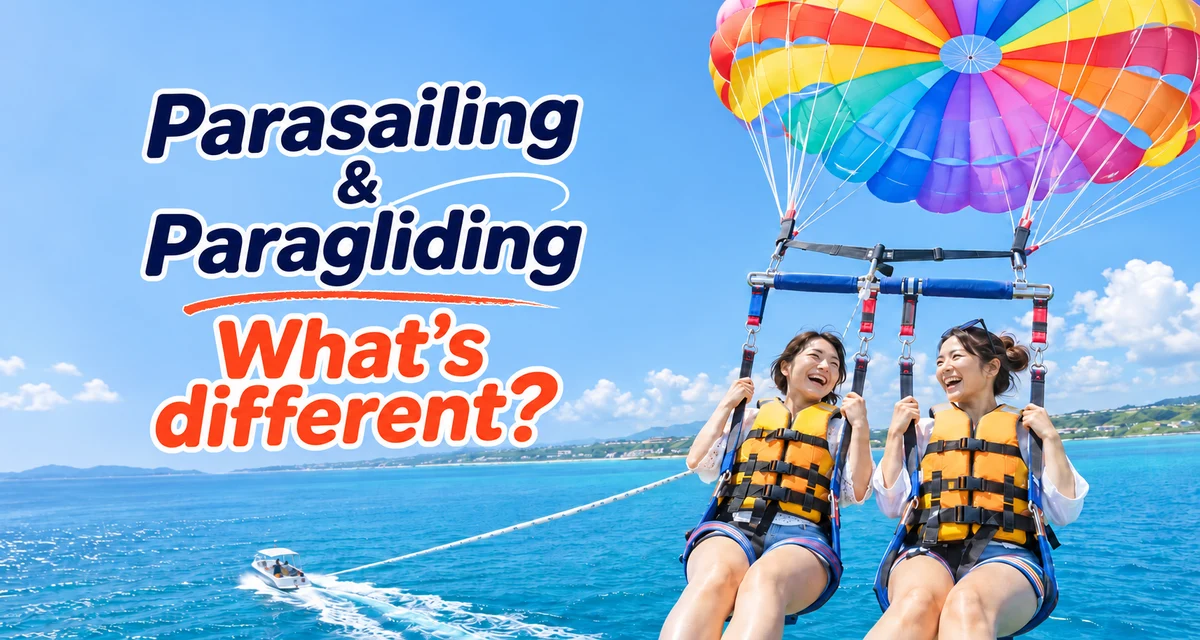
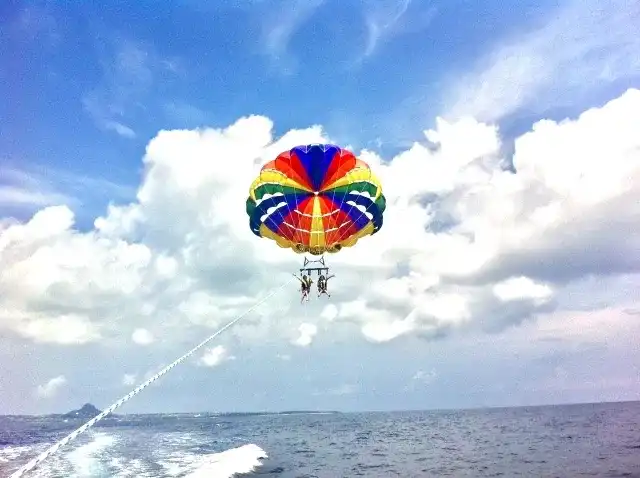
Sea parasailing uses a special parachute-like canopy and a tow rope connected to a boat. Participants wear harnesses and enjoy views of the sea, the boat and the distant coastline. Seeing the boat’s wake stretching out below is one of the distinctive sights of this experience.
You remain connected to the boat by the rope during flight, rather than choosing your own route toward a coast or mountain. Instead of imagining only the moment of floating in the air, think of a boat-based tour where you follow instructions and enjoy the sea from above. That makes it easier to decide whether it suits your trip.
Paragliding uses an air-filled wing to glide
A paraglider glides beneath a fabric wing that holds its shape when filled with air. In a typical unpowered flight, the pilot, attached below the wing by a harness, controls the flight while taking account of airflow and terrain. When conditions allow, rising air can also be used.
Experiences vary: some are tandem flights with a pilot, while others are lessons in handling the equipment yourself. Don’t assume that every activity called a paragliding experience has the same format. General principles and the definition of tandem flight can also be checked in the Japan Hang & Paragliding Federation’s proficiency regulations (PDF).
Compare flight, controls and activity locations
Here we compare boat-towed sea parasailing, as offered in places such as Okinawa, with typical unpowered paragliding. Actual launch and landing arrangements and participation requirements vary by course, so check the experience you plan to book. The table is not a promise about how an individual tour will operate.
| Feature | Parasailing | Paragliding |
|---|---|---|
| Flight | Towed upward while connected to a boat | Gliding beneath a wing |
| Main controls | Crew handle the boat and tow rope | A pilot controls the wing |
| Taking part | Ride in a harness | Join a pilot or take a lesson |
| Starting point | A boat trip from a harbor, for example | Travel to a launch site such as a slope |
| Two-person rides | Participants may ride together | Tandem means a pilot and a passenger |
| Travel planning | Boat travel, riding together and sea activities | Flight format, launch, landing and access |
Look for the difference between a canopy and an elongated wing
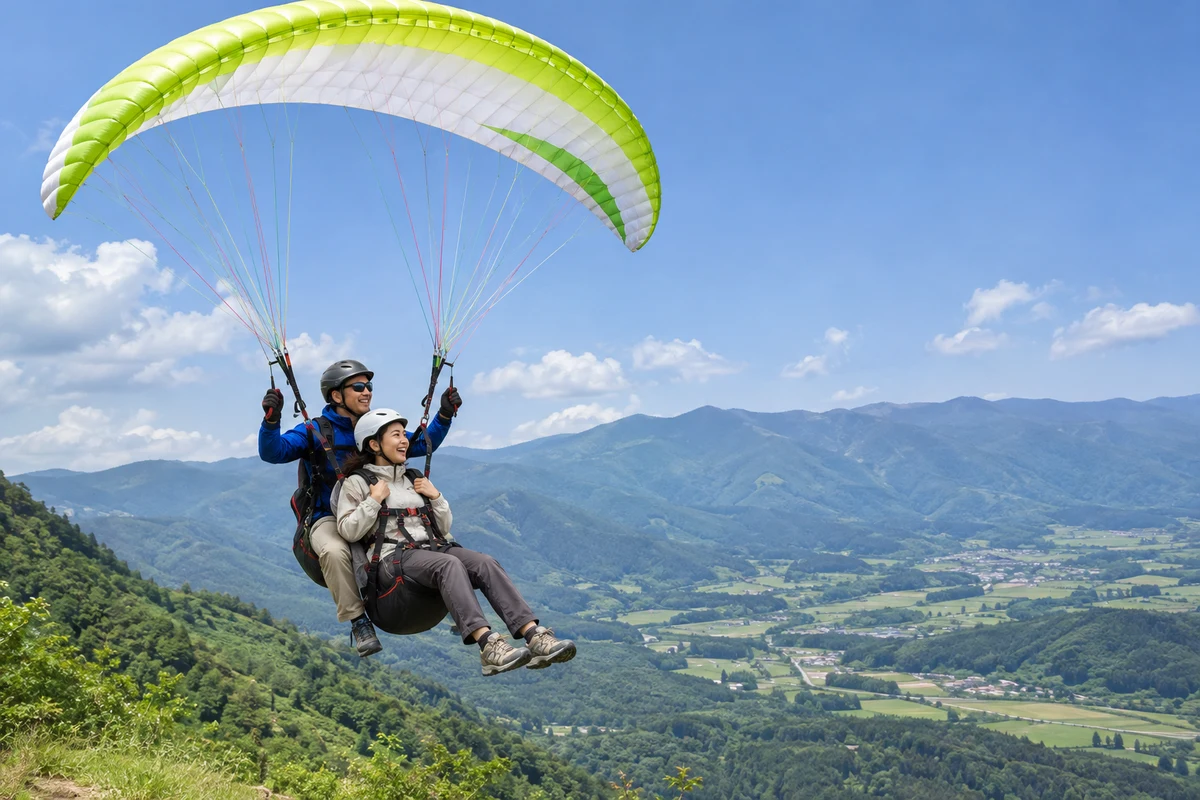
In photos, parasailing often shows a canopy opened like a parachute, while a paraglider has a broad, gently arched wing. In both cases, people appear suspended below it, so a distant photograph can make the activities look similar.
Look at the whole picture rather than the shape alone. Can you see a rope leading to a boat? Is a pilot riding with the participant? What preparation is happening on the ground? These details, alongside the colors and visual appeal, help you identify the activity you are considering.
Wind matters to both, but boat towing and gliding are different
Airflow is involved in parasailing too, but the connection between the boat and tow rope is a defining feature. A paraglider glides beneath its wing, with a pilot managing the flight. If both descriptions mention riding the wind, that does not mean they describe the same mechanism.
Nor does wind alone mean either activity can operate. Direction, changes in the wind and local conditions matter alongside strength. Follow the instructions for your booked course rather than relying only on a sunny forecast. This comparison is intended to help you choose an experience, not to reproduce flight or boat-operation techniques yourself.
For a two-person ride, check who shares the equipment
A holiday photo showing two people together might make you wonder whether both activities let you fly with a friend. Parasailing can have combinations in which participants ride together. Kai・la’s official course page also describes up to 3 adults riding at once, depending on group numbers and weight.
In tandem paragliding, a pilot and a passenger fly together. Don’t assume that “two-person” means two friends share one aircraft: check who the two people are. Booking with a friend on the same day and sharing the same equipment in the air are separate questions. Keeping them separate makes your wishes easier to explain.
Who is in control, and what does the participant do?
The idea of flying can make some people worry that they must know how to operate the equipment. Others may want to learn to fly and then discover that the activity is mainly a scenic ride. Check the role you will have before choosing.
In parasailing, participants ride under the crew’s instructions
For sightseeing sea parasailing, the crew handle the boat and tow rope. Participants do not choose the boat’s course or steer their own flight. Picture putting on the equipment and following instructions about posture and signals before and during the ride.
Even when you are not operating the equipment, listening to the briefing and following the required posture and signals matter. Tell the crew if something feels uncomfortable after fitting, if you did not hear an instruction, or if you want to check something before launch. You can prepare to enjoy the view while also getting the information you need to take part.
Tandem paragliding means joining a pilot as a passenger
In a tandem flight, the pilot controls the paraglider and the passenger joins after receiving instructions. This differs from training to fly solo, so there is no need to assume that every paragliding activity is only for people who can already fly one themselves.
Being a passenger does not mean there is nothing to do. Check the course briefing for the movements and posture required during takeoff and landing, and how to report concerns about your condition. Ask about leaving the ground and returning to it as well as the relaxed seated pose you may see in a flight photograph.
If you want to learn the controls, check what the lesson includes
If handling a wing yourself interests you, look beyond the word “experience.” Does the activity teach equipment handling, or is it a scenic flight with a pilot? Ground practice and lessons that introduce the sensation of floating have different purposes and procedures from a tandem flight.
A first experience and ongoing training toward flying independently are different stages too. Don’t assume you can skip instruction and skill checks and suddenly fly solo during a holiday. Deciding whether you mainly want an aerial view or want to learn to fly makes the search clearer.
Where do takeoff and landing happen? Look beyond the time in the air
The time when you are not flying is easy to overlook. After meeting, where do you travel, where is equipment fitted, and where do you return? Understanding the whole sequence helps reduce mismatched expectations.
Think of parasailing as a sequence from boarding to returning to port
Some sea parasailing tours meet at a harbor and travel by boat to the activity area. Where takeoff and landing happen on the boat, equipment checks before launch and instructions for returning to the deck are part of the experience. Confirm the actual system used by your booked course.
Some people are more concerned about boat movement than the flight itself. Discuss your interest in the aerial view separately from how you feel about boat travel. Other useful questions include where you wait for your turn and what arrangements apply if someone only wants to watch.
For paragliding, check travel to and from the launch and landing sites
For an experience launching from a slope, travel to the launch site and the movements involved in taking off are part of the day. Even for a tandem flight, ask how you prepare and begin the flight, and how you return to the meeting place after landing.
Look beyond the seated flight photo and check the sequence from meeting through takeoff, landing and finishing. Explain any concerns about walking distances or suitable footwear specifically. Paragliders can also use other launch methods, including towing, so avoid assuming every flight involves running from a mountain.
Keep skydiving and powered flight separate too
Neither parasailing nor the paragliding compared here is skydiving, in which someone exits an aircraft and descends. A shared theme of being in the air does not mean you should picture participants jumping from a high place in every activity.
Powered paragliding, such as flight with a motor unit carried behind the pilot, also has different conditions from the unpowered flight discussed here. Paragliding can be photographed near a coast too, so a sea background does not identify parasailing by itself. Check the activity’s full name and what equipment supports the flight on the booking page.
Choose views, height and photos by the moment you want to experience
Once the mechanisms are clearer, imagine the scenery you would like to see. Are you interested in sea colors and a boat’s wake, or in gliding while looking across the landscape? Rather than ranking the activities, think about the moment you want to add to your trip.
Enjoy different viewpoints over blue water, coastlines or landscapes
Parasailing offers a view down over the sea traveled by the boat, with coastline, blue water and the boat’s wake in sight. Kai・la’s course information describes departing from Naha and enjoying an aerial view of the west-coast sea. It suits the wish to see Okinawa’s water from another perspective.
Paragliding views vary with the flying area and may include mountains, open land or coasts. If typical unpowered gliding interests you, look at both the photo background and the flight format. For either activity, visibility and brightness depend on conditions, so the exact scenery in a promotional photo is not promised.
Height alone does not determine fear or satisfaction
Seeing height or flight-time figures on a comparison page can make a larger number sound more impressive or rewarding. But height above the sea, the launch site’s elevation and tow-rope length measure different things, even if the numbers look alike.
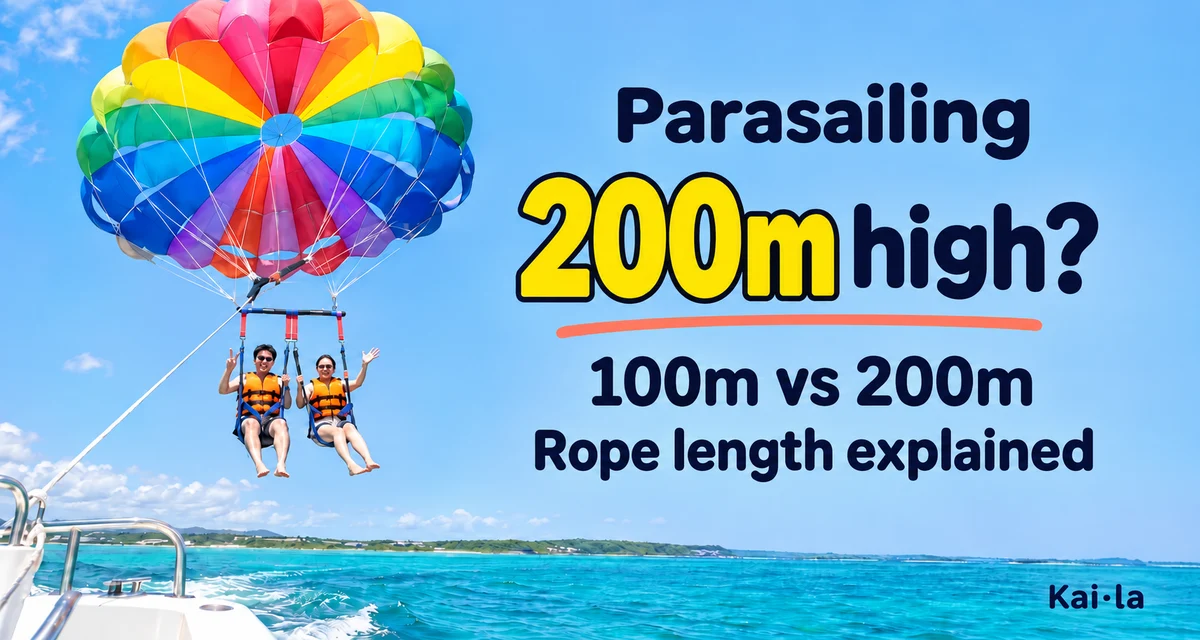
Before comparing parasailing and paragliding by a number, check what that number measures. In particular, don’t assume a parasailing label such as “200m” is the actual altitude. Our separate article explains tow-rope length versus height in more detail.
Want photos? Check who takes them and at what point
Photos of friends side by side, a passenger with a pilot, or a wide sea or landscape view each reflect a different participation format. If you want to appear in the picture, ask who takes it, whether camera use is permitted during the experience, and what conditions apply to bringing equipment.
Kai・la’s parasailing page says guests can take their own photos using their smartphones. Check aerial photography arrangements separately from staff underwater photography at the Blue Cave. In the air, follow crew instructions before focusing on a photo, and ask about preventing drops and carrying equipment before departure. If taking pictures yourself feels uncomfortable, enjoying the view without concentrating on photography is another good choice.
Fit the activity into your trip by comparing time, clothing and group requirements
An aerial experience is easier to plan when you consider the rest of the day. Where will you go from your hotel in the morning, and what would you like to do afterward? Sketch the day together with your companions.
Separate flight time from the full meeting-to-finish duration
Kai・la’s official parasailing page lists an approximate duration of 1 hour. That figure does not mean a full hour in the air. Consider registration, boarding and preparation too, and ask about the expected finish time if another booking follows.
For paragliding, check briefing, preparation and travel to the launch site as well as flight time. A short flight does not automatically guarantee you can make a plan immediately afterward. Distinguishing the time actually spent flying from the time needed in your itinerary makes questions more specific.
Match clothing to the activity and ground conditions
Kai・la’s parasailing information advises wearing a swimsuit beneath your clothes or clothing that can get wet, and avoiding skirts and dresses. Remember that it is a sea-based tour: change before meeting if needed, and consider an extra layer depending on the season.
For paragliding, check the clothing and footwear guidance for ground movements and the launch and landing sites. Clothes suitable for a sea activity should not automatically be assumed suitable for another aerial activity. If preparing from scratch, start with the specific course’s instructions and then identify anything you need.
With children, ask about ages, weights and their own wishes first
Kai・la’s parasailing conditions are listed for healthy participants aged 4 and over, with bookings from 2 people. Meeting the age threshold alone does not guarantee participation or that everyone can fly together. Check group numbers, weights and the other relevant conditions.
Paragliding participation requirements should likewise be checked independently. For a family trip, share everyone’s build and wishes as well as the youngest child’s age. Don’t overlook a child’s feelings because friends are joining or a parent has already booked. Looking at pictures and talking about the experience together can be part of the holiday fun.
Considering Kai・la? Look at parasailing departing from Naha
The Kai・la course introduced here is parasailing over Okinawa’s sea while connected to a boat. If learning the differences has made you want an aerial sea view or a shared floating experience with companions, take a look at the course details.
| Kai・la scenic parasailing | Official course information |
|---|---|
| Listed price | JPY 8,900 per person |
| Requirements | Healthy participants aged 4+ |
| Minimum booking | 2 people |
| Approximate duration | 1 hour |
| Meeting point | Miegusuku Port |
Meet at Miegusuku Port and plan around your time in Naha
For Kai・la parasailing, the meeting point is Miegusuku Port in Naha. You can consider combining the aerial experience with a meal or shopping in the city afterward. The official information also describes a location convenient for plans around Naha Airport and Kokusai Street.
Actual travel time to the airport or your hotel depends on traffic and other conditions. Leave room between arriving at the port, taking part and traveling onward, rather than filling the day because places seem close. Transfers are not provided, so arrange your own transport to the meeting point.
Up to 3 adults may ride together, depending on numbers and weight
The official course page describes simultaneous rides for up to 3 adults, depending on group numbers and weight. For couples, friends or families hoping to enjoy the same moment together, this is a specific feature to ask about.
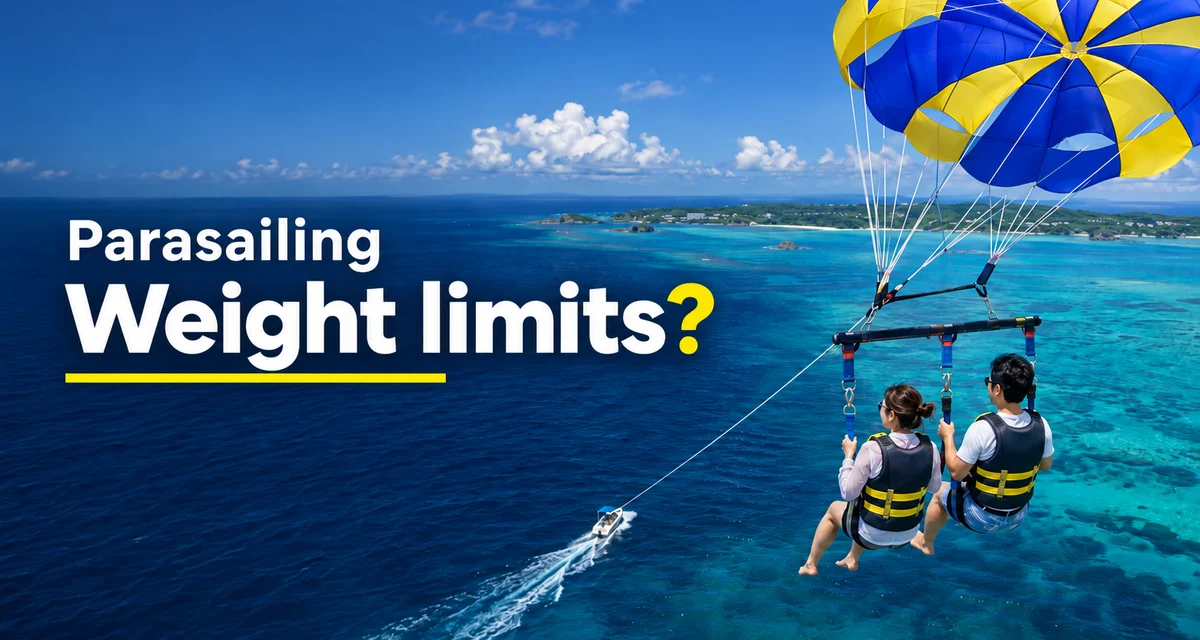
If you hope to fly together with Kai・la, share your group numbers and weights and ask about the riding combinations on the day. It is not a guarantee that everyone in the requested group can ride together. To understand weight differences and combined weight first, see our parasailing weight-limit article.
Combine surface and aerial views with Blue Cave snorkeling
Kai・la also offers a Blue Cave snorkeling and scenic parasailing package. It is an option for travelers who want to look into the sea from the surface and then view it from the air. Enjoying different perspectives on Okinawa’s sea within one trip is an appealing possibility.
The Blue Cave and parasailing activities take place at different locations, with guests traveling between them independently. Check the meeting points and schedule including the transfer, rather than assuming both happen consecutively at one harbor. If you are still choosing a sea activity, our snorkeling versus introductory diving comparison may also help.
Before booking, check the activity name against your group’s wishes
Even after understanding the differences, look over the actual booking page once more. Does the course name match what you searched for? Do the meeting place and your role fit the experience you pictured? Check these details before confirming.
Explain whether you want a scenic ride or to fly in the same group
Along with numbers and ages, tell the provider what you are looking forward to. A short sentence is enough: you want to see the view together, for example, or want a guided ride rather than learning to operate the equipment. For parasailing, an inquiry might look like this:
“We are 2 adults considering parasailing from Naha on date. We would like to fly together, and it is our first time. Could you explain the riding combinations and approximate time from meeting to finishing? We plan to go sightseeing in Naha afterward.”
You can add questions as they come up. If similar names have confused you, explaining that you are looking for an activity towed by a boat over the sea makes your wish clearer. Before deciding, check that everyone understands the moment they hope to enjoy.
Don’t judge operating conditions or fear by the activity’s name alone
Knowing the differences does not by itself rank the safety or sensations of that day’s activities. Heights, feet leaving the ground and boat movement concern different people in different ways. Explain your condition and worries, then check the responsible staff’s instructions and operating decision.
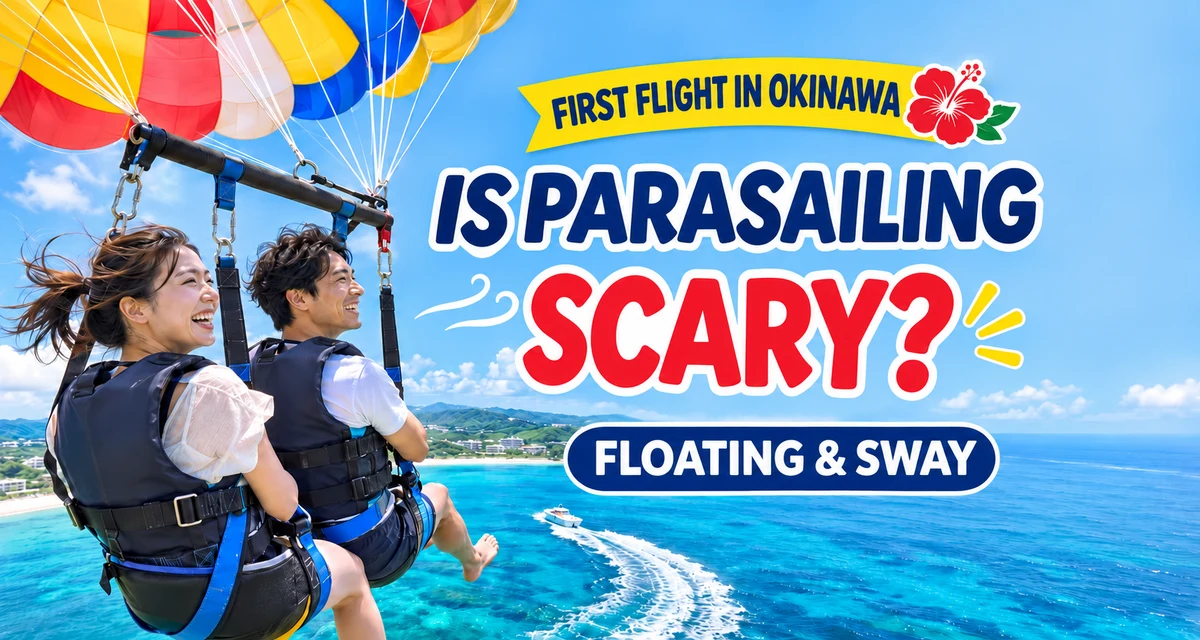
To learn more about parasailing sensations, see our article on floating, movement and nervousness. Researching incidents and checking safety arrangements are covered in our safety-check guide. For this comparison, start with how the activity works, who controls it and what you will do.
Understand the differences and look forward to Okinawa’s sky
Parasailing rises above the sea while connected to a boat; paragliding uses a wing to glide. Despite similar names, the flight mechanism, person in control and takeoff and landing locations differ. Checking what two-person participation means and what happens outside the flight helps you choose the experience you want.
Kai・la offers scenic parasailing from Miegusuku Port in Naha. Consider the options for your family or friends, including up to 3 adults riding together depending on numbers and weight, and packages with the Blue Cave. Seeing the blue sea from an unfamiliar viewpoint can become a lovely holiday memory.
You are welcome to ask Kai・la about the process as a beginner or whether your group can fly together. Send your preferred date and numbers through our reservation and inquiry form. Find an aerial experience that suits your group and add another memorable moment to your Okinawa trip!