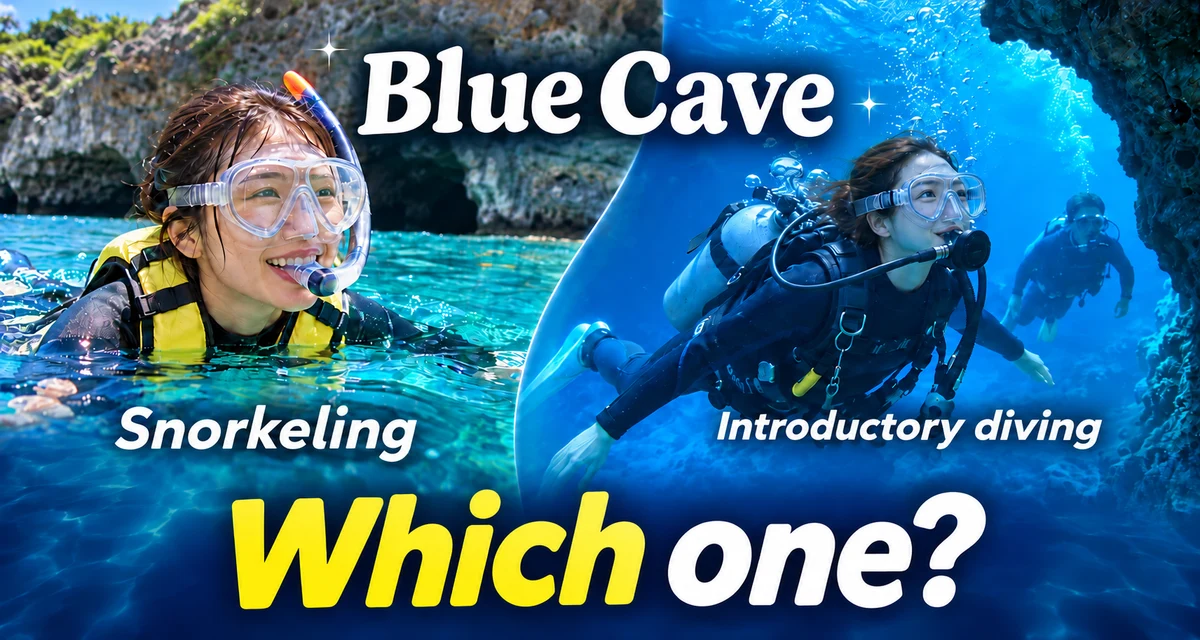
Planning a visit to Okinawa’s Blue Cave often brings up one question: should you choose snorkeling or introductory diving? Both take you into the blue sea, but floating on the surface and looking around from underwater create slightly different holiday memories.
“Is snorkeling my only option as a beginner?” “Will diving give me better photos?” “What if my friend wants a different activity?” Let’s work through the views, breathing, participation requirements and travel schedule. We’ll also compare the details on Kai・la’s official course pages to help you find an experience that suits your group.
Snorkeling or diving at the Blue Cave? Start with the experience you want
You don’t need to rank the activities or decide that one is the correct choice. Even if everyone wants to see the blue scenery, there is a difference between wanting to float with friends and wanting to experience being surrounded by water.
Consider snorkeling if you want to look into the sea from the surface, or introductory diving if you want to experience the view from underwater. Then check ages, health considerations and your flight home to fit that wish into your actual itinerary.
Choose snorkeling for sparkling water and a view into the sea
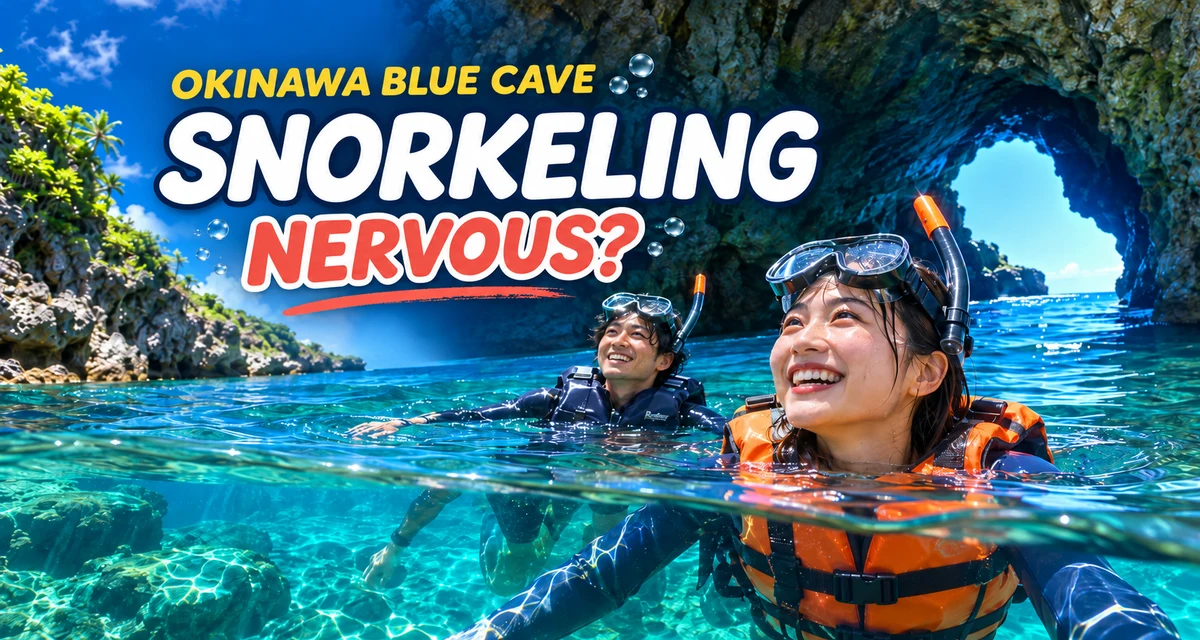
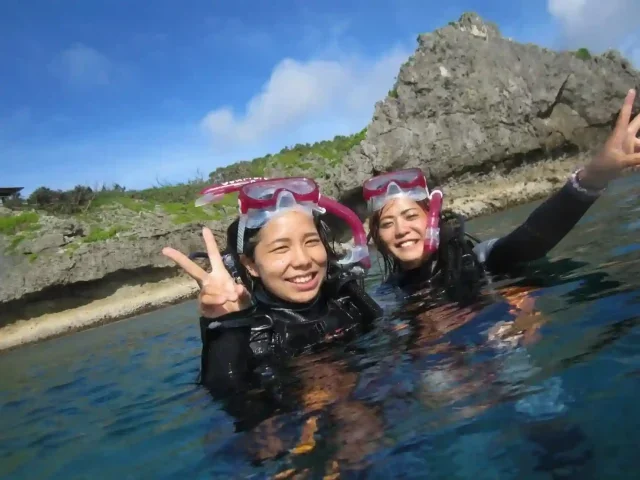
Snorkeling lets you observe the underwater world through a mask while floating on the surface. Put your face in the water to see the scenery and swimming fish; lift it to look at the cave walls and your surroundings. Being able to switch between the surface and underwater views is part of the appeal.
Perhaps you want a first taste of Okinawa’s sea, an activity to share with your child, or the blue scenery rather than the act of diving. Identifying that wish makes the choice clearer. You still need to get used to breathing and the equipment at the surface, so follow your guide and take time to practice, even if snorkeling sounds informal.
Choose introductory diving to experience an underwater viewpoint
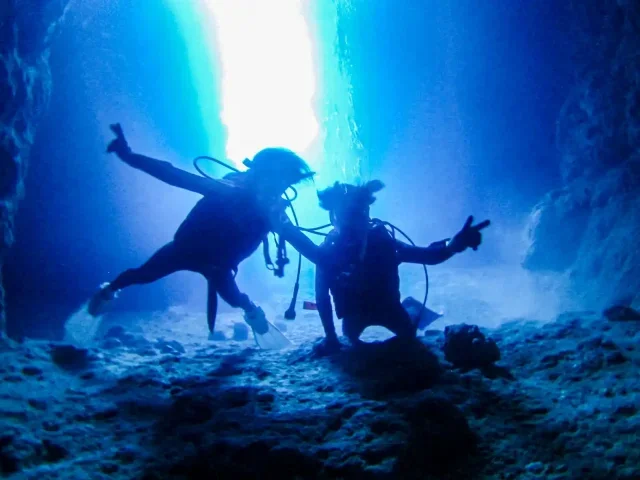
During introductory diving, you breathe from a tank through equipment called a regulator and explore underwater with staff guidance. Instead of looking down into the sea, you experience being surrounded by it. Watching fish move or seeing rock formations from the side changes your viewpoint.
Kai・la offers an introductory diving course for first-time participants. It is not an option reserved for people who have already been diving. If you are curious about breathing underwater, don’t rule it out solely because you lack experience. Check the participation requirements and what the practice involves.
Comparing snorkeling and introductory diving
First, let’s set out how the two experiences work. This comparison assumes a guided Blue Cave tour. Depth, swimming distance and wildlife depend on conditions that day; the table does not promise an identical route or view.
| What to compare | Snorkeling | Introductory diving |
|---|---|---|
| Main viewpoint | Looking into the water from the surface | Looking around from underwater |
| Breathing | Surface air through a snorkel | Tank air through breathing equipment |
| Main equipment | Mask, snorkel and flotation equipment | Mask, tank and regulator |
| What to practice | Face in the water, mouth breathing and surface position | Breathing with equipment, equalization and signals |
| Photo opportunities | Floating on the surface and photos with the blue water | Being underwater and rising bubbles |
| Main question | Do you want to enjoy the sea from the surface? | Do you want to experience going underwater? |
Different breathing equipment means different practice
A snorkel does not let you breathe indefinitely underwater. It draws in air while the top of the tube is above the surface. On a tour, you learn how to use the equipment and signal a problem, then enjoy the surface while using flotation equipment correctly.
Introductory diving lets you breathe tank air underwater, but you need to follow the breathing and signaling instructions. For either activity, being able to swim is no reason to skip the briefing or the time spent getting used to the equipment. Practice with the staff and the equipment you will actually use, rather than trying to copy a video on your own.
The same Blue Cave looks different from a different position
At the surface, you can look toward the entrance from inside the cave, then put your face in the water and look down. If you want to take in the glowing water alongside the shadows on the rocks, floating within that scene can become a memorable part of your visit.
When diving, the water’s surface above you and the rock formations extending sideways can also leave an impression. But diving is not guaranteed to look bluer, and going deeper does not automatically make the scenery better. Light and sea conditions affect the color and brightness. Enjoy what is in front of you within the area your guide indicates, rather than aiming for depth.
Choose photos by the moment you want to remember
Would you like a photo of your companions floating together, or one of yourself underwater with a tank? Think about the memory you want a picture to bring back, rather than treating image quality as a ranking between the activities. Both can offer opportunities for Blue Cave photos.
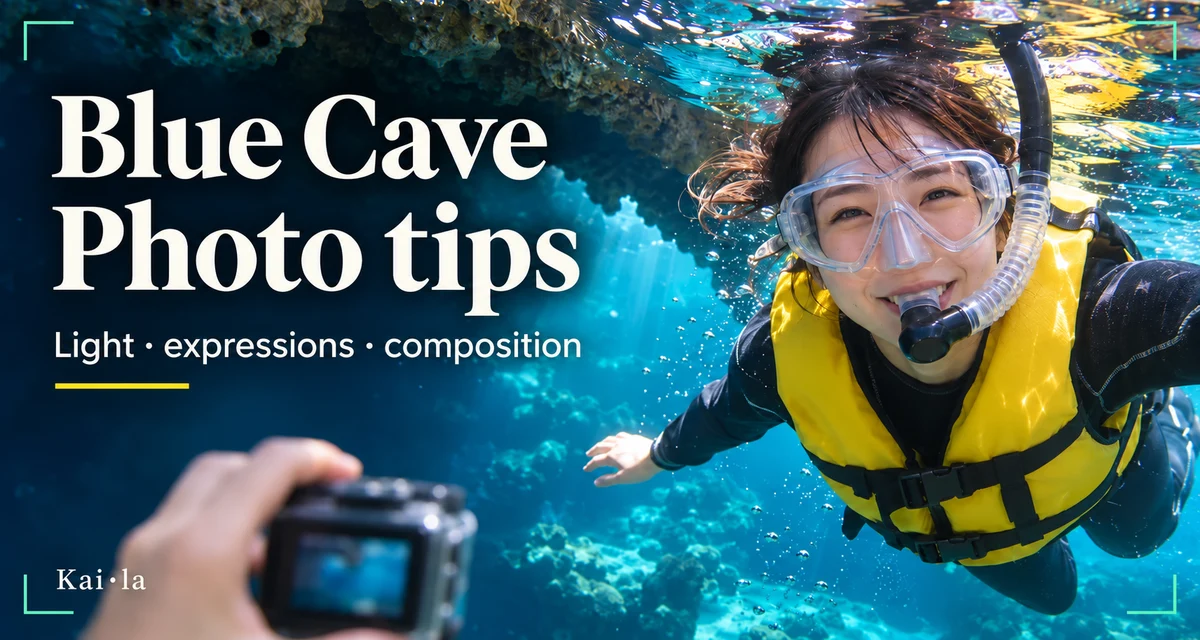
Both Kai・la course pages include staff GoPro underwater photography and photo gifts. It is helpful not to have to plan around operating a camera throughout the activity. Discuss the atmosphere you hope for in advance, while remembering that a particular composition, number of photos or lighting cannot be promised. See our Blue Cave underwater photography tips for more ideas.
First time or not a confident swimmer? Identify what concerns you
“Beginner” can mean someone who has never entered the sea, or someone who loves the ocean but has never tried diving. Explaining the specific moment that worries you is more useful than simply asking whether beginners can join.
Swimming ability alone does not have to decide your choice
Swimming a long distance in a pool is not the same as feeling comfortable in the sea while wearing a mask. Equally, someone who is not a strong swimmer may be able to approach an activity with flotation, staff support and equipment practice. Discuss your individual participation beforehand.
Try describing the concern: water on your face, not being able to stand, or unfamiliar mouth breathing despite being used to the sea. Rather than narrowing your choices just because you are a beginner, discuss both what feels difficult and what you would like to try. Even after deciding to join, you don’t need to endure discomfort just to continue.
Check face-in-water worries separately from equalization and being underwater
Snorkeling also requires practice wearing a mask and putting your face in the water. It would be wrong to assume that everyone who dislikes doing this will feel fine simply because they stay at the surface. Tell the staff about the actual concern, whether it is surface movement or the feel of the equipment.
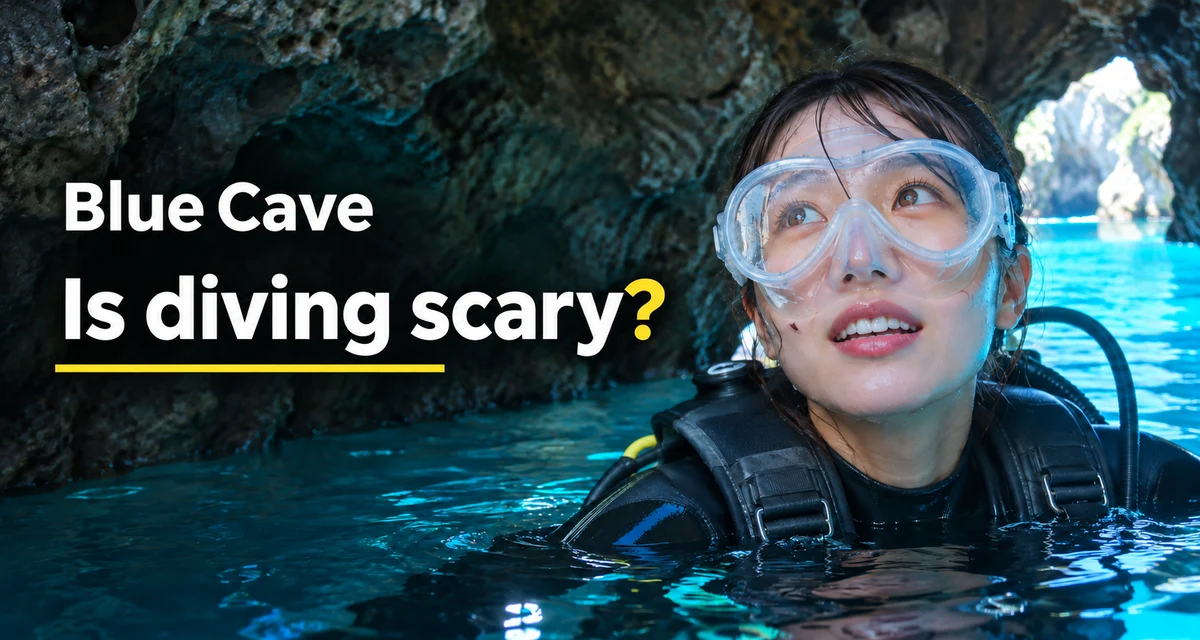
Diving adds breathing underwater, equalization and getting used to hand signals instead of speaking. If you have concerns about your ears or nose, an existing condition or medication, ask before deciding for yourself which activity is suitable. The checks differ; snorkeling does not mean health considerations can be ignored.
For a closer look at particular worries, read our articles for people who feel nervous about snorkeling or feel nervous about introductory diving.
Kai・la explains the equipment, then offers shallow-water breathing practice
Kai・la’s official pages describe an equipment and safety briefing followed by breathing practice in shallow water where you can stand, for both activities. They also describe support until your breathing settles. You do not need to picture a land briefing followed immediately by the main activity without any water practice.
That does not guarantee every worry will disappear or that everyone will progress identically. Think of it as a chance to explain your pace and condition, checking each step with the staff. Even two friends may get comfortable at different speeds. Don’t rush because your companion has already managed something; ask about whatever you still need to check.
Choosing with children, a partner or friends
When traveling together, ask about everyone’s age and feelings about the sea rather than booking based only on the organizer’s wishes. Sharing one activity and respecting each person’s interests are both valid priorities.
For families, check everyone’s age and participation requirements first
Kai・la’s standalone snorkeling course is listed for healthy participants aged 2 and over; introductory diving is listed for healthy participants aged 8 and over. Both require bookings for at least 2 people. Families with young children should first check that everyone meets the requirements of the course being considered.
Meeting the age requirement does not guarantee participation. Health and comfort with the equipment also need to be discussed. When choosing as a family, start with the youngest child’s age and the feelings of the person who is most concerned. Asking children what they would like to do in the sea can help everyone picture the experience together.
Tell your partner or friends what you want to share
One person may picture floating together in blue water; another may want an underwater diving photo. Even on the same trip, people imagine different moments. Sharing a wish before booking helps avoid choosing vaguely just to fit in with someone else.
If you want an activity just for your own group, Kai・la’s introductory diving is advertised as a private-group experience. Snorkeling operates in small groups, with parties of 3 or fewer joining a shared tour. Understanding that “small group” and “only our group” are different helps keep expectations aligned.
If preferences differ, ask about separate courses before booking
Perhaps one person wants to dive while another prefers the surface. Before forcing a shared choice, explain your group size and preferred meeting time and ask about the options. Separate courses are not guaranteed to start or finish at the same time.
You need to check minimum booking numbers, staffing, meeting and finish times, and how to meet afterward. Sending two separate booking forms does not automatically mean you can move around together. If someone only wants to accompany the participants, ask in advance about observation or waiting arrangements too.
Compare your itinerary: duration, flights and operating conditions
Even after deciding what you would like to try, the choice may depend on whether you are heading to the airport afterward or continuing sightseeing. Make room for changing clothes and travel, rather than building the day only around the number shown for the booking slot.
Time in the sea is different from meeting-to-finish time
The duration listed on both Kai・la course pages is approximately 2 hours. This does not mean 2 hours underwater or inside the cave. Registration, changing, equipment explanations, breathing practice and a shower afterward also take time.
Nor should that estimate be used to assume diving always takes longer, or that snorkeling guarantees a return to your hotel by a certain time. If you have another fixed plan, explain your preferred finish time and check the schedule from meeting through changing afterward. Allow separately for traffic, food and onward travel so you can enjoy the sea without watching the clock.
Flying afterward? Check the diving conditions carefully
Kai・la’s introductory diving notes state that you cannot board a flight on the same day after diving. A morning dive followed by an afternoon flight home would not meet that condition. Check your departure date and flight time first.
Follow the staff’s instructions about the required interval before flying, including the details of your experience. Don’t assume that crossing midnight is enough. If you want to enjoy the sea on your departure day, explain the itinerary and ask whether snorkeling is an option. Include your health and travel time to the airport in the plan.
Either activity still requires a check on cave access that day
Choosing snorkeling or diving is separate from confirming whether the Blue Cave can be entered that day. Both Kai・la courses explain that the activity may move to another site if sea conditions lead to a cave closure, and may be canceled because of sea conditions or equipment problems.
Don’t assume diving allows access during a closure, or that waves cannot affect a surface activity. Check the booking information and the instructions on the day. Discuss whether entering the cave is the group’s main priority, or whether seeing fish and enjoying the sea elsewhere would also be appealing. Our guide to checking operating conditions may help.
Differences shown on Kai・la’s official course pages
Now let’s compare Kai・la’s standalone courses rather than general impressions. Package plans have their own contents and conditions, so check the specific course you intend to book. Full details are on the Blue Cave snorkeling and Blue Cave introductory diving pages.
| Kai・la standalone course | Snorkeling | Introductory diving |
|---|---|---|
| Listed price per person | JPY 5,500 | JPY 9,000 |
| Age guidance | Healthy participants aged 2+ | Healthy participants aged 8+ |
| Minimum booking | 2 people | 2 people |
| Group arrangement | Small groups; parties of 3 or fewer join a shared tour | Private group |
| Approximate duration | 2 hours | 2 hours |
| Meeting point | Blue Cave Core | Blue Cave Core |
Introductory diving is private to your family or friends
Kai・la describes its introductory diving as a private experience for your family or companions, without other customers joining your group. This can be a reason to choose it if you feel self-conscious as a beginner or want to share the activity within your circle of friends.
At Kai・la, you can choose between private-group introductory diving and small-group snorkeling. A private group does not mean exclusive use of the sea or cave; sea conditions and other visitors remain separate factors. Ask in advance if you have preferences about staff numbers or individual support.
Think about whether the experience makes the price difference worthwhile for you
The listed standalone prices are JPY 5,500 per person for snorkeling and JPY 9,000 per person for introductory diving. Instead of assuming the cheaper option is enough or that the more expensive option is automatically better, consider which activity matches the experience you actually want.
If floating on the surface and looking into the sea is the goal, snorkeling may leave more of your budget for other parts of the trip. If entering the water with a tank is what excites you, check what the diving experience includes, from equipment to practice. Both official pages describe the displayed price as all-inclusive, but don’t assume special requests or other packages have identical terms. Compare the actual course you plan to book.
Check GoPro photography and the partner facility for changing afterward
Both courses include information about staff GoPro underwater photography and photo gifts, with photos viewable on a smartphone by the evening. That is a welcome way to record your trip while still taking time to get used to the equipment and enjoy the surroundings.
The meeting point is the partner facility Blue Cave Core, with showers and changing afterward described in the course information. Transfers are not provided, so arrange your own transport. The listed items to bring are a swimsuit, towel and sandals. Planning for sightseeing after your activity can help you enjoy the rest of the day too.
Still undecided? Three ways to think about your trip
If the comparison table hasn’t settled the question, imagine what you would like to talk about afterward. Would it be “the blue water was beautiful,” or “breathing underwater felt so different”? Putting the memory into words may reveal what you want to experience.
You want a first sea activity to share with family or friends
If you want to enter the sea and see fish and cave scenery from the surface, consider snorkeling. Check the ages in your group, any worries about putting faces in the water, and the small-group or shared-tour arrangements to decide whether it suits you.
There is no need to assume the experience will be incomplete because you are not diving. Floating and looking through a mask can be the purpose of the activity in their own right. Equally, don’t pressure someone who finds face-in-water activities uncomfortable just because the rest of the group wants to join.
You want to try going underwater on this trip
Perhaps you have snorkeled before and now want an underwater viewpoint, or perhaps diving interests you despite having no experience. In either case, check the introductory diving course. Considering diving for a first sea experience is not automatically an unreasonable ambition.
Alongside your interest, check ages, health considerations, practice such as equalization, and flight plans. Choosing after confirming that your wishes and the participation requirements fit together helps you look forward to the day. Ask whether Kai・la’s private-group format and shallow-water breathing practice suit what you are hoping for.
Before choosing, send your numbers, ages, dates and concerns together
You can ask for advice even before deciding on a course. Along with your preferred date, include everyone’s age and experience, what you want to do in the sea, and the time of your flight home. For example, an inquiry could look like this:
“We are considering the Blue Cave for 2 adults on date. We are both beginners. One of us wants to see fish from the surface and the other is interested in diving. We are a little nervous about putting our faces in the water, and our flight home is at time the following day. Could you explain the participation requirements and approximate meeting and finish times?”
For health concerns, follow the official course guidance and ask by phone. You can start with the information you know even if the course is undecided. Check change and cancellation conditions before confirming, and don’t assume you can freely switch activities on arrival.
Frequently asked questions about choosing an activity
What if I want to try both on the same day?
If you would like both surface and underwater views, look at Kai・la’s Blue Cave package plan. Booking two standalone courses and booking a package are not necessarily the same arrangement. Check the relevant page for requirements, activity order and duration, then ask about your preferred date.
When adding activities to one day, consider travel, rest and the interval before your flight. Snorkeling first does not guarantee you will be able to dive afterward. Wanting to do both and meeting the conditions for each activity on the day are separate matters.
Can I dive down by myself during snorkeling?
The snorkeling discussed here is a guided activity enjoyed at the surface while maintaining flotation. Don’t try to go deeper on your own as a substitute for diving, or remove your flotation equipment. Follow the staff’s instructions about the area you can use and the equipment you wear.
If you want to go underwater, asking about introductory diving before booking helps avoid a mismatch between your expectations and the tour. Explain what you want to do from the start, rather than experimenting with a different activity on your own during the tour.
Ask Kai・la about the Blue Cave experience that suits your group
Snorkeling offers the pleasure of floating in the blue and looking into the sea; introductory diving takes you underwater for a different viewpoint. Even at the same Blue Cave, the right choice depends on the moment you most want to experience. Consider your companions’ ages and wishes, health and flight plans alongside previous experience.
Kai・la offers small-group Blue Cave snorkeling and private-group Blue Cave introductory diving for your family or friends. Equipment briefings, shallow-water breathing practice and staff GoPro photography are all part of the course information, helping you plan memories from a first visit too.
You are welcome to contact Kai・la even if you are still deciding between the two. Talk with your companions and find the Blue Cave experience that feels right for you. For course questions, reservations or other inquiries, use our contact form. We would love for your time in Okinawa’s sea to become a highlight of your trip!