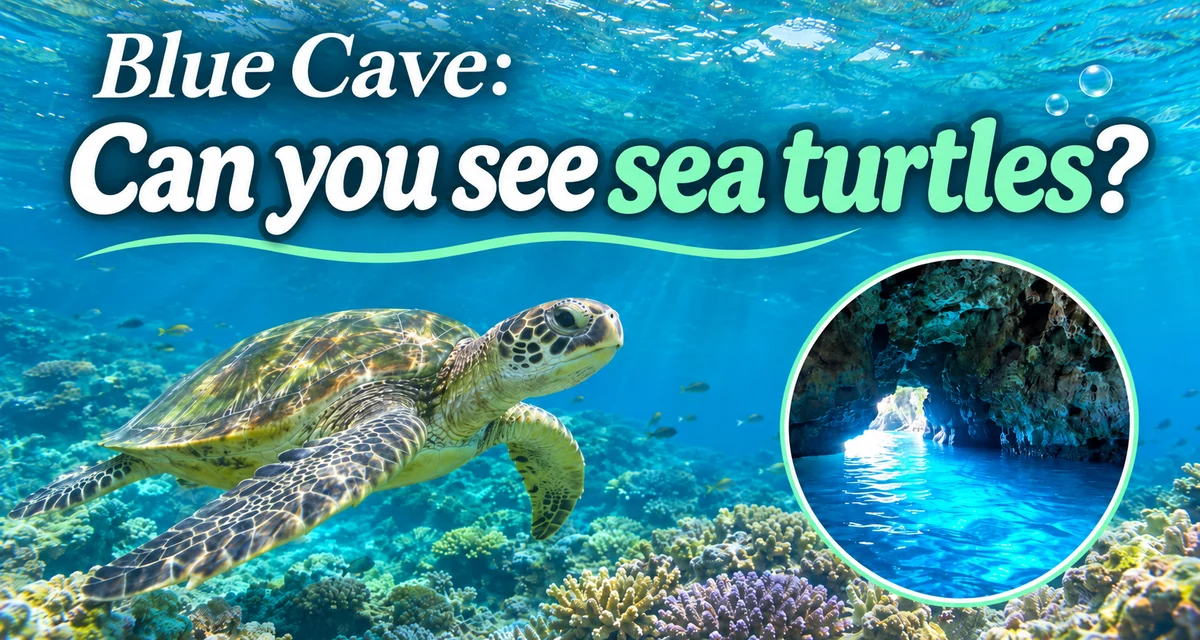
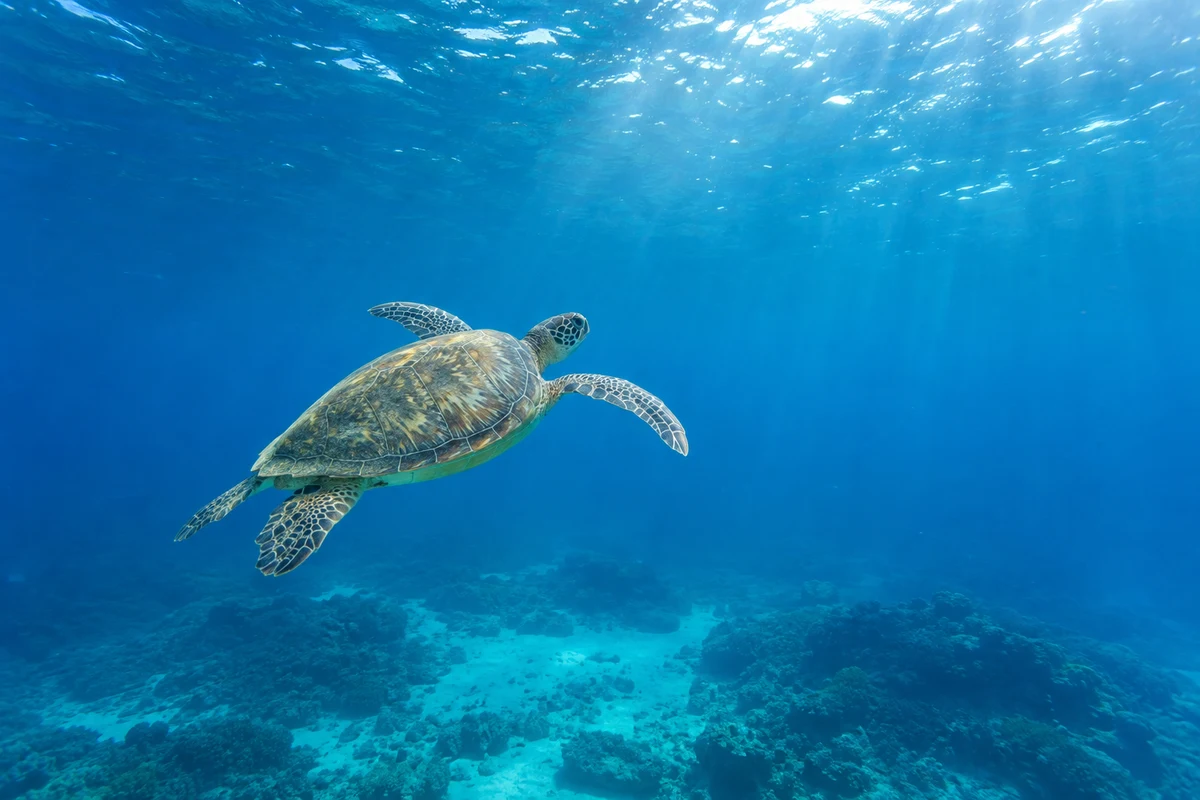
“If we visit Okinawa’s Blue Cave, will we see sea turtles too?” Photos of a blue sea and a swimming turtle make it tempting to imagine enjoying both in one outing. However, booking a Blue Cave tour and being able to observe wild sea turtles are two different things.
Perhaps you want to see the cave’s blue glow, perhaps meeting a turtle is the main reason for your trip, or perhaps you are planning your child’s first experience in the sea. Let’s sort through those wishes and look at how to choose an experience that suits your group. We will also introduce details confirmed on Kai・la’s official course pages and questions to ask before booking.
Can you see sea turtles at the Blue Cave? Start here
It is best not to assume that booking a Blue Cave experience means you will definitely see a turtle. Encounters with wild animals depend on the conditions that day. Kai・la’s Blue Cave snorkeling and introductory diving courses are not presented as experiences that promise sea turtle encounters.
Treat a booking to enjoy the cave’s scenery and a booking whose main purpose is turtle observation as separate choices. Deciding whether a turtle would be a lovely bonus or the main reason you want to enter the sea gives you a clearer basis for choosing.
Entering the cave and seeing a turtle depend on different things
For an experience focused on the cave’s glowing blue water and rocky scenery, an important question is whether sea conditions allow access to the cave. If turtles are your main interest, you need to know where the itinerary goes and what it is designed to observe. Even when both activities take place in the sea, the questions to ask change with your purpose.
A photo found while searching for sea turtles may not show the Blue Cave course you are considering. Likewise, a photo of marine life on a Blue Cave page does not mean that encounters with every animal pictured are included. Read the actual course description to check what is offered.
Check the location and course behind photos and stories
Travel photos capture enjoyable moments. Even if a post mentions Okinawa, snorkeling and the Blue Cave together, you cannot conclude that its turtle photo was taken in the same place on the same outing. Memories from different days or different parts of the sea can appear in one post.
Check where and when a photo was taken, and the name of the course, before using it to plan your own booking. On Kai・la’s pages too, checking which menu a photo belongs to helps connect it with the experience you actually want. If a particular image catches your eye, you can ask what it shows.
Which matters most: the Blue Cave or sea turtles?
If both appeal to you, first decide which moment you are most looking forward to. Floating in beautiful blue water and observing a wild turtle’s natural behavior are slightly different wishes, even though both involve the sea. Knowing your priority helps you choose on more than price or photographs alone.
| What to compare | Choosing for the Blue Cave | Choosing for turtle observation |
|---|---|---|
| Main attraction | The cave’s blue scenery and a sea experience | Observing wild sea turtles |
| What to read closely | Activities at the cave and how you enter the water | Whether the itinerary is designed for turtle observation |
| What to explain beforehand | Your wish to visit the cave; surface or underwater experience | That sea turtles are the main purpose of your trip |
| What to confirm on the day | Cave access and any alternative location | The activity being run and the observation arrangements |
| What nature determines | Cave access and scenery depend on that day’s conditions | Wild encounters cannot be guaranteed |
If the blue scenery is your priority, compare the experiences
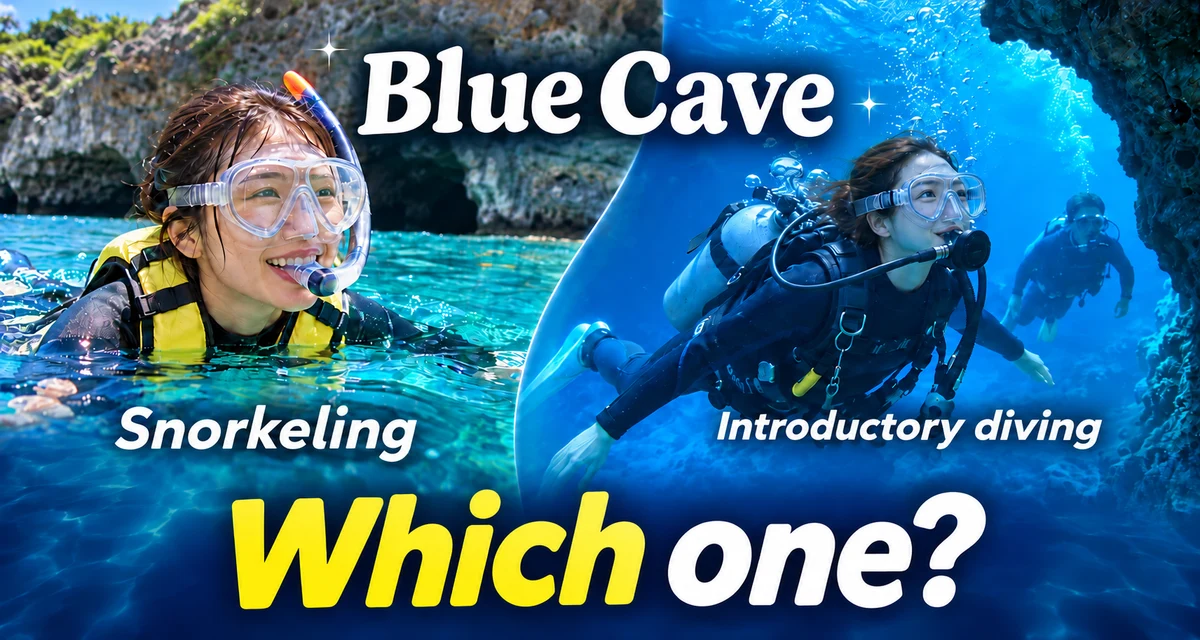
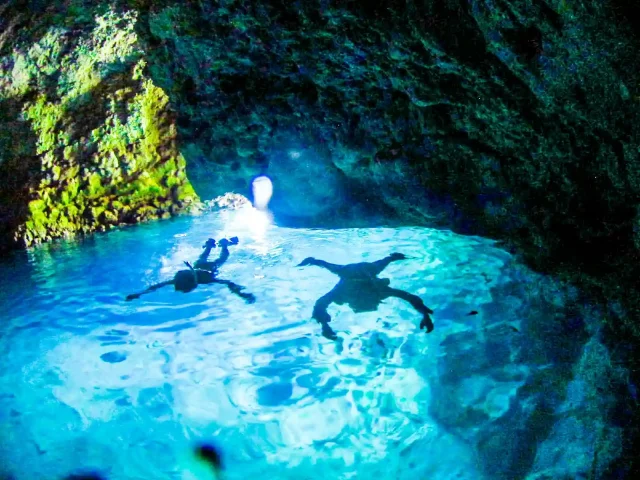
You might want to admire the blue surface inside the cave, look at fish through a mask, or experience the view looking up from underwater. These are useful starting points when the Blue Cave is your goal. Snorkeling at the surface and introductory diving underwater offer different viewpoints.
Kai・la offers both courses, with information about explanations and breathing practice for beginners. Consider how comfortable you and your companions are in the water when choosing. Our article on the differences between snorkeling and introductory diving explains the comparison in more detail.
If turtles come first, check whether observation is the course’s focus
If seeing a sea turtle is central to your trip, check whether the course name and description specifically describe an itinerary for observing them. A general introduction saying that you can see marine life or that there are many fish is different from a course designed around turtle observation.
Even then, do not assume a wild animal will definitely appear. Check the operating conditions and what happens if none are seen. You may not be able to freely change a Blue Cave booking into a turtle search once you arrive. Explain your priorities before confirming the course.
If you want both, consider how you would feel without a sighting
Some people hope to enjoy the cave’s blue glow and welcome any other wildlife as a bonus. Others would prefer a different plan if they cannot see a turtle. Either preference makes choosing easier once you have put it into words.
If both interest you, agree with your companions on which is the trip’s first priority. Combining separate experiences in one day also requires checking travel between venues, rest time and participation conditions. Rather than assuming one booking includes both because they are sea activities, review each itinerary.
How useful are turtle “encounter rates” and photos?
When looking at numbers and images online, the key questions are where, when and during what activity they were recorded. A large number alone is not a reason to expect a turtle in the sea on your booking date.
Check the location, period and number of outings behind a rate
Even a claim of frequent sightings means different things depending on how many outings were counted and over what period. Records from a different sea area or departure point cannot simply be used as a guide to a Blue Cave course.
An encounter rate cannot promise anything for your booking date if its location, recording period and relevant course are unclear. If a number matters to your decision, ask about the conditions behind the record. Use past observations as background while confirming what your chosen course actually offers on the day.
Yesterday’s sighting or a single photo is not today’s guarantee
Wild turtles do not wait in the same place to match human booking times. Even when there is a recent record or a memorable photo, allow for the possibility that you will not see the same scene during your own visit.
It is also worth looking beyond how close a turtle appears in a photo. Camera technique and cropping affect the result. Instead of asking whether you can get as close as the picture suggests, compare whether the activity lets you observe within the guided area without putting pressure on the animal.
Do not predict a Blue Cave encounter from the season or time alone
Avoid choosing a date only because someone says mornings or a particular month guarantee sightings. Records from other locations, or recommended times for a different sea activity, do not automatically apply to turtle observation at the Blue Cave.
If you already have a preferred date, check the operating information for that day and the purpose of the course you want to book. When choosing a time, also consider the journey from your hotel, how your companions are feeling and your plans afterward. Leave room to enjoy the sea itself instead of squeezing your schedule around the hope of meeting an animal.
Check the course name, itinerary and arrangements for changes
Before confirming, compare the course name on the booking screen with the terms that caught your eye in your search. Even if you have been looking at “Blue Cave,” “sea turtles” and “snorkeling,” the formal course details determine what you are booking.
The same activity name can mean different places and purposes
Snorkeling describes a way to enjoy the sea. The word alone does not identify the location or the animals an outing focuses on. Return to the course description to check whether it is about cave scenery or observing a particular animal.
Two courses called “snorkeling” do not necessarily share the same location or purpose. Departure points, meeting facilities, water entry and where the activity finishes also matter when planning your day. Kai・la’s Blue Cave course lists its partner facility, Blue Cave Core, as the meeting place.
Distinguish a closed cave from not seeing a turtle
A change of location because the cave is closed and the absence of a wild animal are separate matters. Being told that a course will move to another location when the Blue Cave is inaccessible does not mean that the replacement location includes a turtle encounter.
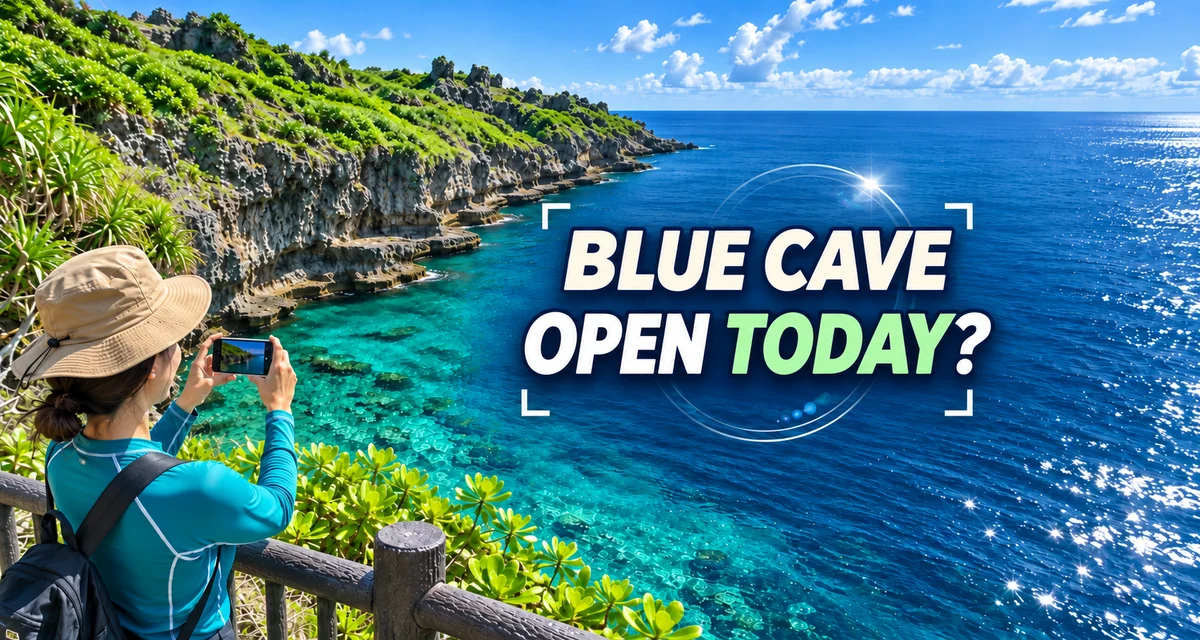
Kai・la’s official course information explains that, if sea conditions close the cave, the activity may move to another point with coral and fish. It also explains that sea conditions or equipment problems may cause cancellation. Check the activity and change conditions before booking, then follow the instructions given that day. See also how to check Blue Cave operating conditions.
Do not replace your plan with a search on your own
Even if you are eager to see a turtle, do not plan to leave a cave tour to search independently or enter the sea alone using a photo as a location guide. Concentrating on finding an animal can make it easier to overlook your surroundings or your own fatigue.
If this is your first sea activity, discuss both what you want to see and what kind of experience would help you feel comfortable. If you are anxious about the water, our points to check when snorkeling feels scary may help you identify the situations that concern you.
Interested in the Blue Cave? Explore Kai・la’s courses
For guests who want to enjoy the blue cave scenery and look into the sea, Kai・la offers Blue Cave snorkeling. The listed price is ¥5,500 per person, for healthy participants aged 2 and over, with bookings from two people. If you have health concerns, please consult by telephone as directed on the official course page.
| Your wish or question | What Kai・la’s official course page describes |
|---|---|
| Getting used to equipment and breathing | Equipment explanations and breathing practice in shallow water where you can stand |
| Understanding the group arrangement | Small-group snorkeling; parties of three or fewer join a shared tour |
| Keeping holiday photos | Underwater GoPro photography by staff and complimentary photos |
| Planning what comes afterward | Showers and changing at partner facility Core |
Small groups and shallow-water practice: one step at a time
Kai・la describes a small-group snorkeling experience that starts with equipment and safety explanations, followed by breathing practice in shallow water where you can stand. If you are unfamiliar with swimming or using a mask, you can explain your concerns beforehand and ask questions.
Kai・la’s course information describes support during breathing practice in standing-depth water until your breathing settles. Make time to get used to the equipment and the sea rather than focusing only on finding wildlife. A small group does not mean a private tour: snorkeling bookings for three people or fewer join a shared tour.
Let staff capture the blue scenery and your experience with a GoPro
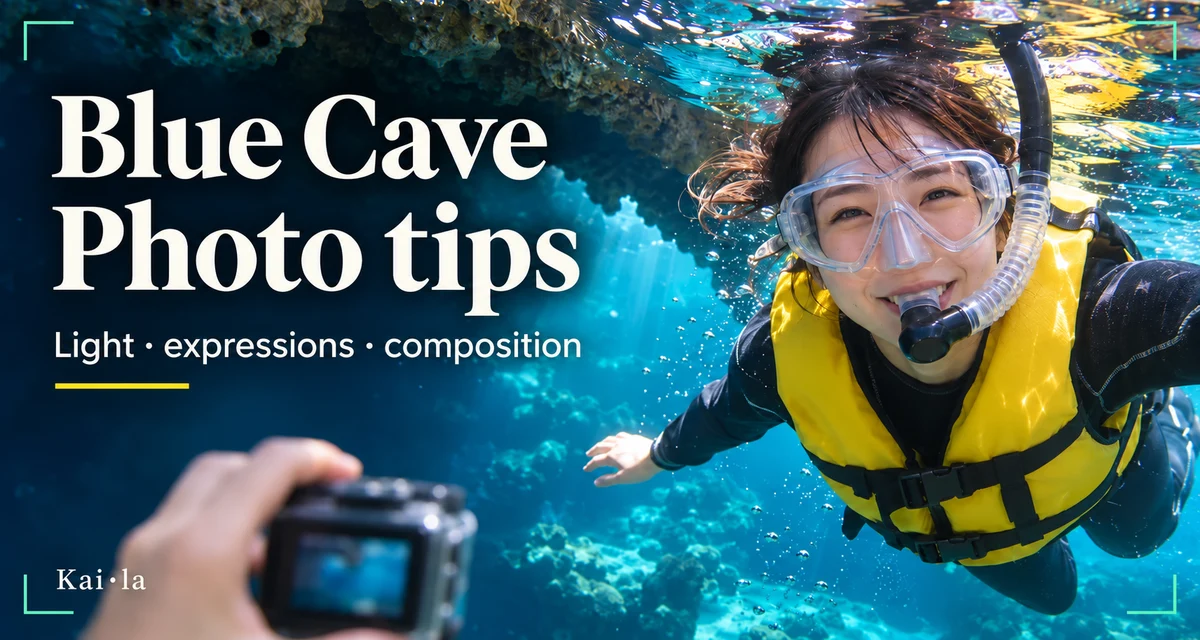
Kai・la’s course page explains that dedicated staff take underwater photos with a GoPro, provide the photos as a gift, and make them available to view on your smartphone by that evening. It is a detail to check if you would like a record of the cave’s blue glow and your own time enjoying the sea.
Leaving photography to the staff can help you give your attention to breathing and the scenery. However, photos with a particular animal, or the exact composition and light shown in published images, are not promised. Discuss the atmosphere you would like beforehand, and prioritize staff instructions during the activity.
For an underwater viewpoint, consider private introductory diving
If you are interested in going underwater as well as looking from the surface, there is also Blue Cave introductory diving. Kai・la’s official page describes this as a fully private experience for your family or companions. Compare the viewpoint you prefer and the participation requirements before choosing.
This is not information supporting a claim that diving increases your chances of seeing a turtle. Compare both options first as Blue Cave experiences. The partner facility also provides a place to shower and change afterward, helping you plan the rest of your day. Transfers are not provided, so please arrange your own travel to the meeting place.
If you meet a sea turtle, put respectful observation first
The excitement of finding a wild animal is a good reason to respect its pace. Here are points to remember so you do not rush toward it in the moment. Always follow the rules of the location and your guide’s instructions in practice.
Do not touch, chase or block its path
If you find a turtle, do not reach out to touch it, follow after it or surround it. Do not use food to draw it closer either. Ask about the appropriate position and distance for watching, following local rules and your guide’s instructions.
When an encounter happens, value observing natural behavior without disturbing it more than getting closer. Even if the turtle seems to move slowly, it has not promised to stay there. If it swims away, watch it go from the guided area rather than trying to follow.
Leave room for it to move and come up to breathe
Sea turtles breathe with lungs rather than fish-like gills and come to the surface for air. Okinawa Churaumi Aquarium’s article about green sea turtles breathing describes this behavior. Pay attention to movement toward the surface as well as the animal’s underwater appearance.
If a turtle swims upward, do not treat that as a chance to approach for a photo. Leave room for it to move and observe. At the same time, stay aware of your breathing, buoyancy and position relative to your companions. The more excited you feel, the more useful it is to calmly check your guide’s voice and signals.
Keep the memory without approaching for a photo
Even if you want a souvenir photo, do not leave the group or remove equipment to get closer to an animal. A large turtle in the frame is not the same thing as a good observation experience. Watching natural behavior from a little farther away can be a lovely travel memory too.
If you bring a camera, check the rules for bringing and using it beforehand. Even with an animal in front of you, prioritize your own condition and the sea around you if camera controls make you feel unsettled. For cave scenery and portraits, see our tips for better underwater photos.
With children or friends, start by sharing expectations
The person arranging the booking may be excited about the cave while a child is most looking forward to turtles. Friends may also have different expectations: some are thrilled simply to enter the sea, while others want time to watch animals. Ask each person what they would like to do before booking.
Tell children about the sea experience without promising turtles
If you say they will definitely see a turtle, it may be harder for them to enjoy the day when one does not appear. Instead, talk about things that fit the booked activity, such as the cave’s blue water or looking into the sea through a mask.
Rather than promising a turtle encounter, explain to children what you will enjoy together on the experience you are booking. Discuss age and water confidence, and listen to how the child feels. For younger children too, meeting the minimum age alone does not mean participation is automatically possible; check health and other conditions.
Include travel, changing and rest in the day’s plan
Kai・la lists approximately two hours for its Blue Cave snorkeling experience. That does not mean two hours inside the cave or two hours continuously searching for a particular animal. Think of check-in, preparation, explanations, practice and changing afterward as part of the overall plan.
If you schedule another activity that day, check the finishing time, travel to the next meeting place, meals and rest. When combining experiences with different purposes, do not assume you can do them immediately back-to-back because they take place in nearby waters. If you have a fixed next appointment, mention your preferred finishing time when asking for advice.
Unsure? Explain your main wish before booking
You can ask questions while you are still deciding on a course, with your wishes and conditions in mind. If you are interested in both the cave and turtles, explaining what excites you most helps avoid mismatched expectations.
Share your date, group size, ages and what you hope to see
Gather the details you know: your preferred date, number of participants, everyone’s ages, concerns about the water and plans afterward. Saying that you want to enjoy the Blue Cave but your child is also interested in turtles makes it easier to clarify both expectations. For example, you could ask:
“We are considering Blue Cave snorkeling on date for two adults and one child. The cave’s blue scenery is our first priority, but our child is also interested in sea turtles. Could you explain what the course includes, the age requirements and how a location change is handled on the day? This will be our first time entering the sea.”
If you have health concerns, please consult by telephone in line with the official course information. You do not need to organize every question perfectly at once. Including a photo or phrase you are curious about can also help you confirm what you are actually booking.
If turtles are your first priority, confirm the purpose before booking the cave
If your main wish is to see turtles, do not book simply because the Blue Cave is a famous name. First confirm whether the content matches that purpose. Choosing only by price or time and adding your wish after arriving can create a larger gap between the experience and what you imagined.
If you also want to enjoy the Blue Cave, think through your priorities. Change and cancellation arrangements differ by course, so check them before confirming. Not seeing an animal is not the same condition as a cancellation or change caused by the sea. Ask about remaining questions so you can choose with a clear understanding.
If you simply want a closer look, consider an exhibition facility
If observing a turtle matters more to you than meeting one in the wild, visiting an exhibition facility can be a separate part of your trip. The area around Okinawa Churaumi Aquarium includes the Sea Turtle Pool, where sea turtles are kept and exhibited. Check official information for viewing areas and the arrangements on your visiting day.
Meeting a wild animal in the sea and observing turtles at a facility offer different kinds of enjoyment. Rather than adding a promise of turtles to a cave booking, separating those wishes within your travel plan can make the day easier to share with family and friends.
Ready to enjoy the Blue Cave? Feel free to contact Kai・la
Choosing separately between enjoying Blue Cave scenery and making turtle observation your main purpose helps clarify what you want. Look beyond photos and encounter rates, check the course’s focus and operating conditions, and look forward to time in the natural sea.
Kai・la offers small-group Blue Cave snorkeling and Blue Cave introductory diving exclusively for your family or companions. Equipment explanations, shallow-water breathing practice and underwater GoPro photography by staff are among the details introduced for enjoying your first sea experience step by step.
Whether you want to see the Blue Cave’s glow or ask about joining with your child, please feel free to contact Kai・la. Share your preferred date, group size and what you are looking forward to through our booking and inquiry form. Choose an experience that suits you and make your time in Okinawa’s sea a wonderful holiday memory♪