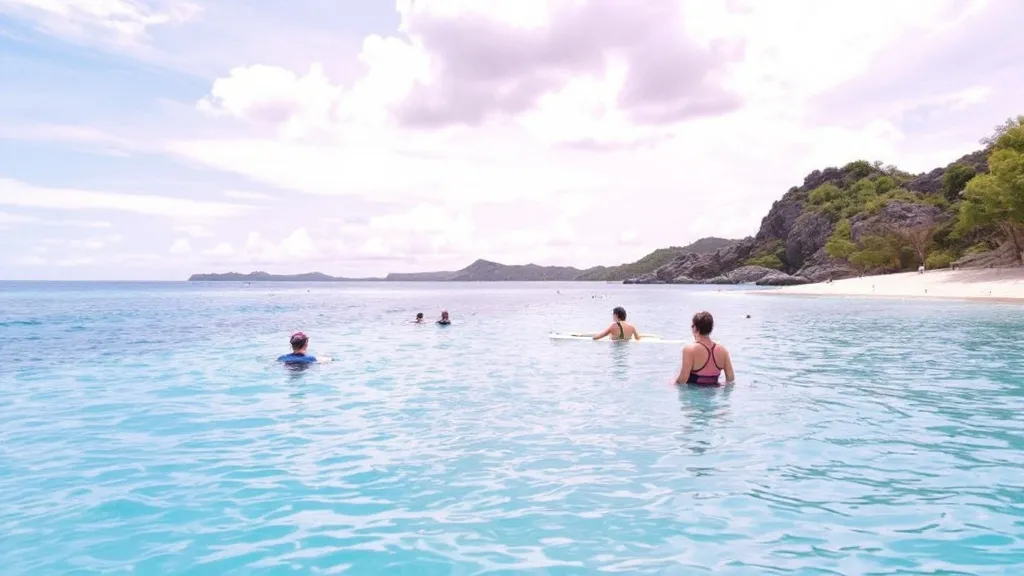
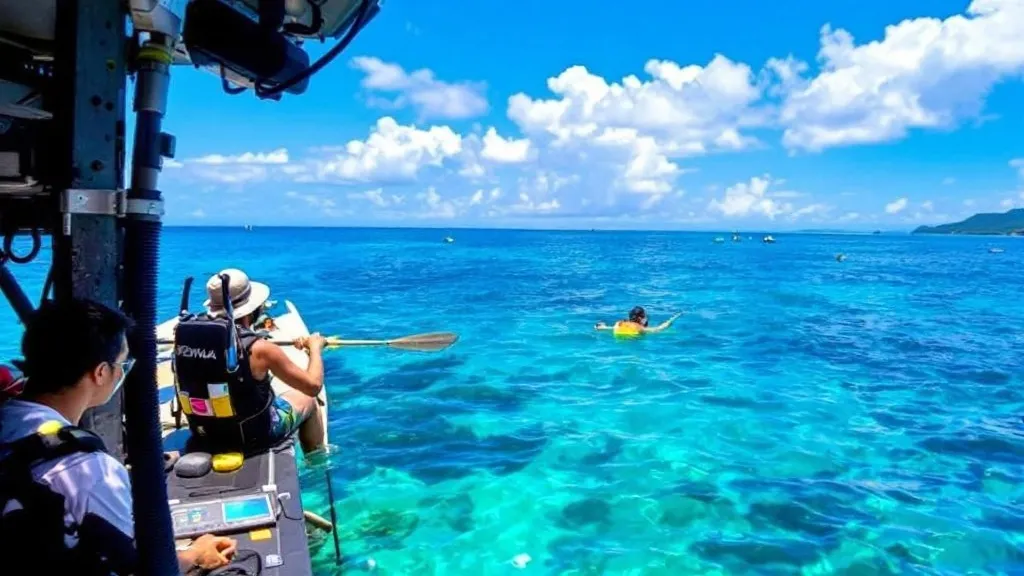
This article introduces everything about the appealing seas and activities you can enjoy in Okinawa in May.
You'll learn about marine sports experiences unique to Okinawa, with its warm climate and clear water, a variety of ways to enjoy activities such as snorkeling, diving, canoeing and stand-up paddleboarding, and the details of stunning places to swim, such as Onna Village, the Chatan area and Miyako Island.
It also includes plenty of valuable advice from local instructors, candid reviews from people who have tried the activities, safety measures and ocean etiquette, access information from Naha Airport, and information on local food and accommodations.
By reading this article, you'll get a comprehensive picture of how to enjoy the ocean in Okinawa in May, and the information you need to plan and prepare for activities, making it the definitive guide for getting started with exciting experiences with peace of mind.
The appeal of Okinawa in May and weather information
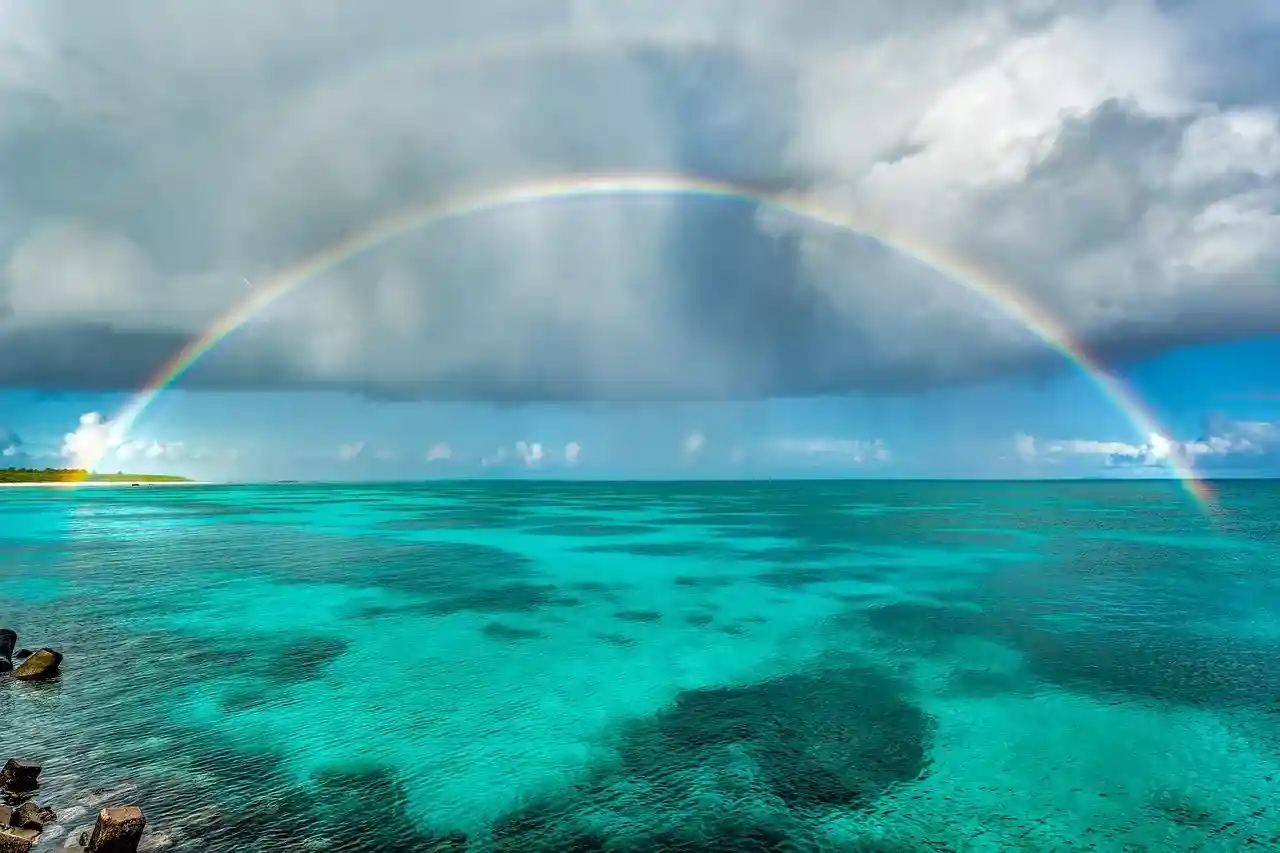
Okinawa in May is characterized by a warm climate and clear skies, creating ideal conditions for marine sports and swimming.
The water temperature also gradually rises, making it a comfortable time to swim, and it is a popular season among tourists and local activity enthusiasts alike.
By understanding the various weather details and what to wear, you can enjoy activities in the ocean and on land with peace of mind.
A warm climate and comfortable swimming conditions
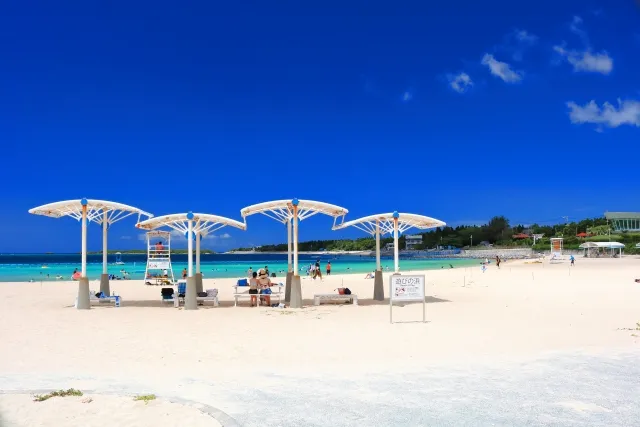
Okinawa in May has very pleasant average temperatures of about 24℃ to 28℃, creating a comfortable outdoor environment.
The water temperature is also about 23℃ to 26℃, warm enough for swimming and snorkeling.
Rainfall is relatively light, but short showers can occur, so it is recommended to check the weather forecast right before you go.
The table below summarizes the main weather data for Okinawa in May.
| Item | May data |
|---|---|
| Average temperature | About 24℃ to 28℃ |
| Water temperature | About 23℃ to 26℃ |
| Chance of rain | About 30% to 40% |
For more detailed weather information, you can check the Japan Meteorological Agency weather forecast or the Japan Weather Association weather forecast.
Recommended clothing and gear

In Okinawa in May, it's warm during the day, but temperatures can drop in the morning and evening, so it's a good idea to bring a light layer to throw on.
For clothing suited to activities at the beach, the following points are important.
- A long-sleeved shirt or rash guard with UV protection
- Shorts or water pants that are easy to move in and breathable
- A quick-drying towel that dries fast even when wet
- Non-slip sandals or water shoes
- A hat to block the sun and a high-SPF sunscreen
Also, when enjoying marine sports, it's important to always prepare safety equipment such as a life jacket.
Many facilities let you rent these items on site, but it's reassuring to check ahead of time for items that fit your body and preferences.
Marine sports experiences in Okinawa
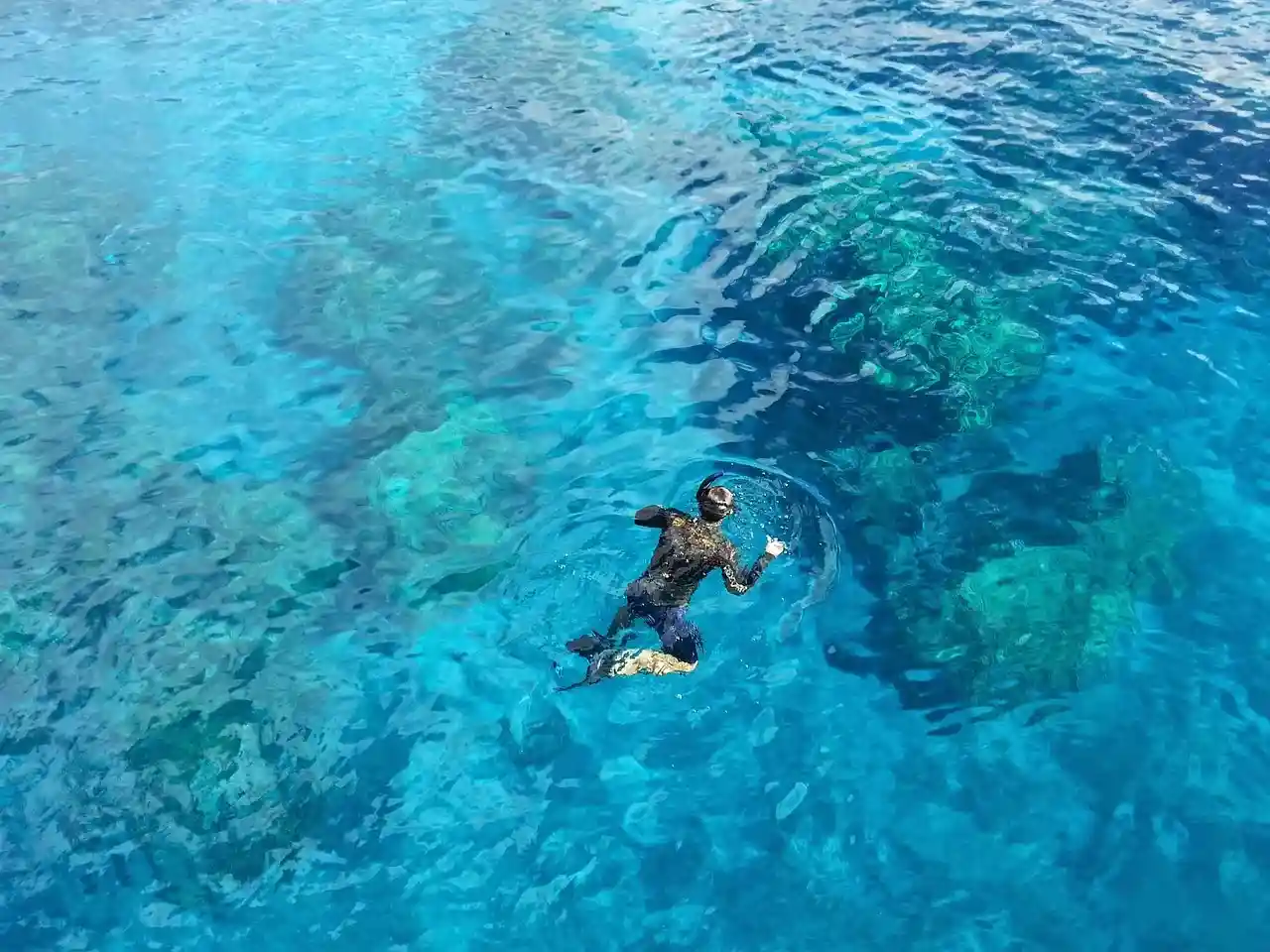
Okinawa has a thriving marine sports scene that makes the most of its rich ocean resources, and in May the warm climate and calm sea conditions are especially appealing.
Here we introduce a range of activities set in the beautiful sea—snorkeling, diving, and canoe and stand-up paddleboard experiences.
Another appeal of these experiences is that various support systems are in place so that people of all levels, from beginners to advanced, can take part with peace of mind.
The underwater world you can see while snorkeling
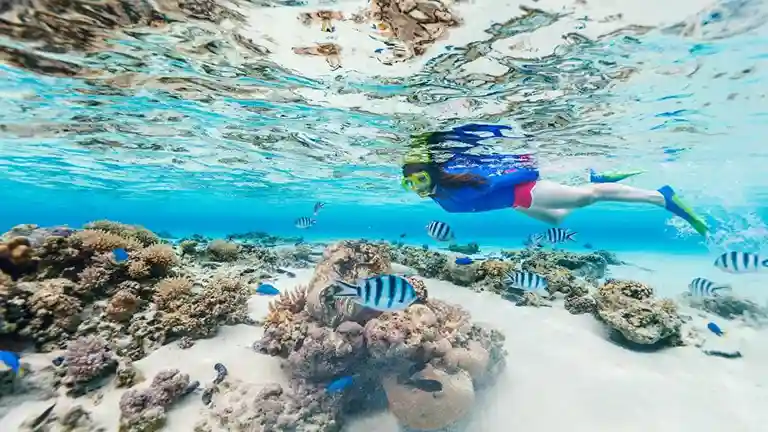
Okinawa's sea is known for its clarity and rich coral reefs, and snorkeling is an appealing activity for families and beginners.
Underwater, colorful tropical fish and corals of every shape spread out before you, making for memories you won't forget once you've experienced them.
For the experience, equipment such as a well-fitting mask, snorkel and fins is essential, and it's important to follow the safety instructions of the local instructors.
For the latest snorkeling tour information and safety measures, you can check the official website of the Okinawa Convention & Visitors Bureau.
Enjoying Okinawa's sea through diving
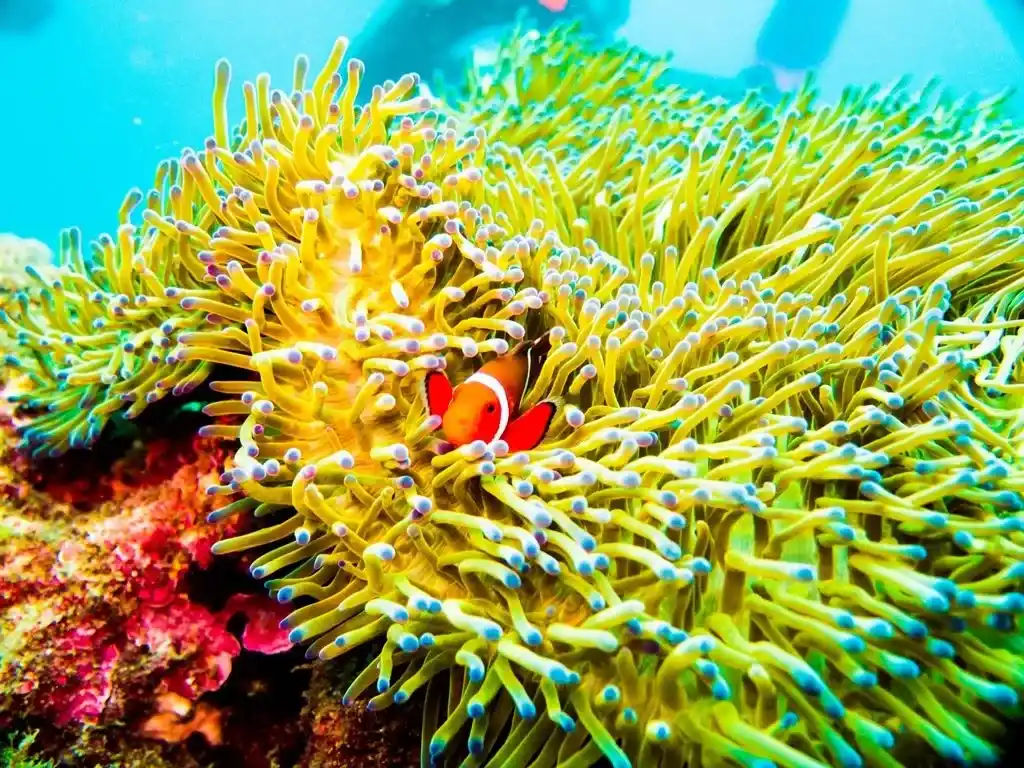
With its abundant marine life and clear water, Okinawa's sea is highly rated by divers around the world as a diving destination.
A variety of plans are available, from introductory diving for beginners to full-fledged Open Water diving and even night diving.
Every course features thorough safety management by professional instructors, so participants can experience the wonders of the underwater world with peace of mind.
| Course name | Duration | Price |
|---|---|---|
| Introductory diving | About 1 hour | From 15,000 yen |
| Open Water diving | About 2 hours | From 30,000 yen |
| Night diving | About 1.5 hours | From 20,000 yen |
These diving experiences let you observe a wide variety of marine life and natural formations up close, making them ideal for nature lovers and adventurous people.
For details and reservations, please refer to the information provided by each dive shop and the Okinawa Diving Information Center page.
Canoe and stand-up paddleboard experiences
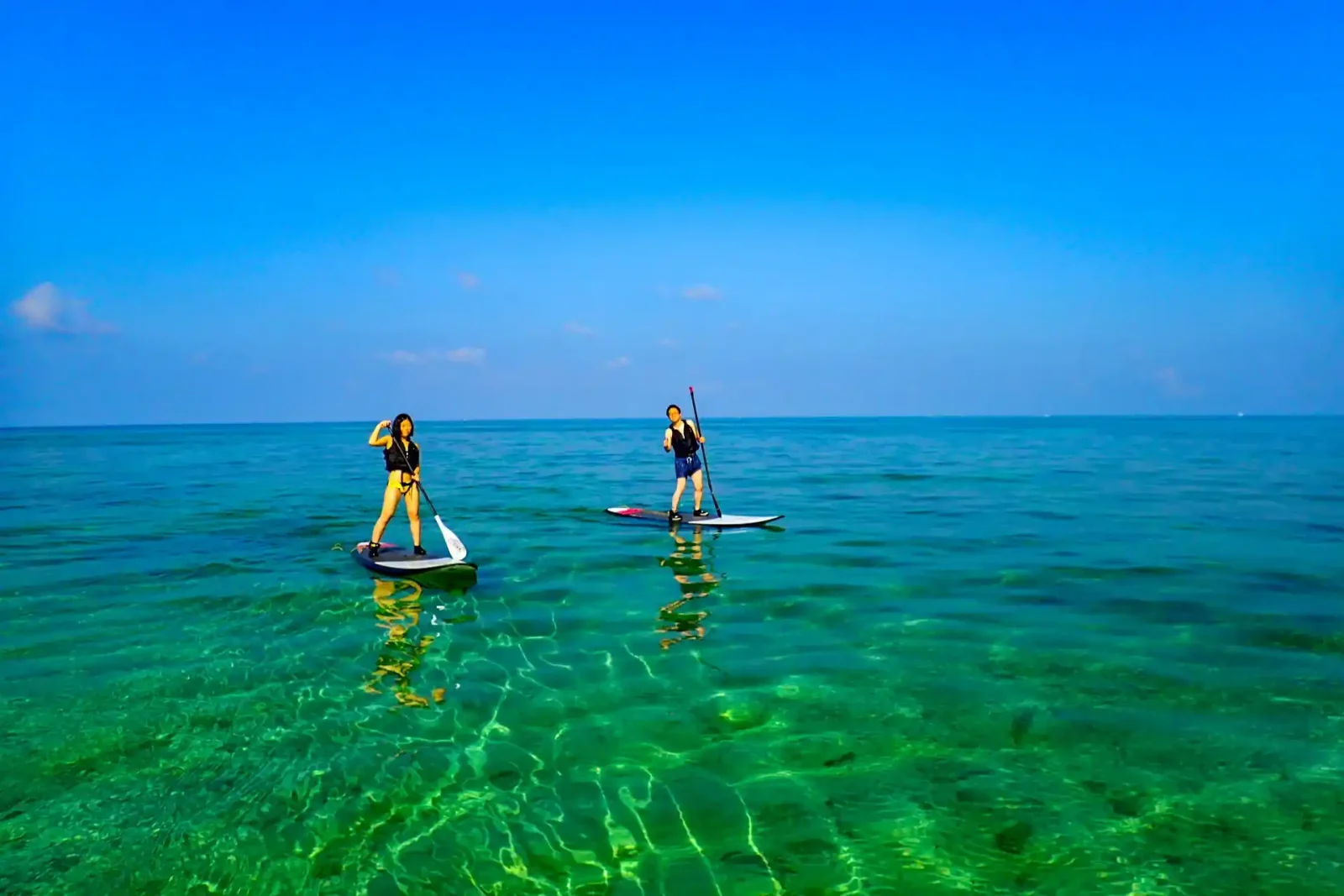
In Okinawa, with its coastline and calm stretches of water, canoe and stand-up paddleboard (SUP) experiences are also popular.
With these activities you can glide across the quiet water at your own pace, so you can relax and feel at one with nature.
So that even beginners can take part with peace of mind, there are plenty of programs on site that teach you carefully from the basics.
SUP is also attracting attention as a full-body aerobic exercise, making it an activity that is ideal for staying healthy or refreshing yourself.
You can enjoy spectacular views from the water while spending an active time in nature.
| Activity | Suitable area | Duration |
|---|---|---|
| Canoe experience | Coastal areas near Naha | 1 to 2 hours |
| Stand-up paddleboard | Quiet beaches in southern mainland Okinawa | 1 to 3 hours |
Through these experiences, participants can enjoy nature at their own pace and refresh both body and mind.
We also recommend checking the information that Okinawa Leisure News updates regularly for the latest event information and detailed experience programs.
Recommended scenic spots for swimming
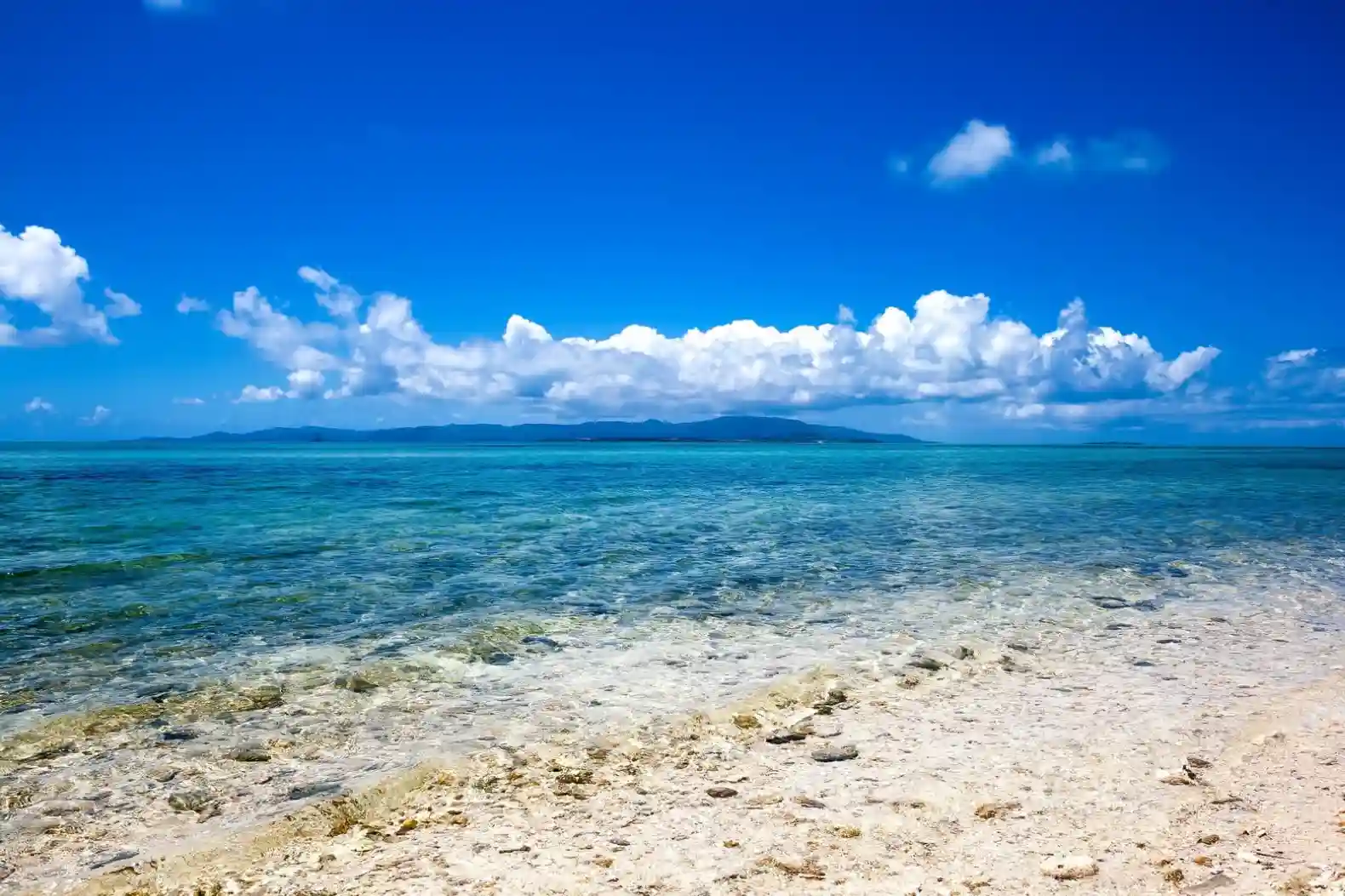
The clear waters of Onna Village
Located in central mainland Okinawa, the clear waters of Onna Village are known for their transparent seawater and wide beaches, providing an ideal environment for snorkeling and swimming.
Here you can enjoy natural beauty and marine sports at the same time, and the clear water never fails to captivate visitors.
Tropical fish and coral reefs spread out underwater, and the area is supported by people of all levels, from beginners to advanced.
Onna Village also has plenty of accommodations, rental shops and lessons with instructors, so families, couples and groups of friends can all enjoy it with peace of mind.
Hidden beaches of the Chatan area
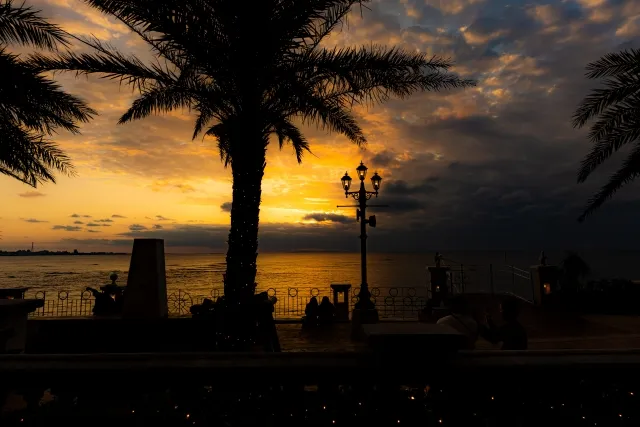
The Chatan area, close to Naha City, is a place that blends the conveniences of the city with the charm of hidden beaches.
Although it is relatively easy to get to, it has few crowds and a quiet, relaxed atmosphere, making it ideal for swimming at a leisurely pace or spending relaxing time by the sea.
There are also many restaurants and cafes where you can taste fresh local seafood, so you can enjoy a stroll by the sea and a food experience at the same time.
Near the beaches there are also plenty of surf schools and stand-up paddleboard (SUP) rental shops, catering to everyone from beginners to experienced people.
Beautiful ocean views on Miyako Island
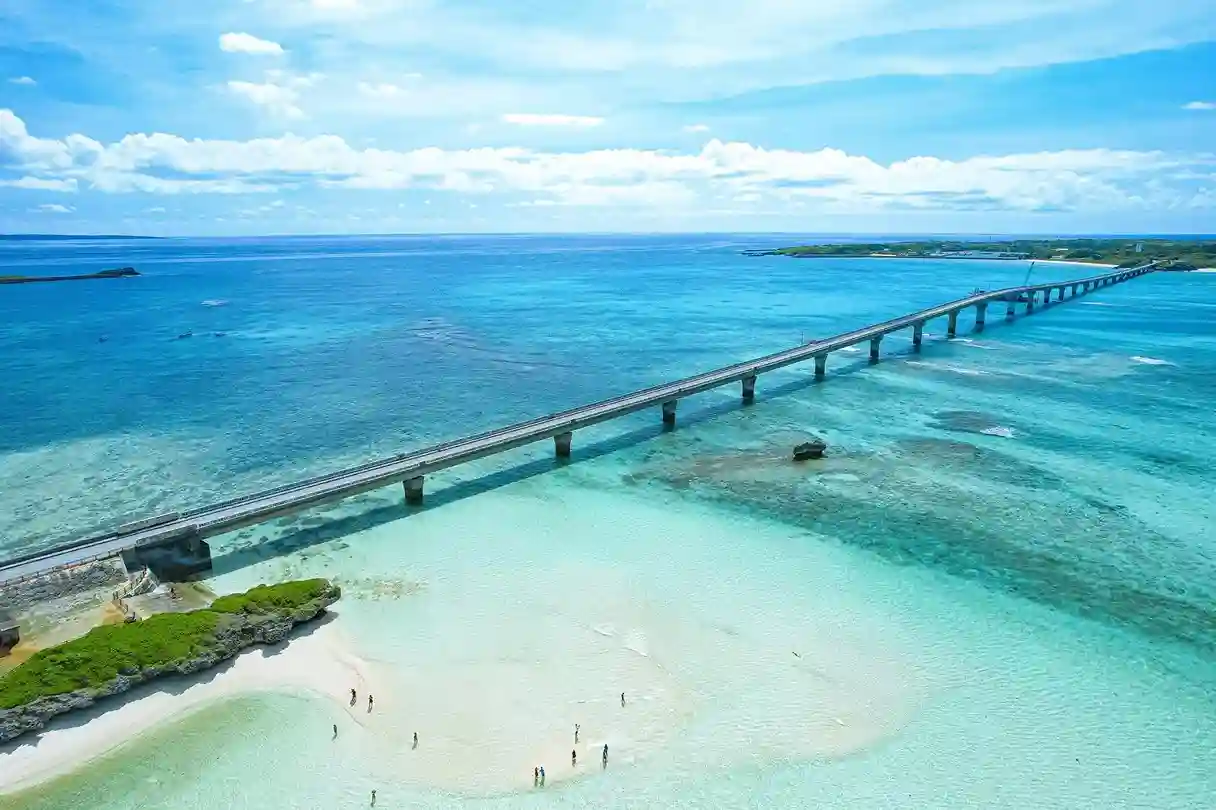
The beautiful ocean views of Miyako Island, with a charm different from mainland Okinawa, stretch out with emerald-green water and white sand beaches, a truly heavenly landscape.
Miyako Island is also known as a mecca for snorkeling and diving, and you're sure to be moved by the colorful marine life and the beauty of the coral reefs.
The island is relatively quiet and rich in nature, so it is especially recommended for those who want to refresh themselves while swimming in the sea and for those who enjoy taking photos.
Local tourist information centers and accommodations also offer plenty of marine sports experience programs for beginners, so you can enjoy ocean activities with peace of mind.
For detailed scenery information and activity reservations, please also refer to the official Okinawa Prefectural Government tourism information site.
| Spot name | Access | Features | Recommended activities |
|---|---|---|---|
| The clear waters of Onna Village | About 30 minutes by car from Naha | Clear seawater and abundant marine life | Snorkeling, swimming, diving |
| Hidden beaches of the Chatan area | About 20 minutes by car from Naha | A quiet, relaxed beach resort | Stand-up paddleboarding, surfing, beach strolls |
| Beautiful ocean views on Miyako Island | About 50 minutes by plane from Naha Airport | Stunning scenery of emerald-green water and white sand | Snorkeling, diving, photo tours |
Local experiences and reviews

Advice from instructors
When enjoying marine sports in Okinawa, advice you get directly from local instructors is extremely valuable.
Instructors give detailed guidance on safety measures and basic techniques for beginners, as well as how to respond properly in an emergency.
For example, for snorkeling they teach how to use the equipment correctly and what to watch out for underwater, and for diving they teach the importance of emergency communication methods and dive planning, and both bring real peace of mind.
Instructors always take in the latest safety information and local weather and sea conditions, and support participants so that they can fully enjoy Okinawa's beautiful sea with peace of mind.
| Name | Affiliation / qualification | Main advice |
|---|---|---|
| Taro Yamada | Diving license holder | Focuses on teaching pre-dive safety checks and emergency response |
| Hanako Sato | Snorkeling instructor | Puts into practice explanations of basic techniques for beginners |
| Ichiro Suzuki | Stand-up paddleboard instructor | Gives advice on how to keep your balance and paddle safely on the water |
Voices from people who have tried it
The voices of people who have tried marine sports in Okinawa's sea sum up the appeal of each activity.
Many participants felt deeply moved by the highly transparent water and the warm instruction, and said that even first-timers could take part with peace of mind.
The reviews describe the instructors' careful guidance and the vivid, on-the-spot experience, making them a valuable source of information for people who are about to take part.
Some participants have shared impressions of each activity, such as snorkeling, diving and stand-up paddleboarding, and they are said to ease anxiety before the experience and give you a concrete image ahead of time.
Below is a summary of reviews from people who have actually tried these activities.
| Reviewer | Activity | Review |
|---|---|---|
| Jiro Suzuki | Snorkeling | I was thrilled by the dreamlike underwater scenery and the colorful fish. The setup made it easy for even a beginner to enjoy with peace of mind. |
| Akemi Takahashi | Diving | During the dive, the instructor's precise support gave me a safe and comfortable experience. I was captivated by the beauty of the sea. |
| Daisuke Ito | Stand-up paddleboarding | Even though it was my first time, thanks to the careful instruction I was able to enjoy it without strain. I developed a sense of balance on the water. |
Also, if you want to hear more firsthand voices from people who have tried these activities, you can get even more realistic accounts by checking the reviews and ratings on established information sites, such as JTB travel information and travel journals.
These experiences and reviews will help you when planning marine sports in Okinawa, as a powerful source of information for easing anxiety ahead of time and choosing safe, enjoyable activities.
Safety measures and ocean etiquette
Basic safety rules for marine sports
When enjoying marine sports in Okinawa, it is important to always keep safety first in mind and follow the basic rules for preventing accidents.
Thoroughly check the sea conditions, weather and condition of your equipment, and act in a planned way so that you can handle sudden situations.
| Safety item | Details |
|---|---|
| Wear a life jacket | For all marine sports, always wear a life jacket to help prevent accidents in the water. |
| Check the weather beforehand | Before your activity, check the Japan Meteorological Agency weather forecast and be prepared for sudden changes in the weather. |
| Attend a safety briefing | For each marine sport, by attending the on-site safety briefing, you acquire the knowledge and skills to prepare for any accident. |
| Follow the instructor's directions | By receiving guidance from a professional instructor and following directions without overexerting yourself, you can keep risks to a minimum. |
Also, each facility inspects its safety equipment and has an emergency communication system in place, so it's important to check the local rules and facilities in advance.
What to do in an emergency and points to note

If an accident or trouble should occur during an ocean activity, a quick and calm response is required.
By understanding emergency procedures in advance and mentally rehearsing how to respond, you can keep harm to a minimum.
| Emergency | Response |
|---|---|
| Drowning accident | Immediately call out to the people around you and perform lifesaving measures. If necessary, promptly contact the Japan Coast Guard. |
| Sudden bad weather | If the weather suddenly turns bad, immediately evacuate to a safe place and pay attention to local warnings and information. |
| Equipment failure | If a problem occurs with the equipment you are using, stop using it immediately, and check your backup equipment or consult the instructor. |
By putting these measures in place, you can respond calmly even in an emergency and help prevent an accident from getting worse.
Checklist for a quick response
To make quick decisions when facing an emergency, please refer to the checklist below.
By checking each item regularly and sharing it with family and friends, you can be fully prepared.
| Checklist item | What to confirm |
|---|---|
| Assess the situation | Calmly observe your surroundings and confirm the location of the victim and the extent of the risk. |
| Secure a way to communicate | Secure a reliable means of communication, such as a mobile phone or a radio. |
| Contact rescuers | If necessary, immediately contact nearby people or specialized agencies such as the Japan Coast Guard. |
| Prepare first aid | Learn first aid in advance and carry a first-aid kit and emergency supplies. |
By putting this checklist into practice, you can prevent confusion in an emergency and respond quickly and accurately.
By following safety measures and ocean etiquette thoroughly, you will be able to enjoy Okinawa's beautiful sea with peace of mind.
Access information and nearby sightseeing
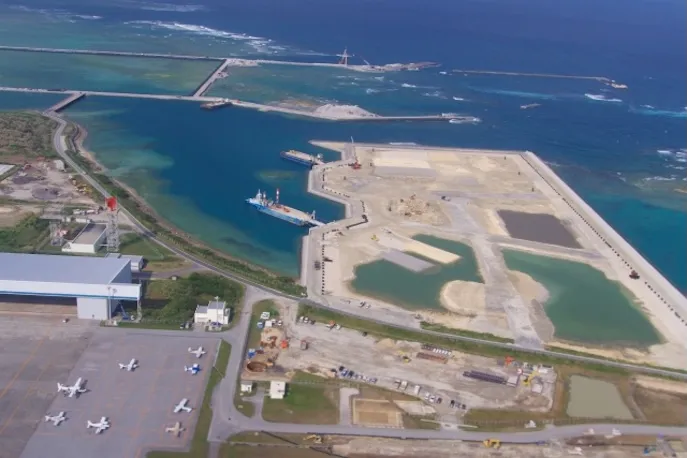
Getting there from Naha Airport
Naha Airport is the gateway to Okinawa and a very convenient airport used by many travelers from Japan and abroad. Inside the airport, a variety of transportation options such as rental cars, taxis and local buses are available, making it easy to get to tourist spots all over Okinawa. For the latest operating information and timetables, you can check the official website of the Okinawa Convention & Visitors Bureau.
Getting there by bus
From Naha Airport, direct buses and sightseeing route buses operate, so you can easily travel to the main tourist areas.
Access to Kokusai-dori, the Chatan area and the Churaumi Aquarium area is especially convenient, and it's reassuring to check boarding times in advance.
The table below gives approximate information on the main bus routes departing from and arriving at Naha Airport.
Related article: How to get from Naha Airport to Onna Village
| Destination | Travel time | Fare |
|---|---|---|
| Around Kokusai-dori | 15 to 20 minutes | About 300 yen |
| Chatan / American Village | 30 to 40 minutes | About 500 yen |
| Churaumi Aquarium area (Nago City) | 1 hour 30 minutes to 2 hours | About 1,000 yen |
Using a rental car or taxi
Besides the bus, you can also use a rental car or taxi to get around on a flexible schedule.
If you rent a car, you can complete the paperwork at a rental company inside Naha Airport or nearby and enjoy driving around the local area.
Taxis wait near the airport exit, so they are very convenient when you have a lot of luggage or are in a hurry.
For the fares and detailed routes of each means of transportation, please check the latest information from airlines such as Japan Airlines and on local transportation bureau websites.
Related article: For getting around on a trip to Okinawa, we recommend a rental car
Local food and accommodations

Okinawa offers not only beautiful ocean views but also food that lets you experience its unique culture and flavors, as well as comfortable accommodations.
Many local dishes, such as Okinawa soba, goya champuru and taco rice, can be enjoyed at local izakaya (Japanese pubs) and restaurants.
There is also a wide range of accommodation options, including resort hotels for families and couples, minshuku (family-run inns) and pensions, to meet each traveler's needs.
The table below gives some examples of recommended places to eat and stay in Okinawa.
| Category | Recommended spot | Features |
|---|---|---|
| Food | Hateruma Shokudo | Enjoy traditional Okinawa soba and local cuisine |
| Food | Seafood Izakaya Hama no Daidokoro | Known for its fresh seafood dishes |
| Lodging | The Resort Okinawa | An excellent view and well-equipped facilities |
| Lodging | Okinawa Resort Hotel Colorful | A warm, welcoming inn that is also ideal for families |
This facility information is based on the latest data from the Okinawa Convention & Visitors Bureau, and it's a good idea to also refer to actual reviews and ratings.
We recommend checking detailed information on reservation sites or official websites ahead of time.
Summary
Okinawa in May is a perfect season, with its warm climate, for refreshing both body and mind through activities and marine sports.
The setting lets you fully enjoy Okinawa's natural beauty through ocean experiences such as snorkeling, diving, canoeing and stand-up paddleboarding, and the clear waters of Onna Village, the hidden beaches of the Chatan area and the stunning scenery of Miyako Island give many travelers new discoveries and moments of wonder.
In addition, the appropriate advice from local instructors and reviews from people who have actually tried the activities clearly show the importance of following safety measures and etiquette, and they convey the key points for enjoying yourself with peace of mind in an easy-to-understand way.
The convenient access from Naha Airport and the wealth of local food and accommodations are also decisive reasons to visit Okinawa.
For these reasons, it can be concluded that Okinawa will continue to be supported by many people as an appealing resort destination to visit in May.
Why not fully enjoy Okinawa's sea and experiences on your next trip?