To enjoy Okinawa's sea, it is important to know when jellyfish appear and how to avoid being stung.
In this article, we explain in detail when jellyfish are commonly seen in Okinawa, the main types of jellyfish, how to avoid being stung, and first aid if you are stung.
Common types of jellyfish in Okinawa and when they appear
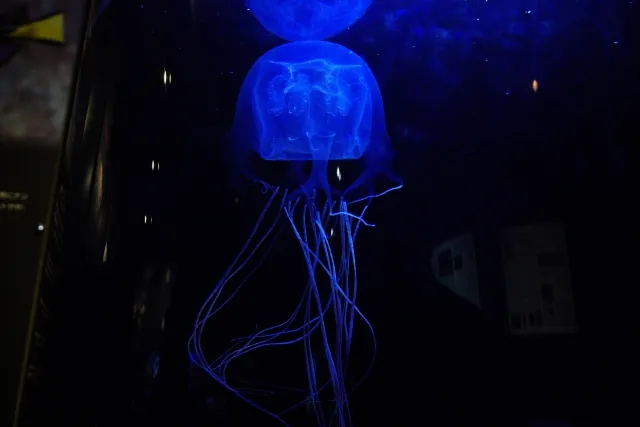
Okinawa's beautiful sea is a sightseeing destination that many travelers look forward to, but during the summer swimming season you also need to watch out for jellyfish.
In particular, species such as the Habu box jellyfish and the Portuguese man o' war are frequently seen in Okinawa, and being stung can bring pain and danger. Let's look at the characteristics of each jellyfish and when they appear.
Habu box jellyfish
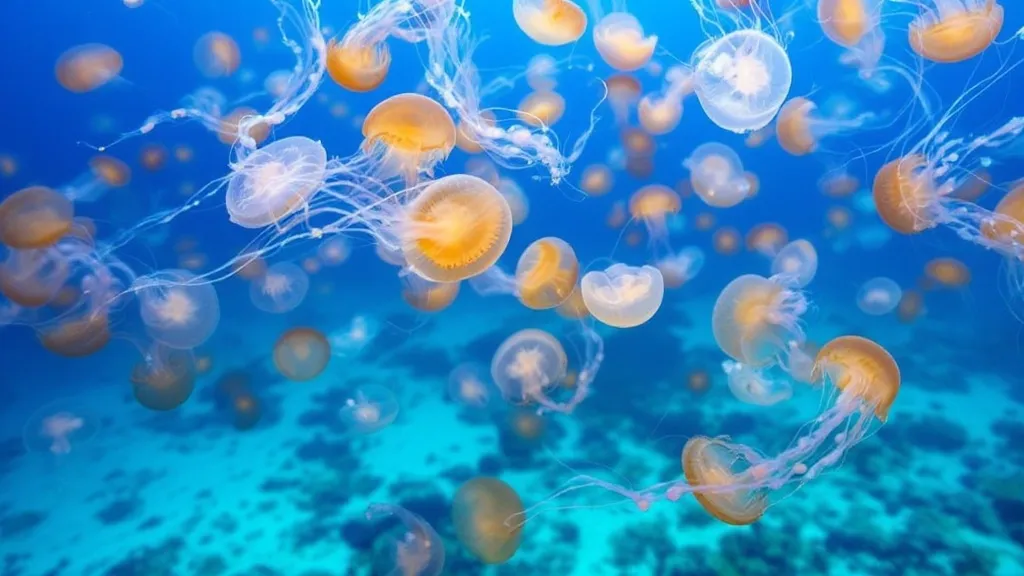
The Habu box jellyfish is a tropical jellyfish seen in the waters of Okinawa and the Amami region from early summer through fall.
It is characterized by 7 to 8 tentacles extending from the four corners of its bell, and its venom is extremely strong even among the jellyfish living in Japan, which is said to be how it got the name "Habu" (the name of a venomous Okinawan pit viper).
In Okinawa Prefecture it appears widely from May to October, but it has not been confirmed in some areas, such as the Kerama Islands.
It also shows up in shallow water, so special caution is needed. Its bell can be transparent, so it is hard to spot even when it is drifting in the sea.
From 1998 to 2022, the number of injuries caused by harmful marine organisms reached 6,558, and 43.7% of those were caused by Habu box jellyfish, so nearly half of the injuries from dangerous creatures in Okinawa's sea are thought to be caused by Habu box jellyfish.
These results show that stronger countermeasures and preventive activities against Habu box jellyfish are even more important.
Portuguese man o' war
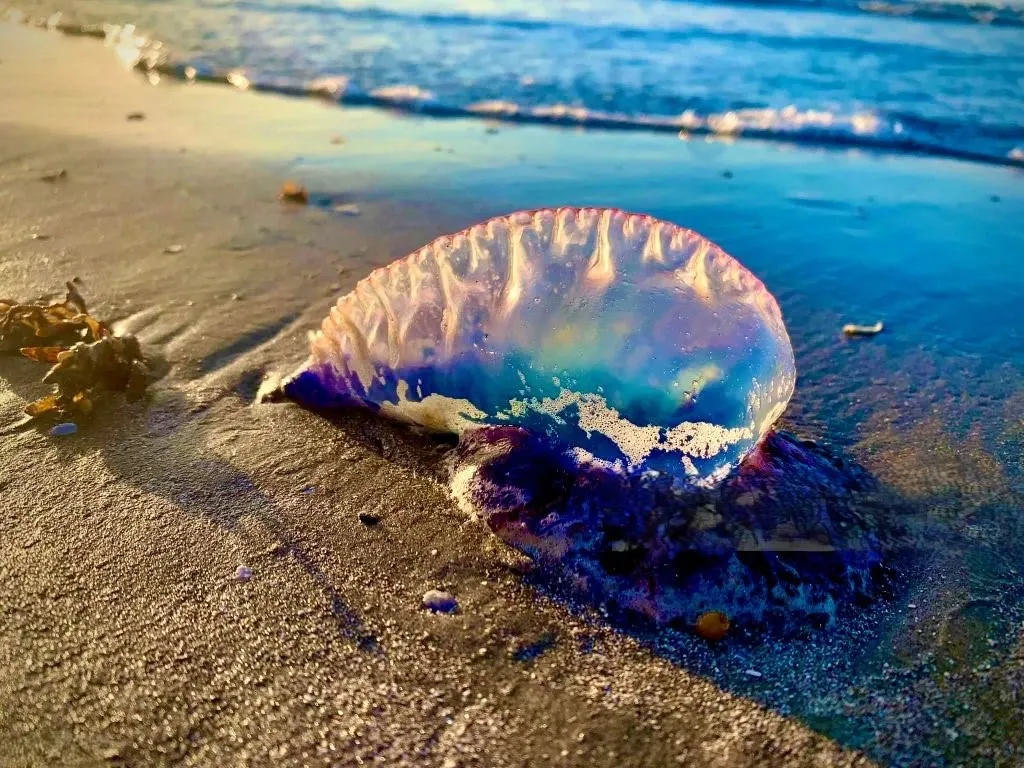
The Portuguese man o' war is an open-ocean jellyfish, commonly seen in Japan's warm waters, especially in southern Japan and around Okinawa.
It is especially likely to appear in summer, from June to September, and in Okinawa it may be seen until around November.
It floats on the surface with a blue float, and long tentacles hang down in the water.
This jellyfish is a kind of siphonophore with powerful venom, and touching its tentacles causes a sharp pain like an electric shock.
A second contact can also trigger an anaphylactic reaction, with the danger of falling into life-threatening shock.
On windy days it may be washed up onto the shore or drift onto sandy beaches, and its vivid color and shape can make you want to touch it, but you should avoid touching it with bare hands.
The current state of Habu box jellyfish injuries
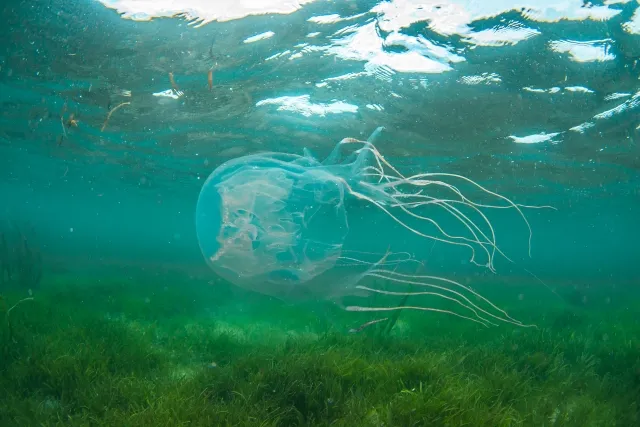
The tentacles of the Habu box jellyfish have venomous stingers, and on contact the venom is injected and causes intense pain.
In the past there have been cases in which people died after being stung by a Habu box jellyfish, and over the 25 years from 1998 to 2022 the number of injuries totaled 2,865.
Monthly occurrence of Habu box jellyfish injuries (1998-2023), number of reported injuries: 2,868
| Jan | Feb | Mar | Apr | May | Jun | Jul | Aug | Sep | Oct | Nov | Dec |
| 0 | 0 | 1 | 3 | 15 | 192 | 1,136 | 1,293 | 195 | 31 | 1 | 1 |
Created by the author based on the monthly occurrence of Habu box jellyfish injuries in the Okinawa Prefectural Institute of Health and Environment's "Habu Box Jellyfish Intrusion Prevention Net Management Manual"
https://www.pref.okinawa.jp/_res/projects/default_project/_page_/001/005/069/kuragenet_manual.pdf
You can see that injuries from Habu box jellyfish are concentrated mainly from June to September.
There are peaks in July and August, and because these months fall in Okinawa's summer, swimming and other activities in the sea become more active.
Injuries begin to increase from May and decrease in the fall.
In addition, almost no injuries are reported from January to April, which shows that Habu box jellyfish activity tends to be limited to the summer season.
Being stung by a Habu box jellyfish can even lead to death.
Those who suffered severe harm were children aged 15 or younger. Three deaths are confirmed by the prefecture: a 14-year-old boy in 1961, a 6-year-old girl in 1997, and a 3-year-old girl in 1998.
In response to these accidents, Okinawa Prefecture launched the only program of its kind in Japan, which surveys jellyfish occurrence and raises awareness of safety measures.
Deaths and respiratory arrest caused by Habu box jellyfish stings in Okinawa Prefecture are as follows.
| Age | Sex | Year and month | Location | Outcome |
| 14 | Male | August 1961 | Ogimi Village | Died |
| 6 | Female | August 1997 | Kin Town | Died |
| 3 | Female | July 1998 | Ishigaki City | Died |
| 8 | Female | August 1998 | Uruma City | Survived |
| 8 | Female | August 2000 | Onna Village | Survived |
| 5 | Female | August 2005 | Ogimi Village | Survived |
| 9 | Male | August 2008 | Nago City | Survived |
| 6 | Female | August 2014 | Nakijin Village | Survived |
| 9 | Female | July 2021 | Tomigusuku City | Survived |
| 7 | Female | August 2023 | Nago City | Survived |
Created by the author based on the cases of death and respiratory arrest from Habu box jellyfish stings in the Okinawa Prefectural Institute of Health and Environment's "Habu Box Jellyfish Countermeasure Seminar"
What these results tell us is that Habu box jellyfish stings are extremely dangerous, and that children in particular are prone to serious harm.
According to past data, no deaths have been reported since 1998, but injuries leading to respiratory arrest have continued to occur since then, which shows that the danger of Habu box jellyfish remains high.
In addition, the jellyfish occurrence surveys and safety awareness activities carried out by Okinawa Prefecture are important, and these efforts are thought to be contributing to a decrease in injuries.
How to avoid being stung by jellyfish
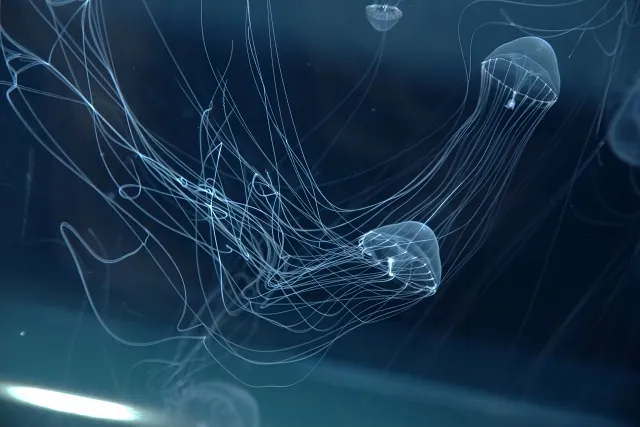
During the summer swimming season, even a fun time can expose you to jellyfish danger if you let your guard down.
In particular, being stung by a venomous jellyfish can cause intense pain, so safety measures are important.
To enjoy the sea safely, follow a few basic measures: reduce exposed skin, choose swimming beaches with jellyfish-prevention nets, and let the jellyfish know you are there.
Let the jellyfish know you are there
To avoid being stung by jellyfish, it helps to let them know you are there.
If you move quietly in the water, a jellyfish may approach without noticing you.
However, small stimuli such as splashes, shadows and water movement can startle a jellyfish and make it move away.
In this way, by being aware of your own movements and your surroundings, you can keep your distance from jellyfish.
For example, by moving forward while slowly pushing the water with your hands spread, you can signal your presence to a jellyfish.
Changes in water flow and movement can also stimulate a jellyfish and make it react by moving away from the spot.
Even when visibility is poor and jellyfish are hard to see, this method lets you avoid them before they come close.
Even so, some types of jellyfish are slow to react, so this method does not completely guarantee safety.
In areas with many jellyfish, the most important thing is to check information beforehand and avoid going near dangerous areas.
Reduce exposed skin
To avoid being stung by jellyfish, it is important to reduce the amount of exposed skin.
We recommend wearing a wetsuit, a long-sleeved shirt, leggings or similar.
With these garments, the stingers are less likely to touch your skin directly even if you are stung, so you can keep the harm to a minimum.
A wetsuit covers the whole body and protects well all the way down to the ankles, wrists and neck, so it is a highly safe choice.
Combining it with a long-sleeved shirt or leggings reduces exposed skin even further and lowers the risk of being stung.
However, even these measures cannot completely block jellyfish stingers.
You can sometimes be stung through clothing, so take sufficient care when entering the sea.
In addition, visibility may be poor, or jellyfish may be transparent and hard to see, so check local information and sea conditions before getting in the water.
Choose a swimming beach with a jellyfish-prevention net
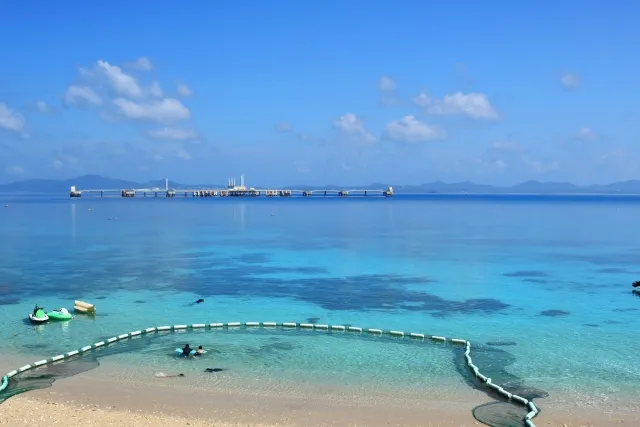
In Okinawa Prefecture, more than 100 stings and bites from dangerous marine organisms occur every year, and about 40% of them are caused by Habu box jellyfish.
To reduce these injuries, the prefecture recommends installing "Habu box jellyfish prevention nets."
By using a swimming beach with a jellyfish net, injuries from Habu box jellyfish inside the net are said to be greatly reduced.
The beaches with jellyfish nets are as follows.
| Okinawa Main Island | Kume Island | Kohama Island | Ishigaki Island | Miyako Island |
| • JAL Private Resort Okuma • Uppama Beach • Emerald Beach • Sesoko Beach • Kise Beach • Busena Beach • Kariyushi Beach • Manza Beach • Onna Seaside Park Nabee Beach • Village-run Zanpa Beach • Village-run Nirai Beach • Chatan Park Sunset Beach • Araha Beach • Ginowan Tropical Beach • Naminoue Beach • Toyosaki Churasun Beach • Bibi Beach Itoman • Resonex Nago Beach • Kanucha Beach • Kanna Beach • Beach in front of Rizzan Sea-Park Hotel • Sun Marina Beach • Moon Beach • Renaissance Beach • Ikei Beach • Tomai Beach on Tsuken Island • Nishihara Kirakira Beach • Azama Sunsun Beach | Anland Eef Beach | • Haimurubushi Beach • Kohama Island Koki Beach | • Ishigaki Island Sunset Beach • Club Med Kabira Beach • Sokoji Swimming Beach • Fusaki Beach • Maesato Beach • Moramora Beach | • Miyako Sunset Beach • Yonaha Maehama Beach |
Created by the author based on the beaches with jellyfish nets listed in the Okinawa Prefecture Department of Public Welfare and Health's "Dangerous Marine Creatures"
In Okinawa Prefecture, the installation of jellyfish-prevention nets is being actively promoted to reduce injuries from Habu box jellyfish.
Jellyfish nets have been installed at many beaches, and in areas with these nets the risk of Habu box jellyfish stings can be greatly reduced.
In resort areas such as the main island of Okinawa, Ishigaki Island and Miyako Island in particular, jellyfish nets are being installed, and safety measures for people enjoying swimming are being strengthened.
However, the time of year when the nets are installed differs from beach to beach, so it is important to check whether the nets are in place before you visit.
If you go at a time when no net is installed, you need to take precautions to avoid the danger of Habu box jellyfish.
By gathering information beforehand and choosing a beach where safety is ensured, you can reduce the risk and enjoy the sea with greater peace of mind.
Use a sunscreen that makes jellyfish less likely to sting
Using a sunscreen that makes jellyfish less likely to sting is a very effective safety measure at sea.
Special sunscreens have been developed to protect against venomous marine creatures such as jellyfish, coral and sea anemones.
Unlike ordinary sunscreens, these products do not work by "keeping away" marine life; instead, their unique ingredients are designed to make jellyfish recognize you as one of their own.
As a result, the chance of being stung even when a jellyfish comes close is greatly reduced, and even if you are stung, the damage is lessened.
You will not be absolutely safe from stings, but in tests on multiple jellyfish species, data show that the sunscreen prevented stings 99.9% of the time.
This high effectiveness means the sunscreen strengthens your defenses in the water and should help you avoid contact with jellyfish.
That said, it does not make you absolutely immune to stings, so it is ideal to use it together with other preventive measures.
For example, it is also important to choose a beach with a jellyfish net, and to wear a wetsuit or long-sleeved shirt to reduce exposed skin when you go in the water.
Using this sunscreen is one important preventive measure for enjoying activities in the sea with even more peace of mind, and it is especially effective in seasons when there are many jellyfish.
First aid if stung by a Habu box jellyfish
If you are stung by a Habu box jellyfish, prompt first aid is important.
Being stung causes intense pain and swelling, but with the right response you can ease the symptoms and keep them from becoming severe.
Here we introduce the basic first aid to give if you are stung by a Habu box jellyfish: getting out of the water, pouring on vinegar, removing the tentacles, and cooling the affected area.
Get out of the water right away
If you are stung by a Habu box jellyfish, it is important to get out of the sea quickly.
Right after being stung, the pain may feel mild, but it can take from several minutes to several tens of minutes for the venom to spread through the body, and symptoms may get worse as time passes.
In particular, if an anaphylactic reaction occurs, difficulty breathing or impaired consciousness can result, which carries a life-threatening danger.
Your condition can also worsen rapidly from pain or shock, and you may become unable to move in the water.
Because of these various risks, return to land immediately.
Pour on vinegar
If you are stung by a Habu box jellyfish, caution is needed because many stinging cells remain on the tentacles.
A light touch does not fire all the stinging cells, but rubbing can stimulate the unfired cells and may spread the injury.
In this case, pouring on vinegar can suppress the firing of the stinging cells.
In addition, "vinegar boxes" are installed at 68 beaches managed by the prefecture and can be used for first aid.
The first-aid effect of vinegar by type of jellyfish is as follows.
| Type of jellyfish | Effect of vinegar | Remarks |
| Habu box jellyfish | Deactivates the stinging cells | Vinegar is effective as first aid |
| Portuguese man o' war, Unbai sea anemone | May instead activate the stinging cells | Avoid using vinegar |
Created by the author based on the first-aid information in the Okinawa Prefecture Department of Public Welfare and Health's "Dangerous Marine Creatures"
As shown above, vinegar may instead activate the stinging cells of the Portuguese man o' war, so if you do not know the type of jellyfish, you should avoid using vinegar.
If you have no table vinegar, there is a method of crushing the leaves of the monpanoki, a shrub that grows naturally on Okinawa's sandy beaches, with a stone, mixing them with water and applying the mixture to the affected area.
Remove the tentacles
When you are stung by a jellyfish, tentacles may remain on the skin, and if they are left there you could be stung again, so it is important to remove them early.
At this time, never touch them with bare hands.
Touching them with bare hands risks being stung on the hands, so remove them carefully using gloves, tweezers, a handkerchief or the like.
If the tentacles are tangled and cannot be removed, gently rinse the affected area with seawater.
Fresh water can activate the stinging cells and make symptoms worse, so be sure to rinse with seawater.
Even then, it is important to rinse gently so as not to stimulate the stinging cells.
Warm with hot water or cool with cold water
Whether to warm or cool the area is a matter on which even experts disagree.
The Japan Lifesaving Association introduces both warming and cooling, depending on the situation.
Each method has its own particular effect, so decide which to use according to the condition of the sting and the circumstances at the time.
When warming
Jellyfish venom is made up mainly of protein, and it is known that heat of 40 degrees or higher weakens its toxicity.
For this reason, warming may soften the effect of the venom and reduce pain.
Because warming renders the toxins harmless, if you feel pain right after being stung, warming the affected area with hot water of about 40 degrees is said to be effective.
As a point of caution, make sure the temperature is not too high and avoid burns.
In addition, warming is considered a relatively safe method because there are no jellyfish for which it makes symptoms worse.
Warming also promotes blood circulation in the stung area, and the pain may ease more quickly.
When cooling
Cooling the affected area is also often recommended.
The stung area often swells and becomes hot, and in this case cooling constricts the blood vessels and has the effect of suppressing inflammation.
For cooling, it is effective to use ice or a cold plastic bottle of a drink.
Cooling can reduce pain and ease swelling. In particular, cooling before the inflammation gets severe may keep symptoms from progressing.
However, be careful not to over-cool, and it is a good idea to put a cloth between the cooling item and your skin so that it does not touch the skin directly.
Okinawa's swimming season
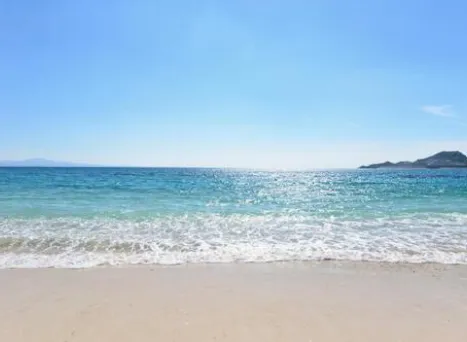
There are many beaches scattered across Okinawa Prefecture.
Surrounded by beautiful emerald-green sea, they captivate everyone who visits. July
and August are the best months for enjoying a beach resort.
During this period, short squalls typical of the subtropics may occur, but sheltering from the rain solves the problem.
Even in the coldest part of winter, temperatures in Okinawa rarely drop below 10°C, and the sea temperature almost never falls below 20°C throughout the year, so you can enjoy the sea for a long period.
The swimming season opens earlier than on the mainland, many beaches open in March and April, and you can swim until October.
From late March into April, the sea temperature is 21 to 24°C, and depending on the weather it may feel a little chilly, so we recommend wearing a wetsuit.
Snorkeling and diving in Okinawa's sea
Snorkeling and diving in Okinawa's sea is a precious experience that lets you get close to beautiful coral and colorful fish.
Okinawa's sea keeps a water temperature of 20°C or higher throughout the year, so you can enjoy snorkeling and diving in any season.
However, in winter the outside air temperature drops, making conditions a little harsh for snorkeling and diving.
Even when wearing a wetsuit, the most comfortable time to enjoy it is between April and November.
Injuries from dangerous marine creatures
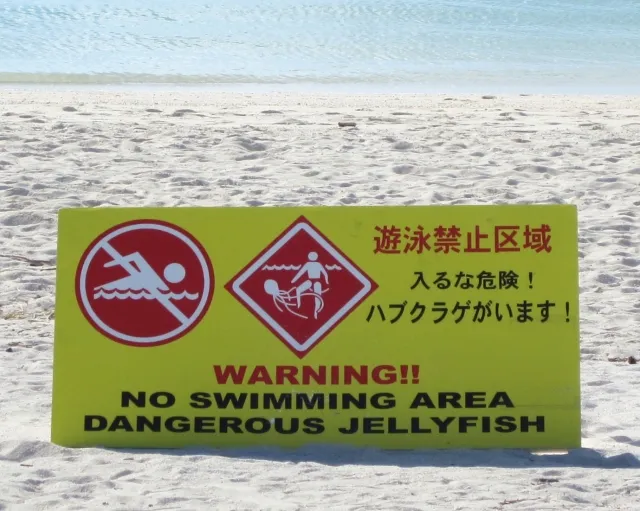
There are many dangerous creatures in the sea besides jellyfish, and injuries from them number 300 to 400 every year.
In particular, injuries are concentrated in the summer months of July and August.
This is data on the number of stings and bites from dangerous marine creatures reported in Okinawa Prefecture in 2022, broken down by sex and age.
| Sex | 10 and under | Teens | 20s | 30s | 40s | 50s | 60 and over | Total |
| Male | 11 | 9 | 9 | 10 | 8 | 5 | 3 | 55 |
| Female | 12 | 8 | 16 | 8 | 4 | 2 | 0 | 50 |
| Total | 23 | 17 | 25 | 18 | 12 | 7 | 3 | 105 |
Created by the author based on the number of stings and bites from dangerous marine creatures reported in Okinawa Prefecture, from the Okinawa Prefectural Institute of Health and Environment's "Epidemiological Survey of Injuries from Dangerous Marine Creatures in Okinawa Prefecture in 2022"
Injuries from dangerous marine creatures reported in Okinawa Prefecture do not occur evenly across sex and age groups.
By age, you can see that many injuries are concentrated among children aged 10 and under, teenagers and adults in their 20s.
Injuries among teens and people in their 20s stand out in particular, and this may be influenced by the fact that these age groups have many opportunities to go out to sea and by a lack of awareness of dangerous marine creatures.
Injuries are relatively few among people aged 60 and over, but caution is still needed.
In summer, when swimming and leisure activities increase, vigilance toward dangerous marine creatures is important for every age group.
Other Okinawan creatures to watch out for besides Habu box jellyfish
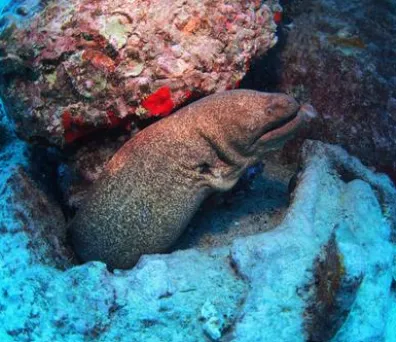
In Okinawa's beautiful sea there are many dangerous marine creatures besides the Habu box jellyfish.
These creatures can look attractive and are sometimes hard to notice while enjoying leisure in the sea, but touching them can cause serious injury and health problems.
Carelessness can lead to a serious accident, so when you enjoy the sea in Okinawa, stay fully alert to dangerous creatures there.
Unbai sea anemone
The Unbai sea anemone is about 10 to 20 centimeters in diameter and attaches to rocks, dead coral, gravel and the like with its pedal disc. Because it looks like seaweed, it is easy to overlook.
The surface of this sea anemone has stinging-cell balls packed with stinging cells, and touching it can cause intense pain.
Injuries are especially likely to occur while gathering shellfish at low tide or snorkeling.
Being stung can also cause internal conditions such as acute kidney failure, so be sure to be examined at a medical facility.
If you are stung, it is recommended to rinse off the stinging-cell balls with seawater and cool the area with ice or cold water.
Also, do not use vinegar. Pouring on vinegar may cause even more stinging cells to fire.
Blue-ringed octopus
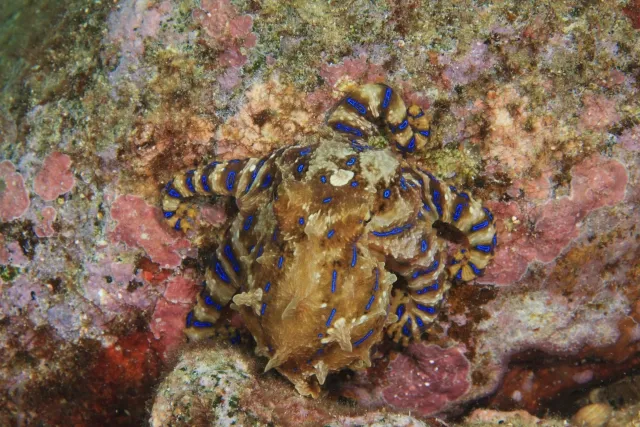
The blue-ringed octopus is a small octopus about 12 centimeters long, characterized by vivid blue spots.
This pattern changes color, so it looks very beautiful.
It lives in rock holes and under stones on coral reefs, and it is highly venomous and cannot be eaten.
If you are bitten, sucking the venom out with your mouth is dangerous (swallowing it can be life-threatening).
It is important to squeeze the venom out and take the person to a hospital immediately.
This octopus can be inconspicuous at ordinary times, but when threatened or agitated, vivid cobalt-blue ring patterns appear.
If it bites with the mouth at the base of its arms, a fatal venom may be injected.
This venom is tetrodotoxin, which is also known from pufferfish and the like. If you are bitten, respond quickly without sucking the venom out with your mouth, and it is important not to run, to avoid spreading the venom.
Reef stonefish
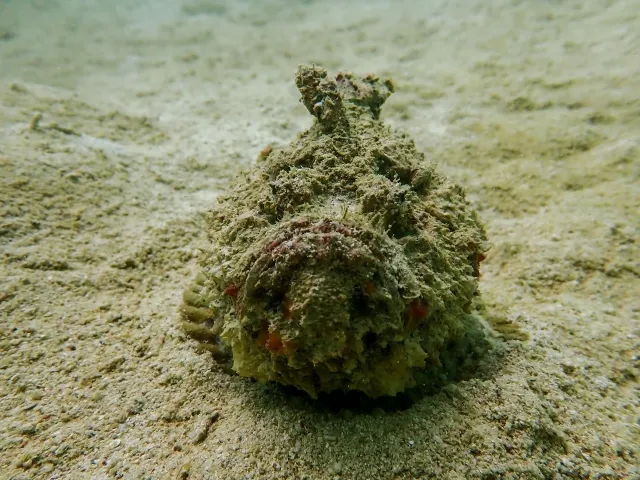
The reef stonefish lives on shallow coral reefs south of Amami Oshima.
It looks very much like the surrounding rocks, so when it sits still on the seabed it is impossible to tell apart, and people often step on it by mistake.
The dorsal fin has strong venom, and in the worst case it can even cause death.
If you are stung, remove any large visible spines and warm the affected area with hot water of about 40 to 45°C.
Putting hot water in a plastic bag and applying it to the affected area is also effective.
Crown-of-thorns starfish
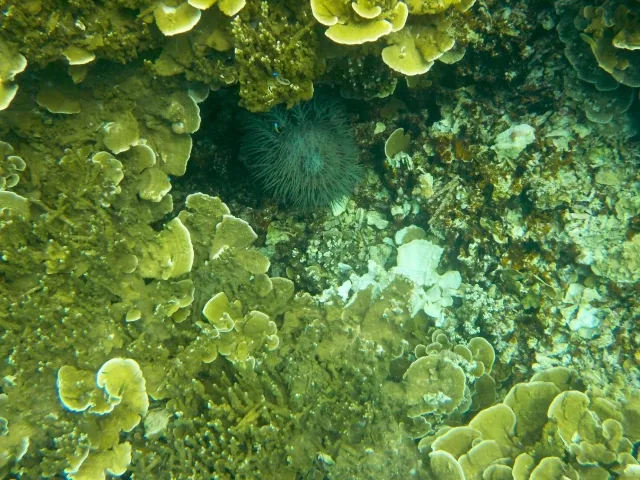
The crown-of-thorns starfish is about 30 centimeters in diameter and has 10 to 17 sharp, venomous spines.
During the day it may hide under table corals and the like, so take care not to reach in carelessly.
If you are stung, remove any large visible spines and soak the affected area in hot water of about 40 to 45°C.
Putting hot water in a plastic bag and applying it to the affected area is also effective.
In Okinawa Prefecture's coral reefs, there have been past outbreaks of crown-of-thorns starfish that fed on the coral and caused major damage.
At the end of 2001 (Heisei 13), another large outbreak was confirmed around Okinawa Island and the Kerama Islands. Okinawa Prefecture, related agencies, volunteers and others have since cooperated in extermination efforts, but because a second generation has appeared, the situation continues today.
Furthermore, a survey in fiscal 2004 (Heisei 16) found that it had also spread to the Miyako Islands and Kume Island.
Striped eel catfish
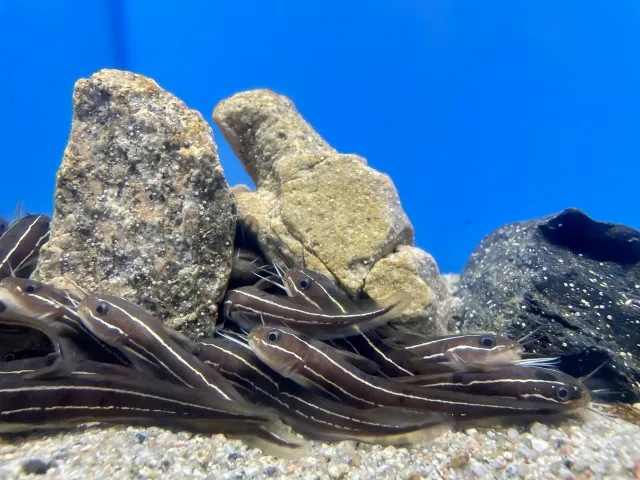
The striped eel catfish (gonzui) is a fish belonging to the order Siluriformes, with strong venomous spines on its dorsal and pectoral fins.
In the juvenile stage, they form schools called "gonzui balls."
If you are stung, remove any large visible spines and soak the affected area in hot water of about 40 to 45°C, which is effective.
Putting hot water in a plastic bag and applying the bag to the affected area is another method.
Sea snakes
There are 8 species of sea snakes in the Ryukyu Islands, and they have powerful neurotoxins.
If you are bitten, your nerves may be paralyzed and you may become unable to move.
Sea snakes sometimes come close, but never touch them.
The fangs of sea snakes carry very strong venom, and its strength reaches several tens of times that of the habu.
If you are bitten by mistake, there is a life-threatening danger.
Symptoms after a bite include paralysis such as difficulty breathing and cardiopulmonary arrest, so first aid on the spot is almost impossible.
The most important thing is to take the person to a hospital quickly, without sucking the venom out with your mouth, and receive appropriate treatment.
Summary
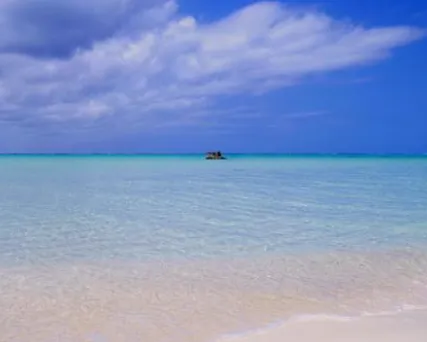
To enjoy Okinawa's sea, you need to be careful of marine life, starting with jellyfish.
According to an Okinawa Prefecture official, local Okinawans are well aware of Habu box jellyfish countermeasures, and injuries are decreasing.
However, among tourists visiting from outside the prefecture, there are reportedly still many cases of people entering the sea without taking precautions and being injured.
By gathering information beforehand and taking appropriate measures, you can enjoy swimming safely.
If you are stung by a jellyfish, stay calm, give first aid, and see a medical facility promptly.
To fully enjoy Okinawa's sea safely, keep the following points in mind.
Gather information beforehand: Collect information in advance about jellyfish occurrence and dangerous creatures.
Choose appropriate clothing: Choose clothing that reduces exposed skin, such as a wetsuit or rash guard.
Choose a beach with a jellyfish-prevention net: You can enjoy swimming more safely.
Stay alert to your surroundings: While swimming, always pay attention to your surroundings and do not go near jellyfish or other marine creatures.
Learn first aid methods: Learn first aid methods in case you are stung by a jellyfish.
To make your Okinawa trip a fun one, please use this information as a guide and enjoy swimming safely.