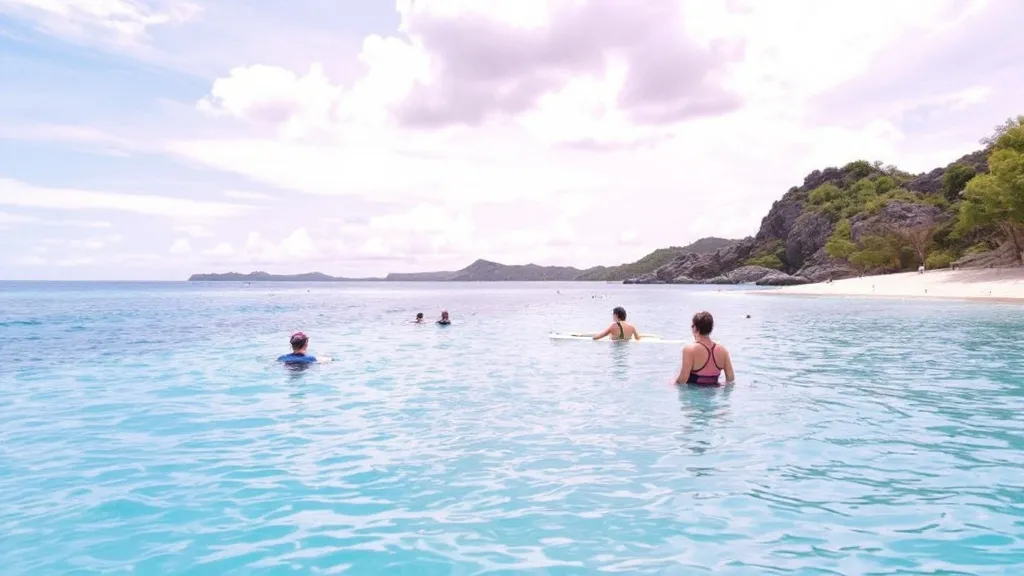
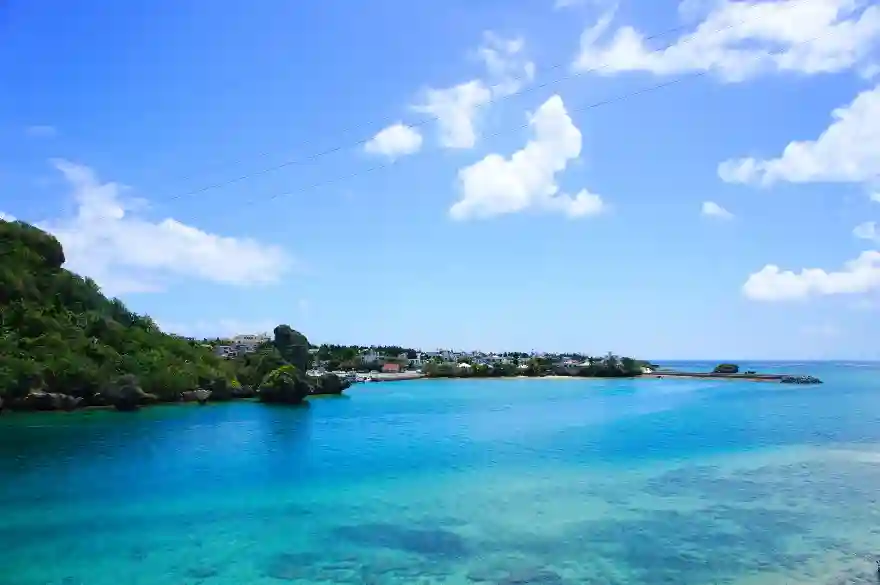
When you see the beautiful sea in Okinawa, you may have wondered, "Why is the water so blue?"
Let's answer that question.
This article gives a thorough explanation of "why the sea in Okinawa is so blue, and more."
Why does the sea in Okinawa look so blue?
The properties of light, the characteristics of the terrain, and efforts to protect the environment all play a part in the blue of Okinawa's sea.
This beautiful blue is no coincidence. It has a scientific basis.
The relationship between the wavelength of light and the color of the sea
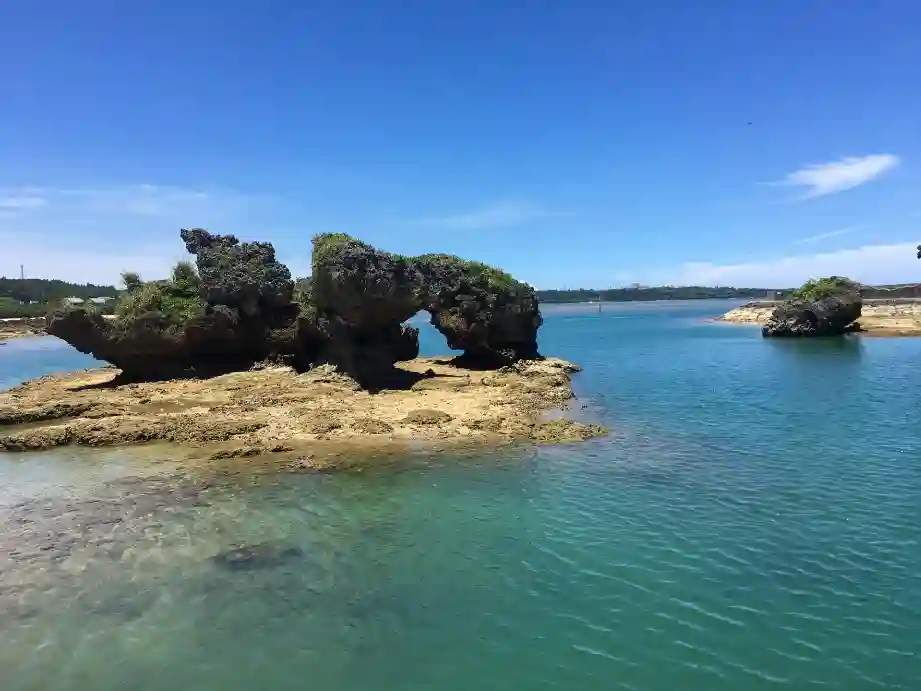
Sunlight is made up of different colors, each with its own wavelength.
When light enters water, blue light, which has a short wavelength, scatters easily and tends to reach our eyes.
Colors with long wavelengths, such as red and yellow, are absorbed in the water, so they are hard to see.
This phenomenon is the main reason the sea looks blue.
| Color of light | Wavelength | Behavior in water |
|---|---|---|
| Blue | Short | Scatters and easily reaches the eye |
| Red and yellow | Long | Absorbed and hard to see |
Okinawa's exceptional water clarity
The sea in Okinawa is known for being extremely clear compared with other regions.
This clarity is greatly influenced by coral reefs and sandy seabeds.
Coral reefs in particular play an important role in absorbing impurities in the water and keeping the environment clean.
As a result, light travels even farther, and the blue of the sea really stands out.
How Okinawa's terrain brings out the blue
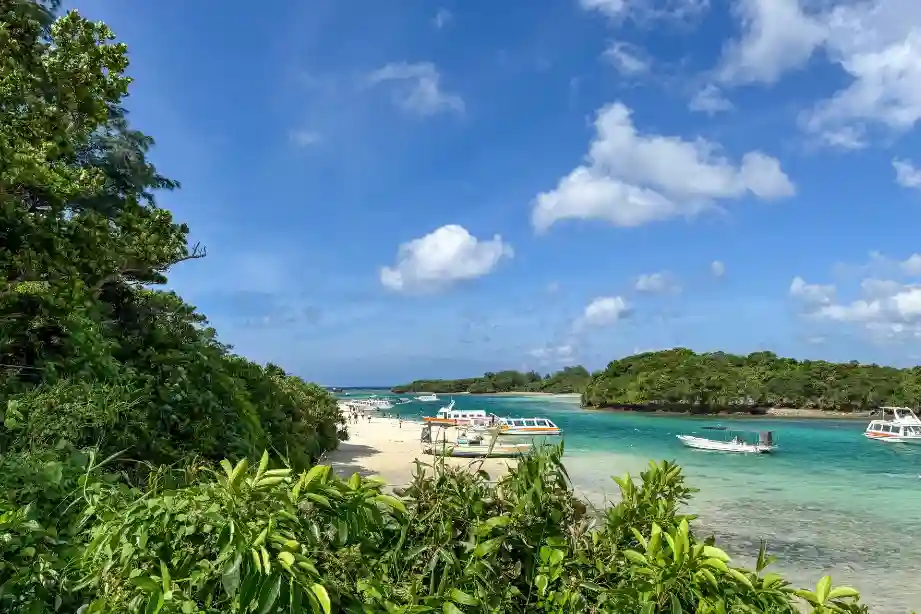
The terrain is another reason the sea in Okinawa looks so blue.
Sandy seabeds and shallows reflect sunlight and create a distinctive, vivid blue.
White sand creates a bright blue
In the shallows of Okinawa, there are many places where white sand stretches out. This sand reflects the light, which makes the blue of the sea feel even brighter. On sunny days in particular, sunlight shines straight down onto the water's surface, so the vividness is even more striking.
The Distinctive Colors Created by Coral Reefs
Abundant coral reefs spread across the waters around Okinawa.
Coral reefs not only remove impurities from the seabed and increase clarity, but also give the sea its own distinctive colors.
In waters where healthy coral lives, you can enjoy a wide range of colors, not only blue but also emerald green and turquoise blue.
| Terrain factor | Effect |
|---|---|
| White sand | Reflects light to emphasize a bright blue |
| Coral reefs | Increase clarity and create a variety of colors |
Changes brought by the seasons and weather
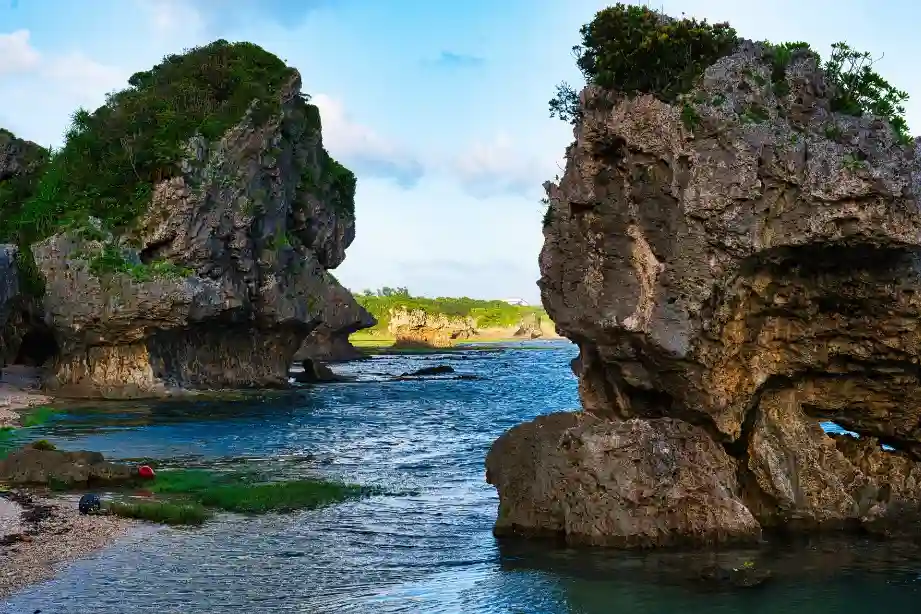
The color of the sea in Okinawa also changes with the season and the weather.
One of its charms is that the impression of the sea can be quite different depending on the conditions.
The difference between sunny and cloudy days
On sunny days, sunlight reaches the sea directly, so the blue is at its most striking.
On cloudy or rainy days, on the other hand, light reflects less, and the blue can feel a little more subdued.
The sea's expressions through the seasons
From spring to summer, the sea is very clear, and this is when the blue is at its most beautiful.
From autumn to winter, stronger winds stir up waves, and a characteristic depth is added to the blue of the sea.
| Weather and season | Characteristics of the sea's color |
|---|---|
| Sunny | Vivid blue |
| Cloudy or rainy | Calm tones |
| Spring to summer | Clear, bright blue |
| Autumn to winter | Deep, dark blue |
Okinawa's blue sea and its appeal for tourism
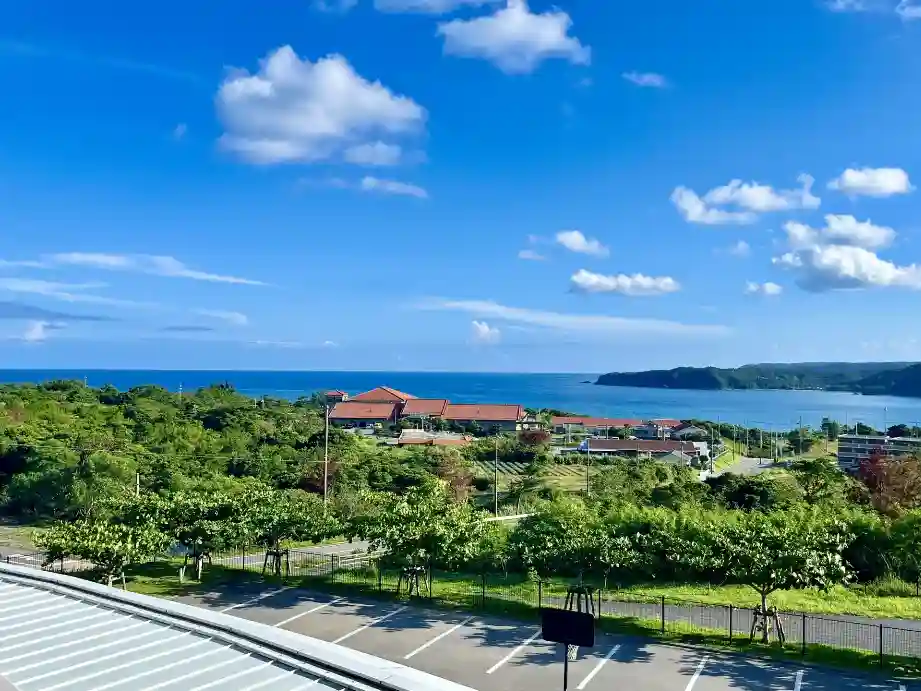
The sea in Okinawa is highly popular as a tourist destination, both in Japan and abroad.
Its beautiful blue captivates visitors and is at the heart of many activities and travel experiences.
Popular tourist spots and the color of the sea
Okinawa has many tourist spots where you can enjoy the beautiful sea.
Each place has its own character, and you can enjoy a different blue depending on when you visit and where you look from.
The clear waters of Kouri Island
Kouri Island, known as the "Island of Love," is a beautiful spot where the blue sea contrasts with the white sandy beaches.
Taking in the sweeping view of the sea as you cross the bridge is an experience unique to Okinawa.
Kerama Blue in the Kerama Islands
The Kerama Islands, known worldwide as a diving destination, let you savor the vivid blue called "Kerama Blue."
In these highly transparent waters, you can also hope to encounter tropical fish and sea turtles.
| Tourist spot | Characteristics | Recommended activities |
|---|---|---|
| Kouri Island | Clear blue visible from the bridge | Driving, snorkeling |
| Kerama Islands | A world-famous diving destination | Diving, snorkeling |
Travel experiences linked to the sea
In Okinawa, you can do more than simply enjoy the sea. A wide range of travel experiences make the most of its blue.
For example, with snorkeling or diving, you can observe coral reefs and tropical fish up close.
Staying at a resort hotel with the sea as a backdrop is also popular.
The spread of ecotourism
Okinawa's tourism industry is promoting ecotourism that protects the natural environment.
There are also more and more programs that give visitors a chance to learn about the marine environment.
Coral planting experiences and environmental tours led by local guides are examples.
Efforts to protect Okinawa's sea
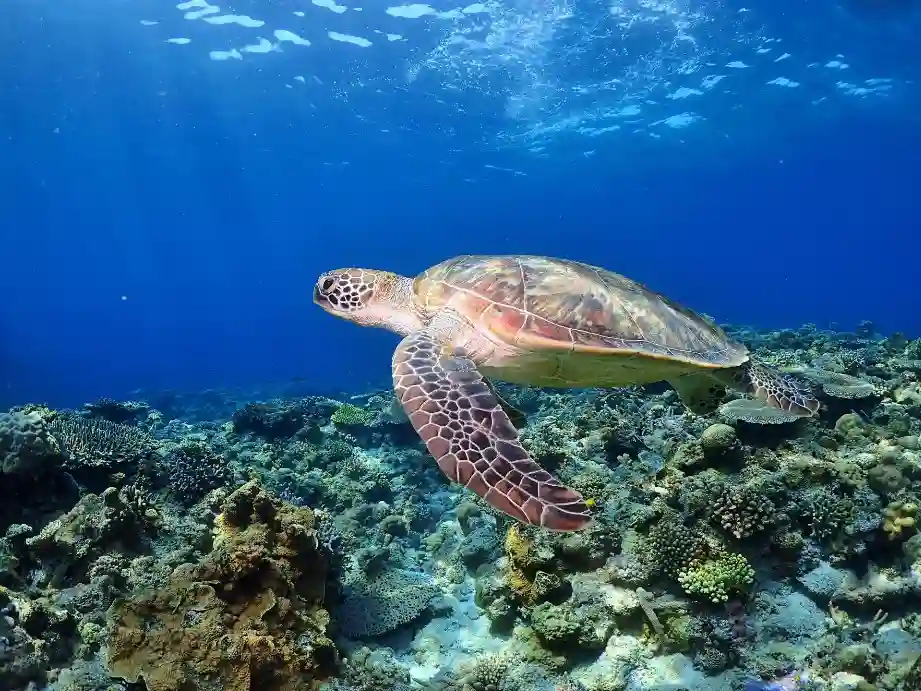
Environmental conservation is essential if we want to keep Okinawa's blue sea for the future.
Various efforts are underway in the region, and there are a growing number of activities that visitors can take part in.
Efforts to protect coral reefs
Okinawa's coral reefs play an important part in sustaining its blue sea.
In recent years, however, coral bleaching has been advancing because of climate change and human activity.
In response, coral planting projects are being carried out, and rules for protecting the environment while diving are being promoted.
| Effort | Details |
|---|---|
| Coral planting projects | Transplanting artificially grown coral into the sea |
| Promoting environmental protection rules | Preventing contact with coral while diving |
Responding to marine plastic pollution
The problem of marine plastic is also affecting Okinawa's beautiful sea.
Locally, beach cleanup activities and campaigns to reduce waste are carried out.
Tourism businesses are also working to reduce single-use plastic and recommending locally made recycled products.
The message Okinawa's sea sends to the future
Okinawa's blue sea is not only beautiful. You could also call it a textbook for learning how important it is to protect the environment.
To preserve this beauty for the future, it is important for individuals and communities to take action.
Education for the next generation
In Okinawa, environmental education for local children and visitors is thriving.
For example, workshops on topics such as growing coral and the problem of marine debris are held, giving participants a chance to feel how important the sea is.
Okinawa's sea and its cultural role
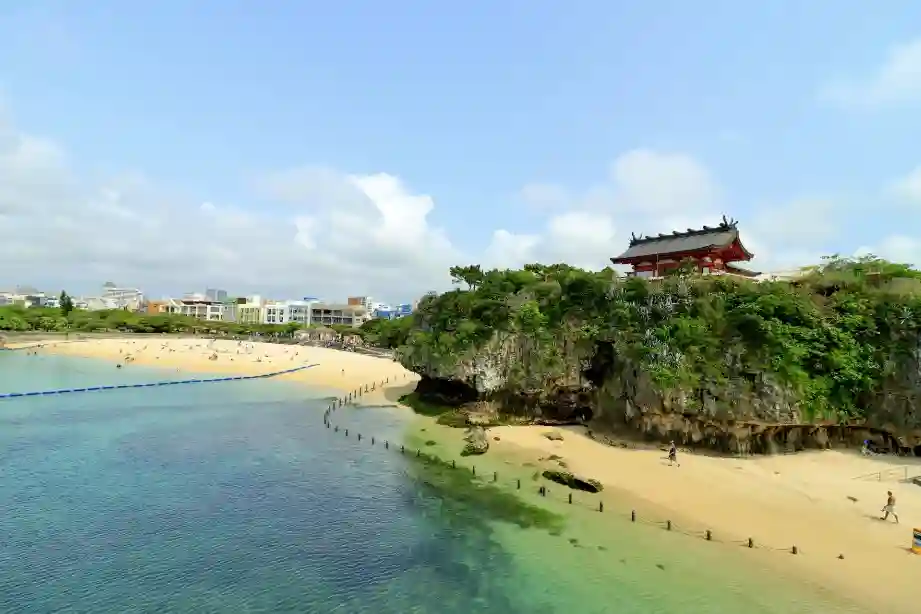
The sea in Okinawa is deeply rooted in local culture.
The blue sea has not only provided a livelihood but also played an important role as a source of spiritual support and a cultural symbol.
Myths and legends about the sea
Okinawan culture preserves many myths and legends about the sea.
A representative example is the concept of "Niraikanai."
This is an ideal land said to lie far beyond the sea, and it is regarded as the source of abundance and happiness.
Prayers are sometimes offered for success in fishing and farming as blessings from Niraikanai.
Traditional events and the sea
In Okinawa, there are many traditional events connected with the sea.
One example is a festival called "Haari." It is a dragon boat race held to pray for a good catch, and it is known for its dynamic scenery set against the blue sea.
In a ritual called "Unkei," held on the shore, there is a deep-rooted belief that the spirits of ancestors are welcomed by way of the sea.
| Event | Purpose | Characteristics |
|---|---|---|
| Haari | Praying for a good catch and strengthening community unity | Dragon boat races on the sea |
| Unkei | A ritual to welcome the spirits of ancestors | Traditional prayers on the shore |
Okinawa's sea and the local economy
The blue sea is an important resource for Okinawa's local economy.
It has a major impact not only on tourism but also on fishing and specialty products.
The impact on tourism
Okinawa's tourism industry is centered on the sea.
In addition to resort hotels and marine activities, tourist spots set against the blue sea draw visitors from Japan and overseas.
Ecotourism that makes use of local culture and the natural environment is also growing.
| Tourism element | Impact |
|---|---|
| Resort hotels | Offer a luxurious stay with views of the sea |
| Marine activities | Snorkeling and diving are popular |
| Ecotourism | Promotes sustainable tourism that lets you experience nature and culture |
Fishing and specialty products
Seafood and seaweed raised in Okinawa's blue sea are shipped nationwide as local specialties.
Seafood such as mozuku seaweed and sea grapes in particular only grows in clean water, so they symbolize the value of Okinawa's sea.
These specialties are also popular with visitors, and they play an important role as souvenirs.
Okinawa's sea and its seasonal charms
Another charm of the sea in Okinawa is that it shows a different face in each season.
Knowing how to enjoy each season can make your visit even richer.
High clarity from spring to summer
From spring to summer, the sea in Okinawa shines at its brightest.
There are many sunny days during this period, and the water stays highly clear.
It is the best season for snorkeling and diving, and the perfect time to enjoy the coral and tropical fish underwater.
| Spring to summer | How to enjoy it |
|---|---|
| High water clarity | Snorkeling, diving |
| Strong sunshine | Relax on the beach while protecting yourself from the sun |
Deep blue from autumn to winter
From autumn to winter, the sea in Okinawa is characterized by a deep, dark blue.
As temperatures drop, fewer tourists visit, and you can enjoy a quiet, calm atmosphere.
This is a good time to gaze at the sea at your own pace and take a stroll while feeling the sea breeze.
| Autumn to winter | How to enjoy it |
|---|---|
| A sea with calm tones | Refresh in a quiet environment |
| Fewer tourists | Strolls and scenery photography along the peaceful shore |
Thinking about the future of Okinawa's sea
To keep Okinawa's blue sea for the future, we each need to take action.
There are challenges that visitors, local residents and the international community should work on together.
Realizing sustainable tourism
In Okinawa, where tourism thrives, promoting tourism while keeping the burden on the environment low is a challenge.
Tourism businesses need to offer plans that consider environmental protection, and visitors themselves also need to take care not to harm nature.
Taking part in environmental protection
Issues such as marine plastic pollution and coral bleaching are themes that the whole world, not just the local community, should address.
Small everyday actions, such as joining a beach cleanup or choosing eco-friendly products, can become a great force for protecting the blue sea.
Okinawa's sea and education
The sea in Okinawa is used as a place of learning for everyone from children to adults.
Learning the importance of environmental protection and the greatness of nature through the blue sea is a valuable experience for the generation that will carry the future.
Environmental education in the community
Schools in Okinawa include classes on the marine environment.
In addition to programs that teach the importance of coral reefs and the effects of marine debris, efforts are under way to deepen understanding through hands-on activities in the sea.
- Coral planting activities : Children learn the importance of coral reefs by growing and planting artificial coral.
- Beach cleanup activities : Children pick up trash on local beaches to raise awareness of the marine plastic problem.
| Educational activity | Purpose |
|---|---|
| Coral planting activities | Maintaining the ecosystem and fostering awareness of protection |
| Beach cleanup activities | Raising interest in marine pollution |
Awareness programs for visitors
There are also a growing number of programs for visitors to learn about the sea in Okinawa.
On snorkeling tours, guides explain how to protect coral reefs and be considerate of the environment, so visitors can learn as well as have fun.
The region's outlook for carrying Okinawa's sea into the future
To keep protecting Okinawa's sea, the whole community needs to work together and aim for sustainable development.
This calls not only for expanding tourism but also for balancing nature conservation with the local economy.
Integrating local industry and environmental conservation
In Okinawa, local industries are increasingly working together with environmental conservation.
In fishing, for example, eco-friendly fishing methods are being adopted, aiming to use fishery resources sustainably while protecting the coral reefs.
In the tourism industry, tours that make use of local specialty products are offered, helping to revitalize the local economy.
| Effort | Example |
|---|---|
| Eco-friendly fishing methods | Using fishing gear that does not damage coral reefs |
| Tourism that makes use of local specialty products | Cooking experience tours themed on local seafood |
Conservation activities that use technology
The latest technology is also being put to use in marine conservation in Okinawa.
Coral reefs are monitored with drones and underwater robots, and effective conservation plans are drawn up based on the data.
Efforts have also begun to use AI technology to make the collection of marine debris more efficient.
What visitors should keep in mind when enjoying Okinawa's sea
Visitors to the sea in Okinawa are asked not only to enjoy themselves but also to be considerate of the environment.
It is no exaggeration to say that each visitor's actions can shape the future of the sea.
Follow the etiquette and rules
In Okinawa, the etiquette and rules that visitors should follow are posted in guidebooks and at tourist spots.
For example, visitors are asked to do the following.
- Do not touch coral directly
- Take your trash with you
- Be considerate of the environment during marine activities
By keeping these in mind, you can minimize the impact that tourism has on the sea.
Respect local culture
For local people, the sea in Okinawa is part of daily life and also a source of spiritual support.
That is why it is important to respect the local culture and traditions.
When visiting traditional events or sacred places, you are expected to follow local rules and behave with humility.
What Okinawa's sea teaches us

Through its blue and its beauty, the sea in Okinawa teaches us many things.
It is a place where we can feel anew the wonder of nature and the importance of protecting the environment, and it is also a chance to think about the future.
The power of nature and the need to live in harmony with it
Looking at the sea in Okinawa, you sense both the greatness of nature and its delicacy.
To protect this blue, we humans need to choose a path of living in harmony with nature.
Living in an eco-friendly way is the first step toward leaving the blue sea for the next generation.
Cooperation between the region and the world
Okinawa's efforts do not stop at the local level. They offer lessons for global environmental issues.
We must not forget that this blue sea is an asset we all share, and that it should be protected on a global scale.
The role Okinawa's sea plays in the global environment
Okinawa's blue sea plays an important role not only locally but also for the environment of the whole planet.
Its value is immeasurable, especially in maintaining marine ecosystems and easing climate change.
Absorbing carbon dioxide and its effect on climate change
The ocean is a major absorber of carbon dioxide on Earth, and the sea around Okinawa is no exception.
Coral reefs and seaweeds absorb carbon dioxide and supply oxygen, helping to keep the global climate in balance.
Coral reefs in particular have the ability to fix carbon, and they are sometimes called "forests of the sea."
If this role is lost, global warming will accelerate, so protecting them is becoming ever more important.
| Element | Role |
|---|---|
| Coral reefs | Absorb carbon dioxide and supply oxygen |
| Seaweeds | Regulate the carbon cycle in the water |
A habitat for marine life
The sea in Okinawa is an important environment where a great variety of living things make their home.
It is home to fish, crustaceans, sea turtles and more, and the whole marine ecosystem is sustained when these creatures thrive. In addition, endangered species have been confirmed in the waters around Okinawa, and protecting them is drawing international attention.
Challenges facing Okinawa's sea
To protect Okinawa's blue sea, several challenges need to be solved.
We need to think about how to respond to problems such as climate change, the expansion of tourism and environmental destruction.
Climate change and coral bleaching
Rising sea temperatures caused by climate change are seriously affecting Okinawa's coral reefs.
When high water temperatures continue, coral loses the algae that live inside it in symbiosis, and bleaching occurs.
As bleaching progresses, coral reefs die, with a negative effect on the whole marine ecosystem.
| Challenge | Impact |
|---|---|
| Rising sea temperatures | Coral bleaching and the collapse of ecosystems |
| Climate change | Loss of biodiversity and a worsening environmental balance |
Environmental burden from the expansion of tourism
The development of tourism brings great benefits to the local economy, but it can also increase the burden on the environment.
In particular, as the number of visitors grows, so does the amount of waste, and cases of damage to coral reefs and sandy beaches have been reported.
To deal with this problem, tourism businesses and local residents need to work together on sustainable initiatives.
International cooperation to preserve Okinawa's sea for the future
To protect Okinawa's sea, international cooperation is important as well as efforts at the local level.
For problems shared around the world, the messages and efforts that Okinawa sends out carry great significance.
International marine protection projects
Okinawa also actively takes part in international marine protection projects.
For example, activities are under way based on Goal 14, "Life Below Water," of the United Nations' Sustainable Development Goals (SDGs), which aims to protect marine resources.
In this project, restoring coral reefs and reducing marine plastic are important themes.
Sending messages to visitors from around the world
Many visitors come from overseas, so it is necessary to raise awareness of environmental protection from an international perspective.
Okinawa's efforts are expanding, with awareness materials provided in multiple languages such as English and Chinese, and eco tours held for international visitors.
What Okinawa's blue sea teaches us
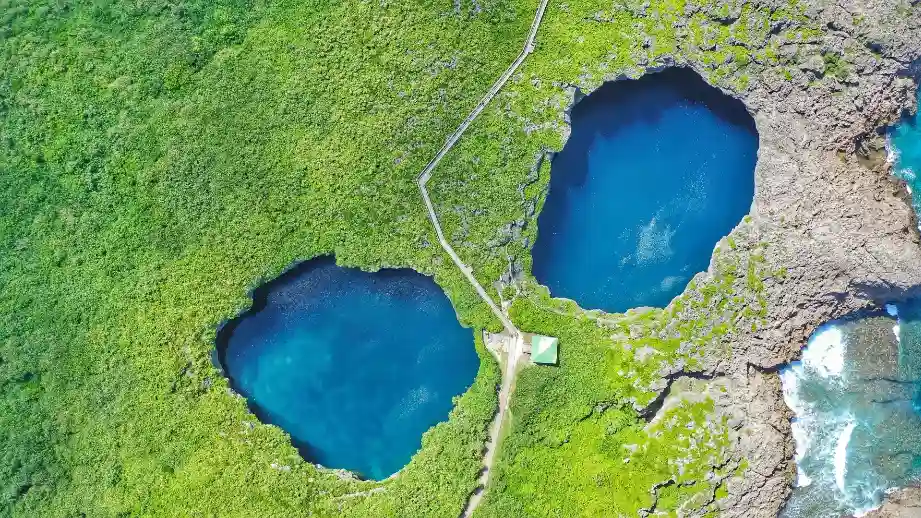
Through its blue and its beauty, the sea in Okinawa teaches us many things.
It is a place where we can feel the importance of nature and of protecting the environment, and at the same time it gives us a chance to think about actions with the future in mind.
What it means to protect the environment
That Okinawa's sea stays blue and beautiful is not merely a matter of scenery.
It is directly tied to biodiversity and the environmental balance of the whole planet, and it affects our own lives too.
Knowing this is what drives us to take action.
Aiming to live in harmony with nature
Looking at Okinawa's blue sea, you feel how important it is to live in harmony with nature. To make this possible, it is important to stay aware of nature in daily life and build up small actions. For example, reducing plastic waste or joining an eco tour can be a step toward protecting the blue sea of the future.
Okinawa’s Sea and Local Communities
The sea in Okinawa also serves as a place that strengthens the bonds of the local community.
Let's look at how local people interact around the sea and build the future.
Connections between generations through the sea
In Okinawa, connections between generations are nurtured through fishing and a way of life by the sea.
Scenes such as grandparents teaching their grandchildren how to fish, or the whole community giving thanks for the sea's bounty at local festivals, are uniquely Okinawan.
Traditional events like Haari in particular are an important chance for young people to learn about the history and culture of their community.
| Activity | Impact on the local community |
|---|---|
| Teaching fishing | Younger generations learn traditional skills |
| Holding festivals and events | Bonds among residents deepen and exchange between generations becomes more active |
Environmental protection led by local residents
Okinawa's residents make everyday efforts to protect the beauty of the sea.
At local elementary and junior high schools, cleaning the shoreline is often included as part of class, giving children a chance to develop a sense of responsibility for the local natural environment.
In addition, in the "Beach Cleanup Project," led by local residents, many volunteers gather and the work of protecting Okinawa's beautiful sea continues.
Art and expression inspired by Okinawa's sea
Okinawa's blue sea has also had a great influence on art and cultural expression.
Let's explore how the sea in Okinawa is expressed in a wide range of fields, such as photography, painting and music.
The blue depicted in photographs and paintings
Photographs and paintings of Okinawa's sea are a way of conveying its beauty for all time.
Not only professional photographers but also visitors share their photos widely on social media, spreading the appeal of Okinawa around the world.
Among paintings, many works make use of the contrast between blue and white, and those that express the vastness and sparkle of the sea are especially popular.
The sea as a motif in music and literature
There are many songs in Okinawan music that take the sea as their theme.
Not only traditional music such as "shima uta" (island songs) but also pop songs and ballads depict the blue of the sea and the lives of the people who live there.
In novels and poems set in Okinawa, the blue sea is often portrayed as a symbol of the characters' emotions and of the story.
| Field | Relationship with Okinawa's sea |
|---|---|
| Photography and painting | Share its visual beauty with the world |
| Music | Songs that reflect daily life and culture |
| Literature | Used as a setting for stories and a symbol of emotion |
Okinawa's sea and advances in marine science
The sea in Okinawa is also an important subject of research in marine science.
Because of its high clarity and diverse ecosystems, many scientists conduct surveys in Okinawa, and new discoveries are being made.
The front line of coral reef research
Okinawa's coral reefs are among the northernmost in the world, and they are considered an important field site for studying the effects of climate change.
In recent years, research on coral bleaching and changes in sea temperature has advanced, and valuable data is being collected to understand the effects of global warming.
Sustainable use of marine resources
The sea in Okinawa is attracting attention not only as a fishing and tourism resource but also for the development of new ocean energy.
The potential of renewable energy such as wave power and tidal current power is being studied, and it is expected to help solve energy problems on a global scale.
| Research field | Results and expected benefits |
|---|---|
| Coral reef research | Clarifying the effects of climate change and drawing up protection measures |
| Ocean energy development | Realizing a sustainable energy supply |
Summary
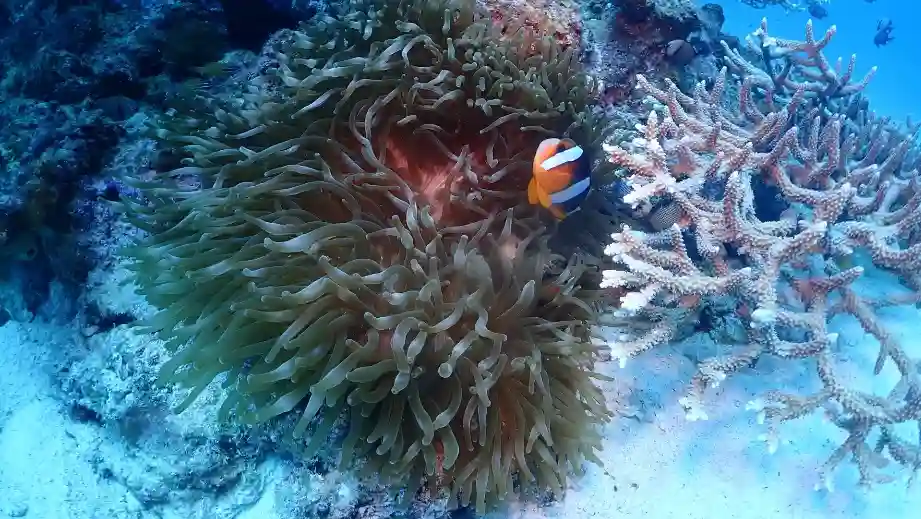
Okinawa's sea is not only a place of natural beauty and scientific value. It is also a symbol of hope for the future.
To hand this blue sea on to the next generation, it is important to think about what we can do now.
One thing each of us can do is to bring consideration for the environment into our daily lives.
By working to reduce single-use plastic and use renewable energy, we can have a positive effect on the global environment as a whole, including the sea around Okinawa.
It is also necessary to tell the children who will carry the future about the value and importance of Okinawa's sea.
By sharing responsibility for protecting the marine environment through school education and community activities, we can leave the blue sea for the future.