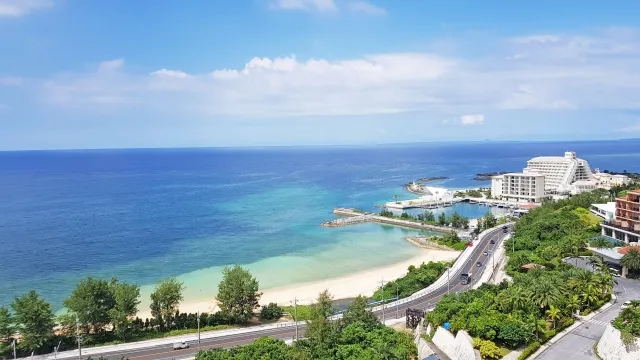
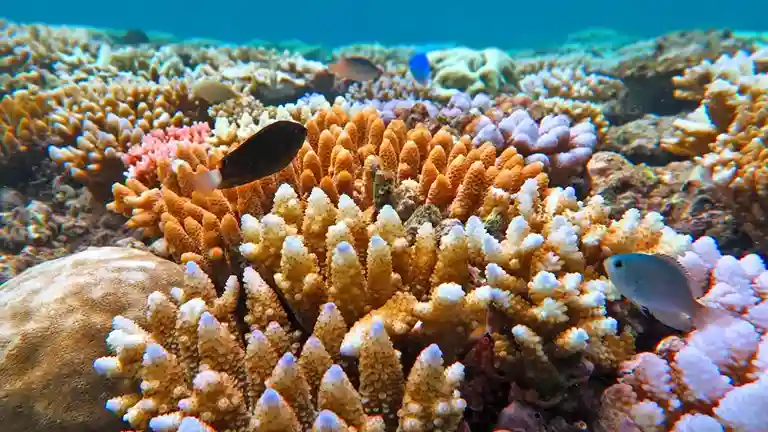
Okinawa's coral reefs, together with its clear blue waters, captivate divers and tourists from all over the world.
But did you know that these beautiful coral reefs are now facing a major crisis?
Due to "bleaching" caused by global warming and ocean pollution, it has been reported that more than 90% of the corals in the shallows around the main island of Okinawa have turned white.
If things continue like this, these precious coral reefs may disappear.
In this article, we take a detailed look at how important a role coral reefs play in our lives and in marine ecosystems, among other topics.
To protect Okinawa's corals and preserve their beauty for the future, why not take a first step with something you can do?
What is the coral bleaching that is becoming serious in Okinawa?
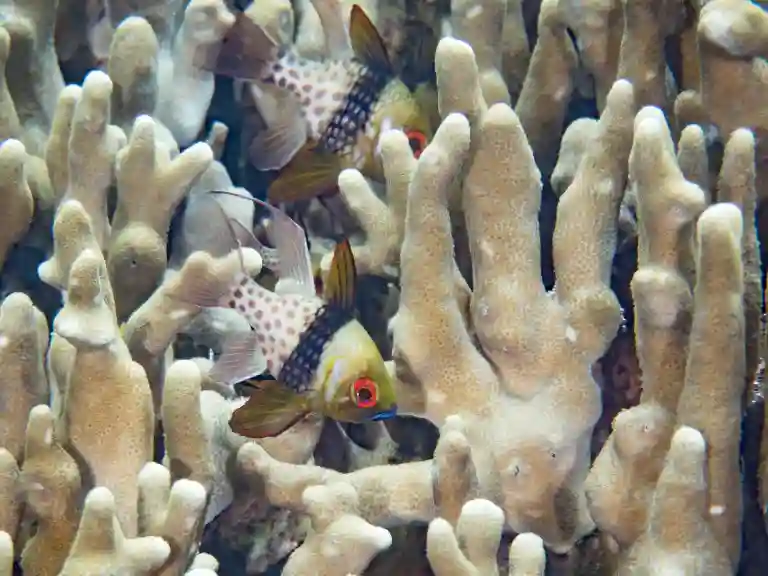
Okinawa's beautiful coral reefs are now facing a serious problem called "bleaching."
Bleaching refers to corals losing their color and turning white.
It happens when the algae that live in symbiosis with corals (zooxanthellae) leave the coral, and the coral loses the nutrients it needs to survive.
Here is a simple explanation of how bleaching works.
- When the seawater temperature rises, the algae release a lot of "reactive oxygen species"
- Reactive oxygen species are "harmful" to the coral, so the coral expels the algae
- As a result, the coral's "skeleton is exposed"
In Okinawa, this bleaching is occurring on a large scale, having a major impact on tourism resources and ecosystems.
More than 90% of the corals in the shallows around the main island of Okinawa are reported to be bleached
The situation is especially serious in the shallows around the main island of Okinawa, where more than 90% of the corals have reportedly bleached.
The shallows are an important area where many marine creatures live, but when the corals disappear, the balance of the whole ecosystem collapses and many creatures lose their habitat.
Coral bleaching in Okinawa is also a major loss for the local fishing and tourism industries.
The main cause of bleaching is rising seawater temperature
The main cause of bleaching is said to be rising seawater temperature.
Because of global warming, summers in recent years have been hotter than usual, and temperatures are said to have risen by about 1°C over 100 years.
And the seas around Okinawa are no exception.
When the water temperature goes above what suits the coral, the zooxanthellae are expelled from the coral's body and the coral bleaches.
In addition, the inflow of pollutants and the acidification of seawater also stress the coral and are considered to promote bleaching.
Bleached corals may still recover
Bleached corals do not die right away.
If the seawater temperature returns to normal and conditions improve, the zooxanthellae can begin living in symbiosis with the coral again, and the coral can recover.
However, if the bleaching lasts a long time, the coral weakens from lack of nutrients and its ability to recover declines.
Corals that have lost their ability to recover do not return to normal even when conditions improve, and simply die.
For this reason, as warming continues over the long term, it is quite possible that the situation will become irreversible.
The actual damage caused by coral bleaching in Okinawa
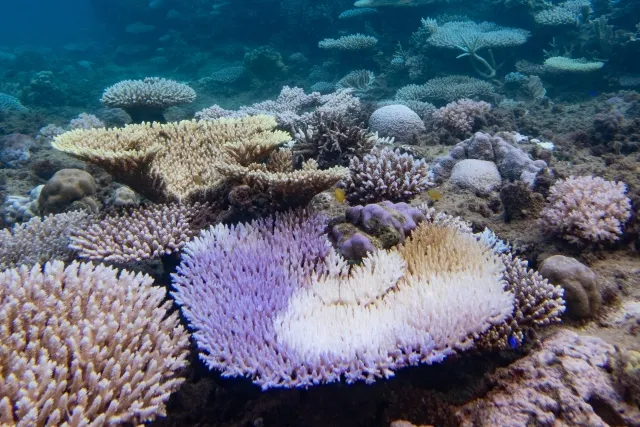
As Okinawa's coral reefs bleach, serious damage is occurring to tourism, fishing and the ecosystem as a whole.
In fact, the following kinds of damage are already happening in reality.
- Coral reefs are home to about 25% of marine life, and this is being seriously affected
- Their water-purifying function is declining, which is contributing to the deterioration of the marine environment
- In the Sekisei Lagoon, the economic value of fishing has reportedly dropped by about 100 million yen
Coral reefs are home to many marine creatures such as fish, shrimp and crabs, and the gathering of these creatures keeps Okinawa's sea a rich ecosystem.
When corals bleach and die off, these creatures lose their habitat and food, and as a result fishery resources decline as well.
Okinawa's coral reefs are also a major tourist attraction, and there is concern that the number of visitors who enjoy diving and snorkeling will decrease.
The appeal of Okinawa's coral reefs
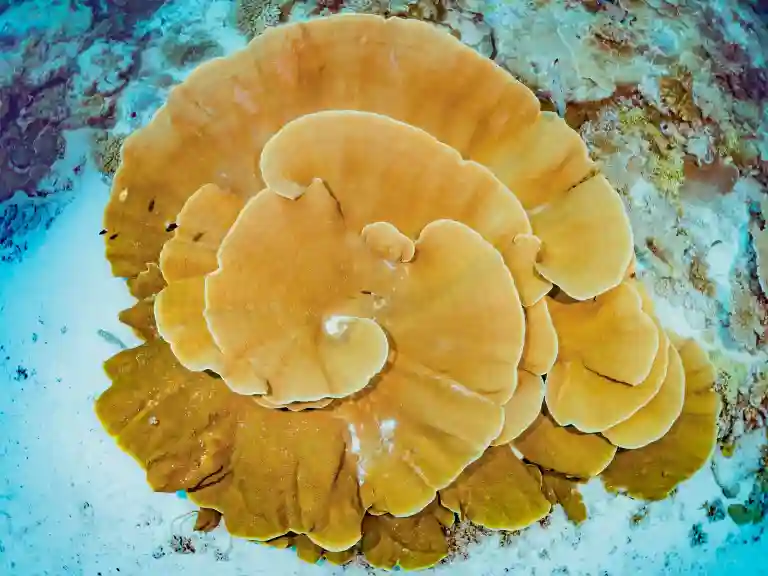
Okinawa's coral reefs, together with the clear blue sea, show a beauty like a tropical paradise.
Many tourists come to see these coral reefs and experience Okinawa's rich sea up close.
The colorful fish swimming among the corals and the corals' unique shapes are nature's mystery itself.
Okinawa's coral reefs are also a "home" for marine creatures and an important source of "food."
The appeal of these coral reefs lies not only in the beauty of the scenery but also in their power to support the ecosystem.
Okinawa's coral reefs have a beauty the world can be proud of
Okinawa's coral reefs, woven from colorful corals and highly transparent water, boast a beauty among the finest in the world.
They are praised not only within Japan but also by divers and nature lovers around the world.
This beautiful scenery is also called the "Galapagos of the East," and visitors keep coming to see the coral reefs.
The coral reefs of the "Yaeyama Islands" and the "Kerama Islands" in particular, with their rich colors and diverse forms, have one repeat visitor after another.
Okinawa's coral reefs nurture a diverse ecosystem
Okinawa's coral reefs are also known as the "forests of the sea" that nurture a diverse ecosystem.
A wide variety of creatures such as clownfish, shrimp and sea turtles live together on the reefs, each playing its own role in forming the ecosystem.
Coral reefs do not exist merely as beautiful scenery; they also serve as a food source and a sanctuary for many kinds of creatures.
For this reason, it is predicted that if the corals are lost, the surrounding creatures will lose their homes too, upsetting the balance of the entire marine ecosystem and having a major impact.
Okinawa's coral reefs are a precious resource
Okinawa's coral reefs are also a precious resource that is indispensable to tourism and fishing.
In terms of tourism, the beauty of the reefs attracts divers and tourists, while in terms of fishing, seafood such as fish and shellfish depends on the reefs.
Coral reefs are an important part of what supports Okinawa's regional economy and culture, and they are deeply rooted in daily life in Okinawa.
Corals also absorb carbon dioxide and help prevent ocean acidification, so their value from the standpoint of environmental protection is immeasurable.
Coral basics: learn about their biology and role
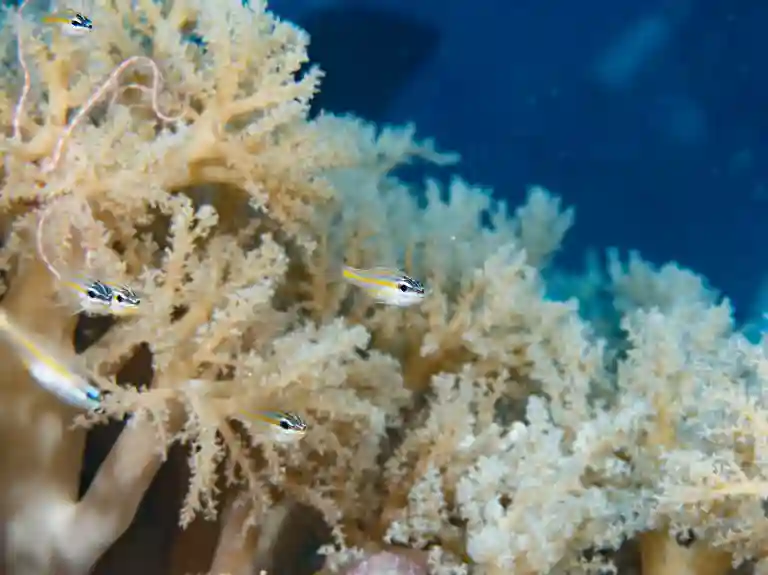
When we think of coral reefs, their colorful forms and gorgeous underwater landscapes come to mind, but the more you learn about corals, the more their mysterious world opens up.
Corals are not only beautiful to look at; they also play an important role in marine ecosystems.
Corals are not plants but "animals"
Corals may look like plants, but they are actually a kind of animal.
A coral is a "colony" made up of a gathering of small organisms called polyps, which together form a limestone skeleton and build coral reefs over a long span of years.
Each polyp has tentacles and catches plankton in the sea to take in nutrients.
Corals also live in symbiosis with algae called "zooxanthellae" inside their bodies, and grow by receiving the nutrients the zooxanthellae produce through photosynthesis.
Corals are animals, yet they are fascinating animals that live in partnership with plants.
How coral reefs form and grow
The formation of a coral reef is an extremely slow process.
Coral reefs form as polyps secrete limestone skeletons and these gradually pile up bit by bit.
Growth is very slow, only a few centimeters a year.
The large coral reefs we see today were built over hundreds to thousands of years.
Reefs formed in this way create large structures on the seafloor and become complex habitats where fish gather.
Coral reefs are the "home" of fish and other marine life
Coral reefs are so rich in biodiversity that they are also called the "forests of the sea."
Among the branches and crevices of the reef, small fish hide and shrimp and crabs make their homes, and many creatures live together.
For these creatures, the coral reef is both a "home" and a "source of food."
If coral reefs are lost, the creatures that depend on them will also lose their place to live, which will greatly affect the entire marine ecosystem.
In this way, coral reefs are not merely a scenic resource; they play a vitally important role as the foundation of marine ecosystems.
Types of coral in Okinawa and 7 representative corals
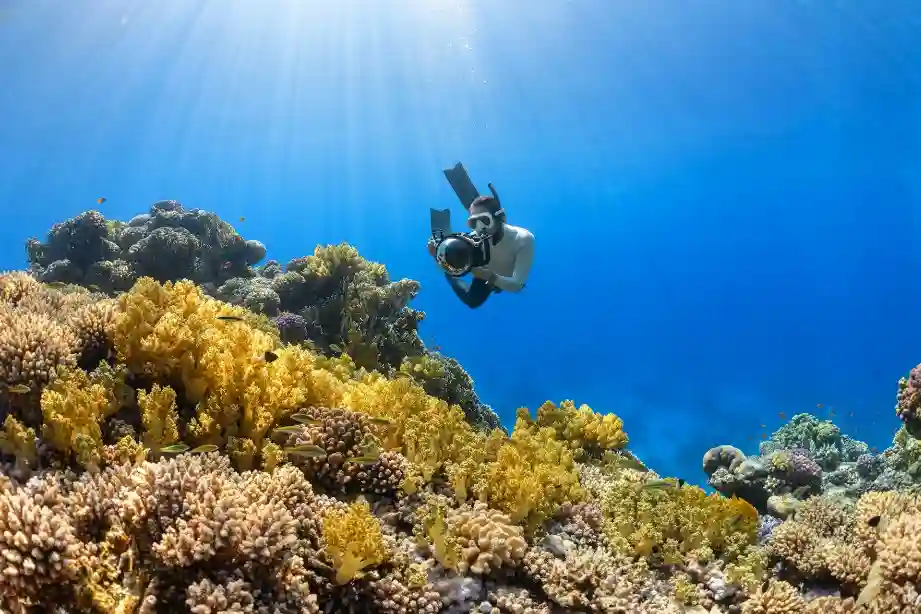
Okinawa's coral reefs are known for their rich ecosystems and beauty, and many species of coral live there.
Below, we explain in detail 7 types of coral that represent Okinawa.
1. Acropora (staghorn coral)
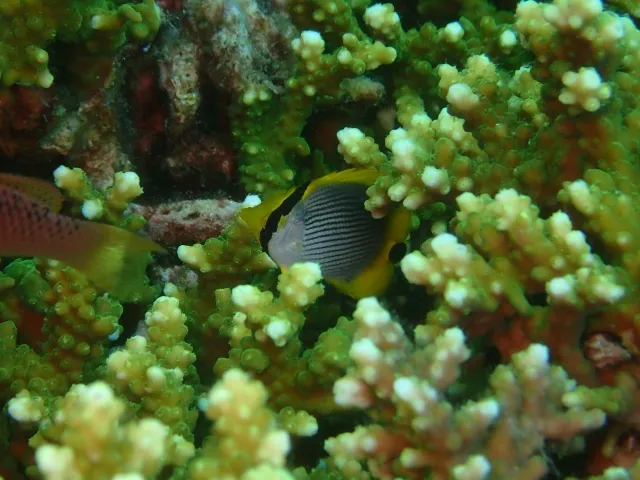
Acropora is one of the corals most commonly seen on Okinawa's coral reefs.
It belongs to the family Acroporidae in the order Scleractinia (stony corals) and forms sturdy limestone colonies.
Its colors are not only green but also blue, pink and more, and it is characterized by a high ability to adapt to its environment.
More than 130 species have been confirmed around Okinawa, and they play an important role in the reef ecosystem.
2. Galaxea coral
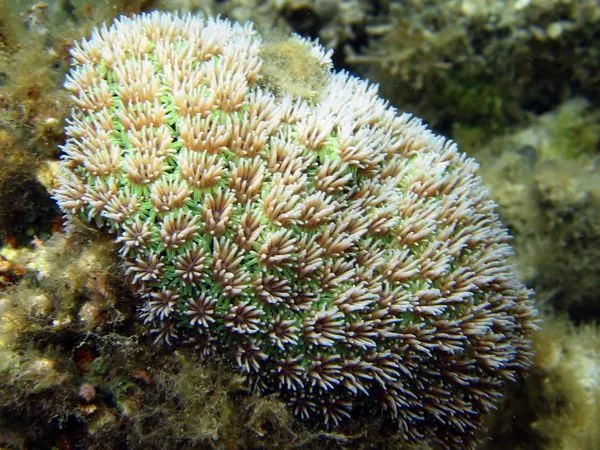
Galaxea coral belongs to the family Oculinidae in the order Scleractinia and forms massive colonies with cylindrical or trumpet-shaped branches.
Individual polyps about 8 mm in diameter gather to make a colony, and the coral is found mostly in calm inlets and similar places.
It is a translucent green, and at night it extends its polyps to feed on plankton.
3. Flowerpot coral
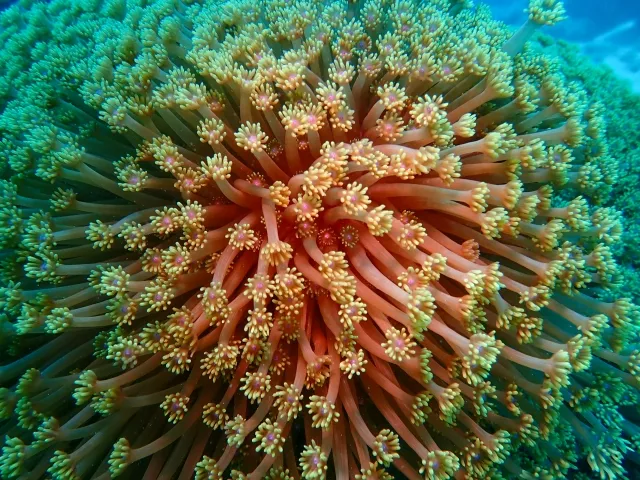
Flowerpot coral is a beautiful coral belonging to the family Poritidae.
It mainly has branching or table-like forms, and its colors are not only green but also colorful, including yellow and blue.
It is known for spawning on full-moon nights from July to August, and the sight is said to be truly mystical.
If you can go night diving, please be sure to go and see it.
4. Round mushroom coral
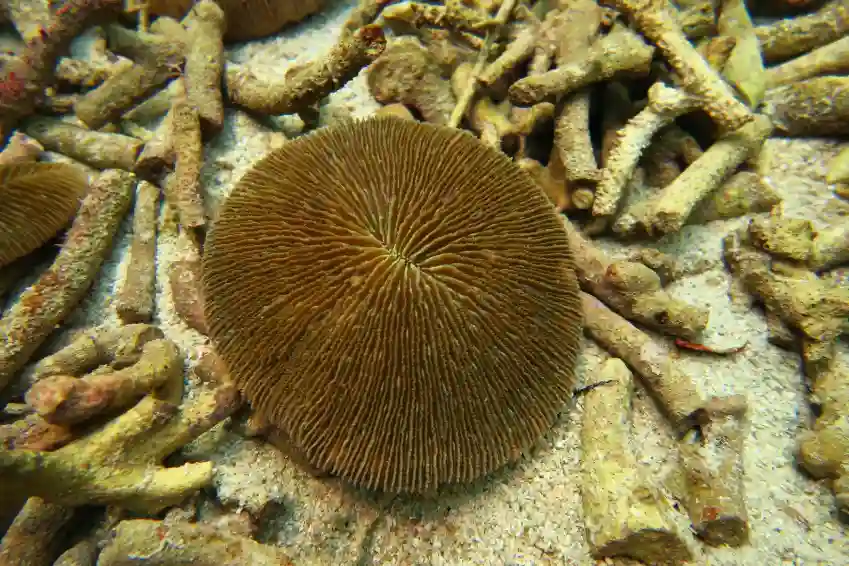
Round mushroom coral is shaped like a squashed ball and is characterized by its variety of colors and forms.
It lives on gentle reef slopes and sandy bottoms where the waves are weak, and as a solitary coral it does not attach to rocks.
It is very common in the Ryukyu Islands and plays an important role in Okinawa's marine ecosystem.
5. Favia coral
Favia coral mainly forms hemispherical or massive colonies, and its surface is densely covered with polyps shaped like chrysanthemum flowers.
It looks as if bare rock is exposed.
Its colors are generally yellowish brown or pale brown, but depending on the environment it can show a variety of hues.
It is often seen in Okinawa's shallow waters, especially at depths of 2 to 3 meters.
6. Porites (massive coral)
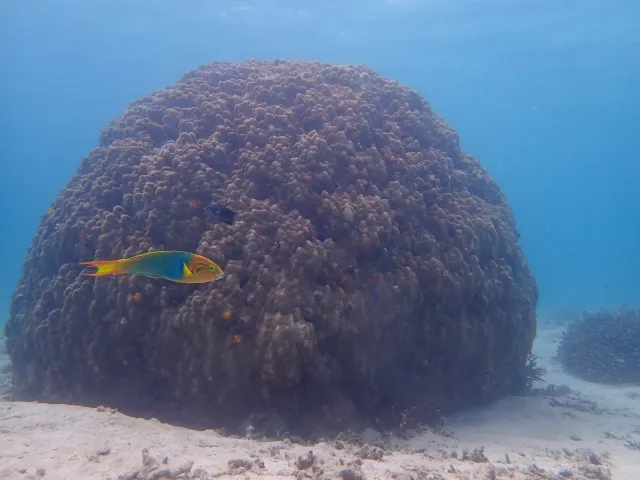
Porites lives on the edges and slopes of shallow coral reefs.
It comes in various colors such as brown and yellowish brown, and is characterized by round polyps about 1.5 mm in diameter.
The colony is a branching hemisphere, and it becomes smoother toward the tips of the branches.
Some large ones grow to several meters or more in diameter.
7. Yaeyama roof-tile coral
Yaeyama roof-tile coral is a coral distributed in the Indian and Pacific Oceans, from the Amami and Ryukyu Islands, including Okinawa, southward.
At first glance, it looks like overlapping petals.
It has a shape in which thin semicircular plates overlap radially, and sometimes it becomes bowl-shaped.
It is found on calm reef slopes, and large colonies can reach more than 1 meter.
Besides the ones introduced here, many other kinds of coral live in Okinawa's waters, so please observe them up close while diving.
Examples of coral reef conservation activities in Okinawa
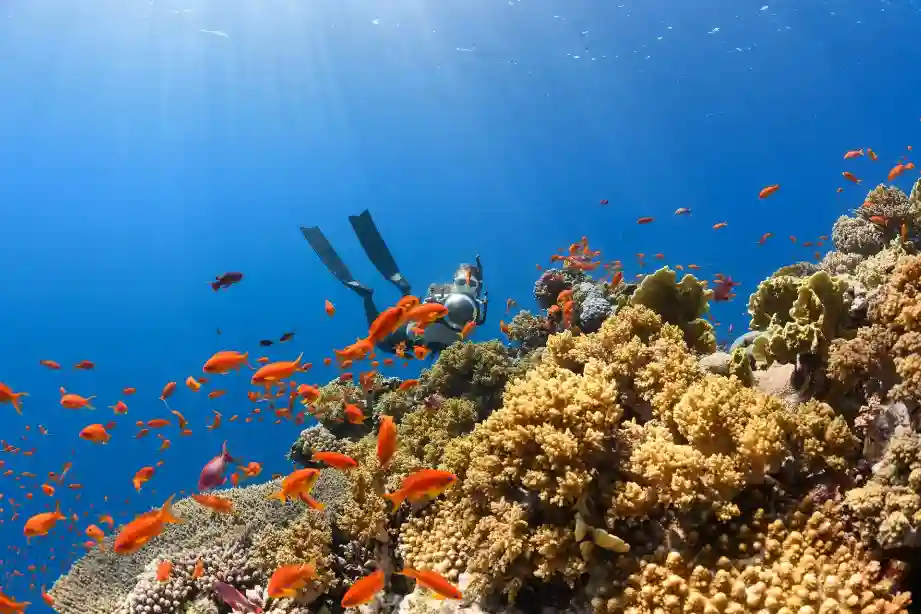
Here is an overview of coral reef conservation activities carried out in Okinawa.
There are many activities you can join easily, so if one catches your interest, please take part as part of your trip to Okinawa!
If you spread the word on social media or through live streams, that should also help Okinawa's corals.
Coral Reef Week
- An awareness event for coral reef protection held every year in early March
- Organized by the Okinawa Prefecture Coral Reef Conservation Promotion Council
- Cooperating events are held not only in Okinawa but also on remote islands and outside the prefecture
Coral Reef Week is held every year, and in 2024 it ran from late February to early March.
During the period, a variety of events are held to reaffirm the importance of coral reefs and promote conservation activities.
Specifically, these include beach cleanups, nature observation sessions, planned exhibitions, displays, coral planting, art experiences and workshops.
Local residents and tourists are given opportunities to learn about the coral reef ecosystem and take part in conservation activities.
Team Chura Coral
- A team formed by companies from inside and outside Okinawa that has been going for more than 20 years
- Carries out coral conservation activities in Onna Village, Okinawa
- Works to spread the "heart that cherishes the beautiful sea" to more people
Team Chura Coral is a project established in 2004.
Based in Onna Village, Okinawa, the team carries out coral planting activities.
In 2024, a planting event was held in September, with both divers and non-divers taking part.
So far, more than 4,000 people have taken part, and more than 19,000 corals have been planted.
SAVE the BLUE~Ocean Project~
- An environmental support project undertaken every year by Sekkisei, the skincare brand of KOSE Corporation
- A portion of sales during the campaign period is donated to coral conservation activities
- Works on awareness activities to raise interest in and deepen understanding of protecting the global environment
"SAVE the BLUE" is an environmental support project run by KOSE Corporation.
A portion of the sales of KOSE's eligible products is donated to coral cultivation activities in Yomitan Village, Okinawa.
Over 15 years of activity, more than 20,000 corals have been planted in total so far.
In addition, the company runs "Coral Study Abroad" as employee training, also working to raise awareness of environmental conservation.
By purchasing KOSE cosmetics, you can contribute to Okinawa's sea, which makes it an easy project to take part in.
Coral restoration project using sexual reproduction
- A project established by seven companies and the Fisheries Civil Engineering and Construction Technology Center, a general incorporated association
- Works to pass Okinawa's rich sea on to the next generation
- A technology that allows efficient fertilization in a way close to nature and the raising of large numbers of seedlings
The coral restoration project using sexual reproduction is a large-scale research project led by the Yaeyama Fisheries Cooperative.
It is carrying out coral restoration using sexual reproduction at a practical level in the open sea, a first in Japan.
Between 2020 and 2025, the goal is to produce 10,000 colonies of seedlings.
And in May 2024, it was confirmed that corals propagated by this project spawned for the first time.
Iki-Iki Coral Campaign
- An event held since 2007 in which many recreational divers from all over the country take part
- Thorough management of monitoring and maintenance of the planted corals
- It is not just fun diving; the intention is to get people interested in corals
The Iki-Iki Coral Campaign is an event organized by the Churaumi Promotion Association.
It is held in the first week of November every year and is the largest coral planting event in Japan.
Many divers from all over the country gather to plant corals and carry out maintenance and monitoring.
It is so popular that at past events, more than 250 participants planted over 600 corals.
If you would like to take part, please become a diver and join in!
What individuals can do to leave Okinawa's coral reefs to future generations
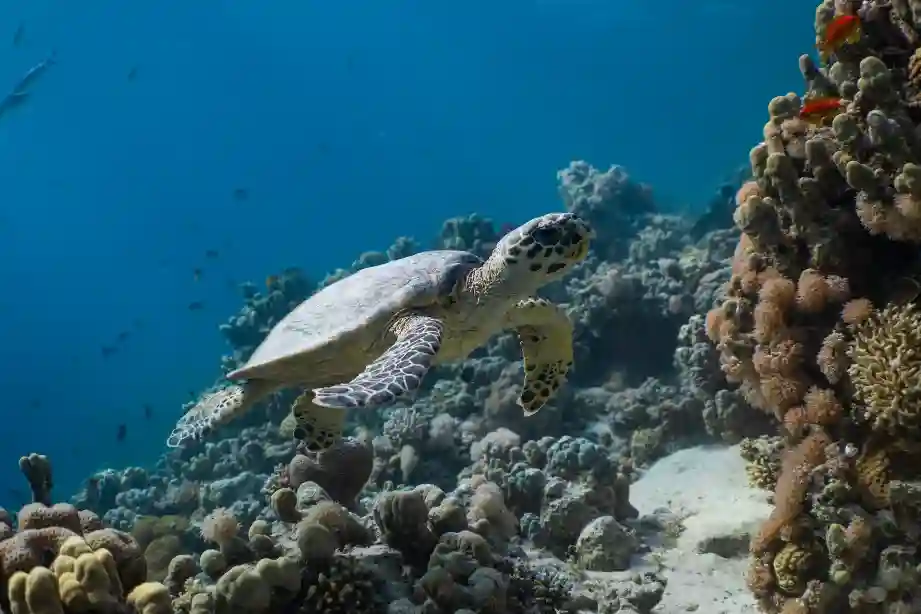
There are many things you can do to leave Okinawa's coral reefs to future generations.
Even if it is not directly connected to Okinawa's coral reefs, simply being mindful of saving electricity and water in order to improve the global environment is a big first step in what an individual can do.
Here, we introduce some of the representative activities.
Take part in coral conservation activities in Okinawa
In Okinawa, coral conservation activities that tourists and local residents can join are held regularly.
For example, "Team Chura Coral" and "Coral Reef Week" hold coral planting, cleanup activities, workshops and more, so you can learn about coral protection in a hands-on way.
By taking part in these activities, you can deepen your knowledge of coral reef conservation and take concrete action to protect corals together with other participants.
Through these activities, your understanding of the coral ecosystem and the marine environment also deepens, which leads to greater awareness for each person.
Do not touch corals while diving or swimming
To protect Okinawa's coral reefs, it is important not to touch the corals while diving or snorkeling.
Corals are very delicate living things, and even a light touch can break them or damage them.
Damage from fins is especially severe, so keep a sufficient distance when approaching a coral reef.
It is also necessary to keep a stable posture while diving and take care not to touch corals unconsciously.
Follow your guide's instructions carefully and dive while being mindful of the underwater natural environment, including the corals.
Of course, when playing in the sea in shallow water, please also avoid touching corals or taking them home.
Do not litter, and use environmentally friendly products
Littering in the sea or on the beach has a major impact on coral reefs and the creatures around them.
When trash flows into the sea, it can snag on corals and cause physical damage, and in some cases marine animals swallow it by mistake and die.
When spending time at the beach, not only take your own trash home but also make an active effort to pick up any trash you see.
Also, to reduce plastic waste, making a daily habit of using a reusable water bottle and an eco bag also helps protect coral reefs.
It is also important to choose coral-friendly sunscreen and cosmetics.
Ordinary sunscreens often contain ingredients that are harmful to corals, and when they dissolve in the water they have a negative effect on the corals.
Try to choose "reef-safe" or "environmentally friendly sunscreen" made with naturally derived ingredients.
Save electricity to prevent environmental pollution
Saving electricity in daily life can also indirectly contribute to protecting coral reefs.
This is because saving power reduces greenhouse gas emissions from burning fossil fuels and can slow the progress of global warming, even if only a little.
When seawater temperatures rise because of global warming, corals bleach and, in the worst case, die.
Specifically, start with small actions, such as using electrical appliances less and choosing energy-efficient ones.
Spread the beauty of Okinawa's corals on social media and let many people know about the problem
One thing an individual can do to protect coral reefs is to use social media to spread information.
By sharing the wonder you felt seeing Okinawa's coral reefs, the current state of the corals, the bleaching problem and more, you can get more people interested.
By conveying the beauty of corals and the diverse ecosystem through photos and videos, and by sharing information on the importance of coral protection, awareness of coral conservation spreads.
Spreading information about conservation organizations can also be expected to make it easier for many people to take part in conservation activities.
To see Okinawa's coral reefs up close and learn about the problems, we recommend "diving"!
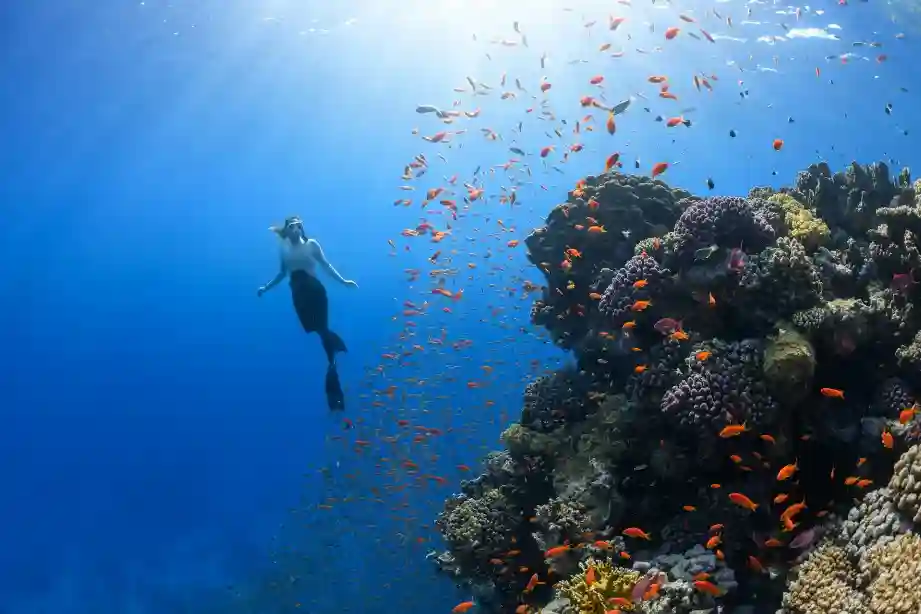
Diving is the best way to experience Okinawa's beautiful coral reefs up close and to feel the current environmental problems along with their charm.
By encountering the delicate ecosystem of the corals through diving, you can truly feel how important a "home" the coral reef is for so many living things.
You can also see with your own eyes the serious effects that corals have suffered from recent environmental changes, and you will strongly feel the need to protect coral reefs.
The appeal of corals you feel while diving
Okinawa has clear blue seas, and colorful, diverse corals live there.
In the "Onna Village area" and "around Miyako Island," fish swim through the underwater world where coral reefs spread out, creating a dreamlike seascape.
When you dive underwater, you can observe up close the fine patterns of the corals and the tropical fish weaving through the gaps between them.
Through experiences like this, you can feel the real beauty of coral reefs and the strength of life, which photos and videos cannot convey.
Feel the problems facing corals and grow more aware of protecting them
By seeing coral bleaching and damaged coral reefs through diving, you can truly feel how much global warming and environmental pollution are affecting marine ecosystems.
It is said that more than 90% of the corals in Okinawa's shallows are bleached, and you may see white-colored corals at many dive sites.
Knowing this reality makes the importance of what each of us can do to protect them feel closer to home, and makes it easier to carry into our daily actions.
Even diving beginners can take part with peace of mind
In Okinawa, diving tours for beginners are plentiful, and professional instructors support you, so even first-timers can take part with peace of mind.
There are also plans where, through "introductory diving," you can observe coral reefs up close at shallow depths without a license, making it an ideal entry point to enjoying Okinawa's coral reefs.
Diving can be the starting point for becoming interested in corals and marine ecosystems and learning more about their appeal and current state.
Q&A about Okinawa's coral reefs
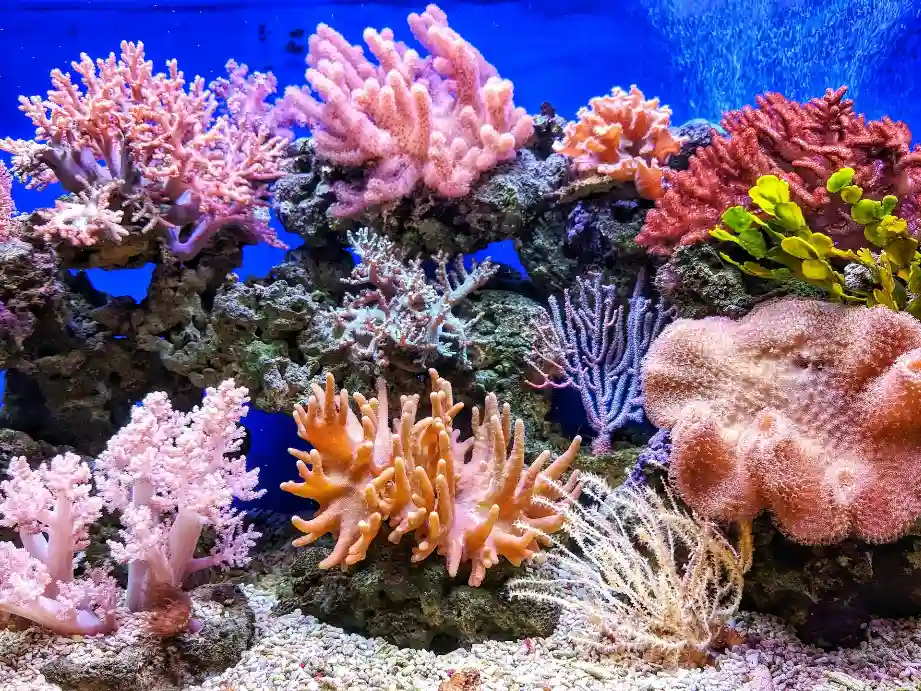
How does coral bleaching in Okinawa affect the marine ecosystem?
When coral reefs bleach, the diverse marine creatures that live around them are seriously affected as well.
Coral reefs are the "home" of fish, invertebrates and other animals, and provide them with food and places to hide.
For this reason, when corals die, the creatures that depended on them also lose their place to live and their food, and as a result the balance of the whole ecosystem collapses.
As a result, there is a risk that Okinawa's beautiful sea, a tourism resource, will change, and that the variety and number of fish will decline.
Can bleached corals in Okinawa return to normal? How likely is recovery?
Bleached corals may recover, but various factors, such as temperature and water quality, are said to be involved in the conditions for recovery.
Bleaching can also be called a temporary state that corals enter in order to survive.
For this reason, if the surrounding environment returns to normal, the coral can take in symbiotic algae again and sometimes recover.
However, if seawater temperatures keep rising and environmental pollution continues, corals stay bleached for a long time, and the risk that they eventually die increases.
In fact, natural recovery is seen in Okinawa in some cases, but conservation activities to prevent bleaching in the first place are considered important.
What coral conservation activities can tourists in Okinawa take part in?
In Okinawa, there are several coral conservation activities that even tourists can easily join.
A representative example is the activities of "Team Chura Coral," which supports coral restoration through coral planting, monitoring and more.
In addition, initiatives such as "SAVE the BLUE Ocean Project" hold events and awareness activities that raise environmental protection awareness.
As part of this, workshops that tourists can join are also offered.
By taking part in these activities, you can contribute directly to coral conservation in Okinawa.
What should I keep in mind to protect corals while diving or snorkeling in Okinawa?
To protect corals while diving or snorkeling, it is important to follow basic manners.
First, never touch the corals.
Corals are very delicate, and can be damaged just by being touched.
It is also important to always check your body position so that your fins do not hit the corals, and to keep a reasonable distance from them.
Choose sunscreen that contains coral-friendly ingredients as well, and try to reduce the impact of chemicals on the corals.
What can we do in daily life to help protect Okinawa's corals?
There are plenty of things you can do in daily life to help protect Okinawa's corals.
For example, saving electricity and water helps prevent global warming and contributes to holding down the rise in seawater temperature.
It is also important to choose environmentally conscious products and to reduce plastic waste.
Sharing the current state of Okinawa's corals and conservation activities on social media, so that many people learn about this problem, is also effective.
When these small actions add up, they become a force that protects the future of coral reefs.
Summary
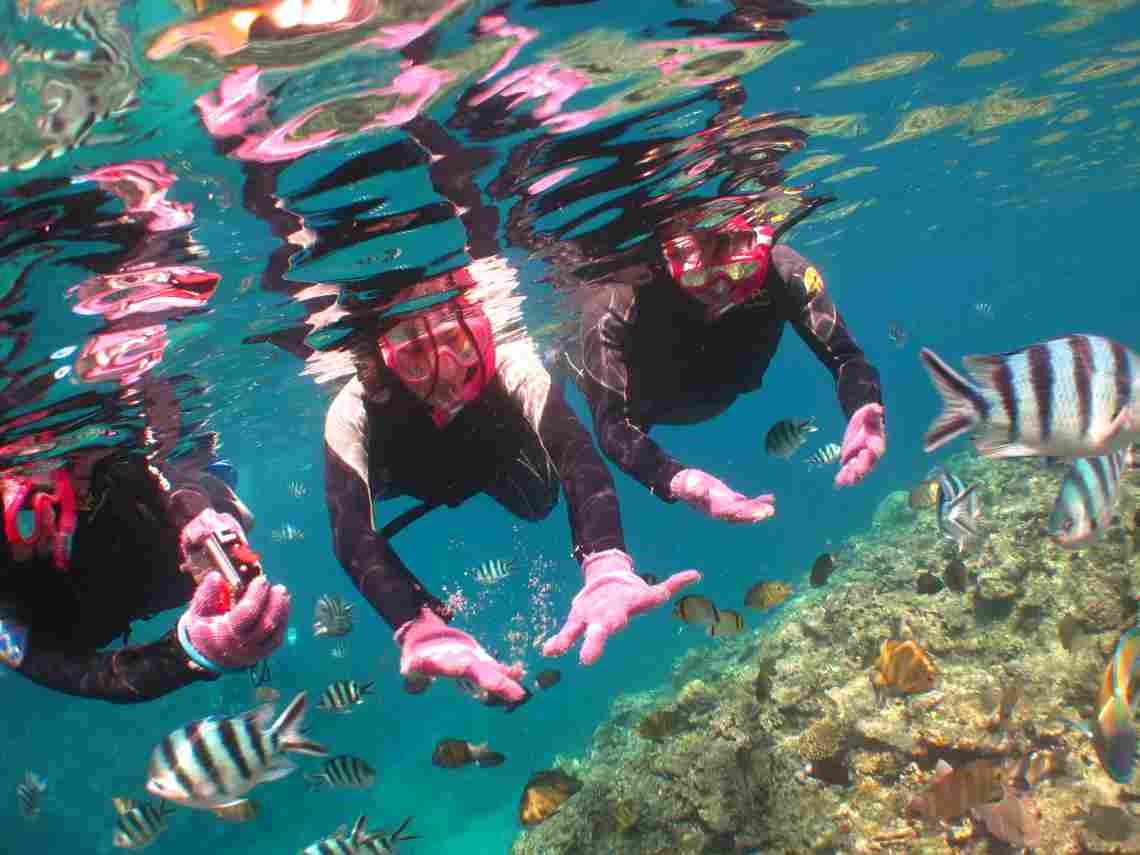
Okinawa's coral reefs, with their emerald-blue sea and beautiful corals, create a unique landscape that captivates people around the world.
However, this precious natural treasure is exposed to the crisis of "bleaching" caused by warming and environmental pollution.
- More than 90% of the corals in the shallows around the main island of Okinawa are bleached
- Marine debris that keeps increasing around the world
- Rising seawater temperatures due to the effects of climate change
All of these are having a major impact on coral reefs and the ecosystems that depend on them.
The actions we can take are by no means difficult.
By taking part in coral conservation activities held in Okinawa and following small rules of etiquette such as not touching corals, you can directly protect nature.
Daily awareness, such as saving electricity and using environmentally friendly products, and spreading the word about the state of the corals on social media are also big steps toward protecting coral reefs.
Let's each start with what we can do and pass Okinawa's coral reefs on to future generations!