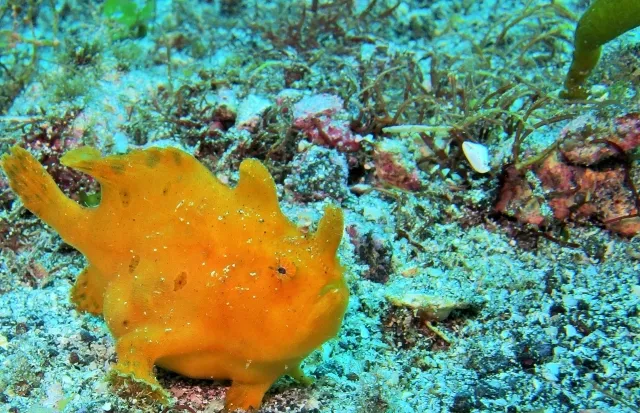
A fish long known as “Izari-uo” was renamed “frogfish” (Kaeru-ankou) in 2007, and it has been quietly attracting attention ever since.
Known for walking along the seabed on its pelvic and pectoral fins and for its remarkable camouflage, this fish is growing in popularity among divers and marine life fans.
In Okinawa, there are spots where you can see it alongside beautiful coral reefs, and a growing number of people are trying diving in search of frogfish.
In this article, we explain what the frogfish (Izari-uo) is, covering its biology and behavior, and share where you can see one in Okinawa and tips for enjoying the search.
We also introduce recommended aquariums and dive spots, with information to make your encounter with a frogfish even more enjoyable, so please read to the end!
What is a frogfish (Izari-uo)?
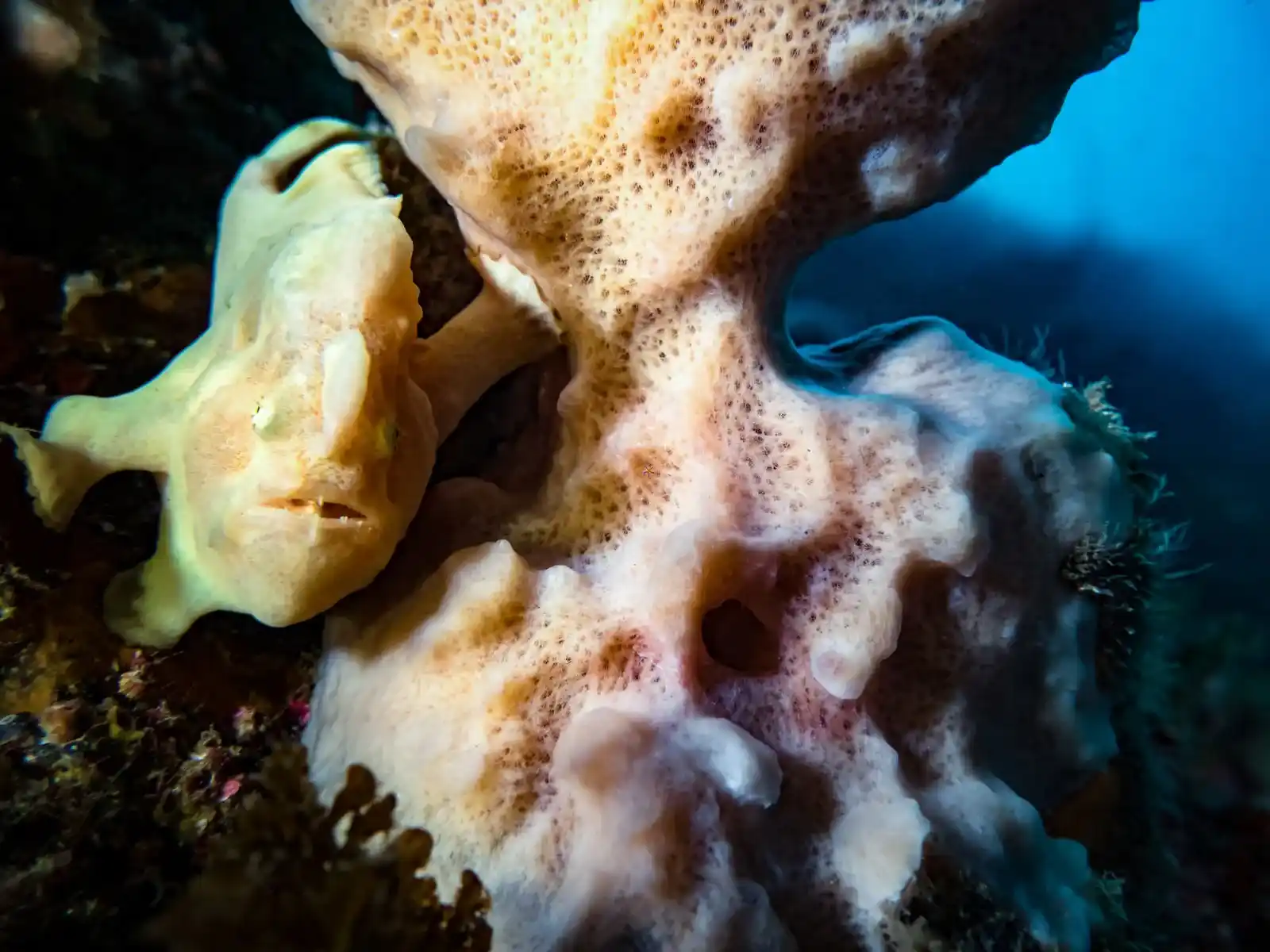
The frogfish is a fish loved by countless divers for its distinctive appearance and unique way of moving.
It ranges in length from a few centimeters to over 30 cm, and its skin is thick and flexible, with no scales on the body surface.
Its coloring is vivid like a tropical fish, with many varieties, and some have spots and other patterns.
On its head it has a fishing-rod-like “lure” (illicium) with a “bait” (esca) at the tip, making it look like a small anglerfish.
The frogfish uses this bait to lure in prey and catches it in 0.01 seconds or less.
This lure can also be stored in a groove near its back, and it is said to grow back within a few months even if it is lost.
It is generally found in tropical and subtropical waters with a temperature of about 20°C, but it seems to live in places that are colder than 20°C as well.
Why “Izari-uo” was renamed “frogfish”
The renaming from “Izari-uo” to “frogfish” was part of a movement in Japan to review fish names that use discriminatory expressions.
Because “izari” can carry discriminatory connotations in Japanese, the fish was officially renamed “frogfish” in 2018.
“Izari” is a discriminatory term for a person who cannot move their legs, but it seems the fish was not given that name because of it.
One theory says the fish came to be called “Izari-uo” because “izaru” is a word for sitting.
The new name was chosen based on the frog-like body shape and the fact that the fish belongs to the anglerfish group, and “frogfish” is now widely used.
The biology and behavior of the frogfish (Izari-uo)
The frogfish is a patient predator that lies still and waits in ambush for prey, and it has the following distinctive characteristics.
- Behavior: Usually lives alone and gathers during the breeding season
- Hunting method: Opens its mouth wide and rapidly sucks in prey when feeding
- Diet: Small fish and crustaceans; it is voracious and sometimes even eats its own kind
Its body has colors and patterns that make camouflage easy, and it waits for prey by blending in with the surrounding rocks and coral.
It can change its body color, but this takes several weeks.
It seems to imitate not only coral and sponges but also things like sea anemones and sea urchins.
It can also shoot water it has taken in forcefully from behind its pectoral fins to dart forward, but most of the time it moves as if walking along the seabed.
What kind of environment does the frogfish (Izari-uo) live in?
Frogfish mainly live in places like the following.
- Warm, shallow areas at a depth of about 40 m
- Around coral reefs and seaweed
- Sandy areas and rocky areas
They can be seen widely in Japanese waters, but warm areas such as Okinawa and the Izu Islands are the easiest places to observe them.
Frogfish usually live camouflaged on sand, rocky areas and coral reefs.
Because they can change their body color to match their surroundings, individuals come in a variety of colors.
They prefer environments where they can hide easily, so they are hard to spot during a dive unless you search carefully.
However, once you find one, it doesn’t move, so it is easy to observe and photograph, which makes it popular.
Tips for spotting the camouflage of the frogfish (Izari-uo)
To spot a frogfish’s camouflage, it is important to observe carefully while comparing it with the surrounding environment, such as rocks and coral.
- Look for the frogfish’s shape: The color and pattern may be similar, but it cannot completely change its shape, so focus on the outline of the fish
- Observe patiently: It is slow to flee unless it senses danger, so take your time and don’t rush
- Watch for changes in color and texture: Because it changes its body color to match its surroundings, it is also important to observe subtle color differences and surface texture
First, paying attention to “unnatural patterns or bumps” that differ from the coral or rocks makes it easier to find a camouflaged frogfish.
With help from an experienced instructor, you will find it easier to spot a hidden frogfish.
Why is the frogfish (Izari-uo) so popular? The charm that captures divers’ hearts
The frogfish is a creature full of appeal for divers.
Its frog-like appearance, anglerfish-like behavior and the fact that it is easy to observe all come together, so spotting one during a dive is considered a “lucky encounter,” and it has many fans.
Their body colors, patterns and characterful faces are also endearing, and quite a few divers dive just to find a frogfish.
On top of that, the coral and rocky underwater environments that frogfish favor are themselves mysterious, making the fun of observing even greater.
The frogfish (Izari-uo) has a cute appearance
The frogfish has a charming face and a rounded body, and it has a certain cuteness about it.
It comes in a variety of body colors; depending on the location, some individuals are vivid yellow, orange or pink, and others have funny patterns that look like something a child designed.
As a result, stylized illustrations of frogfish and straps featuring them are even sold.
The hunting behavior of the frogfish (Izari-uo) is fascinating
The frogfish hunts by waving a protrusion on top of its head called the “illicium” like a fishing rod to lure in prey.
The moment prey comes close, it opens its mouth wide and sucks it in, so seeing that moment with your own eyes is a real thrill.
It wouldn’t be unusual for a diver to want to see it hunt live.
The frogfish (Izari-uo) is easy to observe
Because frogfish often stay still underwater, they are well suited to careful observation.
Unlike other fish, they rarely swim around and often stay motionless in their camouflaged state, so once you find one you can observe it at your leisure.
Furthermore, observing a frogfish is also a good opportunity to look at the other creatures lurking on the seabed, letting you feel the real thrill of diving, which is enjoying the whole natural environment.
Please come see a frogfish with your own eyes, living in the vast natural sea of Okinawa!
5 recommended aquariums where you can see a “frogfish (Izari-uo)”
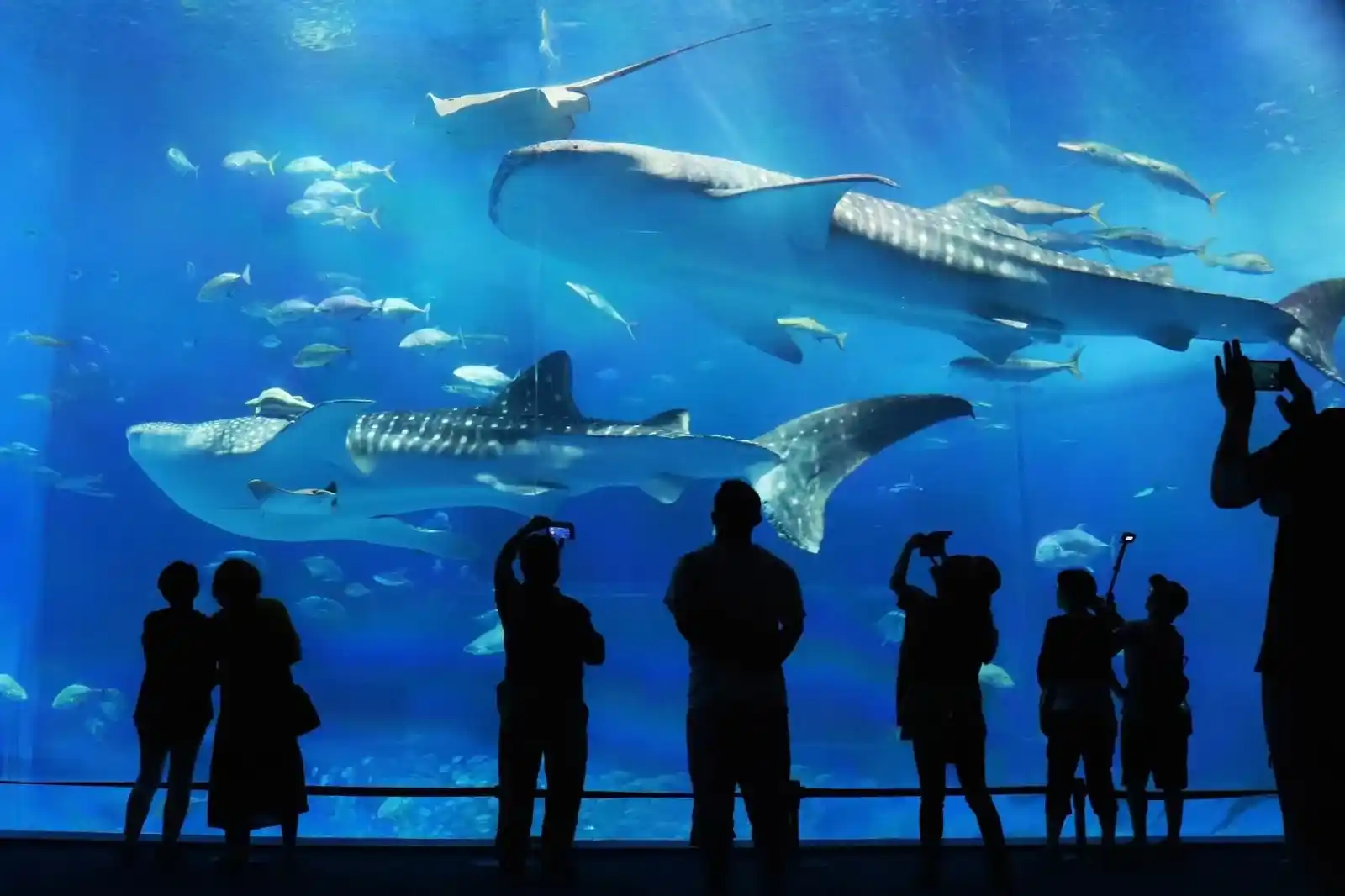
Here we introduce aquariums that have kept frogfish in the past, along with their features.
If one of the aquariums catches your interest, please visit and see a frogfish in person!
The frogfish introduced here are living creatures, so they are not necessarily always on display.
To find out whether they are still kept at present, please contact each aquarium.
Okinawa Churaumi Aquarium (Okinawa Prefecture): Clown frogfish
- See whale sharks and manta rays up close in “Kuroshio Sea,” one of the world’s largest aquarium tanks!
- Okinawa’s rich marine ecosystem is recreated, with coral reefs and tropical fish!
- Many hands-on exhibits that everyone from children to adults can enjoy, plus plenty of areas where you can touch the animals!
At Okinawa Churaumi Aquarium, a species called the “clown frogfish,” the first record of its kind in Japan, is on display.
This fish has a distinctive cone-shaped protrusion, and it was named because its shape looks like a clown’s hat.
You can see it in the “Journey to the Coral Reef” corner, where an individual about 20 cm in total length is exhibited.
Ashizuri Marine Museum (Kochi Prefecture): Painted frogfish, Beni frogfish and more
- Exhibits a wide variety of marine life from the waters of southwestern Shikoku, so you can enjoy seeing them in their natural form!
- Has corners for the coral, fish and deep-sea creatures found off Cape Ashizuri!
- Though small, it has diverse exhibits, and you can take your time touring each corner!
At Ashizuri Marine Museum, you can see several species of frogfish, including the painted frogfish and the Beni frogfish.
Among them, you may sometimes see the rare “giant frogfish,” which lives in the deep sea.
You can observe them in an environment close to their natural habitat as part of Shikoku’s underwater ecosystem, and you will be able to enjoy the amazing camouflage of the frogfish up close.
Hekinan Seaside Aquarium (Aichi Prefecture): Painted frogfish
- Many explanations are designed for children, giving the aquarium a warm atmosphere that families can enjoy!
- Easy to visit, and with a seaside walking path nearby, you can fully enjoy nature!
- Seasonal exhibits mean you can make new discoveries no matter how many times you visit!
At Hekinan Seaside Aquarium, the painted frogfish, popular as “ugly-cute,” is on display.
Two of them, one yellow and one cream-colored, are exhibited in the tank introducing coral relatives near the main large tank.
They are about 10 centimeters long, and you can watch their distinctive movements up close.
Toba Aquarium (Mie Prefecture): Kumadori frogfish, Bonbori frogfish and more
- One of the best in Japan for the number of species on display, this huge aquarium exhibits about 1,200 kinds of creatures!
- Exhibits include the “Mermaid’s Sea,” where you can see dugongs, and the “Ise-Shima Sea”!
- You can experience sea lion shows, penguin walks, walrus meet-and-greet time and more!
At Toba Aquarium, you can observe the fascinating behavior of various kinds of frogfish.
Many of the frogfish on display live in relatively shallow waters.
For example, these include the “Kumadori frogfish” and the “Bonbori frogfish,” which have become popular in recent years.
They are placed in spots that are easy to observe, so you will be able to take a good look at their camouflaged forms.
Shinagawa Aquarium (Tokyo): Painted frogfish
- Easy to visit within Tokyo, a rare spot where you can immerse yourself in the sea world while in the city!
- Impressive performances such as the “dolphin show” and “seals”!
- An underwater tunnel lets you have the unusual experience of looking up at swimming fish from directly below!
At Shinagawa Aquarium, you can observe several painted frogfish.
At one point, during an event called the “Creatures You Can Never Find Exhibition,” they even timed how long it took to find a painted frogfish.
Original exhibits like this, combining creatures in ways devised by the keepers, are also a feature, and you will likely discover something new with every visit.
Recommended Okinawa dive spots where you are likely to encounter a “frogfish (Izari-uo)”
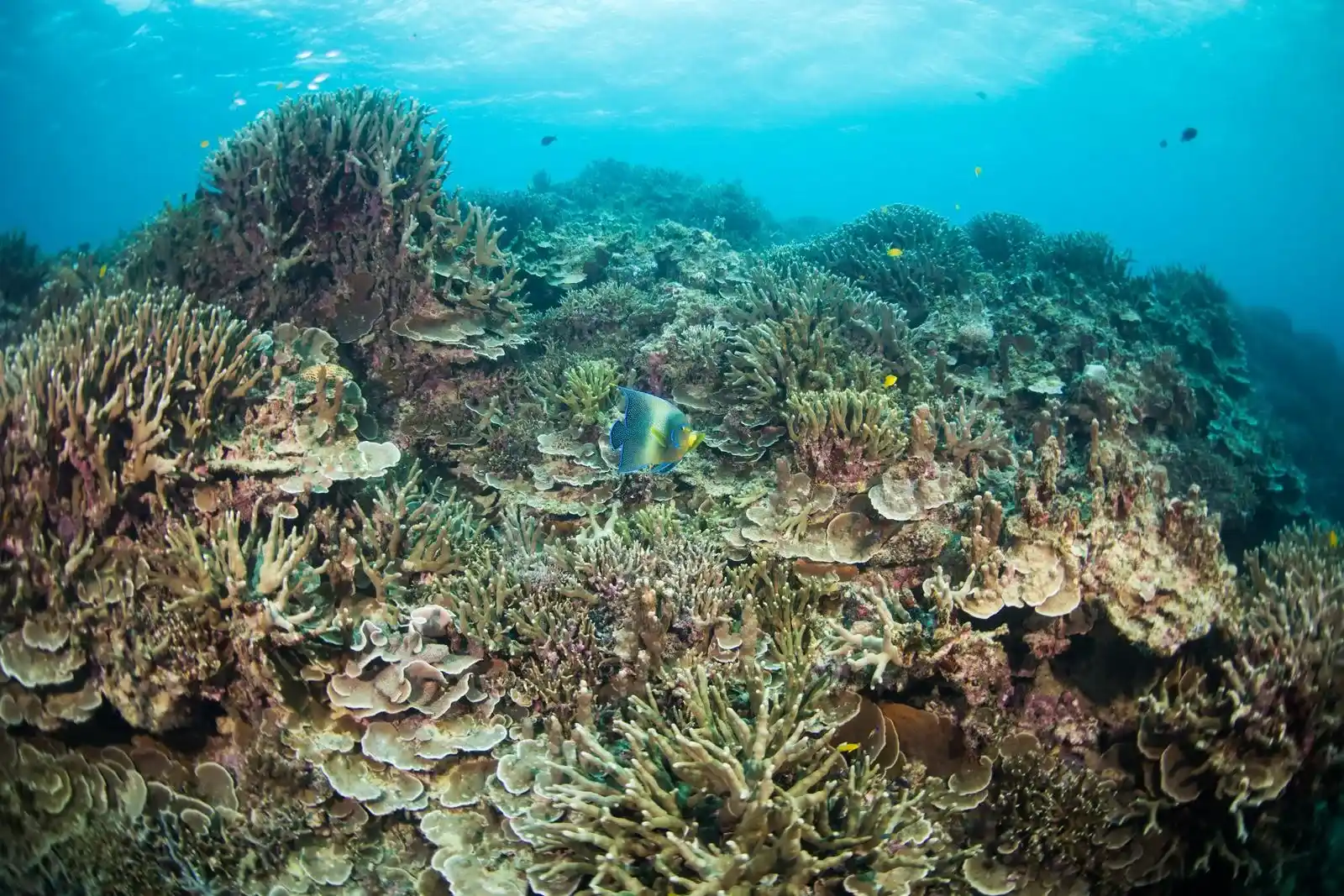
From here, we introduce recommended Okinawa dive spots where you are likely to encounter a frogfish.
In fact, you can see frogfish at almost any spot in the waters of Okinawa.
However, from among them we chose points that are easy to access or have a relatively low level of diving difficulty.
Use this information as a reference to dive in the sea of Okinawa and observe frogfish living in the wild.
Onna Village area: about 1 hour by car from Naha Airport
The Onna Village area is a popular dive spot well suited to observing frogfish.
At Manza Dream Hole in particular, you can expect to see frogfish frequently.
In this area, there are even reports of both juvenile and adult frogfish being observed.
“Blue Cave” diving difficulty: beginner to intermediate
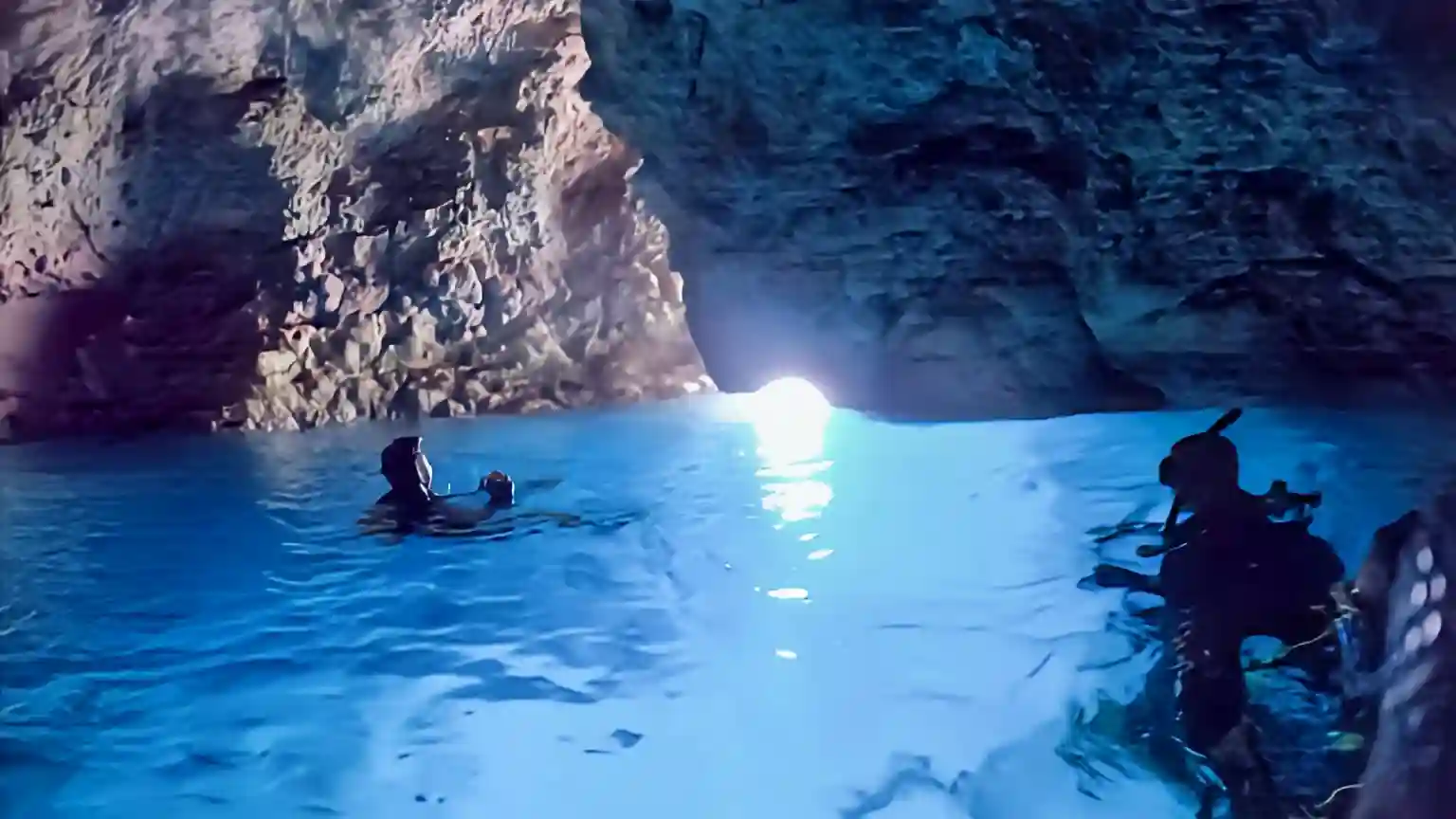
- A spot where the light streaming into the cave shines blue, creating a fantastical atmosphere
- Located in relatively shallow water, so introductory diving and snorkeling are also possible
- Highly popular among Okinawa’s dive spots, a famous attraction visited by many divers
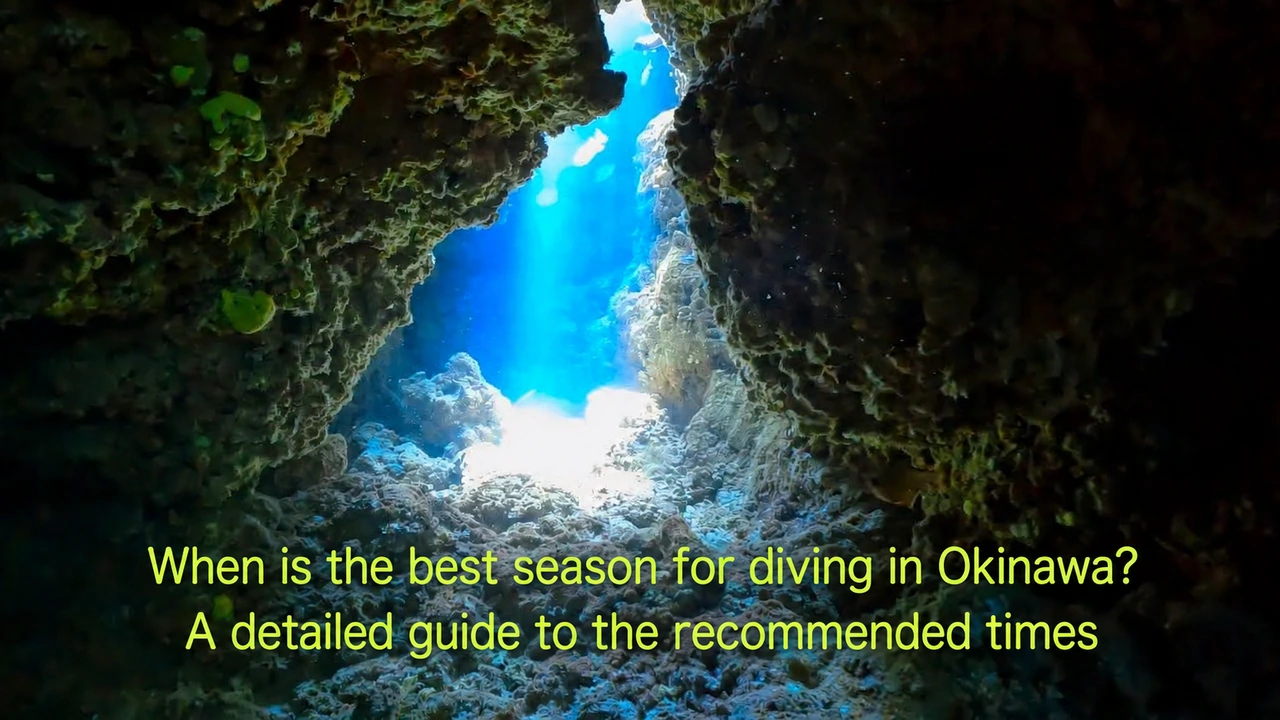
The Blue Cave is a fantastical spot where the blue light streaming into the cave is beautiful.
In the coral reef area spreading outside the cave, frogfish sometimes lurk among the small creatures, making it well suited to macro diving.
Macro diving is a type of diving for photographing small marine creatures with a dedicated camera.
The Blue Cave itself is located in relatively shallow water, so it is easy for beginners to join.
“Manza Dream Hole” diving difficulty: intermediate to advanced
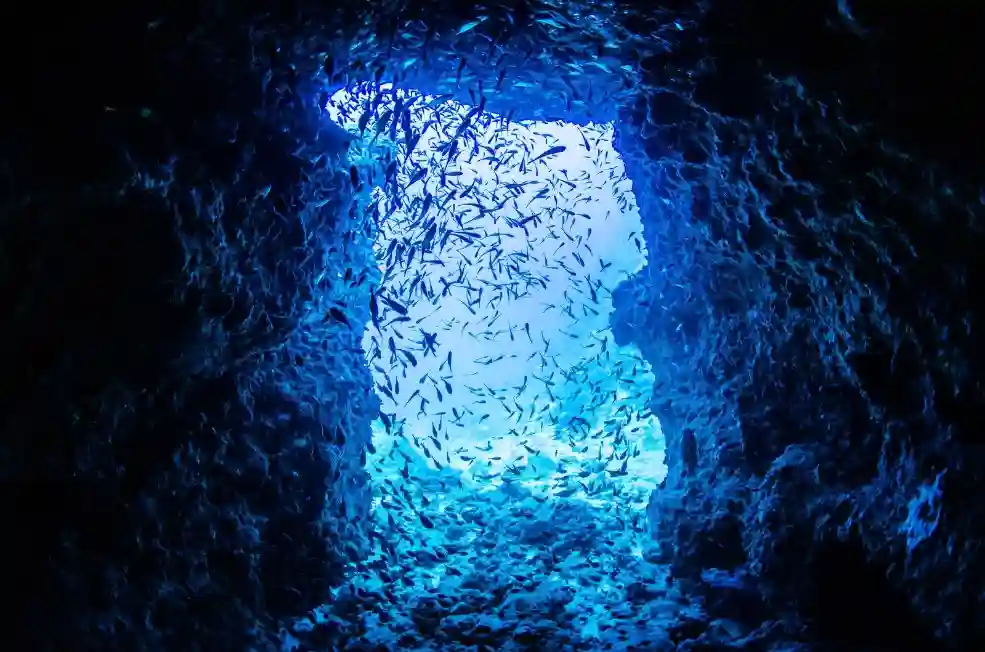
- Features thrilling cave terrain that runs from a vertical shaft into a horizontal passage
- Beautiful lighting effects deep in the cave make it a popular, fantastical photo spot
- Because the water is deep, decompression stops may be required, so it suits experienced divers
Manza Dream Hole is a spot for advanced divers, characterized by cave terrain that leads from a large vertical shaft into a horizontal passage, and you can enjoy a fantastical landscape with light streaming in.
Here, you can explore an L-shaped tunnel with depths from 5 m to 30 m.
Besides frogfish, you can observe marine life such as Ryukyu cardinalfish and Pacific double-saddle butterflyfish.
Frogfish sometimes hide inside the cave and in the coral reefs around it, and searching with an experienced instructor will likely increase your chances of encountering one.
“Gorilla Chop” diving difficulty: beginner to intermediate
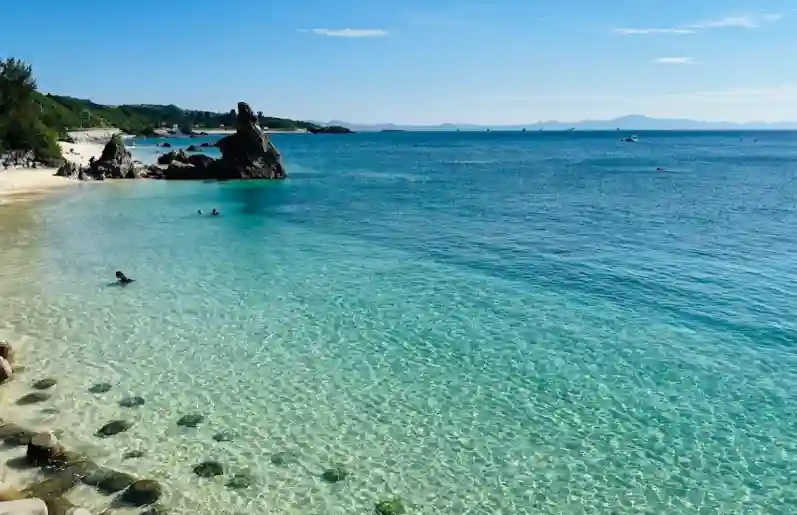
- A dive spot named because the rock looks like a gorilla’s hand
- Shallow-water diving is possible, with plentiful coral reefs and colorful fish
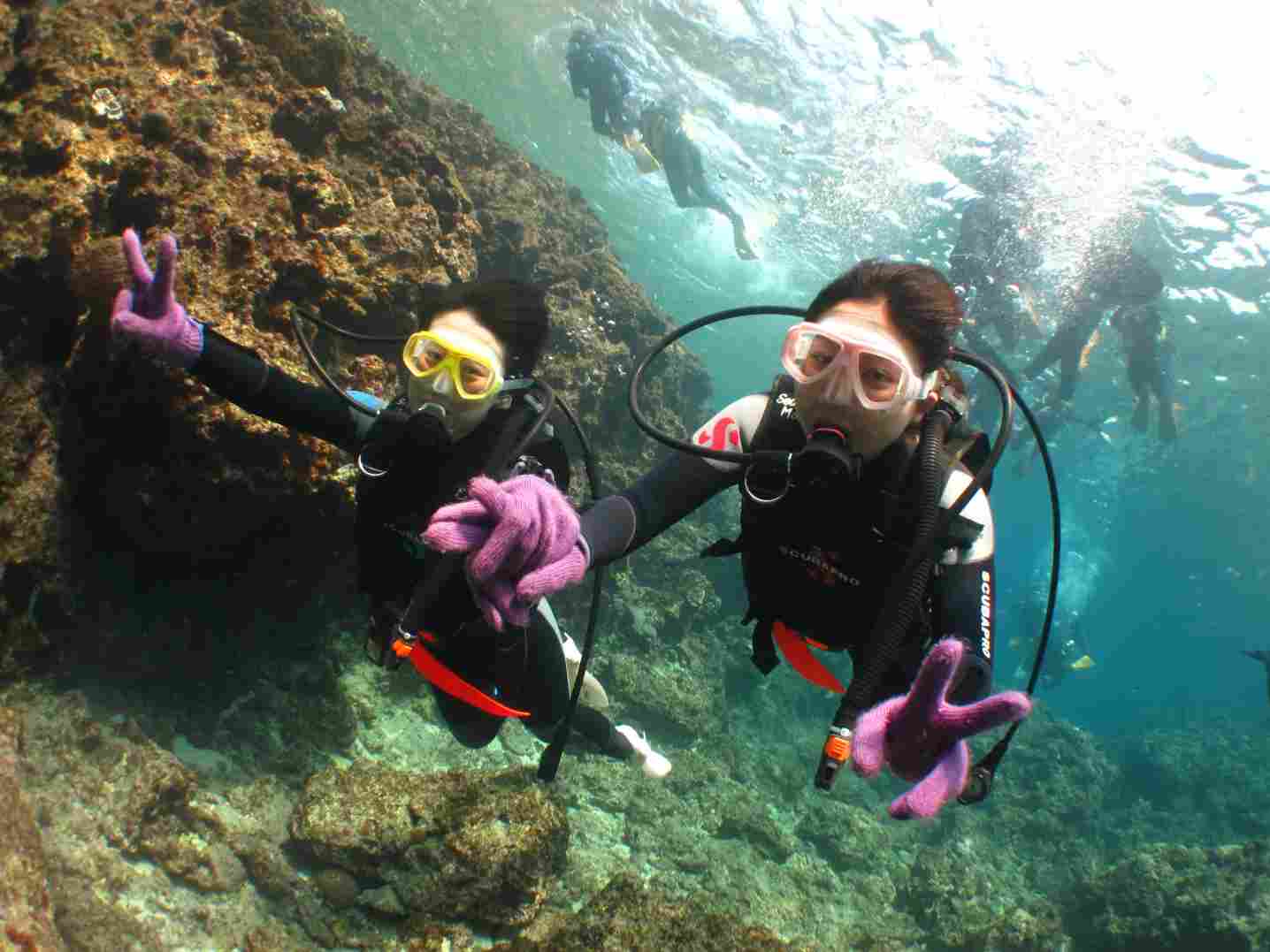
- Suited to beginners, and popular for introductory diving and with families
Gorilla Chop is a spot named because the rock looks like a gorilla’s hand, and it is a beach-entry point that beginners can enjoy.
Camouflaged frogfish often live among the surrounding coral reefs and rocks, and because the current is gentle, it is an environment where they are easy to find even on your first dive.
You can also observe tropical fish such as damselfish and clownfish.
Sesoko Island area: about 1.5 hours by car from Naha Airport
Sesoko Island is located in the northern part of the main island of Okinawa, at a point even farther north than Onna Village.
Nearby are the “Okinawa Churaumi Aquarium” and “Lily Field Park,” making it a convenient place for sightseeing as well.
Rich coral reefs spread around the island, and frogfish camouflaged as that coral are sometimes observed.
Sesoko Island is a treasure trove of underwater life, and besides frogfish you will be able to see a wide variety of small creatures.
“Labyrinth” diving difficulty: intermediate to advanced
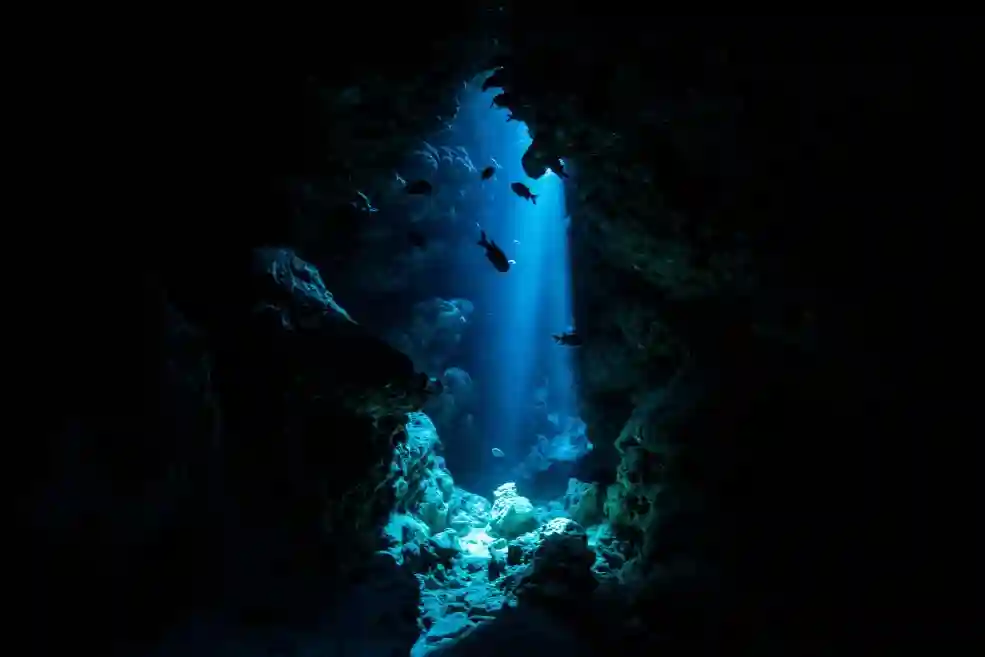
- A spot where you can enjoy diving through labyrinth-like, intricate terrain
- With caves and tunnels, you can encounter camouflaged creatures such as frogfish if you search carefully
- Because of the current, diving skills are needed, and whitetip reef sharks can also be observed
As its name suggests, Labyrinth is characterized by labyrinth-like, intricate terrain.
Deep in the cave, small corals and rocky areas are intricately intertwined, making it an ideal home for frogfish.
Many marine creatures such as whitetip reef sharks and crimson soldierfish also live here.
Because you can enjoy both the complex terrain and observing marine life, it is popular with divers and with people who want to watch underwater creatures.
“Moomin Valley” diving difficulty: beginner to intermediate
- You can enjoy unique terrain like Moomin Valley, in a calm environment suited to beginners
- Many shallow areas make it good for practicing ear equalization and buoyancy control
- With plentiful coral and fish and gentle waves, you can dive safely
Moomin Valley was named because its unique terrain looks like Moomin Valley, and it has the right conditions for frogfish to live.
You can also see Porites cylindrica coral and yellow boxfish, and you will likely want to dive here again and again.
Also, because the water is relatively shallow, it is suited to beginners, and even on tours joined by first-time divers there is a chance of finding a frogfish.
“Clownfish Mountain North (Pei)” diving difficulty: beginner to intermediate
- A spot where a colony of clownfish lives, featuring a landscape of colorful fish gathering in schools
- Located in a relatively shallow place, a dive spot that beginners can join
- Schools of fish are frequently seen, making it a popular area for underwater photography
Clownfish Mountain North is famous for the many clownfish that live there, as its name suggests, but you can also observe frogfish camouflaged as rocks and coral.
There is the fun of searching for frogfish together with colorful fish, and on a tour with an instructor you can observe them at a relaxed pace, which is a highlight.
If you get a diving license, you will be able to dive into crevices and underwater tunnels and experience a fantastical underwater world.
A license is not required for diving in shallow areas (about 5 to 7 m), but a license is mandatory if you dive deeper than that.
Some licenses can be obtained in 1 to 2 days, so if you want to get serious about diving, we recommend a tour that lets you earn one.
Because you can get your license while enjoying diving, you can have fun without any problem as part of your trip!
5 ways to improve your chances of meeting a frogfish (Izari-uo) at Okinawa dive spots
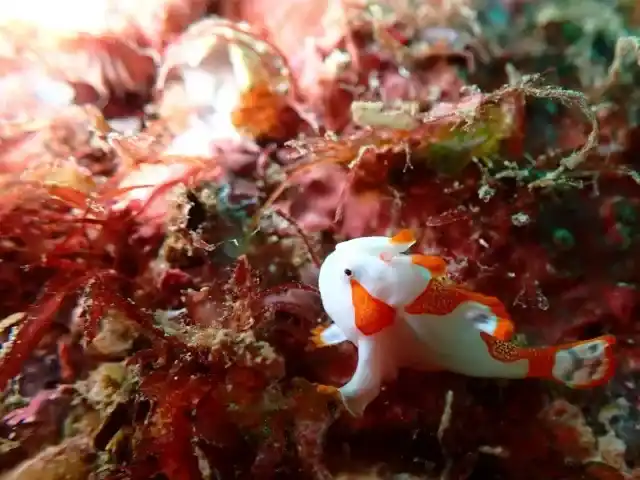
Frogfish have camouflage abilities that make them hard to find even when displayed in the limited space of an aquarium tank.
So for people diving for the first time, searching for a frogfish in the unfamiliar underwater world will be extremely difficult.
Here, we share 5 ways to improve your chances of meeting one so that you can find a frogfish even on your first dive.
1. Choose a suitable dive spot
The environment where frogfish live is one with many coral reefs and rocky areas.
Okinawa has spots scattered around with terrain where they can easily camouflage themselves.
If you choose a spot with a rich surrounding ecosystem, such as “Gorilla Chop” or the “Blue Cave,” your chances of meeting a frogfish go up.
When booking a tour, it is also important to ask whether frogfish can be seen.
A professional instructor who dives almost every day will be able to give you fresh local information.
2. Consider the timing of your dive
Frogfish often become active in the warm-water season from spring to autumn, and spring and autumn in particular are considered good times to observe them.
The best seasons for diving in Okinawa are “April to June” and “October to November,” when there are fewer tourists and the weather is less likely to turn rough, and these are ideal for observing frogfish.
During these periods, underwater visibility is also clear, making it easier to find where frogfish are.
One thing to watch out for is after a typhoon or storm has passed: marine creatures may behave differently than usual, which can make them hard to find even for professional instructors.
3. Search with slow movements
Because frogfish are camouflaged and blend into their surroundings, it is important to observe with slow movements in order to find one.
With fast, large movements it is harder to find a frogfish, and you may even scare it off.
By moving along without rushing, carefully searching the gaps between rocks and coral, you improve your chances of meeting one.
4. Search together with your instructor
To find a frogfish, the cooperation of an instructor who knows their biology and camouflage well is essential.
An instructor who knows the local sea well will know where frogfish are often found and which areas they live in by season.
By following your instructor’s directions and being guided to places where frogfish are likely to be hiding, your chances of finding one improve dramatically.
To repeat, talk to the tour company about wanting to observe frogfish.
That is because doing so may lead them to consider the best dive plan for you.
5. Use proper observation techniques
For observing frogfish, the technique of looking closely and searching carefully is effective.
Pay attention to parts whose color or pattern differs subtly from their surroundings, and don’t overlook any lump that looks out of place.
In particular, focusing on places where the color and shape differ slightly from the rocks and coral increases the chance of finding a hidden frogfish.
If you want to meet a frogfish (Izari-uo) in the sea of Okinawa, we recommend using a diving tour!
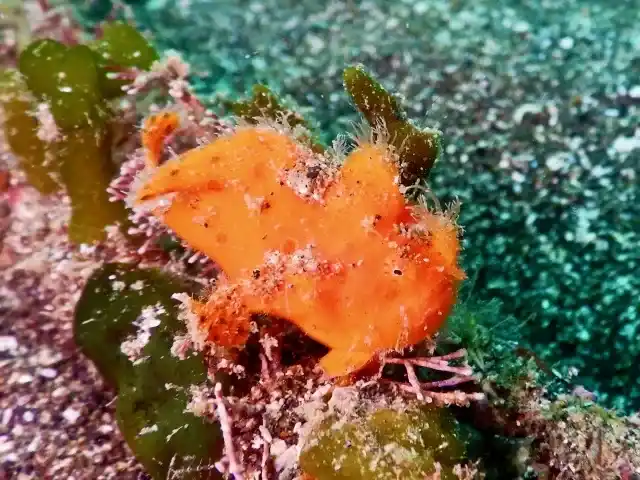
If you want to meet a frogfish in the sea of Okinawa, joining a diving tour is the efficient way.
Among diving tours, a one-on-one plan or one that you can join in a small group is preferable.
The reason is that frogfish are skilled at camouflage and often blend into coral and rocky areas, so they are creatures that are hard to find with ordinary diving alone.
On small-group tours, an instructor who knows the local sea inside and out will accompany you.
And because they guide you to areas where frogfish are often seen and places where they are likely to be hiding, your chances of finding one go up dramatically.
Furthermore, on a diving tour the instructor will teach you how to dive properly from scratch, so there is no problem even if it is your first dive.
Please take on a diving tour where you can enjoy not only frogfish but also encounters with Okinawa’s rich coral reefs and fish!
Frogfish (Izari-uo) Q&A
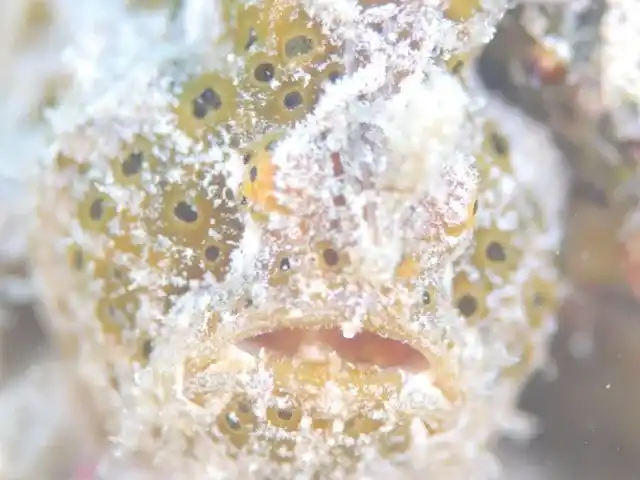
How is the frogfish (Izari-uo) different from other fish?
The frogfish differs from other fish in having unique characteristics in its body shape and behavior.
First, as its name suggests, the frogfish looks like a cross between a frog and an anglerfish.
In addition, the frogfish’s body surface has various colors and protrusions, and by blending into the surrounding coral and rocks it can achieve a high level of camouflage.
It also swims around less than other fish, and another feature is its unique hunting method of attracting prey with a lure-like esca (bait) on its forehead.
What is the biology of the frogfish (Izari-uo) like?
Frogfish generally stay still among coral reefs and seaweed, and are patient predators that wait for food.
They can change their body color to blend in with their surroundings, and lie in ambush for the small fish and crustaceans that are their food.
They move the protrusion at the tip of the head called the “esca (bait),” and when prey comes close they instantly open their mouths and suck it in.
Also, because frogfish are not good swimmers, they move mainly by “walking” with their fins and swim only when necessary, which is a unique aspect of their biology.
What is the best time to find a frogfish (Izari-uo) while diving in Okinawa?
In Okinawa, frogfish are often seen during the “spawning season (June to August).”
From this period into autumn, it becomes easier to observe small individuals.
However, you can see frogfish all year round in Okinawa, so it is not the case that you can see them only during this period.
Whatever the season you visit, you will be able to find frogfish hiding among the coral reefs.
If you search together with an instructor, you may be able to meet one throughout the year.
Is it difficult to find a frogfish (Izari-uo)?
The frogfish is called a master of camouflage, and it is a fish that is hard for beginners who are not used to diving to find.
It has body color and protrusions that blend into coral and rocky areas, making it hard to spot.
Furthermore, because it hardly moves, the help of a skilled instructor is essential to finding one during a dive.
On tours in Okinawa, if you tell the instructor you want to see a frogfish, they will help you, so following their directions as you search makes it easier to find one.
How can I enjoy observing frogfish (Izari-uo) on a diving tour in Okinawa?
To enjoy observing frogfish, the key is to join a tour with instructors who know the habitat well.
With an experienced instructor accompanying you, your chances of finding a hidden frogfish go up.
Also, because they usually camouflage themselves as coral or rocks, you may be able to find one on your own by carefully observing those areas.
Please observe wild frogfish, which you can’t see in aquariums, by diving in Okinawa.
Summary
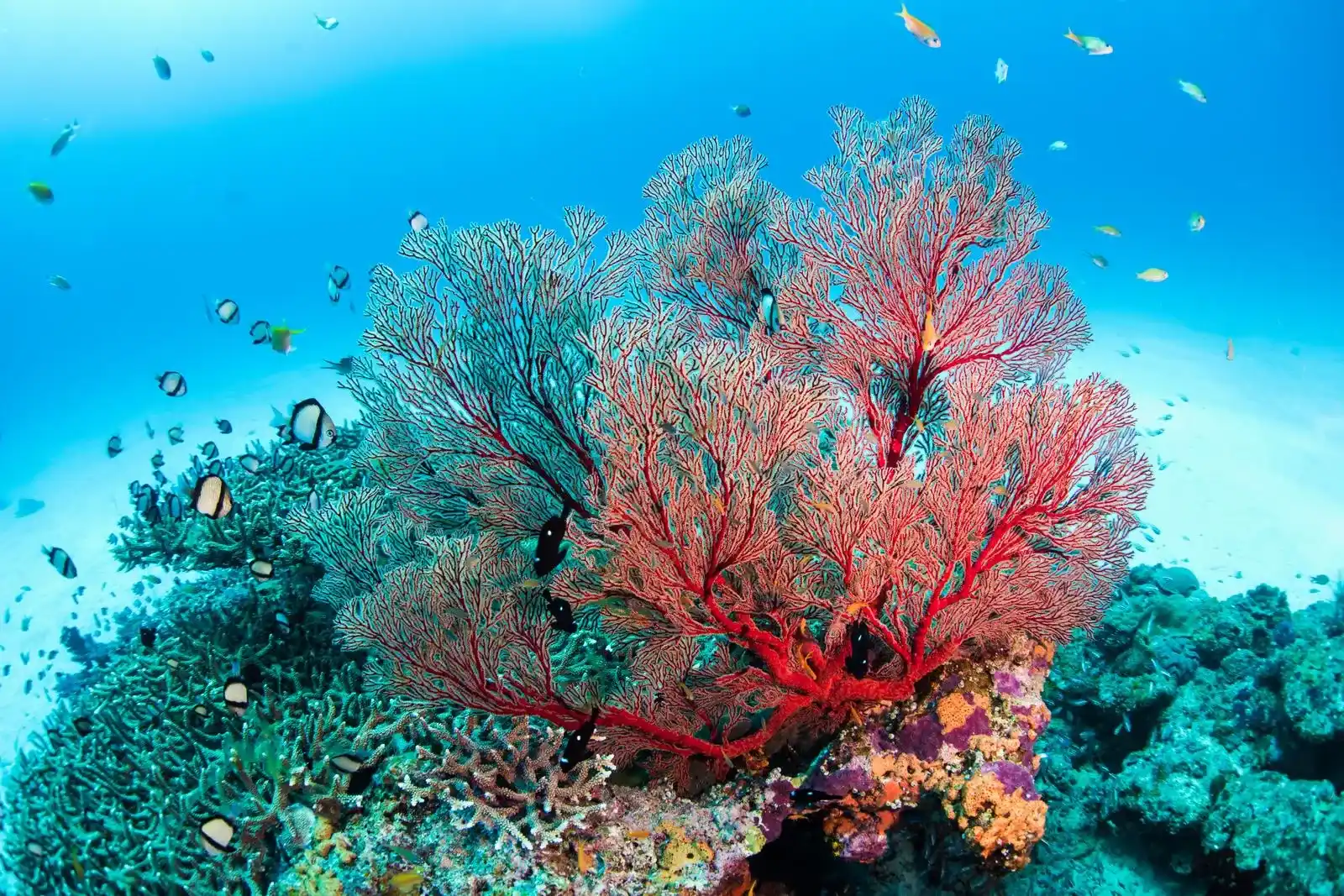
The sea of Okinawa is filled with a beautiful, crystal-clear underwater world and a rich ecosystem, and it is a dream place for divers.
Meeting a frogfish is a moving moment of connecting with the sea’s mysterious creatures.
Okinawa has many dive spots, and each one has its own appeal, so new discoveries await every time you visit.
If you join a diving tour, professional instructors will use their rich knowledge to tell you where frogfish can be seen and how to observe them, so even first-timers can enjoy it with peace of mind.
Please come meet a variety of creatures, frogfish among them, in the sea of Okinawa and experience the mystery of nature.
We hope this special experience will make your memories of the sea of Okinawa even more wonderful.
Book a diving tour right away to go and see frogfish!